Flax Textile Composite Film
CN → US| HS Code | Tariff Rate | Origin | Destination | Doc |
|---|---|---|---|---|
| 5309190090 | 35.0% | CN | US | Official Doc |
| 5309294090 | 35.0% | CN | US | Official Doc |
| 3921902900 | 39.4% | CN | US | Official Doc |
| 3921901910 | 40.3% | CN | US | Official Doc |
| 5903903090 | 37.7% | CN | US | Official Doc |
Product Images


AI Analysis
🌿 Flax Textile Composite Film: The Ultimate Classification & Tariff Breakdown | 2026 Customs Strategy
🌐 HS Code Reference & Customs Clearance Guide | Professional Import Strategy for US Customs (China Origin)
📌 Part 1: Product Definition & The Classification Puzzle
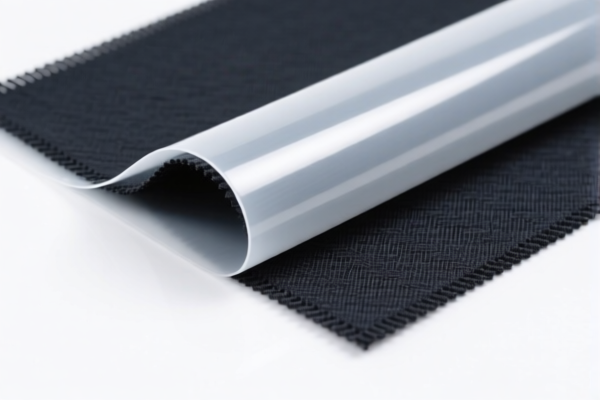
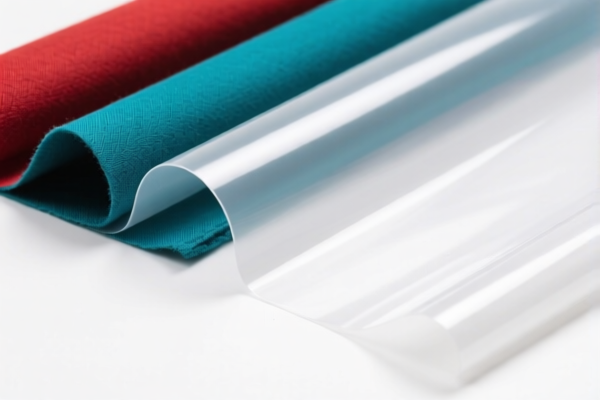
Flax Textile Composite Film is a hybrid material combining natural fibers (flax/linen) with synthetic or plastic films. In international trade, its classification is complex because it sits at the intersection of Chapter 53 (Vegetable Fibers) and Chapter 39 (Plastics) or Chapter 59 (Impregnated Textiles).
The core challenge lies in answering:
"Is it primarily a textile, or is it primarily a plastic film?"
The answer determines your HS Code and, more importantly, your total tariff burden.
⚠️ Key Distinction Points:
- If the flax fibers are the dominant feature or the primary structure → Chapter 53.
- If the plastic film provides the primary structure or waterproofing/barrier function → Chapter 39.
- If it is heavily impregnated, coated, or laminated for specific industrial use → Chapter 59.
📦 Part 2: Detailed HS Code Analysis (Based on Provided Data)
Below are the four possible classifications for "Flax Textile Composite Film" according to the provided data, along with their tax implications.
| HS Code | Product Description & Logic | Primary Characteristic |
|---|---|---|
| 5309.19.00.90 | Flax Woven Fabric (Composite) Classified under Chapter 53 (Vegetable Fibers). Assumes the product is primarily a fabric/woven form of flax fibers, potentially laminated but retaining textile identity. |
🧵 Textile-Dominant Woven structure prevails. |
| 5309.29.40.90 | Other Flax Woven Fabric Also under Chapter 53. Classified as "Other" flax fabrics. Applies if the composite film is considered a specialized flax textile category not covered by other specific subheadings. |
🧵 Textile-Dominant Specialized flax weave. |
| 3921.90.29.00 | Plastic Film/Sheet (Composite) Classified under Chapter 39 (Plastics). Inferred that the product contains significant plastic components, and the film/plastic layer is considered the essential characterizing component. |
🧊 Plastic-Dominant Film/Sheet structure prevails. |
| 3921.90.19.10 | Other Plastic Plates/Sheets Classified under Chapter 39. Treats the flax as a reinforcement within a plastic matrix. The "plate/sheet/film" identity dominates over the fiber identity. |
🧊 Plastic-Dominant Reinforced plastic film. |
| 5903.90.30.90 | Impregnated/Coated Textile Fabric Classified under Chapter 59. Specifically for textile fabrics impregnated, coated, covered, or laminated with plastic/rubber. The "treatment" defines the class. |
🎨 Treated Textile Laminated/Impregnated fabric. |
🔍 Critical Insight:
- Chapters 53 vs. 39 vs. 59: The choice depends on which material gives the product its "Essential Character" (General Rule of Interpretation 3).
- 5309/5309.29: Best if the flax fiber content and woven structure are the primary selling points.
- 3921: Best if the plastic film is the main functional barrier (e.g., waterproofing) and the flax is just a backing.
- 5903: Best if the product is a standard textile that has been treated with plastic, rather than a laminate where both are co-equal.
💰 Part 3: 2026 Tariff Rate Breakdown (China Origin → USA)
✅ Applicable Country: United States (US)
✅ Country of Origin: China (CN)
✅ Effective Date: 2025/2026 (Based on current 301/IEEPA policies)
All classifications above share a similar high-tax profile due to Sino-US trade tensions.
🎯 1. Textile Classifications (5309.19.00.90, 5309.29.40.90)
| Item | Detail |
|---|---|
| Base MFN Rate | 0.0% |
| Section 301 Tariff (USITC) | +25.0% |
| Section 122 / IEEPA Tariff | +10.0% |
| Total Effective Rate | 35.0% |
| Calculation | CIF Value × 35% |
| De Minimis Exemption | ❌ Not Applicable (High risk of audit/rejection) |
| Legal Path | USITC:5309 → FOOTNOTE:301 → IEEPA:9903 |
📌 Explanation:
- Flax textiles from China enjoy a 0% base duty under Most Favored Nation (MFN) status.
- However, the 25% Section 301 tariff applies to almost all Chinese textiles.
- An additional 10% (often labeled as Section 122 or specific IEEPA provisions for strategic goods) is added.
- Total: 35%. This is a moderate-to-high tariff but lower than the plastic options below.
🎯 2. Plastic Film Classifications (3921.90.29.00, 3921.90.19.10)
| Item | Detail |
|---|---|
| Base MFN Rate | 4.4% - 5.3% |
| Section 301 Tariff (USITC) | +25.0% |
| Section 122 / IEEPA Tariff | +10.0% |
| Total Effective Rate | 39.4% - 40.3% |
| Calculation | CIF Value × (Rate) |
| De Minimis Exemption | ❌ Not Applicable |
| Legal Path | USITC:3921 → FOOTNOTE:301 → IEEPA:9903 |
📌 Explanation:
- Plastic films have a base duty (4.4%-5.3%), unlike the 0% for textiles.
- The 25% Section 301 and 10% IEEPA are added on top.
- Total: ~39.4% - 40.3%.
- Conclusion: Classifying as plastic is more expensive than classifying as textile due to the higher base rate.
🎯 3. Impregnated/Coated Textile (5903.90.30.90)
| Item | Detail |
|---|---|
| Base MFN Rate | 2.7% |
| Section 301 Tariff (USITC) | +25.0% |
| Section 122 / IEEPA Tariff | +10.0% |
| Total Effective Rate | 37.7% |
| Calculation | CIF Value × 37.7% |
| De Minimis Exemption | ❌ Not Applicable |
| Legal Path | USITC:5903 → FOOTNOTE:301 → IEEPA:9903 |
📌 Explanation:
- This category strikes a middle ground. The base rate (2.7%) is higher than pure flax (0%) but lower than plastic (4.4%+).
- Total: 37.7%.
- This classification is often the most defensible if the plastic layer is thin or primarily for adhesion, but the product is still fundamentally a textile.
🛠️ Part 4: Customs Clearance Strategy & Recommendations
✅ 1. Document Preparation Checklist
| Document | Required? | Notes |
|---|---|---|
| Commercial Invoice | ✔️ | Must clearly state "Flax Textile Composite Film" and material composition (% Flax, % Plastic). |
| Packing List | ✔️ | Detail weight and dimensions. |
| Product Specification Sheet | ✔️ | CRITICAL: Describe the layer structure (e.g., "Flax weave laminated with 0.1mm PE film"). |
| Material Composition Statement | ✔️ | Explicitly state percentage by weight/volume. This supports the "Essential Character" argument. |
| Photos | ✔️ | Show cross-section of the film to demonstrate lamination/adhesion. |
| USITC Footnote 301 Exemption List | ❌ | Check if this specific subheading is exempt. (Current data suggests NO exemption). |
✅ 2. Classification Strategy: Which HS Code to Choose?
| Strategy | Recommended HS Code | Total Tax | When to Use |
|---|---|---|---|
| Lowest Cost | 5309.19.00.90 |
35.0% | Use if the flax fiber structure is dominant, woven, and the plastic layer is minimal/non-structural. |
| Middle Ground | 5903.90.30.90 |
37.7% | Use if the product is a standard fabric that has been coated or laminated for specific utility (e.g., water-resistant). |
| Highest Cost | 3921.90.29.00 |
39.4% | Use only if the plastic film is the primary barrier and flax is merely a reinforcing fiber (e.g., composite laminate for construction). |
📌 Recommendation:
- Aim for5309.19.00.90or5903.90.30.90to minimize tariff impact.
- Avoid3921unless legally required, as it adds ~4-5% more in base duties.
✅ 3. Critical Compliance Warnings
⚠️ Risk 1: Misclassification Penalty
- If you declare as5309(35%) but customs determines it is3921(39.4%), you will face back taxes + interest + penalties.
- Action: Ensure your product spec sheet highlights the textile nature (woven, flexible, breathable) to support Chapter 53 classification.⚠️ Risk 2: Section 301 Tariff Eligibility
- Ensure the Country of Origin is correctly declared as China. If the flax is grown in Europe but processed in China, it may still be Chinese origin.
- Action: Provide proof of substantial transformation if claiming non-China origin (though unlikely for this composite).⚠️ Risk 3: De Minimis Exemption (Section 321)
- Do NOT rely on de minimis (under $800) for these goods.
- Section 301 and IEEPA tariffs often exclude de minimis exemptions for certain categories, and flax/plastic composites are frequently audited.
- Action: Plan for full duty payment regardless of shipment size.
🌍 Part 5: Global Market Context
| Market | HS Code Strategy | Approx. Duty | Notes |
|---|---|---|---|
| 🇺🇸 USA | 5309.19.00.90 |
35.0% | High Section 301/IEEPA tariffs. Textile classification is preferred. |
| 🇨🇳 China | 5309 |
Low (5-9%) | Import duties are lower, but VAT applies. |
| 🇪🇺 EU | 5309 |
~0-4% | GSP may apply if from eligible countries. No US-style punitive tariffs. |
| 🇬🇧 UK | 5309 |
~0-4% | Post-Brexit rules apply. Check UK Global Tariff. |
📌 Conclusion for USA Imports:
The 35% tariff is the baseline for the most favorable classification (5309). There are no easy exemptions currently available for Chinese-origin flax composite films.
🎯 Part 6: Actionable Advice for Importers
- Pre-Ruling Request:
-
Submit an Advance Ruling Request to US Customs and Border Protection (CBP) with detailed product samples and specs. This locks in the HS Code and protects against retroactive penalties.
-
Supply Chain Diversification:
-
Consider sourcing flax from Vietnam, Cambodia, or India if possible, as these countries may have lower or zero Section 301 tariffs for textiles (check current FTAs).
-
Design for Classification:
-
If the product is still in design, consider reducing the plastic layer thickness or changing the lamination method to strengthen the "textile" character, supporting
5309classification. -
Financial Planning:
- Budget for 35-40% duties in your landed cost calculation. Do not underestimate the impact of Section 301 + IEEPA tariffs.
📌 Final Summary: The "Flax Film" Tariff Hierarchy
| Rank | HS Code | Total Tax | Reason |
|---|---|---|---|
| 🥇 Best | 5309.19.00.90 |
35.0% | 0% Base + 25% 301 + 10% IEEPA |
| 🥈 Good | 5903.90.30.90 |
37.7% | 2.7% Base + 25% 301 + 10% IEEPA |
| 🥉 Acceptable | 5309.29.40.90 |
35.0% | 0% Base + 25% 301 + 10% IEEPA |
| ❌ Avoid | 3921.90.29.00 |
39.4% | 4.4% Base + 25% 301 + 10% IEEPA |
| ❌ Worst | 3921.90.19.10 |
40.3% | 5.3% Base + 25% 301 + 10% IEEPA |
🚀 Pro Tip:
"Textile wins! Aim for 5309 to save 4-5% in base duties. Always document the woven nature of the flax!"
✨ Professional Customs Clearance Starts with Precise Classification!
💼 Every Percent Counts in the Age of Trade Wars!
Customer Reviews
About HS Code Classification
The Harmonized System (HS) is an internationally standardized nomenclature developed by the World Customs Organization (WCO) to classify traded products. Over 200 countries use the HS system as the basis for customs tariffs, trade statistics, and import/export regulations.
Each HS code follows a hierarchical structure:
- Chapter (2 digits) — Broad category of goods (e.g., Chapter 84: Machinery and Mechanical Appliances)
- Heading (4 digits) — More specific grouping within the chapter
- Subheading (6 digits) — Internationally standardized breakdown, used by all WCO member countries
- National subdivisions (8-10 digits) — Country-specific extensions for further classification, such as US HTSUS 10-digit codes
Correct HS code classification is essential for smooth customs clearance, accurate duty payment, and compliance with trade regulations. Misclassification can lead to customs delays, overpayment of duties, or penalties.
When importing from CN to US, the applicable tariff rates may include:
- Most-Favored-Nation (MFN) rate — The standard duty rate applied to WTO members
- General rate — Applied to countries without trade agreements
- Trade remedy duties — Additional tariffs such as Section 301 (anti-dumping), Section 232 (national security), or countervailing duties
The information provided on this page is for reference purposes only. For official classification, please consult with your local customs authority or a licensed customs broker.