Flexible PVC Sheet
CN → US| HS Code | Tariff Rate | Origin | Destination | Doc |
|---|---|---|---|---|
| 3920435000 | 39.2% | CN | US | Official Doc |
| 3920490000 | 40.8% | CN | US | Official Doc |
| 3904220000 | 41.5% | CN | US | Official Doc |
| 3904100000 | 41.5% | CN | US | Official Doc |
Product Images

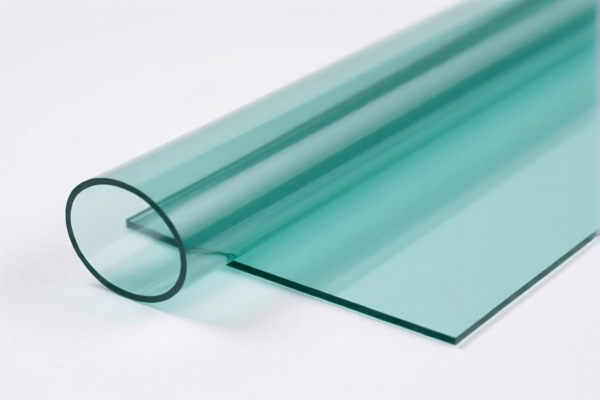
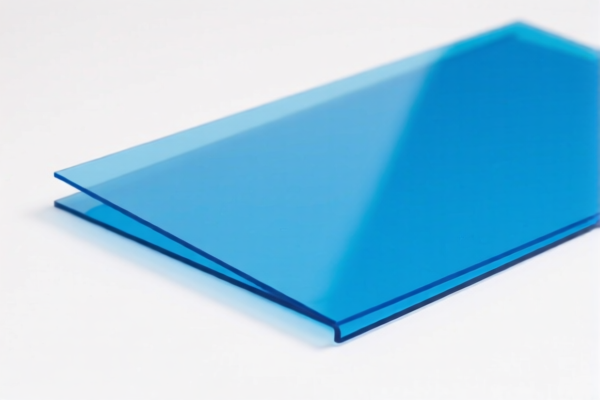

AI Analysis
🧪 Flexible PVC Sheet (Soft Polyvinyl Chloride)
🌐 HS Code Reference & Customs Clearance Guide | 2026 Latest Tariff Analysis | Professional Strategy for High-Tariff Goods
📌 I. Product Definition & Classification: Is it "Raw Material" or "Finished Product"?
Flexible PVC Sheets are versatile plastic materials characterized by the addition of plasticizers to rigid Polyvinyl Chloride (PVC), making them soft, pliable, and durable. In international trade, the classification hinges on one critical factor: Have they been processed into a specific form or remains in a primary/raw state?
Primary Form (Raw Resins/Granules/Liquids): Unprocessed PVC polymers ready for further manufacturing.
Semi-Finished/Finished Forms (Sheets/Films/Plates): PVC that has been extruded, calendered, or molded into specific shapes like sheets, films, or plates, often containing additives (plasticizers, stabilizers).
⚠️ Key Distinction Point:
- If the material is in the form of granules, pellets, or liquid resins without being shaped into a sheet/film → It is "Primary Form" → HS 3904.
- If the material is already manufactured into sheets, plates, films, or strips (even if soft/flexible) → It is "Other Forms" → HS 3920.
📦 II. HS Code Classification Details (2026 Latest Tariff Authority Comparison)
Based on the provided data, here is the precise breakdown for Flexible PVC Sheets:
| HS Code | Product Description | Application Scenario | Form Factor |
|---|---|---|---|
3920.43.50.00 |
Flexible PVC Material, Contains Plasticizers, Matches PVC Polymer Characteristics | Soft PVC sheets, liners, wallpaper backing, medical tubing components | ✅ Sheet/Film/Plate Form |
3920.49.00.00 |
Flexible PVC Material, Inferred as Sheets/Films, Vinyl Polymer Category | Generic flexible PVC sheets (non-specific subtype), industrial flooring | ✅ Sheet/Film/Plate Form |
3904.22.00.00 |
Flexible PVC Material, Primary Form PVC Polymer | PVC granules/powder that will become flexible PVC after plasticizer addition | ❌ Raw/Primary Form |
3904.10.00.00 |
Flexible PVC Material, Primordial/Primary Vinyl Polymer Products | Basic PVC resins/powders, pre-plasticizer state | ❌ Raw/Primary Form |
3920.43.50.00 |
(Duplicate) Flexible PVC, Contains Plasticizers | See above | ✅ Sheet/Film/Plate Form |
🔍 Critical Warning:
- Do NOT misclassify soft sheets as raw resin (3904) just because they are "flexible." If it is physically a sheet or film, it MUST be under 3920.
- The presence of plasticizers confirms it is "soft PVC," but the physical shape (sheet vs. pellet) determines the chapter/subheading difference between 3904 and 3920.
💰 III. 2026 Latest Tariff Rate Breakdown (Including Surcharges & Policy Add-ons)
✅ Applicable Country: United States (US)
✅ Country of Origin: China (CN)
✅ Effective Time: Current rates apply for imports from China
🎯 1. 3920.43.50.00 & 3920.49.00.00 —— Flexible PVC Sheets/Films (Finished/Semi-Finished)
These codes apply when the PVC is already formed into sheets, films, or plates.
| Item | Content |
|---|---|
| Base Tariff | 4.2% (for 3920.43.50.00) / 5.8% (for 3920.49.00.00) |
| Section 301 Tariff | +25.0% (Mandatory surcharge for Chinese goods) |
| Section 122 Tariff | +10.0% (Specific surcharge for certain plastic materials) |
| Total Effective Rate | 39.2% (for 3920.43.50.00) / 40.8% (for 3920.49.00.00) |
| Tax Calculation | CIF Value × Total Rate |
| De Minimis Exemption | ❌ Not Eligible (High tariff codes usually exclude small parcels from exemption) |
| Legal Basis Path | USITC:3920 → Section 301: Footnote 9903.88.01 → Section 122: Specific Plastic Rules |
📌 Explanation:
- Base Rate: Depends on the specific sub-classification of the sheet.
- 301 Tariff (25%): Applies to almost all plastic sheets/films from China.
- Section 122 (10%): An additional levy often applied to plastic materials under specific trade enforcement actions.
- Total Impact: You are paying nearly 40% tax on the value of your flexible PVC sheets.
🎯 2. 3904.22.00.00 & 3904.10.00.00 —— Primary Form PVC (Resins/Granules)
These codes apply if the "Flexible PVC" is actually raw material (e.g., granules mixed with plasticizers) that has NOT yet been extruded into a sheet.
| Item | Content |
|---|---|
| Base Tariff | 6.5% |
| Section 301 Tariff | +25.0% |
| Section 122 Tariff | +10.0% |
| Total Effective Rate | 41.5% |
| Tax Calculation | CIF Value × 41.5% |
| De Minimis Exemption | ❌ Not Eligible |
| Legal Basis Path | USITC:3904 → Section 301 → Section 122 |
📌 Explanation:
- Even though it's "raw," the 301 + 122 surcharges make the total tax 41.5%, which is higher than the sheet category (39.2%/40.8%).
- Strategic Insight: If your product is truly a sheet, try to classify under 3920 to save 0.7% - 1.7% vs. 3904, but the main driver is the 35% surcharge, not the base rate.
🛠️ IV. Customs Clearance Practical Advice (Operational Pitfall Guide)
✅ 1. Required Documentation Checklist (Non-Negotiable)
| Document | Mandatory? | Explanation |
|---|---|---|
| ✅ Product Specification Sheet | ✔️ | Must explicitly state: "Flexible PVC," "Plasticizer Content %," "Thickness," "Width." |
| ✅ Certificate of Composition | ✔️ | Detail the polymer type (PVC) and additives (Plasticizers). Crucial for distinguishing from rigid PVC or PE. |
| ✅ Product Photos | ✔️ | Show the sheet/film form. If it looks like a roll or sheet, it supports 3920. If it looks like a bag of powder, it supports 3904. |
| ✅ Commercial Invoice | ✔️ | Clearly describe as "Flexible PVC Sheet" or "Plasticized PVC Film," NOT just "PVC Material." |
| ✅ Bill of Lading/Air Waybill | ✔️ | Standard shipping docs. |
| ✅ FDA Compliance (If applicable) | ✔️ | If used for food contact or medical, provide FDA migration test results. |
✅ 2. Declaration Tips (Key Mantra)
🔥 “Form Determines Code, Plasticizer Defines Type, Surcharges Are Inevitable!”
| Scenario | Correct Declaration | Wrong Practice |
|---|---|---|
| Soft PVC Rolls/Sheets | 3920.43.50.00 or 3920.49.00.00 |
Misdeclaring as 3904 (Raw) → Audit risk for misclassification |
| PVC Granules for Soft PVC | 3904.22.00.00 |
Misdeclaring as 3920 (Sheet) → Rejected by customs (form mismatch) |
| Mixed Package (Sheet + Granules) | Split Declaration | Bundling together → Complex duty calculation, potential penalty |
| Non-China Origin | Check FTA Rates | Assume 40% tax → Missed opportunity for duty reduction if from Vietnam/Mexico |
✅ 3. Special Situation Handling
| Situation | Handling Advice |
|---|---|
| OEM Custom Sheets | Provide print proofs/design files to prove "finished product" status if challenged. |
| Recycled PVC | Ensure "Recycled" is declared. May have different environmental regulations but same HS base. |
| Food-Grade Flexible PVC | Must provide FDA 21 CFR 177.1680 compliance statement. Without it, customs may hold shipment for safety checks. |
| High Plasticizer Content | If plasticizer >30%, ensure label says "Plasticized PVC" to support 3920.43/49. |
🌍 V. Global Main Market Customs Comparison (2026 Latest)
| Country/Region | Recommended HS Code | Tariff (China Origin) | Certification Requirement | Notes |
|---|---|---|---|---|
| 🇺🇸 USA | 3920.43.50.00 |
39.2% | FDA (if contact) | High Surcharge (35%) makes this very expensive. |
| 🇨🇳 China | 3920.43.50.00 |
0% - 5% | No specific import tax for self-use | No 301/122 tariffs. |
| 🇪🇺 EU | 3920.43.50.00 |
6.5% - 7.5% | REACH Compliance | No "Section 301" equivalent, but REACH registration is costly. |
| 🇬🇧 UK | 3920.43.50.00 |
6.5% | UKCA (if regulated) | Post-Brexit rules apply. |
| 🇯🇵 Japan | 3920.43.50.00 |
6.0% - 8.0% | JIS Standards | Competitive tariff compared to US. |
📌 Conclusion:
- The USA is the most expensive market for Flexible PVC due to Section 301 (25%) + Section 122 (10%).
- Europe and Asia have significantly lower tariffs but require strict chemical compliance (REACH/JIS).
- Strategy: If exporting to the US, consider transshipment or assembly in a third country (like Vietnam or Mexico) if eligible, to avoid the 35% surcharge.
📌 VI. Common Errors & Pitfall Guide (Lessons Learned)
❌ Error 1: Declaring "Flexible PVC Sheet" as 3904.10.00.00 (Raw Resin)
👉 Consequence: Customs may reject it because the physical form (sheet) does not match "primary form." Penalty for misdeclaration.
❌ Error 2: Ignoring Section 122 Tariff
👉 Consequence: Underpaying by 10% → Back taxes + Interest + Fine.
❌ Error 3: Failing to declare Plasticizer Content
👉 Consequence: Customs may classify as "Rigid PVC" or refuse entry due to lack of safety data (phthalates concerns).
❌ Error 4: Using "Plastic Material" as generic description
👉 Consequence: Delays for additional inspection. Need precise chemical composition.
✅ Correct Practice:
"Flexible Polyvinyl Chloride (PVC) Sheet, Plasticized, Thickness 1.5mm, Width 1.2m, Used for Waterproof Liner, Model PVC-F-1500, FDA Compliant"
🎯 VII. Conclusion: Professional Declaration, Cost Control, Efficiency!
🎯 Remember the Mantra:
🔹 “Form is King: Sheet = 3920, Granule = 3904.”
🔹 “Surcharge is Law: 301 (25%) + 122 (10%) = 35% Extra Tax for US Imports.”
🔹 “Total Cost is ~40%: Plan your margin accordingly.”
📌 Pro Tip:
If your Flexible PVC is not originally from China (e.g., produced in Vietnam, Thailand, or Malaysia), you may qualify for lower or zero Section 301/122 tariffs.
Action:
📞 Consult a customs broker for Country of Origin Verification.
🚀 Evaluate Supply Chain Restructuring to avoid the high US tariffs.
📣 Immediate Action:
📋 Ensure your Commercial Invoice clearly states "Flexible PVC Sheet" and "Plasticized".
📄 Have Technical Data Sheets ready to prove the physical form (Sheet vs. Resin).
💰 Calculate your landed cost including the ~40% effective duty rate.
✨ Professional Clearance Starts with Precise Classification!
💼 Your Bottom Line Depends on the Last Digit of the HS Code!
Customer Reviews
About HS Code Classification
The Harmonized System (HS) is an internationally standardized nomenclature developed by the World Customs Organization (WCO) to classify traded products. Over 200 countries use the HS system as the basis for customs tariffs, trade statistics, and import/export regulations.
Each HS code follows a hierarchical structure:
- Chapter (2 digits) — Broad category of goods (e.g., Chapter 84: Machinery and Mechanical Appliances)
- Heading (4 digits) — More specific grouping within the chapter
- Subheading (6 digits) — Internationally standardized breakdown, used by all WCO member countries
- National subdivisions (8-10 digits) — Country-specific extensions for further classification, such as US HTSUS 10-digit codes
Correct HS code classification is essential for smooth customs clearance, accurate duty payment, and compliance with trade regulations. Misclassification can lead to customs delays, overpayment of duties, or penalties.
When importing from CN to US, the applicable tariff rates may include:
- Most-Favored-Nation (MFN) rate — The standard duty rate applied to WTO members
- General rate — Applied to countries without trade agreements
- Trade remedy duties — Additional tariffs such as Section 301 (anti-dumping), Section 232 (national security), or countervailing duties
The information provided on this page is for reference purposes only. For official classification, please consult with your local customs authority or a licensed customs broker.