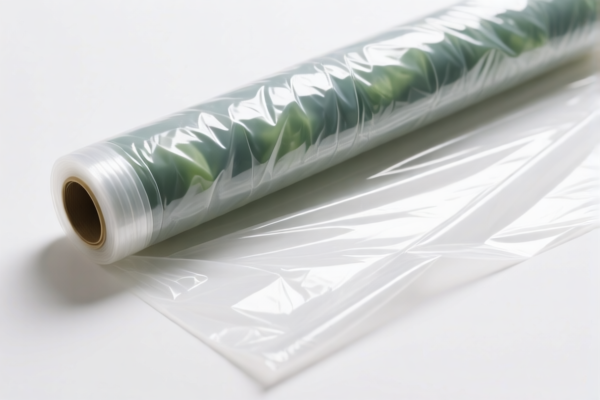
Flexible Plastic Agricultural Film
CN → US| HS Code | Tariff Rate | Origin | Destination | Doc |
|---|---|---|---|---|
| 3920992000 | 39.2% | CN | US | Official Doc |
| 3921905050 | 39.8% | CN | US | Official Doc |
| 3921190010 | 41.5% | CN | US | Official Doc |
| 3920620090 | 39.2% | CN | US | Official Doc |
Product Images



AI Analysis
🌾 Flexible Plastic Agricultural Film (PET-Based)
🌐 HS Code Reference & Customs Clearance Guide | 2026 Tariff Analysis | Strategic Compliance Strategy
📌 I. Product Definition & Classification: Is It Just "Plastic Film"?
Flexible plastic agricultural film, specifically those made from Polyethylene Terephthalate (PET) or Polyester, is a high-strength, transparent, or opaque film used in farming for mulching, greenhouse covers, and crop protection. Unlike traditional polyethylene (PE) films, PET films offer superior durability, tear resistance, and UV stability.
In international trade, the classification depends heavily on the specific chemical composition and physical characteristics defined by the Harmonized System (HS). The key distinction lies in whether the film is classified under "Plates, Sheets, Film, Foil and Strip" of Heading 39.20 (non-cellular, non-reinforced) or Heading 39.21 (other plates, sheets, film, foil and strip).
⚠️ Critical Distinction Point:
- 3920.99.20.00 / 3920.62.00.90: Typically covers flexible films that are non-cellular and not reinforced with materials like metal or fabric, often categorized under "Other plastics" or specific polyester types.
- 3921.90.50.50 / 3921.19.00.10: Covers films that may have specific modifications, laminations, or characteristics that place them in the "Other" or more specific sub-categories of Heading 39.21, often implying a different manufacturing process or end-use specification.
📦 II. HS Code Classification Details (2026 Latest Tariff Authority Cross-Reference)
| HS Code | Product Description | Application Scenario | Key Characteristics |
|---|---|---|---|
3920.99.20.00 |
Flexible plastic agricultural film, material: Polyester (PET), form: Film, classified as flexible membrane of non-cellular, non-reinforced plastic. | High-strength mulch films, general agricultural covers. | Non-cellular, flexible, PET base. |
3921.90.50.50 |
Flexible plastic agricultural film, material: Polyester/Plastic, form: Film, meeting requirements for other plastic plates, sheets, films, foils, and strips. | Specialty agricultural films with specific structural properties. | Fits "Other plastic sheet/film" category. |
3921.19.00.10 |
Flexible plastic agricultural film, material: Polyester, form: Film, meeting characteristics of plates, sheets, films, and foils. | Films with specific thickness or surface treatment meeting HS 39.21 criteria. | Specific "Plate/Sheet/Film" definition. |
3920.62.00.90 |
Flexible plastic agricultural film, material: Polyethylene Terephthalate (PET), form: Film, not belonging to the metalized category. | Standard clear or pigmented PET films for agriculture. | Explicitly Non-Metalized. |
🔍 Key Reminder:
- Metalized Films are excluded from3920.62.00.90. If the film has a metallic coating (e.g., for reflective properties), it must be classified elsewhere (often under 3920.62.00.10 or similar, depending on local tariffs).
- Non-Cellular vs. Cellular: All HS codes listed below assume non-cellular (solid, not foamed) films. Cellular films fall under different sub-headings.
- Reinforcement: If the film is reinforced with glass fibers, carbon fibers, or other materials, it may not qualify for 3920 and must go to 3921 or other headings.
💰 III. 2026 Latest Tariff Rate Breakdown (Including Surcharge Policies)
✅ Applicable Country: United States (US)
✅ Origin: China (CN)
✅ Effective Date: From November 10, 2025 (including subsequent imports)
🎯 1. 3920.99.20.00 — Flexible Plastic Agricultural Film (PET, Non-Cellular, Non-Reinforced)
| Item | Content |
|---|---|
| Base Duty Rate | 4.2% (Ad Valorem) |
| Section 301 Surcharge | +25.0% (Based on USITC List 4A) |
| Section 122 Tariff | +10.0% (Specific agricultural/trade measure) |
| Total Duty Rate | 39.2% |
| Tax Calculation | CIF Value × 39.2% |
| De Minimis Eligibility | ❌ Not Eligible (High total duty rate exceeds threshold for exemption in many cases, and specific agricultural products are often excluded from Section 321 benefits if duties are high) |
| Legal Basis Path | USITC:3920.99.20.00 → SECTION301:4A → SECTION122:AGRI |
📌 Explanation:
- The 25% Section 301 tariff applies to all Chinese-made PET films due to broader industrial policy.
- The 10% Section 122 tariff is a specific agricultural/trade measure often applied to plastic films used in agriculture to protect domestic manufacturers.
- Total 39.2% is a significant cost factor. Importers must calculate this into their landed cost.
🎯 2. 3921.90.50.50 — Other Plastic Agricultural Film (PET/Plastic)
| Item | Content |
|---|---|
| Base Duty Rate | 4.8% (Ad Valorem) |
| Section 301 Surcharge | +25.0% |
| Section 122 Tariff | +10.0% |
| Total Duty Rate | 39.8% |
| Tax Calculation | CIF Value × 39.8% |
| De Minimis Eligibility | ❌ Not Eligible |
| Legal Basis Path | USITC:3921.90.50.50 → SECTION301:4A → SECTION122:AGRI |
📌 Note:
- Slightly higher base rate (4.8% vs 4.2%) due to being classified under "Other" plastics.
- Same surcharges apply. Total tax burden is marginally higher than 3920.99.20.00.
🎯 3. 3921.19.00.10 — Polyester Film (Plates/Sheets/Film Characteristic)
| Item | Content |
|---|---|
| Base Duty Rate | 6.5% (Ad Valorem) |
| Section 301 Surcharge | +25.0% |
| Section 122 Tariff | +10.0% |
| Total Duty Rate | 41.5% |
| Tax Calculation | CIF Value × 41.5% |
| De Minimis Eligibility | ❌ Not Eligible |
| Legal Basis Path | USITC:3921.19.00.10 → SECTION301:4A → SECTION122:AGRI |
📌 Warning:
- This classification has the highest base rate (6.5%) among the listed options.
- Total Tax: 41.5%. This is the most expensive option for this product.
- Misclassification here (e.g., when it should be 3920) can lead to overpayment, but underpayment penalties are severe.
🎯 4. 3920.62.00.90 — PET Film (Non-Metalized)
| Item | Content |
|---|---|
| Base Duty Rate | 4.2% (Ad Valorem) |
| Section 301 Surcharge | +25.0% |
| Section 122 Tariff | +10.0% |
| Total Duty Rate | 39.2% |
| Tax Calculation | CIF Value × 39.2% |
| De Minimis Eligibility | ❌ Not Eligible |
| Legal Basis Path | USITC:3920.62.00.90 → SECTION301:4A → SECTION122:AGRI |
📌 Note:
- Same total tax as3920.99.20.00.
- Specific mention of "Not Metalized" is critical. If the film is metalized, it cannot use this code.
- Preferred for standard, clear, or pigmented (non-metallic) PET agricultural films.
🛠️ IV. Customs Clearance Practical Advice (Battle-Tested Pitfall Avoidance)
✅ 1. Required Documentation Checklist (Non-Negotiable)
| Document | Required | Description |
|---|---|---|
| ✅ Product Specification Sheet | ✔️ | Must explicitly state: Material (PET/Polyester), Thickness, Width, Length, Non-Metalized status, Non-cellular, Non-reinforced. |
| ✅ Commercial Invoice | ✔️ | Must clearly describe item as "Flexible Plastic Agricultural Film, PET, Non-Metalized." Avoid vague terms like "Plastic Sheet." |
| ✅ Packing List | ✔️ | Detail rolls, cores, and packaging material. |
| ✅ Certificate of Origin (CO) | ✔️ | Essential for origin verification. If not China, may avoid Section 301 tariffs. |
| ✅ Material Safety Data Sheet (MSDS) | ✔️ | For customs safety checks, especially if treated with chemicals. |
| ✅ Photos of Product & Labels | ✔️ | Show roll ends, label details, and any branding. |
✅ 2. Declaration Tips (Key Mnemonics)
🔥 “Specify Material, Deny Metal, Confirm Non-Cellular!”
| Scenario | Correct Declaration | Wrong Practice |
|---|---|---|
| Standard Clear PET Film | 3920.62.00.90 or 3920.99.20.00 |
Using 3921 codes without justification → 41.5% tax |
| Metalized Reflective Film | NOT 3920.62.00.90 |
Using 3920.62.00.90 for metalized film → Seizure/Fine |
| Reinforced Film (Fiberglass) | 3921.XX.XX.XX (Different sub-heading) |
Using 3920 codes → Misclassification |
| Cellular (Foamed) Film | Different Heading (e.g., 3921.12.xx) | Using 3920/3921 "non-cellular" codes → Penalty |
⚠️ Critical Warning:
- Do NOT use "Agricultural Film" alone in the description. Always specify Material (PET/Polyester) and Form (Non-Metalized, Flexible).
- If the film is metalized, you cannot use3920.62.00.90. You must find the correct metalized plastic film code (often higher duty or different treatment).
✅ 3. Special Cases Handling
| Scenario | Handling Advice |
|---|---|
| OEM/Private Label Films | Provide OEM agreement and spec sheet. Ensure HS code is based on physical properties, not brand. |
| Reinforced Films | If reinforced with glass/carbon fiber, re-evaluate classification. May fall under 3921 or even 54.07/55.01 if woven. |
| Multi-Layer Films | If laminated with other plastics, use the principal material rule or specific HS note for laminates. |
| Recycled PET Film | May have different environmental certifications required. Ensure "Recycled Content" is declared if claiming green benefits. |
🌍 V. Global Market Comparison (2026 Latest)
| Country/Region | Recommended HS Code | Duty Rate (China Origin) | Certification Requirements | Notes |
|---|---|---|---|---|
| 🇺🇸 USA | 3920.62.00.90 / 3920.99.20.00 |
39.2% | FDA (if food contact), CPSIA | Section 301 + 122 apply. High cost. |
| 🇨🇳 China | 3920.62.00.90 |
5-10% | None | Low duty for import into China. |
| 🇪🇺 EU | 3920.62.00.90 |
6.5% | REACH, RoHS | No Section 301 equivalent, but REACH compliance is strict. |
| 🇬🇧 UK | 3920.62.00.90 |
6.5% | UKCA, REACH | Post-Brexit rules. |
| 🇯🇵 Japan | 3920.62.00.90 |
0-3% | PSE (if electrical), JIS | Low duty, high quality standards. |
📌 Conclusion:
- USA is the most expensive market for Chinese PET agricultural films due to Section 301 + 122 tariffs.
- EU/UK/Japan have significantly lower base duties but stricter environmental/chemical regulations (REACH, etc.).
📌 VI. Common Errors & Pitfalls (Lessons Learned)
❌ Error 1: Describing the product simply as "Plastic Film"
👉 Consequence: Customs cannot determine exact HS code → Delay, detention, potential re-classification with higher duty.
❌ Error 2: Using 3920.62.00.90 for Metalized Film
👉 Consequence: Misdeclaration. Penalties, fines, and possible seizure of goods. Metalized films have different HS codes.
❌ Error 3: Ignoring the Non-Cellular distinction
👉 Consequence: If the film is foamed (cellular), it belongs in a different sub-heading. Misclassification leads to incorrect duty calculation.
❌ Error 4: Not disclosing Reinforcement
👉 Consequence: If the film is reinforced, it may not qualify for 3920. This is a material fact that must be disclosed.
✅ Correct Practice:
"Flexible Plastic Agricultural Film, Material: Polyethylene Terephthalate (PET), Non-Metalized, Non-Cellular, Non-Reinforced, Width: 2.0m, Thickness: 0.1mm, Roll Width: 500m"
🎯 VII. Conclusion: Precision Classification, Cost Optimization!
🎯 Remember the Mantra:
🔹 "PET is Key, Metal is the Trap, Non-Cellular is the Rule!"
🔹 "USA Duty is 39.2%, Think Before You Ship!"
🔹 "Clear Description Saves Money, Vague Description Costs Thousands!"
📌 Pro Tip:
If your film is not from China (e.g., sourced from Vietnam, India, or Turkey), you may avoid Section 301 tariffs (25%) and Section 122 tariffs (10%), reducing the total duty to just the base rate (4.2%-6.5%).
Strategy: Evaluate supply chain diversification to reduce tax burden significantly.
📣 Immediate Action:
📞 Consult with a licensed customs broker + Provide detailed product specs + Verify material composition (PET vs. PE, Metalized vs. Non-Metalized)
🚀 Optimize your supply chain, ensure compliance, and maximize profit margins!
✨ Professional Clearance Starts with Accurate Classification!
💼 Every percentage point of duty counts!
Customer Reviews
About HS Code Classification
The Harmonized System (HS) is an internationally standardized nomenclature developed by the World Customs Organization (WCO) to classify traded products. Over 200 countries use the HS system as the basis for customs tariffs, trade statistics, and import/export regulations.
Each HS code follows a hierarchical structure:
- Chapter (2 digits) — Broad category of goods (e.g., Chapter 84: Machinery and Mechanical Appliances)
- Heading (4 digits) — More specific grouping within the chapter
- Subheading (6 digits) — Internationally standardized breakdown, used by all WCO member countries
- National subdivisions (8-10 digits) — Country-specific extensions for further classification, such as US HTSUS 10-digit codes
Correct HS code classification is essential for smooth customs clearance, accurate duty payment, and compliance with trade regulations. Misclassification can lead to customs delays, overpayment of duties, or penalties.
When importing from CN to US, the applicable tariff rates may include:
- Most-Favored-Nation (MFN) rate — The standard duty rate applied to WTO members
- General rate — Applied to countries without trade agreements
- Trade remedy duties — Additional tariffs such as Section 301 (anti-dumping), Section 232 (national security), or countervailing duties
The information provided on this page is for reference purposes only. For official classification, please consult with your local customs authority or a licensed customs broker.