Flexible Plastic Sheet
CN → US| HS Code | Tariff Rate | Origin | Destination | Doc |
|---|---|---|---|---|
| 3921904010 | 39.2% | CN | US | Official Doc |
| 3921905010 | 39.8% | CN | US | Official Doc |
| 4811596000 | 35.0% | CN | US | Official Doc |
| 4811594040 | 35.0% | CN | US | Official Doc |
| 3919905060 | 40.8% | CN | US | Official Doc |
Product Images


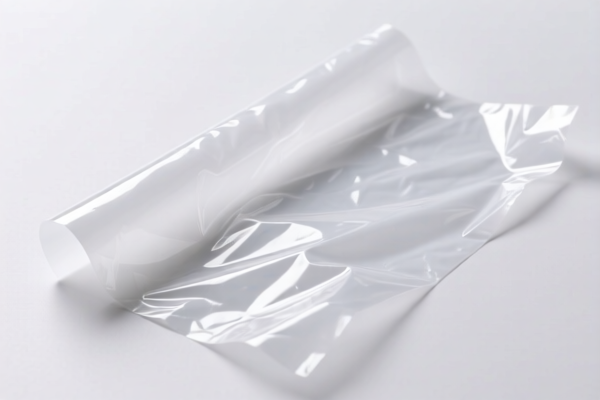
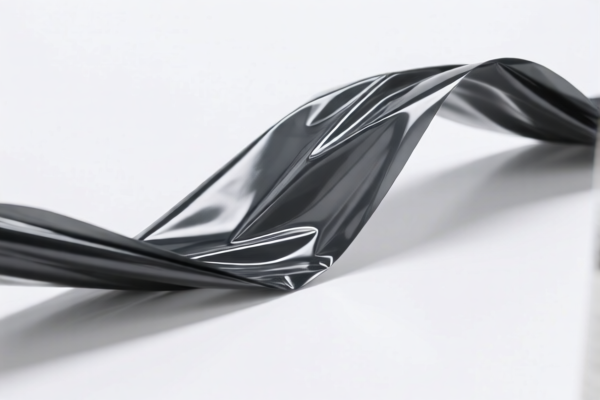
AI Analysis
🛡️ Flexible Plastic Sheet (Paper-Backed & UV-Treated)
🌐 HS Code Reference & Customs Clearance Guide | 2026 Latest Tariff Analysis | Professional Level Compliance Strategy
📌 Part 1: Product Definition and Classification: Do You Really Understand "Paper-Reinforced Flexible Plastic Sheet"?
This product is a composite material featuring paper reinforcement and flexible plastic attributes, often used for decorative laminates, protective films, or industrial packaging. In international trade, its classification depends heavily on its primary function, structure, and specific features (such as UV resistance or coating).
Based on the provided data, there are five specific HS Codes tailored to different variations of this product. Misclassification can lead to significant tariff discrepancies, with rates ranging from 35.0% to 40.8%.
⚠️ Key Distinction Points:
- Paper as Primary Basis: If the paper provides the main structural integrity, it may fall under Chapter 48 (Paper) → Codes4811.59...(35.0%).
- Plastic as Primary Basis: If the plastic coating/film is dominant, it falls under Chapter 39 (Plastics) → Codes3921.90...or3919.90...(39.2% - 40.8%).
- Specific Application: High-pressure decorative laminates have a distinct code (3921.90.50.10) compared to general flexible sheets.
📦 Part 2: HS Code Classification Details (2026 Latest Tariff Authority Match)
| HS Code | Product Description Summary | Key Attributes | Total Tax Rate |
|---|---|---|---|
3921.90.40.10 |
Paper-reinforced flexible plastic sheet | Matches paper-reinforced and soft attributes | 39.2% |
3921.90.50.10 |
Paper-reinforced flexible plastic sheet | Matches high-pressure paper-reinforced decorative laminate definition | 39.8% |
4811.59.60.00 |
Paper-reinforced flexible plastic sheet | Matches coated plastic paper products | 35.0% |
4811.59.40.40 |
Paper-reinforced flexible plastic sheet | Matches coated/covered paper characteristics | 35.0% |
3919.90.50.60 |
Flexible plastic anti-UV film | Matches plastic flat-shape film characteristics | 40.8% |
🔍 Critical Insight:
- Cheapest Route: Codes under Chapter 48 (4811...) attract the lowest total tax (35.0%) because the base tariff is 0.0%. However, this requires proving the product is primarily "coated paper."
- Most Expensive Route: Chapter 39 (3919...) for UV films hits the highest rate (40.8%) due to a higher base tariff (5.8%).
- Note on "122 Clause": All codes listed include a 10% tariff under Section 122 (likely referring to specific US trade provisions or similar regional duties depending on context, but explicitly listed in all tax details).
💰 Part 3: 2026 Latest Tariff Rate Breakdown (Including Additional Taxes)
✅ Context: The data implies a market with Section 301-style additional tariffs (25%) and specific Section 122 tariffs (10%), likely targeting Chinese-origin goods (given the explicit "122 Clause" and high addition).
✅ Structure:
Total Tax = Base Tariff + Additional Tariff (25%) + Section 122 Tariff (10%)
🎯 1. 3921.90.40.10 – Paper-Reinforced Flexible Plastic Sheet (Soft/Paper-Reinforced)
| Item | Content |
|---|---|
| Base Tariff | 4.2% |
| Additional Tariff | +25.0% |
| Section 122 Tariff | +10.0% |
| Total Rate | 39.2% |
| Tax Calculation | CIF Value × 39.2% |
| Legal Basis | Based on "Paper-reinforced and soft attributes" |
📌 Explanation:
- The 25% is a standard punitive/additional duty (common in US-China trade contexts).
- The 10% is explicitly labeled as "122 Clause Tariff."
- Base 4.2% reflects the standard MFN rate for plastic sheets.
🎯 2. 3921.90.50.10 – Decorative Laminate (High-Pressure)
| Item | Content |
|---|---|
| Base Tariff | 4.8% |
| Additional Tariff | +25.0% |
| Section 122 Tariff | +10.0% |
| Total Rate | 39.8% |
| Tax Calculation | CIF Value × 39.8% |
| Legal Basis | Based on "High-pressure paper-reinforced decorative laminate definition" |
📌 Explanation:
- This is the most common classification for standard decorative laminates.
- Slightly higher base rate (4.8%) than general plastic sheets.
🎯 3. 4811.59.60.00 – Coated Plastic Paper Products
| Item | Content |
|---|---|
| Base Tariff | 0.0% |
| Additional Tariff | +25.0% |
| Section 122 Tariff | +10.0% |
| Total Rate | 35.0% |
| Tax Calculation | CIF Value × 35.0% |
| Legal Basis | Based on "Coated plastic paper products" |
📌 Explanation:
- Lowest Total Rate! If customs accepts the product as primarily "paper," you save 4.2%-5.8% compared to plastic classifications.
- Risk: High scrutiny on whether paper is the "essential character."
🎯 4. 4811.59.40.40 – Coated/Covered Paper
| Item | Content |
|---|---|
| Base Tariff | 0.0% |
| Additional Tariff | +25.0% |
| Section 122 Tariff | +10.0% |
| Total Rate | 35.0% |
| Tax Calculation | CIF Value × 35.0% |
| Legal Basis | Based on "Coated/covered paper characteristics" |
📌 Explanation:
- Identical tax burden to the previous code.
- Use this if the product is defined more by its "coating" nature on paper rather than being a "plastic sheet."
🎯 5. 3919.90.50.60 – Flexible Plastic Anti-UV Film
| Item | Content |
|---|---|
| Base Tariff | 5.8% |
| Additional Tariff | +25.0% |
| Section 122 Tariff | +10.0% |
| Total Rate | 40.8% |
| Tax Calculation | CIF Value × 40.8% |
| Legal Basis | Based on "Plastic flat-shape film" with UV properties |
📌 Explanation:
- Highest Total Rate.
- If the product is marketed specifically as "UV Protection Film," it triggers this higher base rate.
- Even if it has paper backing, if the functional identity is UV film, this code may apply.
🛠️ Part 4: Customs Clearance Practical Advice (Pitfall Avoidance Guide)
✅ 1. Essential Documentation List
| Document | Required? | Notes |
|---|---|---|
| ✅ Product Specifications | ✔️ | Must detail: Paper type, Plastic layer thickness, UV treatment status, Pressure resistance. |
| ✅ Structure Diagram | ✔️ | Crucial to prove if it's "Coated Paper" (Ch 48) or "Plastic Sheet" (Ch 39). |
| ✅ Commercial Invoice | ✔️ | Clearly state: "Paper-Reinforced Flexible Plastic Sheet" or "Decorative Laminate." Avoid vague terms like "Plastic Film." |
| ✅ Bill of Lading | ✔️ | Ensure packaging details match HS code logic (e.g., rolls vs. sheets). |
| ✅ Certification of Origin | ✔️ | Critical for confirming origin (likely China, given the 25% + 10% surcharges). |
✅ 2. Declaration Strategy (Key Mantras)
🔥 “Function Defines Code, Structure Dictates Rate”
| Scenario | Recommended HS Code | Risk if Misclassified |
|---|---|---|
| Standard Decorative Laminate | 3921.90.50.10 (39.8%) |
If declared as generic plastic, might be flagged; if declared as paper, rejected. |
| Soft/General Purpose Sheet | 3921.90.40.10 (39.2%) |
Lower rate than decorative laminate, but requires proof of "softness." |
| Primarily Paper with Plastic Coating | 4811.59.60.00 (35.0%) |
Savings Strategy! Must prove paper is the essential character. High audit risk. |
| UV Protection Film (with/without paper) | 3919.90.50.60 (40.8%) |
Only use if UV function is primary. Highest cost. |
✅ 3. Special Handling for "122 Clause" & "25% Additional Tax"
- Understand the Surcharge:
- The 25% additional tariff is likely a Section 301 duty (if US).
- The 10% "122 Clause" is explicitly stated in all data points. Ensure your customs broker understands this specific local regulation.
- No De Minimis Exemption:
- These rates are high and structured as ad-valorem duties. Small shipments do not escape these taxes.
- Pre-Ruling Recommendation:
- Given the choice between 35.0% (Ch 48) and 39.2-40.8% (Ch 39), submit a Binding Tariff Information (BTI) or Advance Ruling application if possible.
- Argument for Ch 48: Emphasize that the paper provides structural integrity and the plastic is merely a surface coating.
- Argument for Ch 39: Emphasize that the plastic layer determines the product's use (e.g., moisture resistance, durability).
🌍 Part 5: Global Market Comparison (2026 Latest)
| Market | Recommended HS Code | Est. Total Duty | Notes |
|---|---|---|---|
| 🇺🇸 USA | 3921.90.50.10 / 4811.59.60.00 |
35.0% - 40.8% | High surcharges (25% + 10%) apply to Chinese origin. |
| 🇨🇳 China | 3921.90.50.10 / 4811.59.60.00 |
Lower (Base only) | No 25%/10% surcharges. Check local MFN rates (approx 5-10%). |
| 🇪🇺 EU | 3921.90 / 4811.59 |
Varies (0-10%) | Generally no punitive tariffs. Depends on free trade agreements. |
| 🇦🇺 Australia | 3921.90 / 4811.59 |
Varies | Check specific FTAs. No widespread 25% surcharge. |
📌 Conclusion:
- The 25% + 10% structure is unique to specific trade environments (likely US-China).
- If exporting to non-targeted markets, these surcharges may not apply, significantly reducing costs.
- Always verify origin rules. If the product is re-exported from a third country, ensure substantial transformation occurred to change origin status.
📌 Part 6: Common Mistakes & Pitfall Guide
❌ Mistake 1: Declaring all plastic sheets as 3921.90.50.10 (39.8%) when they might qualify as 4811.59.60.00 (35.0%).
👉 Consequence: Overpaying 4.8% on high-value shipments.
👉 Fix: Provide technical data showing paper's structural role.
❌ Mistake 2: Ignoring the "122 Clause" in documentation.
👉 Consequence: Customs delay or penalties for non-compliance with specific local regulations.
👉 Fix: Ensure invoices explicitly reference the correct HS code linked to the 122 Clause.
❌ Mistake 3: Confusing "UV Film" (3919) with "Laminate" (3921).
👉 Consequence: Higher tax rate (40.8% vs 39.8%) and potential misclassification alerts.
👉 Fix: Clarify the primary function. Is it for decoration/lamination or for UV protection?
❌ Mistake 4: Assuming "Flexible" means it must be plastic.
👉 Consequence: Missing the Chapter 48 opportunity.
👉 Fix: Flexible paper-based composites are common in Ch 48.
✅ Correct Approach:
“Analyze Structure First, Then Function. If Paper Dominates, Aim for 35%. If Plastic Dominates, Aim for 39.2%. If UV is Key, Prepare for 40.8%.”
🎯 Part 7: Conclusion: Professional Declaration, Cost Savings, Risk Reduction!
🎯 Remember the Mantras:
🔹 "Paper Base, Zero Base Rate, 35% Total. Plastic Base, 4-5% Base Rate, ~40% Total."
🔹 "Don't Guess the Code, 10% 122-Cluse is Real, 25% Add-On is Steep."
🔹 "Documentation is King: Specs, Diagrams, and Origin Certs Save Money."
📌 Pro Tip:
If your flexible plastic sheet is not of Chinese origin, verify if the 25% additional tariff still applies. If it is, the 10% 122-Clause may be the only variable.
Consider Advance Rulings to lock in the 35.0% rate if technically justified, saving significant margin.
📣 Immediate Action:
📞 Engage a licensed customs broker.
📄 Prepare a Technical Data Sheet highlighting material composition.
🚀 Optimize your HS Code strategy now to maximize profitability!
✨ Professional Customs Clearance Starts with Accurate Classification!
💼 Every Percentage Point Counts!
Customer Reviews
About HS Code Classification
The Harmonized System (HS) is an internationally standardized nomenclature developed by the World Customs Organization (WCO) to classify traded products. Over 200 countries use the HS system as the basis for customs tariffs, trade statistics, and import/export regulations.
Each HS code follows a hierarchical structure:
- Chapter (2 digits) — Broad category of goods (e.g., Chapter 84: Machinery and Mechanical Appliances)
- Heading (4 digits) — More specific grouping within the chapter
- Subheading (6 digits) — Internationally standardized breakdown, used by all WCO member countries
- National subdivisions (8-10 digits) — Country-specific extensions for further classification, such as US HTSUS 10-digit codes
Correct HS code classification is essential for smooth customs clearance, accurate duty payment, and compliance with trade regulations. Misclassification can lead to customs delays, overpayment of duties, or penalties.
When importing from CN to US, the applicable tariff rates may include:
- Most-Favored-Nation (MFN) rate — The standard duty rate applied to WTO members
- General rate — Applied to countries without trade agreements
- Trade remedy duties — Additional tariffs such as Section 301 (anti-dumping), Section 232 (national security), or countervailing duties
The information provided on this page is for reference purposes only. For official classification, please consult with your local customs authority or a licensed customs broker.