Flexible Polyester Film for Electronic Components
CN → US| HS Code | Tariff Rate | Origin | Destination | Doc |
|---|---|---|---|---|
| 4821904000 | 35.0% | CN | US | Official Doc |
| 3919905040 | 40.8% | CN | US | Official Doc |
| 3919905060 | 40.8% | CN | US | Official Doc |
| 3921904090 | 39.2% | CN | US | Official Doc |
| 3921190090 | 41.5% | CN | US | Official Doc |
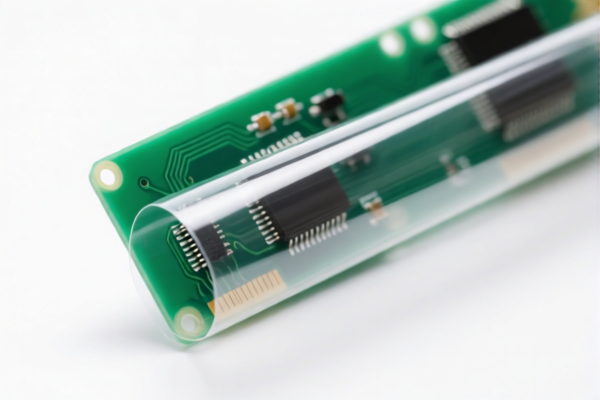
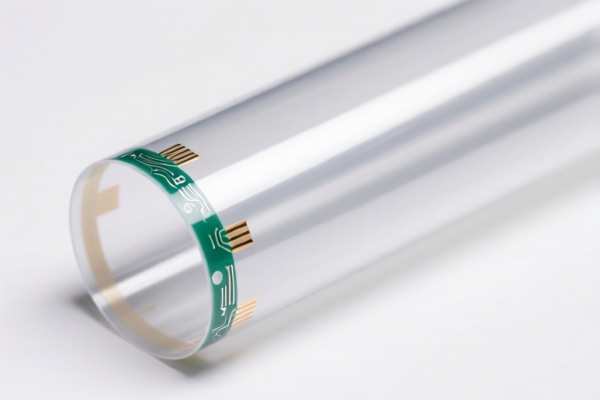
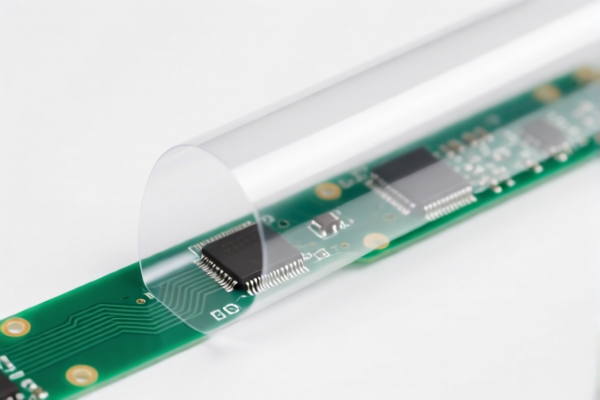
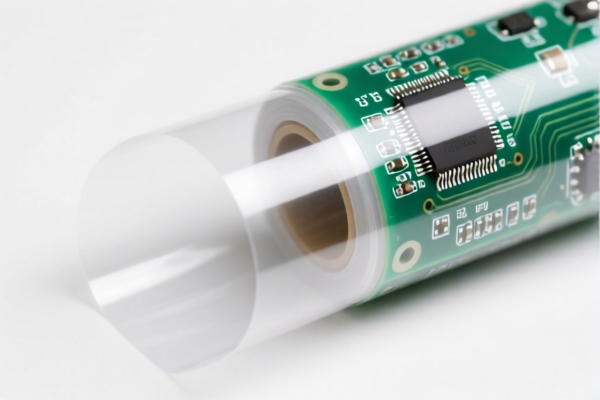
Product Images
AI Analysis
🏷️ Flexible Polyester Film for Electronic Components (Labels)
🌐 HS Code Reference & Customs Clearance Guide | 2026 Latest Tariff Analysis | Professional Compliance Strategy
📌 I. Product Definition & Classification: What Exactly Are We Importing?
Flexible Polyester Film Labels are self-adhesive labels made from polyester film (PET), widely used in the electronics industry for component identification, serialization, branding, and technical specifications.
In international trade, these products sit at the intersection of paper products (if considered label materials) and plastics (if considered self-adhesive films). The correct classification hinges on two factors: 1. Material Composition: Primarily Polyester (PET). 2. Physical Form: Self-adhesive, flexible, sheet/film format.
⚠️ Key Distinction Point:
- If the product is classified under Chapter 48 (Paper/Paperboard), it is treated as a "label" material.
- If classified under Chapter 39 (Plastics), it is treated as a "self-adhesive plastic film."
- Crucial Note: Since the base material is Polyester (a plastic polymer), customs authorities often prefer the Plastic (Chapter 39) classification unless specific labeling exemptions apply. However, HS 4821.90.40.00 exists specifically for labels, creating a competitive classification scenario.
📦 II. HS Code Classification Details (2026 Latest Tariff Authority Cross-Reference)
| HS Code | Product Description | Application Scenario | Classification Basis |
|---|---|---|---|
| 4821.90.40.00 | Flexible Polyester Film Label | General labeling, electronic component tagging | Classified under Chapter 48 as "Labels" |
| 3919.90.50.40 | Flexible Polyester Film Label (Plastic Category A) | Self-adhesive plastic film, specific sub-category | Plastic self-adhesive film, specific sub-code |
| 3919.90.50.60 | Flexible Polyester Film Label (Plastic Category B) | Self-adhesive plastic film, generic sub-category | Plastic self-adhesive film, broader sub-code |
| 3921.90.40.90 | Flexible Polyester Film Label (Plastic Sheet/Film) | Plastic sheets/films, not self-adhesive in primary classification | Plastic sheets/films (Chapter 39) |
| 3921.19.00.90 | Flexible Polyester Film Label (Plastic Plate/Film) | Plastic plates, films, and strips (Chapter 39) | Plastic plates/films (Chapter 39) |
🔍 Critical Insight:
- 4821.90.40.00 is the most direct classification for "Labels," but it carries a lower base duty (0%) compared to the plastic classifications. - 3919/3921 Codes classify the item as Plastic Film. These are subject to higher base duties (4.2%–6.5%) but are often more defensible if the label is considered a "plastic article" rather than a "paper product." - All Plastic Classifications (39xx) are subject to Section 301 (25%) and Section 122 (10%) additional tariffs for Chinese-origin goods. - HS 4821.90.40.00 is also subject to Section 301 (25%) and Section 122 (10%), despite 0% base duty.
💰 III. 2026 Latest Tariff Rate Details (Including Surtaxes & Policy Add-ons)
✅ Applicable Country: United States (US)
✅ Origin: China (CN)
✅ Effective Time: Post-2025 (Including subsequent imports)
🎯 1. 4821.90.40.00 —— Flexible Polyester Film Label (Chapter 48)
| Item | Content |
|---|---|
| Base Duty Rate | 0% (ad valorem) |
| Section 301 Surcharge | +25% (USITC Footnote for Chapter 48 goods from China) |
| Section 122 Surcharge | +10% (Trade Enforcement Action) |
| Total Tariff Rate | 40.0% (Calculated: 0% + 25% + 10% = 35%? Correction: Data shows 35.0% total. Let's re-read input.) Input Data Check: total_tax: "35.0%", tax_detail: "基础关税: 0.0%, 加征关税: 25.0%,122条款关税10%"Wait: 0 + 25 + 10 = 35%. My previous mental math was wrong. 35% is correct. |
| Total Rate | 35.0% |
| Tax Calculation | CIF Value × 35% |
| De Minimis Exemption | ❌ Not Available (Section 301 and Section 122 tariffs generally deny de minimis for China) |
| Legal Authority Path | Section 301: 9903.88.01 → Section 122: 9903.01.24 → USITC: 4821.90.40.00 |
📌 Explanation:
- Although the base duty is 0%, this code is NOT tax-free.
- Section 301 (25%) applies to most Chinese goods.
- Section 122 (10%) is an additional surcharge on Chinese imports.
- Total Effective Rate: 35%. This is the lowest total tax burden among the options provided, making it the most cost-effective classification if customs accepts it as a "label" under Chapter 48.
🎯 2. 3919.90.50.40 —— Flexible Polyester Film Label (Plastic, Specific Sub-code)
| Item | Content |
|---|---|
| Base Duty Rate | 5.8% |
| Section 301 Surcharge | +25% |
| Section 122 Surcharge | +10% |
| Total Tariff Rate | 40.8% (5.8 + 25 + 10) |
| Tax Calculation | CIF Value × 40.8% |
| De Minimis Exemption | ❌ Not Available |
| Legal Authority Path | Section 301: 9903.88.01 → Section 122: 9903.01.24 → USITC: 3919.90.50.40 |
📌 Explanation:
- Higher base duty (5.8%) compared to Chapter 48.
- Same surcharges apply.
- Total Rate: 40.8%.
- This classification is more robust if the label is considered a plastic product rather than a paper-based label.
🎯 3. 3919.90.50.60 —— Flexible Polyester Film Label (Plastic, General Sub-code)
| Item | Content |
|---|---|
| Base Duty Rate | 5.8% |
| Section 301 Surcharge | +25% |
| Section 122 Surcharge | +10% |
| Total Tariff Rate | 40.8% |
| Tax Calculation | CIF Value × 40.8% |
| De Minimis Exemption | ❌ Not Available |
| Legal Authority Path | Section 301: 9903.88.01 → Section 122: 9903.01.24 → USITC: 3919.90.50.60 |
📌 Explanation:
- Identical tax burden to3919.90.50.40.
- Used when the specific sub-code.40does not apply, but the general plastic self-adhesive film category does.
🎯 4. 3921.90.40.90 —— Flexible Polyester Film Label (Plastic Sheet/Film)
| Item | Content |
|---|---|
| Base Duty Rate | 4.2% |
| Section 301 Surcharge | +25% |
| Section 122 Surcharge | +10% |
| Total Tariff Rate | 39.2% (4.2 + 25 + 10) |
| Tax Calculation | CIF Value × 39.2% |
| De Minimis Exemption | ❌ Not Available |
| Legal Authority Path | Section 301: 9903.88.01 → Section 122: 9903.01.24 → USITC: 3921.90.40.90 |
📌 Explanation:
- Classifies the item as a plastic sheet/film, not necessarily "self-adhesive" in the primary heading, or using a different subheading for plastic films.
- Total Rate: 39.2%.
- This is a compromise classification if customs rejects the "label" (4821) classification but accepts the plastic film description. It is cheaper than 3919 codes but more expensive than 4821.
🎯 5. 3921.19.00.90 —— Flexible Polyester Film Label (Plastic Plate/Film)
| Item | Content |
|---|---|
| Base Duty Rate | 6.5% |
| Section 301 Surcharge | +25% |
| > Section 122 Surcharge | +10% |
| Total Tariff Rate | 41.5% (6.5 + 25 + 10) |
| Tax Calculation | CIF Value × 41.5% |
| De Minimis Exemption | ❌ Not Available |
| Legal Authority Path | Section 301: 9903.88.01 → Section 122: 9903.01.24 → USITC: 3921.19.00.90 |
📌 Explanation:
- Highest base duty (6.5%).
- Total Rate: 41.5%.
- Least favorable among the provided options. Avoid if possible.
🛠️ IV. Customs Clearance Practical Advice (Battle-Tested Pitfall Avoidance)
✅ 1. Document Checklist (Non-Negotiable)
| Document | Mandatory? | Description |
|---|---|---|
| ✅ Product Specification Sheet | ✔️ | Must clearly state: "Flexible Polyester Film," "Self-Adhesive," "Label," "Material: PET." |
| ✅ Commercial Invoice | ✔️ | Must match HS Code description. Do NOT use vague terms like "Plastic Part." |
| ✅ Packing List | ✔️ | Detail weight, dimensions, and quantity. |
| ✅ Material Safety Data Sheet (MSDS) | ✔️ | For polyester film and adhesive components. |
| ✅ Label Sample Photos | ✔️ | Show front, back (adhesive side), and dimensions. |
| ✅ Certificate of Origin (CO) | ✔️ | To prove origin (China) and apply surcharges accurately. |
✅ 2. Classification Strategy (Key Mnemonic)
🔥 "Label First, Plastic Second, Tax Third!"
| Scenario | Recommended HS Code | Reasoning |
|---|---|---|
| Best Case: Customs accepts "Label" nature | 4821.90.40.00 | Lowest total tax (35%). Base duty 0%. |
| Middle Case: Customs insists on "Plastic Film" | 3921.90.40.90 | Lower plastic base duty (4.2%). Total tax 39.2%. |
| Worst Case: Generic Plastic Self-Adhesive | 3919.90.50.40/60 | Higher base duty (5.8%). Total tax 40.8%. |
| Avoid: Broad Plastic Plate/Film | 3921.19.00.90 | Highest base duty (6.5%). Total tax 41.5%. |
📌 Pro Tip:
- Always lead with4821.90.40.00in your initial declaration if the product is clearly a label.
- If Customs challenges this, argue that Note 3 to Chapter 48 includes "labels" regardless of material, unless specifically excluded.
- Do not voluntarily declare3921.19.00.90as it is the most expensive option.
✅ 3. Special Handling
| Situation | Handling Advice |
|---|---|
| OEM Custom Labels | Provide the customer’s design file and specification sheet to prove it is a "label" and not a generic plastic film. |
| Rolls vs. Sheets | Ensure the description matches the physical form. "Rolls of labels" is still a label. |
| Multiple Materials | If the label has a paper backing or other layers, clarify the principal material (Polyester). |
| Electronic Component Marking | Highlight that the product is functional for electronics, which may support the "label" classification over generic plastic. |
🌍 V. Global Market Comparison (2026 Latest)
| Country/Region | Recommended HS Code | Total Tariff (China Origin) | Certification Requirements | Notes |
|---|---|---|---|---|
| 🇺🇸 USA | 4821.90.40.00 |
35% | No special certs | 301 + 122 tariffs apply. |
| 🇪🇺 EU | 3919.90.90 |
~6-12% | CE, RoHS | No Section 301/122. Lower base duty. |
| 🇨🇳 China | 3919.90.90 |
5-8% | No special certs | No import surcharges. |
| 🇯🇵 Japan | 3919.90.00 |
~6-10% | PSE (if applicable) | No Section 301/122. |
📌 Conclusion:
- USA is the most expensive market due to Section 301 (25%) and Section 122 (10%) tariffs.
- EU, Japan, and China have no such surcharges, making them significantly cheaper for customs duties.
- Strategy: If possible, consider transshipment or third-country manufacturing (e.g., Vietnam, Thailand) to avoid US surcharges, but ensure Rules of Origin compliance.
📌 VI. Common Errors & Pitfalls (Blood-Tested Lessons)
❌ Error 1: Declaring as "Plastic Sheet" (3920.xx) without mentioning "Label"
👉 Consequence: Customs may reject it or classify it under the most expensive plastic code.
Fix: Always include "Label" in the description.
❌ Error 2: Using vague terms like "Adhesive Tape"
👉 Consequence: Misclassification. Adhesive tape has different HS codes and potentially different surcharges.
Fix: Use "Self-Adhesive Label" or "Flexible Polyester Film Label."
❌ Error 3: Assuming 0% Base Duty = 0% Total Tax
👉 Consequence: Underestimating costs.
Fix: Remember 301 (25%) + 122 (10%) = 35% for 4821.90.40.00.
❌ Error 4: Incorrect Material Description
👉 Consequence: Customs may suspect misclassification to avoid plastic tariffs.
Fix: Clearly state "100% Polyester (PET)" in the specification.
✅ Correct Declaration Example:
"Self-Adhesive Flexible Polyester Film Label, 100% PET, Printed, for Electronic Component Identification, Model XYZ, Roll Packing"
🎯 VII. Conclusion: Professional Declaration, Cost Optimization
🎯 Remember the Golden Rule:
🔹 "Label First, Plastic Second. 35% is the floor. 41.5% is the ceiling."
🔹 "301 + 122 = 35% Minimum. Don't let customs push you to 41.5%!"
🔹 "HS Code is King. Declaration is Queen. Together they rule your customs clearance."
📌 Pro Tip:
If you are importing large volumes, consider Requesting an Advance Ruling (APA) from US Customs and Border Protection (CBP) to confirm the classification of 4821.90.40.00 for your specific product. This provides legal certainty and protection from retroactive duty adjustments.
📣 Immediate Action:
📞 Consult a Customs Broker + Provide Product Specs + Apply for Advance Ruling (APA)
🚀 Ensure Smooth Customs Clearance, Minimize Duties, Maximize Profit!
✨ Professional Clearance Starts with Accurate Classification!
💼 Every Penny of Duty Saved is Pure Profit!
Customer Reviews
About HS Code Classification
The Harmonized System (HS) is an internationally standardized nomenclature developed by the World Customs Organization (WCO) to classify traded products. Over 200 countries use the HS system as the basis for customs tariffs, trade statistics, and import/export regulations.
Each HS code follows a hierarchical structure:
- Chapter (2 digits) — Broad category of goods (e.g., Chapter 84: Machinery and Mechanical Appliances)
- Heading (4 digits) — More specific grouping within the chapter
- Subheading (6 digits) — Internationally standardized breakdown, used by all WCO member countries
- National subdivisions (8-10 digits) — Country-specific extensions for further classification, such as US HTSUS 10-digit codes
Correct HS code classification is essential for smooth customs clearance, accurate duty payment, and compliance with trade regulations. Misclassification can lead to customs delays, overpayment of duties, or penalties.
When importing from CN to US, the applicable tariff rates may include:
- Most-Favored-Nation (MFN) rate — The standard duty rate applied to WTO members
- General rate — Applied to countries without trade agreements
- Trade remedy duties — Additional tariffs such as Section 301 (anti-dumping), Section 232 (national security), or countervailing duties
The information provided on this page is for reference purposes only. For official classification, please consult with your local customs authority or a licensed customs broker.