Flexible Polyester Film for Labels
CN → US| HS Code | Tariff Rate | Origin | Destination | Doc |
|---|---|---|---|---|
| 4821904000 | 35.0% | CN | US | Official Doc |
| 3921904090 | 39.2% | CN | US | Official Doc |
| 3921190090 | 41.5% | CN | US | Official Doc |
| 3919905040 | 40.8% | CN | US | Official Doc |
| 3919905060 | 40.8% | CN | US | Official Doc |
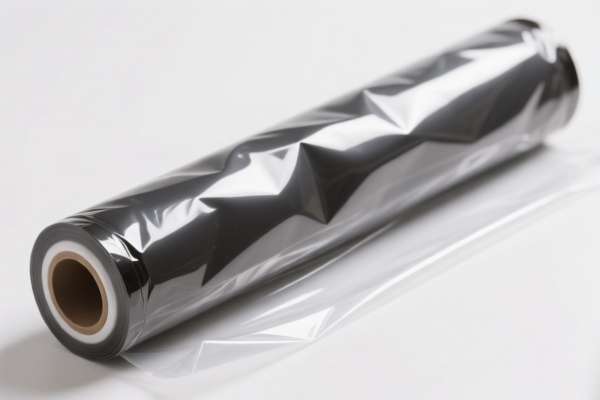
Product Images



AI Analysis
🏷️ Flexible Polyester Film for Labels (PET Labels)
🌐 HS Code Master Guide & US Import Strategy | 2026 Tariff Deep Dive | Smart Clearance Solutions
📌 I. Product Definition: What Exactly is a "PET Label"?
Flexible Polyester Film (PET) Labels are high-performance, self-adhesive or non-adhesive films made from Polyethylene Terephthalate. They are ubiquitous in modern logistics, consumer goods, and industrial packaging due to their durability, chemical resistance, and printability.
In US Customs classification, the crucial distinction lies in the intended use and final form: * Paper/Cardboard Logic: If the product is treated as a "label" intended for paper-based applications (rare for pure PET), it might fall under Chapter 48. * Plastic Film Logic: If the product is recognized as a plastic film (raw material or semi-finished), it falls under Chapter 39 (Plastics). * Self-Adhesive vs. Non-Adhesive: The presence of a backing paper or adhesive layer significantly shifts the code to Chapter 39, Subheading 3919.
⚠️ Critical Classification Trap: - Misclassifying a pure Plastic Film as a "Paper Label" (
4821) results in a 35.0% duty (often lower base but still high). - Correctly classifying as Plastic Film (3921or3919) results in duties ranging from 39.2% to 41.5% due to higher base rates and the same heavy add-on taxes. - The "Label" Form: Even if used as a label, if the base material is plastic, the law often forces it into the plastic chapter unless specifically exempted.
📦 II. HS Code Breakdown (2026 US Tariff Authority)
| HS Code | Product Description | Application Scenario | Key Classification Logic |
|---|---|---|---|
4821.90.40.00 |
Flexible Polyester Film Label (Paper/Cardboard Category Extension) | Used where the product is deemed a "paper label" by extension; rare for pure PET. | Paper Logic: Treated as an extension of paper labels. |
3921.90.40.90 |
Flexible Polyester Film Label (Plastic Film Category) | General plastic film, non-adhesive or non-self-adhesive forms. | Plastic Logic: Fits "Plastic Sheets/Films" category. |
3921.19.00.90 |
Flexible Polyester Film Label (Plastic Board/Film) | Raw polyester film used for manufacturing. | Plastic Logic: Fits "Plastic sheets, films, foil" category. |
3919.90.50.40 |
Flexible Polyester Film Label (Self-Adhesive) | Self-adhesive labels with a plastic backing or adhesive layer. | Self-Adhesive: Fits "Self-adhesive plastic sheets". |
3919.90.50.60 |
Flexible Polyester Film Label (General Self-Adhesive) | Catch-all for self-adhesive plastic films not elsewhere specified. | Catch-all: Fits "Plastic self-adhesive/flat shapes". |
🔍 Important Note: -
4821.90.40.00implies the customs officer accepted it as a "paper label" despite being polyester (a logical stretch). -39xx.xxxx.xxxxcodes are the standard for PET film. The difference in base rates (0% vs 4.2%~6.5%) dictates the final cost. - Adhesive Matters:3919series specifically requires the item to be self-adhesive.
💰 III. 2026 US Tariff Rate Deep Dive (China Origin)
✅ Country of Origin: China (CN)
✅ Destination: United States (US)
✅ Effective Date: November 10, 2025 (Includes 301 & IEEPA measures)
🎯 Scenario A: 4821.90.40.00 (The "Paper" Extension Strategy)
Best case scenario if successfully argued as a "paper label" extension.
| Item | Detail |
|---|---|
| Base Duty | 0.0% |
| Add-on 301 (Sec 301) | +25.0% (Section 301 Tariff) |
| Add-on 122 (Section 122) | +10.0% (Targeted China Tariff) |
| Total Duty Rate | 35.0% |
| De Minimis Exemption | ❌ No (Deny) |
| Legal Path | Section 301 → Section 122 → 4821.90.40.00 |
📌 Explanation: - While the base duty is 0%, the 35% is driven entirely by the 25% Section 301 and 10% Section 122 surcharges. - This code is risky; if Customs rejects the "paper" argument, the rate jumps to ~40%.
🎯 Scenario B: 3921.90.40.90 (Plastic Film - Non-Adhesive)
Most common classification for raw PET film rolls.
| Item | Detail |
|---|---|
| Base Duty | 4.2% |
| Add-on 301 (Sec 301) | +25.0% |
| Add-on 122 (Section 122) | +10.0% |
| Total Duty Rate | 39.2% |
| De Minimis Exemption | ❌ No |
| Legal Path | Section 301 → Section 122 → 3921.90.40.90 |
📌 Explanation: - The base rate of 4.2% adds to the 35% surcharge. - Total Cost Impact: For every $100 of goods, you pay $39.20 in duties.
🎯 Scenario C: 3921.19.00.90 (Plastic Sheets/Foils)
Classification for generic polyester film.
| Item | Detail |
|---|---|
| Base Duty | 6.5% |
| Add-on 301 (Sec 301) | +25.0% |
| Add-on 122 (Section 122) | +10.0% |
| Total Duty Rate | 41.5% |
| De Minimis Exemption | ❌ No |
| Legal Path | Section 301 → Section 122 → 3921.19.00.90 |
📌 Explanation: - This is the Highest Duty scenario (41.5%). - Avoid this if possible; it applies when the film is treated as a "sheet" rather than a specific "label" or "film" product.
🎯 Scenario D: 3919.90.50.40 & 3919.90.50.60 (Self-Adhesive)
Classification for finished self-adhesive PET labels.
| Item | Detail |
|---|---|
| Base Duty | 5.8% |
| Add-on 301 (Sec 301) | +25.0% |
| Add-on 122 (Section 122) | +10.0% |
| Total Duty Rate | 40.8% |
| De Minimis Exemption | ❌ No |
| Legal Path | Section 301 → Section 122 → 3919.90.50.40/60 |
📌 Explanation: - Self-adhesive labels attract a 5.8% base duty. - Total: 40.8%. - Note: Both
50.40and50.60carry the exact same tax burden (40.8%). The choice depends on specific sub-classification of the adhesive type or shape.
🛠️ IV. Clearance & Practical Strategy (The "How-To")
✅ 1. Documentation Checklist (Mandatory)
To survive US Customs scrutiny, you must prove the material and form.
| Document | Requirement | Why It Matters |
|---|---|---|
| Technical Spec Sheet | ✔️ | Must explicitly state: "100% Polyester (PET)", "Thickness", "Adhesive Type" (if any). |
| Material Composition | ✔️ | Must confirm NO paper backing if claiming 39xx codes. If 4821 is used, prove it's a paper-based label extension. |
| Photos (Unlabeled & Labeled) | ✔️ | Show the film roll, the adhesive side, and the application on a product. |
| Commercial Invoice | ✔️ | Must describe as "Self-Adhesive Polyester Film Labels" or "PET Film Rolls". Do not use vague terms like "Stickers". |
| Binding/Coating Details | ✔️ | If self-adhesive, specify the adhesive (Acrylic, Rubber, etc.). |
✅ 2. Declaration Strategy (The Golden Rule)
🔥 Mantra: "Material First, Form Second, Adhesive Third!"
| Scenario | Correct Declaration | Incorrect Declaration (High Risk) |
|---|---|---|
| Raw PET Film Rolls | "Flexible Polyester Film, Non-Adhesive, Self-Winding" (3921.90.40.90) |
"Label Material" (Vague) |
| Finished Self-Adhesive Labels | "Self-Adhesive PET Labels, Backing Paper Removed" (3919.90.50.40) |
"Paper Labels" (4821.90.40.00) → Risk of Audit |
| Mixed Material | "Polyester Film with Adhesive" (3919.90.50.60) |
"Label" without material description |
⚠️ Warning: If you declare
4821.90.40.00(Paper) but the product is clearly 100% PET, Customs may re-classify it to 39xx (Plastic) retroactively, adding 3-6% base duty + fines + storage fees.
✅ 3. Special Cases & Optimization
| Situation | Recommendation |
|---|---|
| Low Value Shipments (<$800) | ⚠️ De Minimis Rule: $800 shipment from China still faces 35-41.5% duty for most plastic/paper items due to Section 301/122. Do not rely on "low value" exemption for these HS codes. |
| Third-Party Manufacturing | If the film is sourced from Vietnam or Mexico, you may qualify for IEEPA Exemption (0-5% base). Provide a Certificate of Origin immediately. |
| Pre-Ruling (Advance Ruling) | STRONGLY RECOMMENDED. File an Advance Ruling with CBP to lock in the correct HS Code (39xx vs 4821) before shipping. This prevents sudden 5% duty increases at the dock. |
| Adhesive Type | Ensure the adhesive is non-toxic and RoHS compliant to avoid EPA/OSHA delays. |
🌍 V. Global Market Comparison (2026)
| Market | Recommended HS Code | Total Duty (China Origin) | Key Requirement |
|---|---|---|---|
| 🇺🇸 USA | 3919.90.50.40 / 3921.90.40.90 |
39.2% - 41.5% | Section 301 + 122 (Heavy) |
| 🇪🇺 EU | 3921.19.00.00 |
~4.0% - 5.0% | CE Marking, REACH |
| 🇨🇦 Canada | 3921.19.10.00 |
~5.0% | Canadian Safety Standards |
| 🇦🇺 Australia | 3919.90.90.00 |
~5.0% | APEC Certificate of Origin |
📌 Conclusion: USA is the most expensive market for PET labels due to the Section 301 (25%) and Section 122 (10%)叠加 (叠加 = stacking) on top of base duties. Strategy: Consider transshipment (via Vietnam/Mexico) if the manufacturing process allows, to avoid the 35-41% US surcharges.
📌 VI. Common Mistakes & Pitfalls (Learn from Others)
❌ Mistake 1: Declaring PET Labels as "Paper Labels" (4821) without proof.
👉 Consequence: Customs rejects the code, reclassifies to
39xx, applies 40%+ duty, and issues a Notice of Disallowance.
❌ Mistake 2: Omitting the "Self-Adhesive" feature in the description.
👉 Consequence: Misclassification from
3919(Adhesive) to3921(Non-adhesive) or vice versa, leading to duty discrepancy.
❌ Mistake 3: Assuming "Labels" are exempt from 301 tariffs.
👉 Consequence: FALSE. All plastic/paper labels from China are fully subject to Section 301 and 122.
❌ Mistake 4: Not separating the "Backing Paper" (if applicable) from the "PET Film".
👉 Consequence: Complex classification issues. If the backing is paper, the product might be
3919+4821split, or4821if the adhesive dominates.
✅ Pro Tip:
"PET Film = Plastic Chapter (39)" "Adhesive = Section 3919" "Non-Adhesive = Section 3921" "Paper Extension = Section 4821 (Risky)"
🎯 VII. Final Verdict & Action Plan
🎯 Key Takeaway:
- Total Tax Range: 35.0% to 41.5% (No exceptions for China origin).
- Safest Code:
3919.90.50.40(Self-Adhesive) or3921.90.40.90(Film).- Avoid:
4821.90.40.00unless you have written legal opinion that your product is treated as a paper label.
📌 Immediate Action Steps:
1. Verify Material: Is it 100% PET or a composite?
2. Check Adhesive: Is it self-adhesive?
3. File Advance Ruling: Get CBP's written confirmation on 39xx vs 4821.
4. Budget Correctly: Assume 40% duty for cost modeling.
5. Consider Origin Shift: If volume is high, explore Vietnam/Mexico manufacturing to bypass 301/122 tariffs.
📣 Get Professional Help:
📞 Contact a Licensed Customs Broker + Provide Spec Sheets + Request Pre-Ruling 🚀 Don't let a 5% classification error cost you 40% of your profit!
✨ Precision Classification = Profit Protection!
💼 Every dollar saved starts with the right HS Code.
Customer Reviews
About HS Code Classification
The Harmonized System (HS) is an internationally standardized nomenclature developed by the World Customs Organization (WCO) to classify traded products. Over 200 countries use the HS system as the basis for customs tariffs, trade statistics, and import/export regulations.
Each HS code follows a hierarchical structure:
- Chapter (2 digits) — Broad category of goods (e.g., Chapter 84: Machinery and Mechanical Appliances)
- Heading (4 digits) — More specific grouping within the chapter
- Subheading (6 digits) — Internationally standardized breakdown, used by all WCO member countries
- National subdivisions (8-10 digits) — Country-specific extensions for further classification, such as US HTSUS 10-digit codes
Correct HS code classification is essential for smooth customs clearance, accurate duty payment, and compliance with trade regulations. Misclassification can lead to customs delays, overpayment of duties, or penalties.
When importing from CN to US, the applicable tariff rates may include:
- Most-Favored-Nation (MFN) rate — The standard duty rate applied to WTO members
- General rate — Applied to countries without trade agreements
- Trade remedy duties — Additional tariffs such as Section 301 (anti-dumping), Section 232 (national security), or countervailing duties
The information provided on this page is for reference purposes only. For official classification, please consult with your local customs authority or a licensed customs broker.