Flexible Polyester Plastic Agricultural Film
CN → US| HS Code | Tariff Rate | Origin | Destination | Doc |
|---|---|---|---|---|
| 3921904010 | 39.2% | CN | US | Official Doc |
| 3920992000 | 39.2% | CN | US | Official Doc |
| 3921904090 | 39.2% | CN | US | Official Doc |
| 3920620090 | 39.2% | CN | US | Official Doc |
| 4821904000 | 35.0% | CN | US | Official Doc |
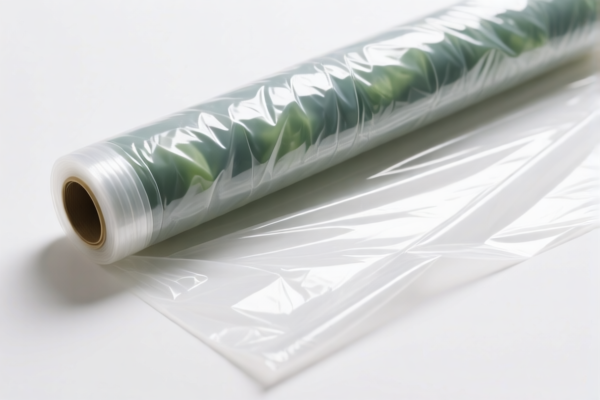
Product Images



AI Analysis
🚜 Flexible Polyester Plastic Agricultural Film (Greenhouse Grade)
🌐 HS Code Reference & Customs Clearance Guide | 2026 Latest Tariff Analysis | Professional Strategy for US Imports
📌 1. Product Definition & Classification: Do You Really Understand "Polyester Film"?
Flexible Polyester Plastic Agricultural Film is a critical material used in modern greenhouse agriculture. It is designed to provide thermal insulation, light diffusion, and durability for crop protection. In international trade, this product is classified based on its material composition (Polyester/PET), physical form (Film/Sheet), and specific application characteristics (Flexible).
The key distinction lies in whether the product is classified as a general plastic film (3920) or a plastic sheet/article (3921), and whether it is marketed as a label (4821). Misclassification can lead to severe delays or unexpected duties.
⚠️ Key Classification Distinctions:
- If it is a general flexible plastic sheet/film made of polyester, it typically falls under Chapter 39 (3920 or 3921).
- If it is specifically prepared as a label (e.g., pre-cut with adhesive backing for identification), it may fall under 4821.90.
- Do not confuse "Polyester Film" with "Polyethylene Film" (commonly used in cheaper greenhouses). This guide strictly addresses Polyester (PET).
📦 2. HS Code Classification Details (2026 Latest Tariff Authority)
Based on the provided data, here are the valid HS Codes for this product:
| HS Code | Product Description | Application Scenario | Classification Logic |
|---|---|---|---|
3921.90.40.10 |
Flexible Polyester Film for Greenhouses | General greenhouse covering, flexible polyester sheet | Material: Polyester; Form: Film; Attribute: Flexible |
3920.99.20.00 |
Flexible Polyester Film for Greenhouses | Flexible membrane/sheet characteristics | Material: Polyester; Form: Film; Flexible |
3921.90.40.90 |
Flexible Polyester Film for Greenhouses | General flexible plastic article | Material: Polyester; Form: Film; Flexible material |
3920.62.00.90 |
Flexible Polyester (PET) Film | Specific PET plastic film definition | Material: PET; Form: Film; Plastic film category |
4821.90.40.00 |
Flexible Polyester Film Label | Labels made of polyester film | Material: Polyester Film; Use: Label classification |
🔍 Important Note:
- Codes3921.90.40.10,3920.99.20.00,3921.90.40.90, and3920.62.00.90share the same total tax rate because they are classified as plastic films/sheets.
- Code4821.90.40.00is significantly different as it classifies the product as a Label, not a structural film. Only use this if the product is strictly a label (e.g., for bagging crops).
💰 3. 2026 Latest Tariff Rate Breakdown (Including Surtaxes & Policy Add-ons)
✅ Applicable Country: United States (US)
✅ Origin: China (CN)
✅ Effective Date: 2025-11-10 onwards (and subsequent imports)
🎯 1. 3921.90.40.10 & 3920.99.20.00 & 3921.90.40.90 & 3920.62.00.90 — Flexible Polyester Film (General)
| Item | Content |
|---|---|
| Base Tariff | 4.2% |
| Section 301 Surcharge | 25.0% |
| Section 122 Tariff (IEEPA) | 10.0% |
| Total Tax Rate | 39.2% |
| Tax Calculation | CIF Value × 39.2% |
| De Minimis Exemption? | ❌ NO (Section 321 cannot be used for high-surtax goods) |
| Legal Basis Path | USITC:3921.90.40.10 → FOOTNOTE:301 → IEEPA:9903.01.24 |
📌 Explanation:
- Base Tariff (4.2%): Standard Most Favored Nation (MFN) rate for plastic films.
- Section 301 (25%): The primary trade war surcharge on Chinese plastic products.
- Section 122 / IEEPA (10%): Additional national security/emergency tariffs applied to Chinese imports.
- Total 39.2%: This is a high-cost entry. Profit margins must account for this significant duty burden.
🎯 2. 4821.90.40.00 — Flexible Polyester Film Label
| Item | Content |
|---|---|
| Base Tariff | 0.0% |
| Section 301 Surcharge | 25.0% |
| Section 122 Tariff (IEEPA) | 10.0% |
| Total Tax Rate | 35.0% |
| Tax Calculation | CIF Value × 35.0% |
| De Minimis Exemption? | ❌ NO |
| Legal Basis Path | USITC:4821.90.40.00 → FOOTNOTE:301 → IEEPA:9903.01.24 |
📌 Note:
- Although the base tariff is 0%, the 35% total rate is still very high.
- Strategic Insight: If your product can be technically classified as a "Label" (e.g., pre-cut, adhesive-backed, used for identification), you save 4.2% compared to the general film classification. However, this requires strict compliance with labeling definitions.
🛠️ 4. Customs Clearance Practical Advice (Real-World Pitfall Avoidance)
✅ 1. Required Documentation Checklist (Non-negotiable)
| Document | Mandatory? | Description |
|---|---|---|
| ✅ Product Specification Sheet | ✔️ | Must clearly state: Material (100% PET/Polyester), Thickness, Width, Flexibility, Temperature Resistance. |
| ✅ Product Photos | ✔️ | Show rolls, packaging, and close-up of texture. Must look like a film, not a rigid sheet. |
| ✅ Commercial Invoice | ✔️ | Description must match HS Code logic (e.g., "Flexible Polyester Film" vs. "Polyester Label"). |
| ✅ Packing List | ✔️ | Weight and dimensions of rolls. |
| ✅ Origin Certificate | ✔️ | Proof of Chinese origin (triggers surtaxes). |
| ✅ Third-Party Test Report | ✔️ | Optional but recommended: Certify it is "Polyester" (PET) and not "Polyethylene" (PE) to avoid misclassification audits. |
✅ 2. Declaration Tips (Critical Keywords)
🔥 "Material True, Form Flexible, Usage Clear, Rate Lower!"
| Scenario | Correct Declaration | Incorrect Practice | Consequence |
|---|---|---|---|
| General Greenhouse Covering | 3921.90.40.10 or 3920.62.00.90 |
Calling it "Plastic Sheet" vaguely | Audit risk, potential reclassification |
| Pre-cut Identification Tags | 4821.90.40.00 |
Calling it "Film" | Overpaying 4.2% (minor saving) |
| Rigid Polyester Plate | ❌ Not 3920/3921 | Declaring rigid plate as film | Major misclassification, fines |
| Mixed Shipment (Film + Frames) | Split HS Codes | Declaring whole kit as one code | Demurrage, separation delays |
✅ 3. Special Situations
| Situation | Handling Advice |
|---|---|
| OEM Custom Films | Provide end-user agreement showing agricultural use. Helps justify "Agricultural Film" description. |
| Multi-layer Films (Co-extruded) | Declare as Polyester if PET is the primary layer (usually >50% by weight or function). |
| Labels with Adhesive | Must declare under 4821.90.40.00. Ensure adhesive is visible/documented. |
| Samples for Testing | If value < $800, check if De Minimis applies. Warning: High-surtax goods often exempt from De Minimis. Verify current CBP rulings. |
🌍 5. Global Market Comparison (2026 Latest)
| Country/Region | Recommended HS Code | Tariff Rate | Certification | Notes |
|---|---|---|---|---|
| 🇺🇸 USA | 3921.90.40.10 / 3920.62.00.90 |
39.2% (Film) 35.0% (Label) |
None specific | High surtaxes dominate cost. |
| 🇨🇳 China | 3920.62.00.90 |
~5-10% | CCC (if applicable) | Low duty, no surtaxes. |
| 🇪🇺 EU | 3920.62.00.90 |
6.5% | REACH (Chemicals) | No trade war surtaxes. |
| 🇯🇵 Japan | 3920.62.00.90 |
6.0% | JIS | Standard MFN rates. |
📌 Conclusion:
- USA is the most expensive market due to 301 + IEEPA surtaxes.
- EU/Japan/China are significantly cheaper for this product.
- Strategy: If importing to the US, consider supply chain diversification (e.g., sourcing from Vietnam or India if available) to avoid Chinese origin surtaxes, if feasible.
📌 6. Common Errors & Pitfall Guide (Lessons Learned)
❌ Error 1: Declaring "Polyester Film" as "Polyethylene Film" (3920.39)
👉 Consequence: Polyethylene (PE) often has lower duties. Misdeclaration is fraud. CBP tests material composition; penalties apply.
❌ Error 2: Ignoring the "Flexible" attribute
👉 Consequence: If the film is rigid/plastic sheet, it may fall under a different code with different duties. Ensure documentation states "Flexible" clearly.
❌ Error 3: Using 4821.90.40.00 for standard greenhouse film
👉 Consequence: If the film is not a label (no adhesive, not pre-cut for ID), CBP will reclassify it to 3920 or 3921 and assess the same 39.2%, plus penalties for incorrect entry.
❌ Error 4: Assuming De Minimis ($800) applies
👉 Consequence: Goods subject to Section 301 (25%) and IEEPA (10%) are excluded from De Minimis relief in many cases. Check latest CBP Notices.
✅ Correct Action:
"100% Polyester (PET) Flexible Plastic Film, Greenhouse Grade, Roll Form, Width 4m, Thickness 0.1mm, For Agricultural Covering. Origin: China."
🎯 7. Conclusion: Professional Declaration Saves Money
🎯 Remember the Mantra:
🔹 "Check Material: PET or PE? Check Form: Flexible or Rigid? Check Use: Film or Label?"
🔹 "US Tariff is 39.2% for Film, 35% for Label. No surprises!"
🔹 "High Duty is Inevitable for CN Origin. Plan Your Margin!"
📌 Pro Tip:
If your film is co-extruded with other materials, ensure the essential character is Polyester. If it's a composite, the classification might change.
Recommend Pre-Ruling (Preliminary Ruling) from CBP for large volumes to lock in the HS Code and tax rate.
📣 Immediate Action:
📞 Contact your Customs Broker + Provide Material Safety Data Sheet (MSDS) + Confirm "Flexible" Status
🚀 Ensure Smooth Clearance, Accurate Duties, and Happy Crops!
✨ Professional Customs Clearance Starts with Precise Classification!
💼 Your Profit Margin Depends on These 39.2%!
Customer Reviews
About HS Code Classification
The Harmonized System (HS) is an internationally standardized nomenclature developed by the World Customs Organization (WCO) to classify traded products. Over 200 countries use the HS system as the basis for customs tariffs, trade statistics, and import/export regulations.
Each HS code follows a hierarchical structure:
- Chapter (2 digits) — Broad category of goods (e.g., Chapter 84: Machinery and Mechanical Appliances)
- Heading (4 digits) — More specific grouping within the chapter
- Subheading (6 digits) — Internationally standardized breakdown, used by all WCO member countries
- National subdivisions (8-10 digits) — Country-specific extensions for further classification, such as US HTSUS 10-digit codes
Correct HS code classification is essential for smooth customs clearance, accurate duty payment, and compliance with trade regulations. Misclassification can lead to customs delays, overpayment of duties, or penalties.
When importing from CN to US, the applicable tariff rates may include:
- Most-Favored-Nation (MFN) rate — The standard duty rate applied to WTO members
- General rate — Applied to countries without trade agreements
- Trade remedy duties — Additional tariffs such as Section 301 (anti-dumping), Section 232 (national security), or countervailing duties
The information provided on this page is for reference purposes only. For official classification, please consult with your local customs authority or a licensed customs broker.