Flexible Shaft
CN → US| HS Code | Tariff Rate | Origin | Destination | Doc |
|---|---|---|---|---|
| 8483103010 | 37.5% | CN | US | Official Doc |
| 8483105000 | 35.0% | CN | US | Official Doc |
Product Images
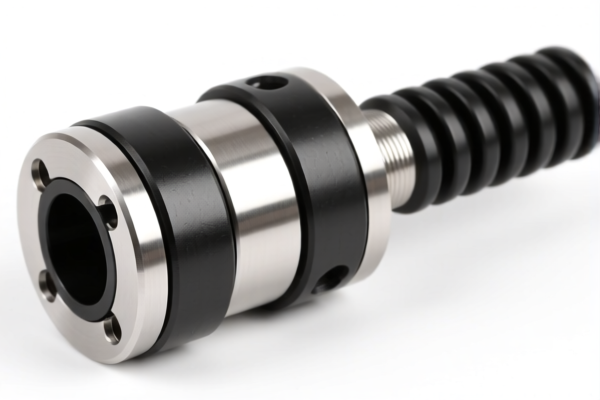
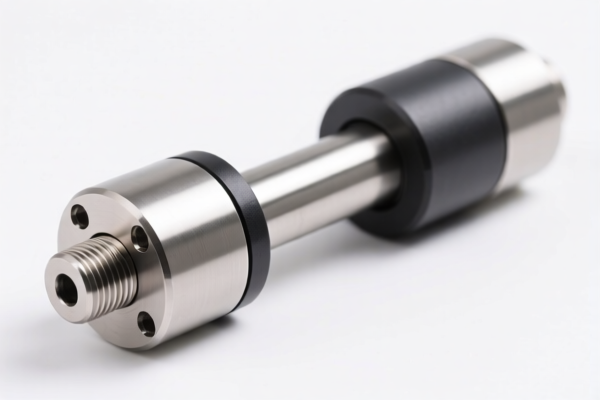
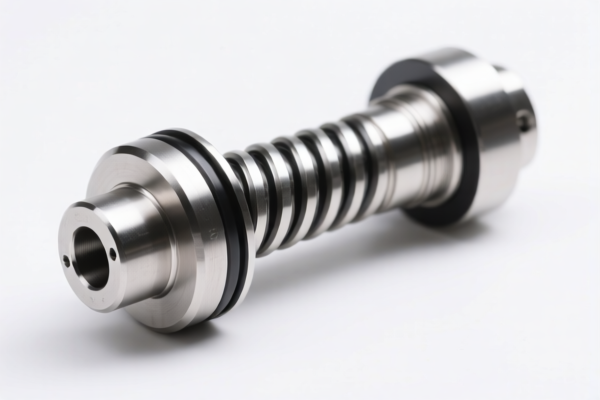
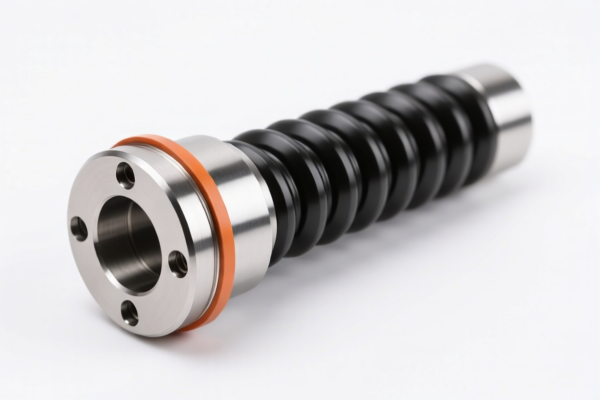
AI Analysis
⚙️ Flexible Shafts & Transmission Components (Transmission Shafts, Cranks, and Parts)
🌐 HS Code Reference & Customs Clearance Guide | 2026 Latest Tariff Analysis | Professional Clearance Strategy
📌 Part 1: Product Definition & Classification: What Exactly is a "Flexible Shaft"?
A Flexible Shaft (often used for transmitting rotary motion between two non-parallel or misaligned axes) falls under the broader category of Transmission Shafts and Cranks. In international trade, this category is strictly defined by Chapter 84.
Crucial Distinction for Classification:
Flexible shafts are generally categorized under Heading 8483. However, the specific HS Code depends heavily on the vehicle application and whether it is a Crankshaft/Camshaft or a general Transmission Shaft.
⚠️ Key Classification Point:
- If the flexible shaft is specifically a Camshaft or Crankshaft for vehicles of Chapter 87 → HS 8483.10.30.10
- If it is a general transmission shaft, crank, or part not specifically listed as cam/crankshaft → HS 8483.10.50.00
- Note: Most standard industrial flexible drive shafts are classified under "Other transmission shafts and cranks" unless they are integral parts of a vehicle engine crank/cam assembly.
📦 Part 2: HS Code Classification Details (2026 Latest Tariff Authority Comparison)
Based on the provided data, here are the two primary HS Codes for transmission shafts and related components:
| HS Code | Product Description | Applicable Scenario | Tax Rate (Total) |
|---|---|---|---|
8483.10.30.10 |
Camshafts and crankshafts: Other Specifically for vehicles of Chapter 87 |
Vehicle engine components (camshafts, crankshafts) for cars, trucks, etc. | 0.0% |
8483.10.50.00 |
Other transmission shafts and cranks Includes general flexible shafts, drive shafts, etc. |
Industrial flexible shafts, general machinery transmission parts, non-vehicle specific cranks | 25.0% |
🔍 Critical Alert:
- Misclassification Risk: Many importers mistakenly classify flexible shafts as "general parts" (which might have lower base rates in other chapters) or fail to distinguish between vehicle-specific crankshafts and general transmission shafts.
- Vehicle Chapter 87 Rule: Only shafts specifically designed as camshafts or crankshafts for Chapter 87 vehicles get the 0% rate. General flexible drive shafts do not qualify for this exemption.
- High Tariff Alert: The standard "Other transmission shafts" category carries a 25% additional tax, which can significantly impact profitability if not properly justified.
💰 Part 3: 2026 Latest Tariff Rate Details (Including Additional Taxes)
✅ Applicable Country: United States (US)
✅ Origin: China (CN) (Assumed based on typical trade context; verify origin)
✅ Effective Time: Current 2026 Tariff Schedule
🎯 1. 8483.10.30.10 —— Camshafts and Crankshafts (For Chapter 87 Vehicles)
| Item | Content |
|---|---|
| Product | Camshafts and Crankshafts: Other (for vehicles of Chapter 87) |
| Base Tariff | 0.0% |
| Additional Tariff | 0.0% |
| Total Tax Rate | 0.0% |
| Tax Calculation | CIF Value × 0.0% = $0 |
| De Minimis Eligibility | ✅ Yes (if value under $800, subject to current rules) |
| Legal Basis | HTSUS 8483.10.30.10 |
📌 Explanation:
- This code is highly favorable for automotive engine components.
- Condition: The product must be a camshaft or crankshaft intended for vehicles classified in Chapter 87 (e.g., automobiles, trucks, buses).
- Risk: If your flexible shaft is used in industrial machinery (not vehicles), this code is invalid.
🎯 2. 8483.10.50.00 —— Other Transmission Shafts and Cranks
| Item | Content |
|---|---|
| Product | Other transmission shafts and cranks (Includes most flexible shafts) |
| Base Tariff | 0.0% |
| Additional Tariff | 25.0% |
| Total Tax Rate | 25.0% |
| Tax Calculation | CIF Value × 25.0% |
| De Minimis Eligibility | ❌ No (Often excluded from de minimis due to Section 301 or specific exclusions; verify current status) |
| Legal Basis | HTSUS 8483.10.50.00 |
📌 Explanation:
- This is the default code for most flexible drive shafts, propeller shafts, and general cranks not specifically listed as cam/crankshafts for vehicles.
- High Cost Impact: A 25% additional tax is substantial. For a $10,000 shipment, you pay $2,500 in tariffs alone.
- Common Mistake: Assuming "flexible shaft" is a generic "part of machinery" with lower rates. It is explicitly a "transmission shaft" under 8483.
🛠️ Part 4: Customs Clearance Practical Advice (Avoid Pitfalls)
✅ 1. Documentation Checklist (Essential)
| Document | Required? | Notes |
|---|---|---|
| ✅ Product Description | ✔️ | Must specify: "Flexible Drive Shaft," material, length, diameter, application (vehicle vs. industrial). |
| ✅ Technical Specifications | ✔️ | Include torque capacity, speed rating, and connection types. |
| ✅ Intended Use Statement | ✔️ | Critical! Explicitly state if it is for Chapter 87 Vehicles (to argue for 0% rate) or Industrial Machinery (25% rate). |
| ✅ Commercial Invoice | ✔️ | HS Code 8483.10.30.10 or 8483.10.50.00 must be clearly stated. |
| ✅ Origin Certificate | ✔️ | To verify country of origin for trade war implications. |
✅ 2. Classification Strategy (Key Rules)
🔥 “Vehicle Cam/Crank = 0%, General Transmission = 25%!”
| Scenario | Recommended HS Code | Tax Rate | Justification |
|---|---|---|---|
| Camshaft/Crankshaft for Cars/Trucks | 8483.10.30.10 |
0.0% | Specifically for Chapter 87 vehicles. |
| General Flexible Drive Shaft (Industrial) | 8483.10.50.00 |
25.0% | Classified as "Other transmission shafts." |
| Flexible Shaft for Motorcycle | 8483.10.50.00 |
25.0% | Motorcycles are Chapter 87, but unless it’s a cam/crankshaft, it falls under "Other." |
| Shaft Coupling (Universal Joint) | 8483.60 |
Varies | Not covered in this data; check 8483.60 for couplings. |
⚠️ Warning: Do not misdeclare a general flexible shaft as a "Camshaft" to save 25%. Customs may inspect and reclassify, leading to penalties and back taxes.
✅ 3. Special Cases & Recommendations
| Case | Handling Advice |
|---|---|
| OEM Parts for Vehicle Repair | If the flexible shaft is an exact replacement for a cam/crankshaft in a specific vehicle model, provide the OEM Part Number and Vehicle VIN/Model to support 8483.10.30.10. |
| Industrial Machinery Shafts | Clearly label as "Industrial Flexible Drive Shaft." Expect 25% tax. Plan budget accordingly. |
| Parts for Non-Vehicle Engines | If for boats, generators, or lawn equipment, use 8483.10.50.00 (25%). |
| Misclassification Risk | If unsure, request a Pre-Ruling (Ruling Letter) from US Customs and Border Protection (CBP) before shipping. |
🌍 Part 5: Global Market Comparison (2026 Latest)
| Country/Region | Recommended HS Code | Tariff (China Origin) | Certification Requirements | Notes |
|---|---|---|---|---|
| 🇺🇸 USA | 8483.10.30.10 (Vehicle) / 8483.10.50.00 (Other) |
0% / 25% | None specific, but must comply with safety standards | 25% tax on general shafts is high. |
| 🇨🇳 China | 8483.10.30 / 8483.10.50 | Varies (Usually 0-10%) | CCC (if applicable) | Lower tariffs compared to US. |
| 🇪🇺 EU | 8483.10.30 / 8483.10.50 | 0-2.7% | CE Marking (if machinery directive applies) | Generally lower tariffs than US. |
| 🇬🇧 UK | 8483.10.30 / 8483.10.50 | 0-2.7% | UKCA Marking | Post-Brexit rules apply. |
| 🇦🇺 Australia | 8483.10.30 / 8483.10.50 | 0-5% | RCM (if electrical parts) | Low tariffs. |
📌 Conclusion:
- USA is the most expensive market for general transmission shafts due to the 25% additional tariff.
- Vehicle-specific cam/crankshafts enjoy 0% duty, highlighting the importance of accurate classification.
- Consider supply chain diversification if the 25% tax erodes margins for non-vehicle shafts.
📌 Part 6: Common Errors & Pitfalls (Lessons Learned)
❌ Error 1: Classifying a general flexible drive shaft as a Camshaft to get 0% tax.
👉 Consequence: Customs audit, penalty, and back taxes of 25%.
Fix: Only use 8483.10.30.10 if it is genuinely a camshaft or crankshaft for Chapter 87 vehicles.
❌ Error 2: Ignoring the 25% Additional Tariff on 8483.10.50.00.
👉 Consequence: Profit margin loss.
Fix: Budget for 25% tax in pricing models for general transmission shafts.
❌ Error 3: Using vague descriptions like "Shaft" or "Rod" on the invoice.
👉 Consequence: Customs delays for clarification.
Fix: Use precise terms: "Flexible Transmission Shaft," "Camshaft," "Crankshaft," and include HS Code.
✅ Best Practice:
“Flexible Drive Shaft, Stainless Steel, 1000mm Length, for Industrial Gearbox Assembly, Model FS-200”
HS Code:8483.10.50.00
Tax: 25.0%
🎯 Part 7: Conclusion: Precision Classification Saves Money!
🎯 Remember the Key Rule:
🔹 “Vehicle Cam/Crank = 0%, General Shaft = 25%.”
🔹 “If in doubt, use 8483.10.50.00 and budget for 25% tax.”
🔹 “Never misdeclare general shafts as vehicle cams to save taxes.”
📌 Pro Tip:
If you are importing large volumes, consider Applying for a Pre-Ruling from CBP to confirm your HS Code. This provides legal certainty and avoids surprise tariffs.
📣 Action Step:
📞 Consult a Customs Broker to review your product specs.
📄 Prepare Detailed Product Descriptions highlighting application (Vehicle vs. Industrial).
🚀 Ensure Accurate Classification to avoid delays and high tariffs.
✨ Professional Customs Clearance Starts with Accurate HS Codes!
💼 Every dollar saved in tariffs is pure profit!
Customer Reviews
About HS Code Classification
The Harmonized System (HS) is an internationally standardized nomenclature developed by the World Customs Organization (WCO) to classify traded products. Over 200 countries use the HS system as the basis for customs tariffs, trade statistics, and import/export regulations.
Each HS code follows a hierarchical structure:
- Chapter (2 digits) — Broad category of goods (e.g., Chapter 84: Machinery and Mechanical Appliances)
- Heading (4 digits) — More specific grouping within the chapter
- Subheading (6 digits) — Internationally standardized breakdown, used by all WCO member countries
- National subdivisions (8-10 digits) — Country-specific extensions for further classification, such as US HTSUS 10-digit codes
Correct HS code classification is essential for smooth customs clearance, accurate duty payment, and compliance with trade regulations. Misclassification can lead to customs delays, overpayment of duties, or penalties.
When importing from CN to US, the applicable tariff rates may include:
- Most-Favored-Nation (MFN) rate — The standard duty rate applied to WTO members
- General rate — Applied to countries without trade agreements
- Trade remedy duties — Additional tariffs such as Section 301 (anti-dumping), Section 232 (national security), or countervailing duties
The information provided on this page is for reference purposes only. For official classification, please consult with your local customs authority or a licensed customs broker.