Flexible plastic capacitor film
CN → US| HS Code | Tariff Rate | Origin | Destination | Doc |
|---|---|---|---|---|
| 3919905060 | 40.8% | CN | US | Official Doc |
| 3919905040 | 40.8% | CN | US | Official Doc |
| 3920591000 | 41.0% | CN | US | Official Doc |
| 3920992000 | 39.2% | CN | US | Official Doc |
| 3920620050 | 39.2% | CN | US | Official Doc |
Product Images
AI Analysis
📦 Flexible Plastic Capacitor Film (Polyester/PET Film)
🌐 HS Code Reference & Customs Clearance Guide | 2026 Latest Tariff Analysis | Professional Clearance Strategy
📌 I. Product Definition & Classification: What is "Flexible Plastic Capacitor Film"?
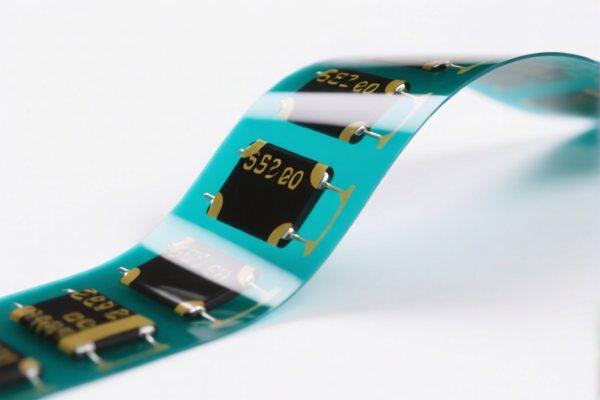
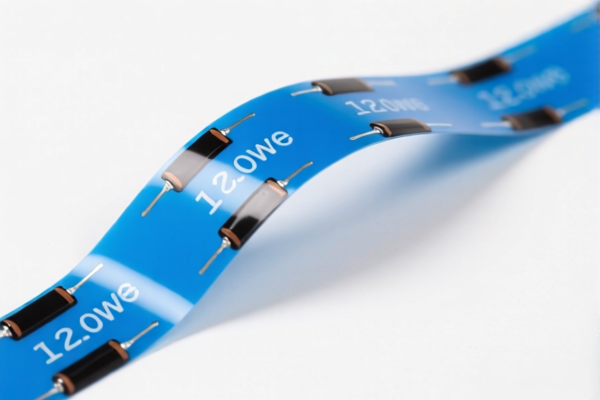
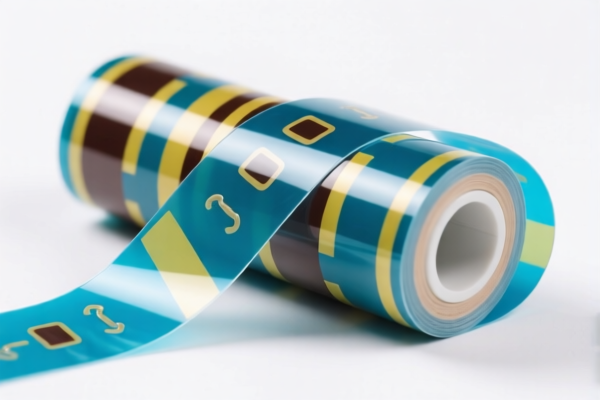
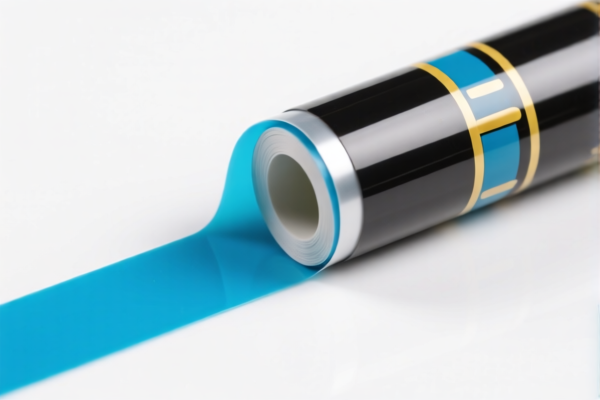
Flexible plastic capacitor film, specifically referring to Polyester (PET) films used in electronic components, is a critical raw material in the manufacturing of capacitors. In international trade, its classification hinges on two main factors: 1. Material Composition: Typically Polyethylene Terephthalate (PET). 2. End-Use/State: Must be in the form of a film, sheet, or strip, often metallized or coated, but not yet formed into a finished capacitor component.
⚠️ Key Distinction:
- If the film is metallized and wound into a finished capacitor unit → It becomes a "Electrical Capacitor" (HS Code 8532.29).
- If it is raw film, rolled or flat, intended for capacitor manufacturing → It falls under Chapter 39 (Plastics).
- Crucial Note: The specific HS codes below apply to the raw film material, not the finished capacitor.
📊 II. HS Code Classification Details (2026 Latest Tariff Concordance)
Based on the provided data, here are the applicable HS codes for Flexible Plastic Ultraviolet/Metallized Film (often used as capacitor film substrate) and Electron-Grade Polyester Film.
| HS Code | Product Description | Applicable Scenario | Key Characteristics |
|---|---|---|---|
3919.90.50.60 |
Flexible Plastic UV-Blocking Film, Self-Adhesive, Flat Shape | Adhesive films, protective layers with UV properties | ✅ Self-adhesive, flat shape, plastic base |
3919.90.50.40 |
Flexible Plastic UV-Blocking Film, Flat Shape | General flat plastic films with UV resistance | ✅ Non-adhesive or generic flat shape, plastic |
3920.59.10.00 |
Flexible Plastic UV-Blocking Film, Electronic/UV Use | High-grade films for electronic/UV applications | ✅ Non-foam, non-reinforced, specific use |
3920.99.20.00 |
Flexible Plastic Film, Non-Cellular, Non-Reinforced | General flexible plastic films (broad category) | ✅ Generic plastic film, no foam/reinforcement |
3920.62.00.50 |
Electronic Component Use Flexible Polyester Film | Primary Target for Capacitor Film | ✅ Specific for Electronics, Polyester Material |
🔍 Strategic Recommendation:
- For Capacitor Film,3920.62.00.50is the most precise fit if the film is explicitly marketed for electronic components (metallized PET).
- If the film is a generic UV-blocking plastic film not specifically designated for electronics,3920.59.10.00or3919.90.50.xxmay apply, but verify with the buyer's specification sheet.
💰 III. 2026 Latest Tariff Rate Breakdown (Including Surcharges)
✅ Applicable Country: United States (US)
✅ Origin: China (CN)
✅ Effective Date: 2025年11月10日起 (Including subsequent imports)
🎯 1. 3920.62.00.50 —— Flexible Polyester Film for Electronic Components
| Item | Details |
|---|---|
| Base Tariff Rate | 4.2% (ad valorem) |
| Section 301 Surcharge | +25.0% (USITC Footnote related to China imports) |
| Section 122 Tariff | +10.0% (Specific clause surcharge) |
| Total Effective Tax Rate | 39.2% |
| Tax Calculation | CIF Value × 39.2% |
| De Minimis Exemption | ❌ Not Eligible (deny_de_minimis) |
| Legal Basis Path | Base Tariff: 4.2% + 301 Tariff: 25.0% + Sec 122 Tariff: 10.0% |
📌 Explanation:
- The 25% Section 301 tariff is the primary driver of cost, applied to most Chinese-manufactured plastic films.
- The 10% Section 122 tariff is an additional surcharge often applied to specific strategic materials.
- Total burden is nearly 40%, making precise classification critical to avoid over-payment or under-payment (which leads to penalties).
🎯 2. 3920.59.10.00 —— Flexible Plastic UV Film (Electronic/UV Use)
| Item | Details |
|---|---|
| Base Tariff Rate | 6.0% |
| Section 301 Surcharge | +25.0% |
| Section 122 Tariff | +10.0% |
| Total Effective Tax Rate | 41.0% |
| Tax Calculation | CIF Value × 41.0% |
| De Minimis Exemption | ❌ Not Eligible |
🎯 3. 3919.90.50.60 & 3919.90.50.40 —— Adhesive/Flat Plastic Films
| Item | Details |
|---|---|
| Base Tariff Rate | 5.8% |
| Section 301 Surcharge | +25.0% |
| Section 122 Tariff | +10.0% |
| Total Effective Tax Rate | 40.8% |
| Tax Calculation | CIF Value × 40.8% |
| De Minimis Exemption | ❌ Not Eligible |
🎯 4. 3920.99.20.00 —— General Flexible Plastic Film
| Item | Details |
|---|---|
| Base Tariff Rate | 4.2% |
| Section 301 Surcharge | +25.0% |
| Section 122 Tariff | +10.0% |
| Total Effective Tax Rate | 39.2% |
| Tax Calculation | CIF Value × 39.2% |
| De Minimis Exemption | ❌ Not Eligible |
🔍 Key Insight:
- The base tariff varies from 4.2% to 6.0% depending on the specific subheading.
- However, the 35% additional surcharge (25% + 10%) is constant across all these codes for Chinese origin.
-3920.62.00.50and3920.99.20.00offer the lowest total rate at 39.2%.
🛠️ IV. Customs Clearance Practical Advice (Avoid Pitfalls)
✅ 1. Documentation Checklist (Mandatory)
| Document | Required | Explanation |
|---|---|---|
| ✅ Product Specification Sheet | ✔️ | Must state: Material (e.g., PET), Thickness (microns), Width, Surface Treatment (Metallized/Coated), and End-Use (Electronics/Capacitors). |
| ✅ Commercial Invoice | ✔️ | Clearly describe as "Flexible Polyester Film for Capacitor Manufacture" or "Plastic Film for Electronic Components." Avoid vague terms like "Plastic Sheet." |
| ✅ Packing List | ✔️ | Detail gross/net weight, dimensions, and number of rolls. |
| ✅ Certificate of Origin (CO) | ✔️ | Essential to prove Chinese origin and assess correct Section 301 liability. |
| ✅ Material Safety Data Sheet (MSDS) | ✔️ | Required for chemical composition verification. |
| ✅ Third-Party Test Report | ✔️ | Optional but recommended: Confirm dielectric strength, thickness uniformity, and UV resistance if claiming 3920.59.10.00. |
✅ 2. Declaration Strategy (Key Mnemonics)
🔥 "Material First, End-Use Second, Avoid Vague Terms!"
| Scenario | Correct Declaration | Wrong Declaration | Consequence |
|---|---|---|---|
| Metallized PET Film for Capacitors | 3920.62.00.50 (Electronics Use) |
"Plastic Film" | Risk of reclassification to generic codes or penalties |
| UV-Blocking Plastic Film (Not Electronic) | 3920.59.10.00 or 3919.90.50.xx |
"Capacitor Film" | Mismatch in description, customs delay |
| Finished Capacitor | 8532.29.00.00 |
"Plastic Film" | Severe Misdeclaration, high fines, seizure |
| Roll vs. Sheet | Specify "Rolled" or "Flat Sheet" | "Film" | Ambiguity, potential audit |
✅ 3. Special Circumstances
| Situation | Handling Advice |
|---|---|
| OEM Custom Film | Provide customer contract and design specs. Declare based on material and form, not just brand. |
| Metallized vs. Non-Metallized | Metallized film still falls under Chapter 39 if not formed into a capacitor. Do not declare as 8532 (capacitors) until wound/formed. |
| Origin Labeling | Ensure "Made in China" is clearly marked on the roll/core and packaging. Mislabeling origin can trigger anti-dumping duties. |
| Pre-Ruling Application | Highly recommended for large volumes. Apply for an Advance Ruling from CBP to lock in the HS Code (3920.62.00.50) and tax rate before shipment. |
🌍 V. Global Market Comparison (2026 Latest)
| Country/Region | Recommended HS Code | Tariff (China Origin) | Certification Requirements | Notes |
|---|---|---|---|---|
| 🇺🇸 USA | 3920.62.00.50 |
39.2% (Total) | None specific, but must be non-toxic | High tariff due to 301 + Sec 122 |
| 🇨🇳 China | 3920.62.00.50 |
6% (Import) + VAT 13% | None | Low import barrier for raw materials |
| 🇪🇺 EU | 3920.62.00.00 |
6.5% | REACH Compliance | No Section 301 surcharge |
| 🇯🇵 Japan | 3920.62.00.90 |
6.0% | JIS Standards | No additional surcharges |
| 🇻🇳 Vietnam | 3920.62.00.00 |
0-5% (if FTA applied) | None | Potential for lower tariffs if re-exported |
📌 Conclusion:
- The USA is the most expensive market for importing flexible plastic capacitor film from China due to the 35% cumulative surcharge.
- EU and Japan offer significantly lower entry costs (~6-6.5%).
- Consider supply chain diversification (e.g., sourcing from Malaysia, Thailand, or Vietnam) to mitigate US tariffs, if feasible.
📌 VI. Common Errors & Pitfalls (Lessons Learned)
❌ Error 1: Declaring finished capacitors as "Plastic Film"
👉 Consequence: Customs may reclassify to 8532 (which may have different duties) or impose fraud penalties.
Fix: Clearly separate raw film imports from component imports.
❌ Error 2: Using generic term "Plastic Film" in the invoice
👉 Consequence: CBP may select the highest duty rate within the subheading or require additional documentation, causing delays.
Fix: Use specific description: "Metallized Polyester Film, 12 micron, for Capacitor Manufacture."
❌ Error 3: Ignoring the Section 122 Tariff
👉 Consequence: Underestimating the total landed cost.
Fix: Factor in the full 39.2% total tax rate for US imports.
❌ Error 4: Confusing UV-blocking film with Capacitor film
👉 Consequence: Wrong HS code selection.
Fix: If the film is for UV protection in solar/wrapping, use 3920.59.10.00. If for dielectric purposes in capacitors, use 3920.62.00.50.
✅ Correct Declaration Example:
"Flexible Polyester (PET) Film, Metallized, 12 Micron Thickness, 500mm Width, Designed for Use in Manufacturing Electronic Capacitors, Origin: China"
🎯 VII. Conclusion: Professional Declaration, Cost Efficiency, Risk Mitigation!
🎯 Remember the Mantra:
🔹 "Material defines Code, End-Use defines Duty!"
🔹 "For US Imports, Budget 39.2% Tax on Plastic Film!"
🔹 "Avoid 'Plastic Film' vagueness; specify 'Polyester for Electronics'!"
📌 Pro Tip:
If your film is sourced from non-Chinese origins (e.g., South Korea, Germany), you may avoid the 25% Section 301 tariff and the 10% Section 122 tariff, reducing the total duty to just the base rate (4.2%-6.0%).
Action:
📞 Consult with a licensed customs broker for Advance Ruling.
📝 Provide detailed Product Data Sheets highlighting material composition and end-use.
🚀 Optimize supply chain to leverage lower-tariff origins if shipping to the US.
✨ Precision in Classification Saves Thousands!
💼 Every percentage point matters in global trade.
Customer Reviews
About HS Code Classification
The Harmonized System (HS) is an internationally standardized nomenclature developed by the World Customs Organization (WCO) to classify traded products. Over 200 countries use the HS system as the basis for customs tariffs, trade statistics, and import/export regulations.
Each HS code follows a hierarchical structure:
- Chapter (2 digits) — Broad category of goods (e.g., Chapter 84: Machinery and Mechanical Appliances)
- Heading (4 digits) — More specific grouping within the chapter
- Subheading (6 digits) — Internationally standardized breakdown, used by all WCO member countries
- National subdivisions (8-10 digits) — Country-specific extensions for further classification, such as US HTSUS 10-digit codes
Correct HS code classification is essential for smooth customs clearance, accurate duty payment, and compliance with trade regulations. Misclassification can lead to customs delays, overpayment of duties, or penalties.
When importing from CN to US, the applicable tariff rates may include:
- Most-Favored-Nation (MFN) rate — The standard duty rate applied to WTO members
- General rate — Applied to countries without trade agreements
- Trade remedy duties — Additional tariffs such as Section 301 (anti-dumping), Section 232 (national security), or countervailing duties
The information provided on this page is for reference purposes only. For official classification, please consult with your local customs authority or a licensed customs broker.