Flexible plastic composite material
CN → US| HS Code | Tariff Rate | Origin | Destination | Doc |
|---|---|---|---|---|
| 3920991000 | 41.0% | CN | US | Official Doc |
| 3920992000 | 39.2% | CN | US | Official Doc |
| 3920591000 | 41.0% | CN | US | Official Doc |
| 3919905060 | 40.8% | CN | US | Official Doc |
| 3919905040 | 40.8% | CN | US | Official Doc |
Product Images
AI Analysis
🧬 Flexible Plastic Composite Materials
🌐 HS Code Reference & Customs Clearance Guide | 2026 Latest Tariff Analysis | Professional Clearance Strategy
📌 I. Product Definition & Classification: What is "Flexible Plastic Composite Material"?
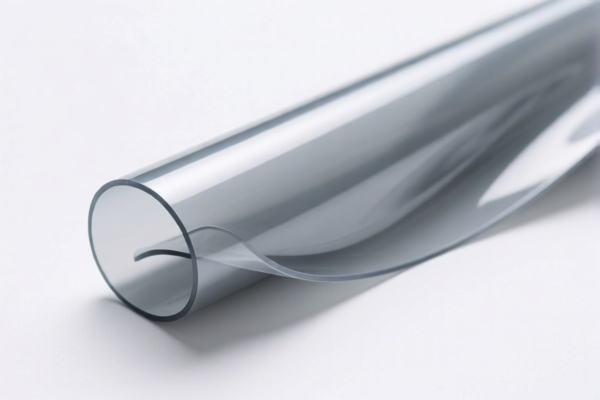
Flexible plastic composite materials refer to semi-finished or finished products made of plastic, characterized by their pliability, thinness, and specific forms such as films, foils, or strips. In international trade, the classification depends heavily on the physical form (e.g., rolls, flat sheets) and functional properties (e.g., self-adhesive, UV-resistant).
The key distinction lies in whether the material is: 1. Non-self-adhesive flexible films/foils/strips: Classified under Chapter 39, Heading 3920 (Plastic plates, sheets, film, foil, and strip). 2. Self-adhesive flexible films: Classified under Chapter 39, Heading 3919 (Self-adhesive plates, sheets, film, foil, tape, strip, and other flat shapes).
⚠️ Key Differentiator:
- If the product is a stand-alone film/foil (no glue backing) → Go to 3920.xxxx.
- If the product has a pressure-sensitive adhesive backing → Go to 3919.xxxx.
- Specific uses (like UV protection) do not change the HS code but must be declared accurately in the summary.
📦 II. HS Code Classification Details (2026 Latest Tariff Authority)
Based on the provided data, here is the detailed breakdown for Flexible Plastic Materials:
| HS Code | Product Description | Key Characteristics | Form Factor |
|---|---|---|---|
| 3920.99.10.00 | Flexible plastic stretching material | Matches plastic material; Film, foil, or strip form. | Rolls, wide films, strips |
| 3920.99.20.00 | Flexible plastic stretching material | Matches plastic material; Flexible film, strip, or sheet form. | Sheets, thin flexible films |
| 3920.59.10.00 | Flexible plastic UV-resistant film | Matches plastic material; Film form; Specifically for UV protection. | UV-blocking films |
| 3919.90.50.60 | Flexible plastic UV-resistant film | Matches plastic material; Self-adhesive film form. | Adhesive rolls, sticky films |
| 3919.90.50.40 | Flexible plastic UV-resistant film | Matches plastic material; Flat shape film form (non-self-adhesive but classified under 3919 due to specific flat shape rules in some contexts, note: check local interpretation, but data links it to 3919). | Flat UV films |
🔍 Crucial Note:
- 3920 codes apply to non-adhesive plastic films/foils/strip.
- 3919 codes apply to self-adhesive plastic products.
- The "UV-resistant" feature is a product attribute, not a primary classification driver, but it must match the HS description.
💰 III. 2026 Latest Tariff Rate Breakdown (Including Surcharges)
✅ Applicable Country: United States (US)
✅ Country of Origin: China (CN)
✅ Effective Date: From 2025 onwards (including subsequent imports)
🎯 1. Codes under Heading 3920 (Non-Adhesive Films/Foils/Strips)
A. 3920.99.10.00 – Flexible Plastic Stretching Material (Film/Foil/Strip)
| Item | Content |
|---|---|
| Base Tariff Rate | 6.0% (ad valorem) |
| Section 301 Surcharge | +25.0% (USITC Footnote) |
| Section 122 Surcharge | +10.0% (Targeted measure) |
| Total Tariff Rate | 41.0% |
| Tax Calculation | CIF Value × 41% |
| De Minimis Exemption? | ❌ No (Denied for Chinese origin goods under these surcharges) |
| Legal Basis Path | Base: 3920.99.10.00 → Surcharge: 301 & 122 |
B. 3920.99.20.00 – Flexible Plastic Stretching Material (Film/Strip/Sheet)
| Item | Content |
|---|---|
| Base Tariff Rate | 4.2% (ad valorem) |
| Section 301 Surcharge | +25.0% |
| Section 122 Surcharge | +10.0% |
| Total Tariff Rate | 39.2% |
| Tax Calculation | CIF Value × 39.2% |
| De Minimis Exemption? | ❌ No |
| Legal Basis Path | Base: 3920.99.20.00 → Surcharge: 301 & 122 |
C. 3920.59.10.00 – Flexible Plastic UV-Resistant Film
| Item | Content |
|---|---|
| Base Tariff Rate | 6.0% (ad valorem) |
| Section 301 Surcharge | +25.0% |
| Section 122 Surcharge | +10.0% |
| Total Tariff Rate | 41.0% |
| Tax Calculation | CIF Value × 41% |
| De Minimis Exemption? | ❌ No |
| Legal Basis Path | Base: 3920.59.10.00 → Surcharge: 301 & 122 |
📌 Explanation:
- The Base Tariff varies slightly (4.2% vs 6.0%) depending on the specific sub-category of the plastic film.
- The Section 301 Surcharge (25%) is applied to almost all Chinese-origin plastic products.
- The Section 122 Surcharge (10%) is an additional targeted tariff.
- Total Effective Rate ranges from 39.2% to 41.0%, making these goods highly sensitive to customs duties.
🎯 2. Codes under Heading 3919 (Self-Adhesive Films)
D. 3919.90.50.60 – Flexible Plastic UV-Resistant Film (Self-Adhesive)
| Item | Content |
|---|---|
| Base Tariff Rate | 5.8% (ad valorem) |
| Section 301 Surcharge | +25.0% |
| Section 122 Surcharge | +10.0% |
| Total Tariff Rate | 40.8% |
| Tax Calculation | CIF Value × 40.8% |
| De Minimis Exemption? | ❌ No |
| Legal Basis Path | Base: 3919.90.50.60 → Surcharge: 301 & 122 |
E. 3919.90.50.40 – Flexible Plastic UV-Resistant Film (Flat Shape)
| Item | Content |
|---|---|
| Base Tariff Rate | 5.8% (ad valorem) |
| Section 301 Surcharge | +25.0% |
| Section 122 Surcharge | +10.0% |
| Total Tariff Rate | 40.8% |
| Tax Calculation | CIF Value × 40.8% |
| De Minimis Exemption? | ❌ No |
| Legal Basis Path | Base: 3919.90.50.40 → Surcharge: 301 & 122 |
📌 Note:
- Self-adhesive films (3919) have a slightly higher base rate (5.8%) compared to some non-adhesive films (3920at 4.2%), but the surcharges remain the same.
- The total rate is 40.8%, which is very close to the 41.0% rate for non-adhesive films.
🛠️ IV. Customs Clearance Practical Advice (Real-World Pitfall Avoidance)
✅ 1. Required Documentation Checklist (No Omissions)
| Document | Required? | Description |
|---|---|---|
| ✅ Product Specification Sheet | ✔️ | Must detail: Material composition (plastic type), thickness, width, length, and UV resistance properties if claimed. |
| ✅ Product Photos | ✔️ | Clear images of the roll, cut edge, and label. Show if it is self-adhesive (peel-off liner). |
| ✅ Commercial Invoice | ✔️ | Must accurately describe the product as "Flexible Plastic Film/Foil/Strip" or "Self-Adhesive Film". Avoid vague terms like "Plastic Material". |
| ✅ Packing List | ✔️ | Specify net weight, gross weight, and number of rolls/sheets. |
| ✅ Certificate of Origin (CO) | ✔️ | Essential for proving Chinese origin to apply the correct surcharges. |
| ✅ Third-Party Test Report | ✔️ | If claiming "UV-Resistant", provide a test report confirming UV blocking performance to avoid misclassification disputes. |
✅ 2. Declaration Tips (Key Mantra)
🔥 "Form Dictates Code, Adhesive Matters, UV is a Feature, Not a Class!"
| Scenario | Correct Declaration | Error to Avoid |
|---|---|---|
| Non-adhesive film roll | 3920.99.10.00 or 3920.99.20.00 |
Don't call it "self-adhesive" → Wrong code |
| Self-adhesive UV film | 3919.90.50.60 |
Don't use 3920 code → Risk of penalty |
| Flat UV sheet (non-adhesive) | Check 3920 vs 3919 based on adhesive status. Data links some flat UV films to 3919 (likely due to specific USITC rulings or format). |
Do not assume all "flat" shapes are 3920. Verify adhesive status. |
| UV-Resistant Claim | Must be supported by specs. | Don't claim "UV-Resistant" without documentation → Customs may reclassify as generic film. |
✅ 3. Special Cases Handling
| Scenario | Handling Advice |
|---|---|
| Mixed Shipment (Adhesive + Non-Adhesive) | Declare separately. Do not mix codes. Mixed declarations lead to audits and delays. |
| Custom Printed Films | If the film has custom graphics, ensure the description includes "Printed Plastic Film". The base code may remain the same, but declaration accuracy is key. |
| Rolls vs. Cut Sheets | Ensure the HS code matches the form. 3920 often covers rolls/strip, while 3920.99.20.00 explicitly mentions "sheet". Use the correct sub-code. |
| Origin Marking | Ensure products are marked "Made in China". This triggers the 301 and 122 surcharges. |
🌍 V. Global Market Comparison (2026 Latest)
| Country/Region | Recommended HS Code | Base Tariff | Surcharges (China) | Total Estimated Rate |
|---|---|---|---|---|
| 🇺🇸 USA | 3920.99.10.00 / 3919.90.50.60 |
4.2% - 6.0% | +35% (301 + 122) | 39.2% - 41.0% |
| 🇨🇳 China | Same codes | 0% - 6% | None | 0% - 6% |
| 🇪🇺 EU | 3920.99 / 3919.90 |
6.5% | None | ~6.5% |
| 🇯🇵 Japan | 3920.99 / 3919.90 |
0% - 6% | None | ~0% - 6% |
📌 Conclusion:
- The US market imposes a significant tariff burden (approx. 40%) on Chinese flexible plastic materials.
- EU and Japan offer much more competitive rates (no major surcharges).
- Cost Optimization: If exporting to the US, consider supply chain diversification or precise HS classification to ensure no overpayment.
📌 VI. Common Errors & Pitfall Guide (Lessons Learned)
❌ Error 1: Misclassifying self-adhesive films as non-adhesive (3920 instead of 3919).
👉 Consequence: Incorrect tax calculation, potential penalties for underpayment or overpayment.
❌ Error 2: Failing to declare "UV-Resistant" feature when it affects value or duty.
👉 Consequence: Customs may reclassify as generic plastic film, leading to disputes or delays.
❌ Error 3: Assuming "Sheet" automatically means 3920.99.20.00.
👉 Consequence: If the sheet is self-adhesive, it should be 3919. Wrong code = Wrong duty.
❌ Error 4: Ignoring Section 122 Tariff.
👉 Consequence: Underpaying by 10% on CIF value. This is a significant cost that must be factored into pricing.
✅ Correct Practice:
"Self-Adhesive UV-Resistant Plastic Film, Polyester Base, Roll Form, 10 Micron Thickness, Model XYZ, Made in China"
🎯 VII. Conclusion: Precision in Classification Saves Costs!
🎯 Remember the Mantra:
🔹 "Adhesive? Go to 3919. No Adhesive? Go to 3920."
🔹 "China Origin? Expect +35% Surcharges on top of Base."
🔹 "Total Duty ~40%. Plan Your Margin Accordingly."
📌 Pro Tip:
If your product is originating from Vietnam, Thailand, or Malaysia, you may qualify for lower or zero surcharges. Ensure your Certificate of Origin is accurate and recognized by the US Customs and Border Protection (CBP).
📣 Immediate Action:
📞 Consult with a licensed customs broker.
📦 Provide detailed product specs (adhesive type, UV performance, form factor).
📋 Request an Advance Ruling from CBP to confirm the correct HS Code and duty rate.
🚀 Protect your profit margin with accurate customs compliance!
✨ Professional clearance starts with precise classification!
💼 Every percent of duty counts—don't leave money on the table!
Customer Reviews
About HS Code Classification
The Harmonized System (HS) is an internationally standardized nomenclature developed by the World Customs Organization (WCO) to classify traded products. Over 200 countries use the HS system as the basis for customs tariffs, trade statistics, and import/export regulations.
Each HS code follows a hierarchical structure:
- Chapter (2 digits) — Broad category of goods (e.g., Chapter 84: Machinery and Mechanical Appliances)
- Heading (4 digits) — More specific grouping within the chapter
- Subheading (6 digits) — Internationally standardized breakdown, used by all WCO member countries
- National subdivisions (8-10 digits) — Country-specific extensions for further classification, such as US HTSUS 10-digit codes
Correct HS code classification is essential for smooth customs clearance, accurate duty payment, and compliance with trade regulations. Misclassification can lead to customs delays, overpayment of duties, or penalties.
When importing from CN to US, the applicable tariff rates may include:
- Most-Favored-Nation (MFN) rate — The standard duty rate applied to WTO members
- General rate — Applied to countries without trade agreements
- Trade remedy duties — Additional tariffs such as Section 301 (anti-dumping), Section 232 (national security), or countervailing duties
The information provided on this page is for reference purposes only. For official classification, please consult with your local customs authority or a licensed customs broker.