Flexible plastic electronic component protection film
CN → US| HS Code | Tariff Rate | Origin | Destination | Doc |
|---|---|---|---|---|
| 3919905060 | 40.8% | CN | US | Official Doc |
| 3921905050 | 39.8% | CN | US | Official Doc |
| 3920992000 | 39.2% | CN | US | Official Doc |
| 3919905040 | 40.8% | CN | US | Official Doc |
| 3920591000 | 41.0% | CN | US | Official Doc |
Product Images
AI Analysis
✨ Flexible Plastic Electronic Component Protection Film
🌐 HS Code Reference & Clearance Strategy | 2026 U.S. Import Tax Guide | Smart Customs Compliance
📌 I. Product Definition & Classification: What Exactly Is "Electronic Component Protection Film"?
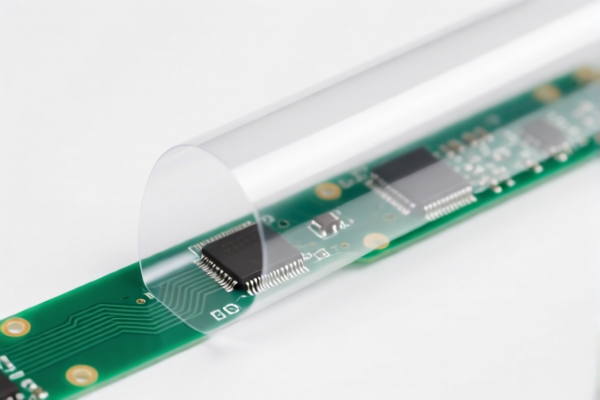
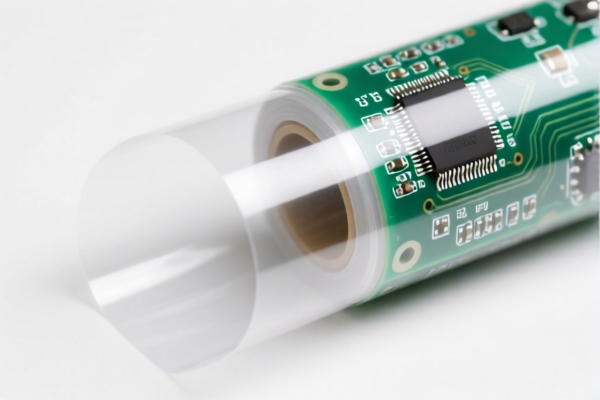
These flexible films are thin, adhesive plastic layers designed to shield electronic components (e.g., PCBs, sensors, displays) during manufacturing, shipping, and assembly. They are not functional electronic parts but protective accessories.
In U.S. Customs classification, they fall under Chapter 39 (Plastics and Articles Thereof), specifically based on: - Material: Plastic (e.g., PET, PE, PP, PVC) - Form: Self-adhesive, flexible film/sheet - Function: Non-conductive, temporary protection
⚠️ Critical Distinction:
- If it's a self-adhesive film → Likely 3919.90 (Self-adhesive tapes/films)
- If it's a non-adhesive general plastic film → Likely 3920.99 or 3921.90
- Misclassification can lead to 25–30% higher duties due to misreading "adhesive" feature.
📦 II. HS Code Breakdown (2026 U.S. Tariff Schedule – China-Origin Goods)
| HS Code | Product Description | Key Features | Total Tax Rate (China → US) |
|---|---|---|---|
| 3919.90.50.60 | Self-adhesive plastic film/sheet for protection | ✅ Adhesive backing, ✅ flexible, ✅ for electronics | 40.8% |
| 3919.90.50.40 | Plastic flat-shaped self-adhesive film | ✅ Adhesive, ✅ generic plastic, ✅ non-specific application | 40.8% |
| 3921.90.50.50 | Other plastic plates, sheets, films (non-adhesive) | ❌ No adhesive, ✅ flexible, ✅ general use | 39.8% |
| 3920.99.20.00 | Other non-cellular plastics, flexible films | ❌ Non-cellular, ❌ not self-adhesive, ✅ thin & flexible | 39.2% |
| 3920.59.10.00 | Plastic films, not cellular, not reinforced | ❌ Cellular-free, ❌ self-adhesive, ✅ general packaging | 41.0% |
🔍 Key Clarification:
- 3919.90 series applies only if the film has adhesive (e.g., peel-off backing).
- 3920/3921 series used when no adhesive is present.
- Electronic component protection does not qualify for special treatment unless explicitly stated in customs rulings.
💰 III. 2026 U.S. Duty Breakdown (China-Origin)
All HS Codes below are subject to: - Base Duty: 4.2% – 6.0% (varies by subheading) - Section 301 Tariff: +25.0% (applied to most Chinese plastics) - Section 122 Tariff (China-specific): +10% - Total Effective Rate: 39.2% – 41.0%
🎯 1. 3919.90.50.60 – Self-Adhesive Protection Film (Most Common)
| Item | Details |
|---|---|
| Base Duty | 5.8% |
| Section 301 Tariff | +25.0% |
| Section 122 Tariff | +10.0% |
| Total Duty | 40.8% |
| Tax Calculation | CIF Value × 40.8% |
| De Minimis Exemption? | ❌ No (Section 301 items are excluded) |
| Legal Basis | USITC:3919.90.50.60 + 301 Footnote + IEEPA:9903.10 |
📌 Note: This is the most accurate code for adhesive films used in electronics. Do not try to classify as "non-adhesive" to save 1–2% – it risks customs penalty.
🎯 2. 3919.90.50.40 – Generic Self-Adhesive Plastic Film
| Item | Details |
|---|---|
| Base Duty | 5.8% |
| Section 301 Tariff | +25.0% |
| Section 122 Tariff | +10.0% |
| Total Duty | 40.8% |
| Use Case | General-purpose adhesive film, not specifically for electronics |
| Risk | If misdeclared as "non-adhesive", penalty may apply |
🎯 3. 3921.90.50.50 – Non-Adhesive Plastic Film
| Item | Details |
|---|---|
| Base Duty | 4.8% |
| Section 301 Tariff | +25.0% |
| Section 122 Tariff | +10.0% |
| Total Duty | 39.8% |
| Applicable When | Film has no adhesive (e.g., static cling, tapeless) |
| Note | Slightly lower duty, but requires proof of non-adhesive nature |
🎯 4. 3920.99.20.00 – Flexible Non-Cellular Plastic Film
| Item | Details |
|---|---|
| Base Duty | 4.2% |
| Section 301 Tariff | +25.0% |
| Section 122 Tariff | +10.0% |
| Total Duty | 39.2% |
| Best For | Thin, flexible, non-cellular films without adhesive or reinforcement |
| Caution | Must prove no adhesive and no cellular structure |
🎯 5. 3920.59.10.00 – Non-Cellular, Non-Reinforced Plastic Film
| Item | Details |
|---|---|
| Base Duty | 6.0% |
| Section 301 Tariff | +25.0% |
| Section 122 Tariff | +10.0% |
| Total Duty | 41.0% |
| Typical Use | Packaging films, protective layers for non-adhesive applications |
| Risk | Highest duty among options – use only if no other fits |
🛠️ IV. Clearance Tips & Best Practices
✅ 1. Documentation Checklist
| Document | Required? | Purpose |
|---|---|---|
| Product Spec Sheet | ✅ | Show thickness, material (PET/PE/PP), adhesive type |
| Adhesive Proof | ✅ | Confirm presence/absence of adhesive layer |
| Photos (Label + Roll) | ✅ | Show product form and markings |
| Bill of Lading | ✅ | Match HS Code, weight, value |
| Commercial Invoice | ✅ | Must state "Flexible Plastic Protection Film" + HS Code |
| Origin Certificate | ✅ | Confirm China origin (if applicable) |
| FCC/UL Report | ❌ | Not required, but helpful if used in sensitive electronics |
✅ 2. Smart Declaration Tips
🔥 "Adhesive? Say 'Yes' to 3919. Don't Hide It!"
| Scenario | Correct HS Code | Wrong Code → Risk |
|---|---|---|
| Film has adhesive backing | 3919.90.50.60 or 3919.90.50.40 |
Use 3920/3921 → Penalty + Delay |
| Film is static-cling (no adhesive) | 3921.90.50.50 or 3920.99.20.00 |
Declare as adhesive → Overpay |
| Film is part of electronic kit | Still 3919/3920 |
Try to classify as "electronic part" → Rejection |
| Multi-layer film (with adhesive) | 3919.90.50.60 |
Classify as "general plastic" → Audit Risk |
✅ 3. Special Cases
| Case | Recommendation |
|---|---|
| Custom-cut protection films | Use 3919.90.50.60 if adhesive; declare as "cut-to-size" |
| Rolls sold in bulk | Declare per roll; avoid "per unit" confusion |
| Reusable films | Still classified under plastic, not "electronic accessory" |
| Films with printed text/logos | Still 3919 – printing doesn't change classification |
🌍 V. Global Market Comparison (2026)
| Country | Recommended HS Code | Duty (China Origin) | Notes |
|---|---|---|---|
| 🇺🇸 USA | 3919.90.50.60 |
40.8% | Section 301 + 122 apply |
| 🇨🇳 China | 3919.90.50.60 |
5.8% | No Section 301 |
| 🇪🇺 EU | 3919.90.50.60 |
0–6% | Depends on origin; no Section 301 |
| 🇯🇵 Japan | 3919.90.50.60 |
5.8% | Low base duty |
| 🇨🇦 Canada | 3919.90.50.60 |
0–5% | CUSMA benefits if from US/Mexico |
📌 Key Takeaway:
- U.S. has the highest duty burden due to Section 301 + 122 tariffs.
- Consider shifting supply chain to Vietnam, Mexico, or Malaysia to avoid 25% + 10% surcharges.
🚫 VI. Common Mistakes & How to Avoid Them
❌ Mistake 1: Calling it "electronic component" → Classify under Chapter 85
👉 Fix: It’s a plastic accessory, not a functional part → Use Chapter 39
❌ Mistake 2: Omitting adhesive mention in invoice
👉 Fix: Always state "Self-Adhesive" if applicable
❌ Mistake 3: Using generic "plastic film" without subheading
👉 Fix: Be precise: "Self-Adhesive PET Protection Film"
❌ Mistake 4: Assuming "electronics" = lower duty
👉 Fix: No exemption for plastic films used in electronics
🎯 VII. Conclusion: Smart Classification = Lower Costs
🔹 “Adhesive? Yes → 3919. No? → 3920/3921. Don’t Guess!”
🔹 “Tax = Base + 25% + 10%. Total = 39–41%.”
🔹 “Wrong Code = Penalty + Delay + Loss of Profit.”
📌 Pro Tip:
If your films are produced in Vietnam or Mexico, apply for preferential duty under USMCA or ASEAN agreements → Possible 0–5% duty!
📣 Act Now!
📞 Contact your customs broker + Provide product photos + Apply for Advance Ruling
🚀 Avoid 40.8% tax, ensure smooth U.S. clearance, protect your margins!
✨ Precise Classification, Predictable Costs, Faster Clearance!
💼 Your Supply Chain Deserves the Right HS Code!
Customer Reviews
About HS Code Classification
The Harmonized System (HS) is an internationally standardized nomenclature developed by the World Customs Organization (WCO) to classify traded products. Over 200 countries use the HS system as the basis for customs tariffs, trade statistics, and import/export regulations.
Each HS code follows a hierarchical structure:
- Chapter (2 digits) — Broad category of goods (e.g., Chapter 84: Machinery and Mechanical Appliances)
- Heading (4 digits) — More specific grouping within the chapter
- Subheading (6 digits) — Internationally standardized breakdown, used by all WCO member countries
- National subdivisions (8-10 digits) — Country-specific extensions for further classification, such as US HTSUS 10-digit codes
Correct HS code classification is essential for smooth customs clearance, accurate duty payment, and compliance with trade regulations. Misclassification can lead to customs delays, overpayment of duties, or penalties.
When importing from CN to US, the applicable tariff rates may include:
- Most-Favored-Nation (MFN) rate — The standard duty rate applied to WTO members
- General rate — Applied to countries without trade agreements
- Trade remedy duties — Additional tariffs such as Section 301 (anti-dumping), Section 232 (national security), or countervailing duties
The information provided on this page is for reference purposes only. For official classification, please consult with your local customs authority or a licensed customs broker.