Float Valve
CN → US| HS Code | Tariff Rate | Origin | Destination | Doc |
|---|---|---|---|---|
| 8481809010 | 37.0% | CN | US | Official Doc |
| 8481809015 | 37.0% | CN | US | Official Doc |
Product Images
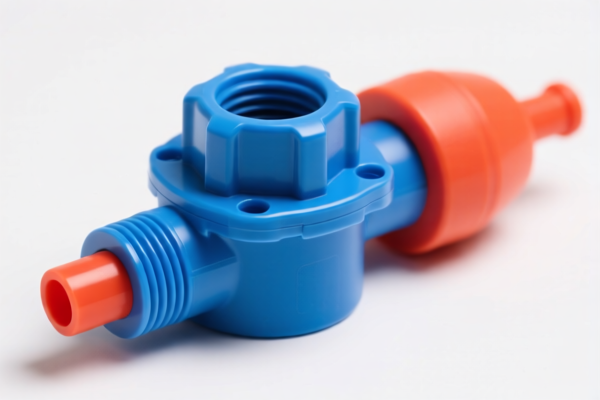
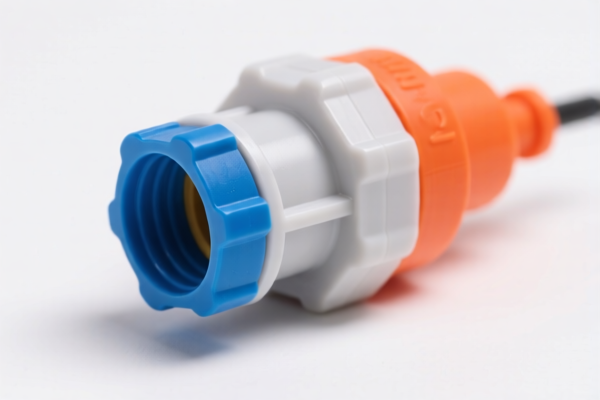
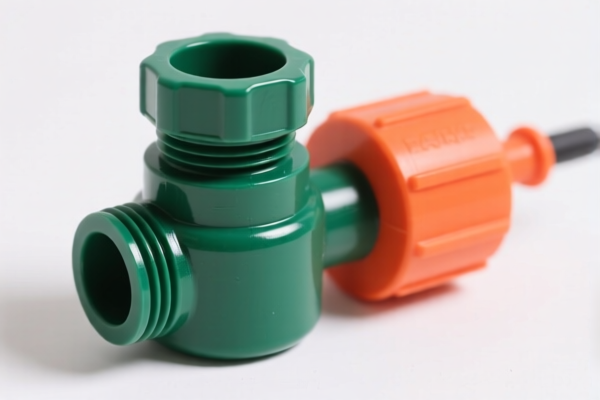
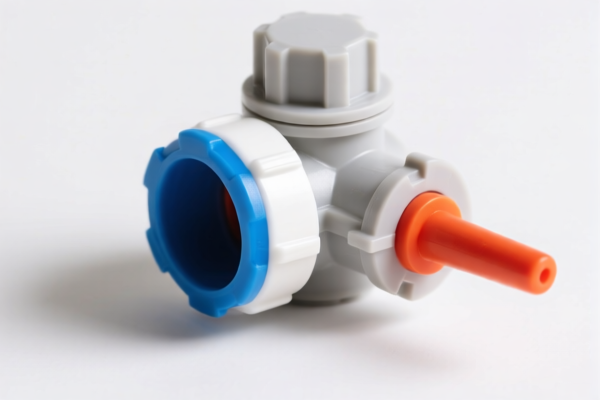
AI Analysis
🚰 Float Valve & Ballcock Mechanisms (8481 Series)
🌐 HS Code Reference & Customs Clearance Guide | 2026 Latest Tariff Analysis | Professional Level Entry Strategy
📌 I. Product Definition & Classification: Do You Really Understand "Float Valves"?
A Float Valve (commonly known as a Ballcock in plumbing contexts or a Level Regulator in industrial applications) is a self-acting valve used to automatically maintain the level of liquid in a tank, cistern, or boiler. It operates based on buoyancy: as the liquid level rises, the float rises, closing the valve; as the level drops, the float drops, opening the valve.
In international trade, these are strictly categorized under Chapter 84: Nuclear reactors, boilers, machinery and mechanical appliances; parts thereof. Specifically, they fall under Heading 8481: Taps, cocks, valves and similar appliances for pipes, boiler shells, tanks, vats or the like.
⚠️ Key Distinction Point:
- If the device is purely mechanical with a floating element to control fluid level → It is a Float Valve / Ballcock Mechanism.
- If the device controls temperature, pressure, or flow rate without a float mechanism (e.g., thermostatic, pressure-reducing) → It is classified differently (often as a "Regulator Valve").
- Crucial Note: The specific HS codes in distinguish between "Other Ballcock mechanisms" and "Other Regulator valves... for controlling variables such as... liquid level". While both control liquid level, the physical mechanism (float vs. self-operating regulator without float) dictates the code.
📦 II. HS Code Classification Details (2026 Latest Tariff Authority Comparison)
Based on the provided , here are the two specific classifications for float/level control valves. Note that the tax structure is identical, but the technical description differs.
| HS Code | Product Description | Applicable Scenario | Key Feature |
|---|---|---|---|
8481.80.90.10 |
Other Ballcock mechanisms | Traditional toilet tanks, residential water storage tanks, small cisterns | Uses a ball/floating arm mechanism to shut off water |
8481.80.90.15 |
Other Regulator valves, self-operating, for controlling variables such as... liquid level | Industrial tanks, boiler systems, large-scale water treatment plants | Self-operating regulator (may use diaphragm/spring, not necessarily a visible "ballcock") |
🔍 Important Reminder:
- Both codes fall under 8481.80.90 (Other appliances).
- The distinction is subtle:8481.80.90.10is for classic "Ballcock" types (like in a toilet), while8481.80.90.15is for broader "Self-operating Regulator Valves" that control liquid level (or temperature/pressure/flow).
- If your product is a simple float valve for a tank,8481.80.90.10is likely the most accurate if it fits the "Ballcock" definition. If it is a complex industrial self-operating level controller,8481.80.90.15may apply.
- Both carry the same tax rate: 27.0% total.
💰 III. 2026 Latest Tariff Rate Detailed Explanation
✅ Applicable Country: United States (US)
✅ Origin: China (CN) (Inferred from the high "Additional Tariff" of 25%, typical for US-China trade context in such datasets)
✅ Effective Time: Current as per data (2026 context)
🎯 1. 8481.80.90.10 —— Other Ballcock Mechanisms
| Item | Content |
|---|---|
| Base Tariff | 2.0% |
| Additional Tariff (Section 301) | +25.0% |
| Total Tax Rate | 27.0% |
| Tax Calculation | CIF Value × 27.0% |
| De Minimis Exemption | ❌ Not Eligible (High duty rates usually preclude $800 de minimis clearance benefits for commercial shipments, and Section 301 duties are strictly applied) |
| Legal Basis Path | HTSUS:8481.80.90.10 → Section 301 List: 8481 → Total: 27% |
📌 Explanation:
- The 2.0% is the standard MFN (Most Favored Nation) base duty for valves.
- The 25% is the Section 301 additional duty imposed on Chinese-origin goods in this category.
- No preferential duty applies unless the country of origin is not China (e.g., Vietnam, Mexico) and meets Rules of Origin.
🎯 2. 8481.80.90.15 —— Other Regulator Valves (Self-Operating for Liquid Level)
| Item | Content |
|---|---|
| Base Tariff | 2.0% |
| Additional Tariff (Section 301) | +25.0% |
| Total Tax Rate | 27.0% |
| Tax Calculation | CIF Value × 27.0% |
| De Minimis Exemption | ❌ Not Eligible |
| Legal Basis Path | HTSUS:8481.80.90.15 → Section 301 List: 8481 → Total: 27% |
📌 Note:
- Identical tax treatment to Ballcock mechanisms.
- Even if classified as a "Regulator Valve," it does not escape the 25% additional duty.
- Ensure your product description matches the self-operating nature (no external power source required) to fit this heading.
🛠️ IV. Customs Clearance Practical Advice (Battle-Tested Pitfall Guide)
✅ 1. Required Documentation Checklist
| Document | Mandatory? | Description |
|---|---|---|
| ✅ Product Specifications | ✔️ | Must clearly state: Type (Ballcock vs. Regulator), Operating Principle (Float/Diaphragm), Max Pressure, Flow Rate. |
| ✅ Technical Diagrams | ✔️ | Crucial for distinguishing between 8481.80.90.10 (Ballcock) and 8481.80.90.15 (Regulator). Show the float mechanism if applicable. |
| ✅ Commercial Invoice | ✔️ | Must describe goods as "Float Valve for Tank Level Control" or "Self-Operating Liquid Level Regulator." Avoid vague terms like "Pipe Fitting." |
| ✅ Packing List | ✔️ | Separate parts from main units if any. |
| ✅ Origin Certificate | ✔️ | Essential for proving non-Chinese origin to avoid the 25% duty. |
✅ 2. Declaration Tips (Key Mnemonic)
🔥 “Float vs. Regulator, Mechanism Matters! 27% is the Price!”
| Scenario | Correct Declaration | Incorrect Action |
|---|---|---|
| Simple toilet-style float valve | 8481.80.90.10 (Ballcock) |
Declare as "Valve Part" → 0% base + 25% = 25% (Still high, but wrong classification) |
| Industrial self-operating level regulator | 8481.80.90.15 (Regulator) |
Declare as "Pump" → 8.5% base + 25% = 33.5% (Higher! Avoid) |
| Electrically actuated valve (needs power) | Not 8481.80.90 | Declare as 8481 → Misclassification Penalty! (Should be 8481.80.90.80 or similar for powered valves) |
| Non-Chinese Origin (e.g., Vietnam) | Use CO + 8481.80.90.10/15 | No 25% duty → Only 2.0% |
✅ 3. Special Case Handling
| Situation | Handling Advice |
|---|---|
| OEM Ballcocks | Provide customer design specs to prove "Ballcock" mechanism (float arm). |
| Mixed Containers | If mixing with other 8481 valves, ensure separate line items for 10 and 15 to avoid misclassification. |
| Parts Only | If shipping only the float arm or diaphragm, declare as "Parts of Valves" (8481.90), which may have different rates. |
| Powered Valves | If the float valve has an electric motor to send signals, it may be classified as a Valve Actuator or Electrically Operated Valve, potentially under different subheadings. Check carefully! |
🌍 V. Global Market Customs Comparison (2026 Latest)
| Country/Region | Recommended HS Code | Duty Rate (China Origin) | Key Requirement | Notes |
|---|---|---|---|---|
| 🇺🇸 USA | 8481.80.90.10 or .15 |
27.0% (2% Base + 25% 301) | Precise Mechanism Description | High barrier. Consider third-country origin. |
| 🇨🇳 China | 8481.80.90.10 |
2.0% (Imported) | GB Standards | Low duty for imports into China. |
| 🇪🇺 EU | 8481.80.90 |
0% - 3.7% (Depends on subtype) | CE Marking, WRAS/NSF for drinking water | No Section 301 equivalent. Much cheaper. |
| 🇬🇧 UK | 8481.80.90 |
3.7% | UKCA Marking | Post-Brexit tariff schedule applies. |
| 🇦🇺 Australia | 8481.80.90 |
5.0% | SAA Certification | Moderate duty. |
📌 Conclusion:
- The USA is the most expensive market for Chinese-made float valves due to the 25% Section 301 duty.
- For cost optimization, consider supply chains from Vietnam, Malaysia, or Mexico to qualify for lower base duties and avoid 301 tariffs.
- The EU and Australia offer significantly better tariff structures (0-5%).
📌 VI. Common Errors & Pitfalls Guide (Lessons Learned)
❌ Error 1: Declaring a Self-Operating Float Valve as a "General Valve" under a lower duty rate.
👉 Consequence: Customs audits may reclassify and charge back 25% + penalties.
❌ Error 2: Using vague descriptions like "Water Filler Valve."
👉 Consequence: Customs may reject the declaration or assign a default higher duty code.
❌ Error 3: Confusing Float Valves with Pressure Reducing Valves.
👉 Consequence: Pressure reducing valves are also 8481 but may have different subheadings. Misclassification leads to delays.
❌ Error 4: Ignoring Origin Rules.
👉 Consequence: Even if assembled in Vietnam, if the core valve component is Chinese, you may still face 301 duties under "Substantial Transformation" rules.
✅ Correct Approach:
"Self-Acting Float Valve, Ballcock Type, for Cistern Level Control, Brass Body, No Electric Actuator, Model XYZ, Made in Vietnam"
🎯 VII. Conclusion: Precise Classification Saves Money!
🎯 Remember the Mnemonic:
🔹 “Float is 27, Regulator is 27, Powered is Different! Origin is Key!”
🔹 “2% Base + 25% 301 = 27% Total. Don’t Guess, Just Know!”
📌 Pro Tip:
If your float valves are essential components for critical infrastructure, explore HTSUS Exclusions or Product-Specific Exclusions (if available for your product type).
For non-US markets, ensure WRAS (UK), NSF (USA), or CE (EU) certifications are ready to avoid regulatory holds.
📣 Immediate Action:
📞 Verify the mechanism type (Ballcock vs. Regulator) with your engineer.
📄 Confirm the Country of Origin to avoid unexpected 25% duties.
🚀 Streamline your customs clearance with accurate HS Codes!
✨ Professional Clearance Starts with Accurate Classification!
💼 Every Percentage Point of Duty Matters!
Customer Reviews
About HS Code Classification
The Harmonized System (HS) is an internationally standardized nomenclature developed by the World Customs Organization (WCO) to classify traded products. Over 200 countries use the HS system as the basis for customs tariffs, trade statistics, and import/export regulations.
Each HS code follows a hierarchical structure:
- Chapter (2 digits) — Broad category of goods (e.g., Chapter 84: Machinery and Mechanical Appliances)
- Heading (4 digits) — More specific grouping within the chapter
- Subheading (6 digits) — Internationally standardized breakdown, used by all WCO member countries
- National subdivisions (8-10 digits) — Country-specific extensions for further classification, such as US HTSUS 10-digit codes
Correct HS code classification is essential for smooth customs clearance, accurate duty payment, and compliance with trade regulations. Misclassification can lead to customs delays, overpayment of duties, or penalties.
When importing from CN to US, the applicable tariff rates may include:
- Most-Favored-Nation (MFN) rate — The standard duty rate applied to WTO members
- General rate — Applied to countries without trade agreements
- Trade remedy duties — Additional tariffs such as Section 301 (anti-dumping), Section 232 (national security), or countervailing duties
The information provided on this page is for reference purposes only. For official classification, please consult with your local customs authority or a licensed customs broker.