Floor Mopping Slippers
CN → US| HS Code | Tariff Rate | Origin | Destination | Doc |
|---|---|---|---|---|
| 3926209050 | 40.0% | CN | US | Official Doc |
| 3926909989 | 22.8% | CN | US | Official Doc |
| 6405209015 | 22.5% | CN | US | Official Doc |
| 6405209080 | 22.5% | CN | US | Official Doc |
| 5602909000 | 0.0% | CN | US | Official Doc |
| 5602290000 | 41.3% | CN | US | Official Doc |
Product Images
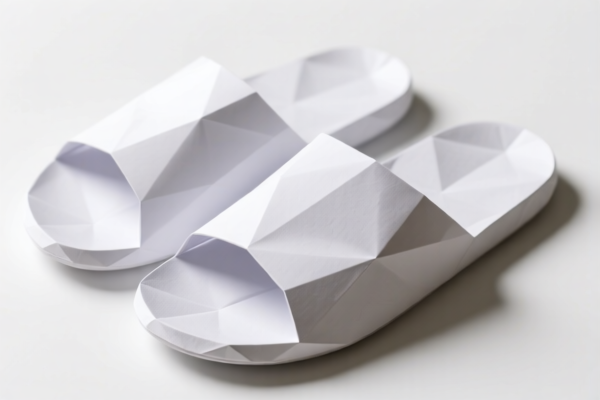
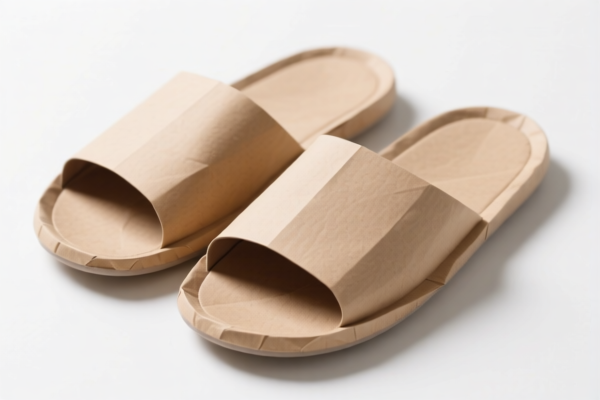
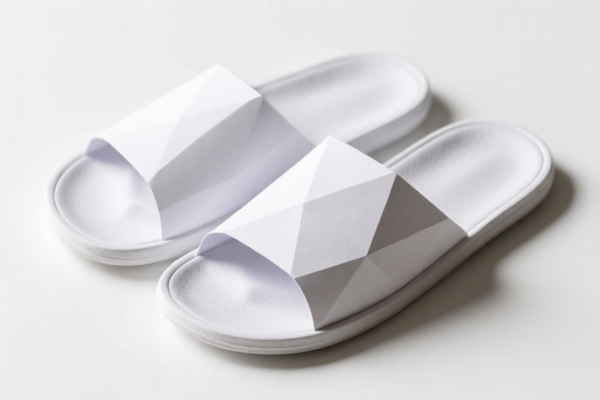
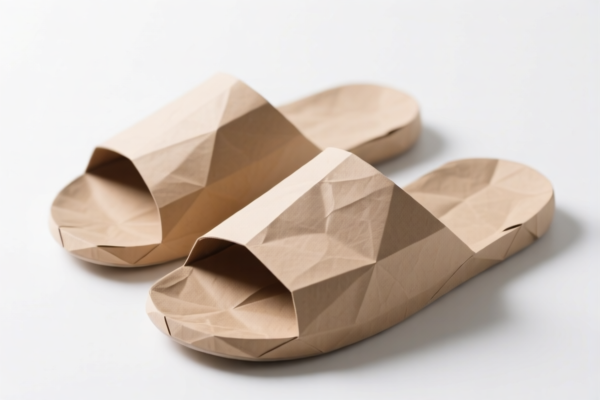
AI Analysis
🧼 Floor Mopping Slippers (Cleaning Footwear)
🌐 HS Code Reference & Clearance Guide | 2026 Latest Tariff Analysis | Professional Clearance Strategy
📌 I. Product Definition & Classification: What Exactly Are "Mopping Slippers"?
Floor mopping slippers (often called "cleaning slippers" or "slipper mops") are specialized footwear designed to clean hard floors while the user walks. They consist of a slipper-shaped sole with an attached microfiber or cotton cleaning pad.
In international trade, these items fall into two main categories depending on their primary composition and construction:
- Textile-Upper Slippers: The upper part is made of fabric/textile materials, and the sole/cleaning pad is also textile-based. These are generally classified under Footwear.
- Plastic/Non-Woven Components: If the item is considered primarily an "article of plastics" or a "felt article" used for cleaning (less common for wearable slippers, but possible for disposable types), it might fall under Chapter 39 (Plastics) or Chapter 56 (Felt).
⚠️ Key Distinction:
- If it is a wearable slipper with an upper made of textile materials → Heading 6405 (Footwear).
- If it is a disposable cleaning pad or a non-wearable felt product → Heading 5602 (Felt) or 3926 (Plastic articles).
- Most commercial "mopping slippers" are classified as footwear because they are designed to be worn.
📦 II. HS Code Classification Details (2026 Latest Tariff Authoritative Comparison)
Based on the provided data, here are the relevant HS Codes for products related to mopping slippers, categorized by their material and structure.
| HS Code | Product Description | Applicable Scenario | Material Key |
|---|---|---|---|
6405.20.90.15 |
Other footwear: With uppers of textile materials: Other House slippers | Standard reusable mopping slippers with fabric uppers and microfiber pads | ✅ Textile Upper |
6405.20.90.80 |
Other footwear: With uppers of textile materials: Other Other: Other | Mopping slippers that don't fit the "House slipper" specific description (e.g., mixed materials) | ✅ Textile Upper |
5602.90.90.00 |
Felt, whether or not impregnated, coated, covered or laminated: Other | If the product is purely a felt pad/cleaning sheet, not wearable footwear | ✅ Felt (No textile upper) |
5602.29.00.00 |
Other felt, not impregnated, coated, covered or laminated: Of other textile materials | Raw felt sheets used for cleaning (not made into slippers) | ✅ Felt (Raw Material) |
3926.20.90.50 |
Other articles of plastics: Articles of apparel and clothing accessories | Rare: Plastic-based "slippers" that are essentially disposable cleaning accessories (not true footwear) | ✅ Plastic Apparel |
3926.90.99.89 |
Other articles of plastics: Other | Plastic cleaning pads or non-wearable plastic components | ✅ Plastic (Non-apparel) |
🔍 Critical Reminder:
- Wearable Mopping Slippers are overwhelmingly classified under 6405.20 (Textile Upper Footwear).
- Disposable Felt Pads (that are not shoes) fall under 5602.
- Do not misclassify wearable slippers as "Plastic Articles" (3926) just because they have a rubber/plastic sole; the upper material usually dictates the heading for footwear.
💰 III. 2026 Latest Tariff Rate Detailed Explanation
✅ Applicable Country: USA (US)
✅ Origin: China (CN)
✅ Effective Date: 2025-11-10 (and subsequent imports)
🎯 1. 6405.20.90.15 – Other House Slippers (Textile Upper)
This is the most likely code for standard mopping slippers.
| Item | Content |
|---|---|
| Basic Tariff | 0.0% |
| Section 301 / Additional Tariff | 0.0% |
| Total Tax Rate | 0.0% |
| Tax Calculation | CIF Value × 0% = $0 |
| De Minimis Eligibility | ✅ Yes (Usually eligible for Section 321 de minimis if < $800) |
| Legal Basis | Standard USITC Tariff Schedule for Textile Footwear |
📌 Explanation:
- Mopping slippers with textile uppers are currently duty-free from both base tariffs and Section 301 additional tariffs.
- This is a highly favorable classification for importers.
- Ensure the "upper" is clearly textile (mesh, cotton, microfiber blend) to maintain this code.
🎯 2. 6405.20.90.80 – Other Footwear with Textile Uppers
| Item | Content |
|---|---|
| Basic Tariff | 0.0% |
| Additional Tariff | 0.0% |
| Total Tax Rate | 0.0% |
| Tax Calculation | CIF Value × 0% = $0 |
| De Minimis Eligibility | ✅ Yes |
📌 Explanation:
- Also duty-free.
- Use this if the slipper does not strictly meet the "House Slipper" definition but still has a textile upper.
🎯 3. 5602.90.90.00 – Other Felt Articles
| Item | Content |
|---|---|
| Basic Tariff | 0.0% |
| Additional Tariff | 0.0% |
| Total Tax Rate | 0.0% |
| Tax Calculation | CIF Value × 0% = $0 |
| De Minimis Eligibility | ✅ Yes |
📌 Explanation:
- If you are importing only the felt pads (not attached to slippers) for cleaning, this code applies.
- Also duty-free.
🎯 4. 5602.29.00.00 – Other Felt, Not Impregnated/Coated
| Item | Content |
|---|---|
| Basic Tariff | 0.0% |
| Additional Tariff | 0.0% |
| Total Tax Rate | 0.0% |
| Tax Calculation | CIF Value × 0% = $0 |
📌 Explanation:
- Applies to raw or semi-finished felt sheets.
- Duty-free.
🎯 5. 3926.20.90.50 – Articles of Apparel of Plastic
| Item | Content |
|---|---|
| Basic Tariff | 0.0% |
| Additional Tariff | 0.0% |
| Total Tax Rate | 0.0% |
📌 Explanation:
- If the item is considered a "plastic accessory" (e.g., disposable plastic cleaning clogs), it is duty-free.
🎯 6. 3926.90.99.89 – Other Plastic Articles
| Item | Content |
|---|---|
| Basic Tariff | 5.3% |
| Additional Tariff (Section 301) | 7.5% |
| Total Tax Rate | 12.8% |
| Tax Calculation | CIF Value × 12.8% |
| De Minimis Eligibility | ❌ No (Section 301 items are generally denied de minimis) |
| Legal Basis | IEEPA:9903.01.25 → USITC:3926.90.99.89 → FOOTNOTE:9903.88.01 |
📌 Explanation:
- This code carries a significant tax burden of 12.8%.
- Avoid this code for mopping slippers unless they are clearly non-wearable plastic articles. Misclassifying textile slippers as general plastic articles to avoid "footwear" scrutiny can lead to penalties, but misclassifying them as this code results in paying 12.8% tax unnecessarily if they qualify for 0%.
- Note: If customs determines these are footwear, they may reassess, but if they stick to 3926, you pay 12.8%.
🛠️ IV. Clearance Practical Advice (Real-World Pitfall Guide)
✅ 1. Documentation Checklist (Must-Have)
| Document | Required | Description |
|---|---|---|
| ✅ Product Photos | ✔️ | Clear images showing the textile upper and the cleaning pad attachment. |
| ✅ Commercial Invoice | ✔️ | Must specify "Textile Upper" and "Cleaning Slippers" or "Mopping Slippers". |
| ✅ Packing List | ✔️ | Detail the quantity and weight. |
| ✅ Material Composition | ✔️ | e.g., "Upper: 100% Polyester Microfiber; Sole: TPU/Rubber; Pad: Cotton/Microfiber blend". |
| ✅ Function Description | ✔️ | "Used for cleaning hard floors while walking; not for industrial safety." |
✅ 2. Declaration Tips (Key Mantras)
🔥 "Textile Upper = Footwear = 0% Tax!"
| Scenario | Correct Declaration | Incorrect Action |
|---|---|---|
| Wearable Mopping Slippers | 6405.20.90.15 (House Slippers, Textile Upper) |
Misclassify as 3926.90.99.89 (Plastic Article) → 12.8% Tax |
| Disposable Felt Pads (No shoe structure) | 5602.90.90.00 (Other Felt) |
Misclassify as Footwear → Confusion/Delay |
| Plastic Cleaning Clogs (Not soft slippers) | 3926.20.90.50 or 3926.90.99.89 |
Misclassify as Textile Footwear → Wrong Code |
✅ 3. Special Situations
| Situation | Handling Advice |
|---|---|
| Mixed Materials | If the upper is 90% textile and 10% plastic, it still likely falls under 6405 (Textile Upper). Declare the primary material. |
| Attached Cleaning Pad | Ensure the pad is securely attached. If it's a separate accessory sold together, it may be classified as a set with the footwear. |
| Sample Imports | If value < $800, use Section 321 De Minimis. Since the tax rate is 0% (for 6405/5602), it's straightforward. |
| Large Volume Commercial | Even if 0% tax, ensure proper labeling. Some carriers may require additional security filings (AMS/ISF). |
🌍 V. Global Market Clearance Comparison (2026 Latest)
| Country/Region | Recommended HS Code | Tariff | Notes |
|---|---|---|---|
| 🇺🇸 USA | 6405.20.90.15 |
0.0% | Best option for textile upper mopping slippers. |
| 🇨🇳 China | 6405.20.90.15 |
Varies | Check latest Chinese tariff schedule for export/import details. |
| 🇪🇺 EU | 6405.20 |
Varies | Generally 0-10% depending on exact origin and trade agreements. |
| 🇬🇧 UK | 6405.20 |
Varies | Post-Brexit tariffs apply. |
📌 Conclusion:
- The USA offers the most favorable 0% tariff for textile-upper mopping slippers.
- Avoid misclassification as "General Plastic Articles" (3926.90.99.89) which incurs a 12.8% tax.
📌 VI. Common Errors & Pitfalls (Blood Lessons)
❌ Error 1: Declaring "Mopping Slippers" as "Plastic Cleaning Tools"
👉 Consequence: If customs inspects and finds textile uppers, they may reclassify to 6405 (which is good, 0%) but penalize for incorrect declaration. If they stick to 3926.90.99.89, you pay 12.8% unnecessarily.
❌ Error 2: Not specifying "Textile Upper" in the description
👉 Consequence: Customs may assign a higher-duty code or request additional classification documents, delaying clearance.
❌ Error 3: Confusing "Mopping Slippers" with "Safety Slippers"
👉 Consequence: Safety footwear may have different regulations. Mopping slippers are casual/cleaning items, not PPE.
✅ Correct Declaration Example:
"Men's Mopping Slippers, Upper: 100% Microfiber Textile, Sole: TPU, With Attached Cleaning Pad, For Home Floor Cleaning"
🎯 VII. Conclusion: Precise Classification Saves Money!
🎯 Remember the Mantra:
🔹 "Textile Upper = 6405 = 0% Tax"
🔹 "Felt Pad Only = 5602 = 0% Tax"
🔹 "Plastic General Article = 3926.99 = 12.8% Tax (Avoid if possible)"
🔹 "De Minimis Applies if < $800 (for 0% items)"
📌 Pro Tip:
If you are importing large quantities, ensure your supplier provides a Material Composition Certificate proving the upper is >50% textile. This solidifies the 6405 classification and protects your 0% tax rate.
📣 Immediate Action:
📞 Contact your customs broker with product photos.
🚀 Declare as "Textile Upper Footwear" to secure the 0.0% total tax rate.
💡 Save costs by avoiding the 12.8% plastic article tax!
✨ Professional clearance starts with accurate classification!
💼 Every dollar saved on tariffs is pure profit!
Customer Reviews
About HS Code Classification
The Harmonized System (HS) is an internationally standardized nomenclature developed by the World Customs Organization (WCO) to classify traded products. Over 200 countries use the HS system as the basis for customs tariffs, trade statistics, and import/export regulations.
Each HS code follows a hierarchical structure:
- Chapter (2 digits) — Broad category of goods (e.g., Chapter 84: Machinery and Mechanical Appliances)
- Heading (4 digits) — More specific grouping within the chapter
- Subheading (6 digits) — Internationally standardized breakdown, used by all WCO member countries
- National subdivisions (8-10 digits) — Country-specific extensions for further classification, such as US HTSUS 10-digit codes
Correct HS code classification is essential for smooth customs clearance, accurate duty payment, and compliance with trade regulations. Misclassification can lead to customs delays, overpayment of duties, or penalties.
When importing from CN to US, the applicable tariff rates may include:
- Most-Favored-Nation (MFN) rate — The standard duty rate applied to WTO members
- General rate — Applied to countries without trade agreements
- Trade remedy duties — Additional tariffs such as Section 301 (anti-dumping), Section 232 (national security), or countervailing duties
The information provided on this page is for reference purposes only. For official classification, please consult with your local customs authority or a licensed customs broker.