Floor Pulling Tool
CN → US| HS Code | Tariff Rate | Origin | Destination | Doc |
|---|---|---|---|---|
| 8205593080 | 35.0% | CN | US | Official Doc |
| 8205593010 | 35.0% | CN | US | Official Doc |
Product Images
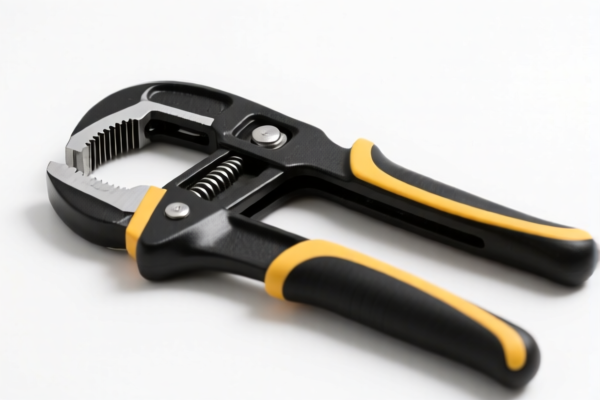
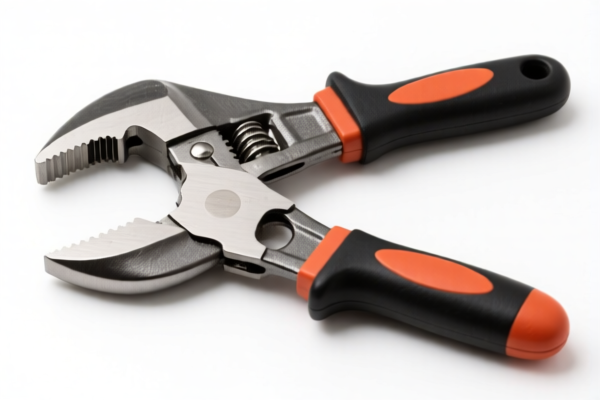
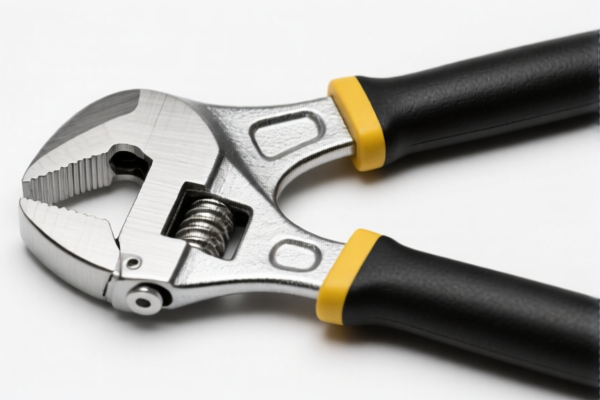
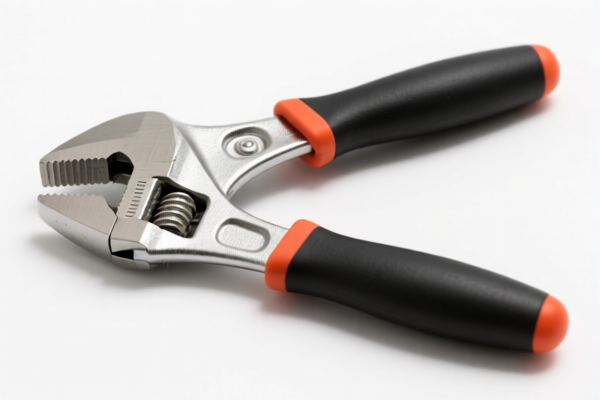
AI Analysis
🔨 Floor Pulling Tools (Crowbars, Track Tools, and Wedges)
🌐 HS Code Reference & Customs Clearance Guide | 2026 Latest Tariff Analysis | Professional Clearance Strategy
📌 I. Product Definition and Classification: What Exactly is a "Floor Pulling Tool"?
Floor Pulling Tools, in the context of international trade and customs classification, primarily refer to mechanical leverage instruments used for demolition, removal, or adjustment tasks. These are commonly known as Crowbars, Track Tools (used for railway maintenance or heavy rail removal), and Wedges.
In the Harmonized System (HS), these items fall under Chapter 82: Tools, Implements, Cutlery, Spoons and Forks, of Base Metal; Parts Thereof.
Specifically, they are classified under: "Other handtools (including glass cutters) and parts thereof: Crowbars, track tools and wedges, and parts thereof."
⚠️ Key Distinction:
- These are non-motorized, manual handtools.
- They are not classified as machine parts unless explicitly designated as such for specific machine tools (which is rare for general crowbars).
- They are not classified as "parts of machine tools" under Chapter 84 unless they are specialized, interchangeable parts for industrial machinery. General floor pulling tools are considered standalone handtools.
📦 II. HS Code Classification Details (2026 Latest Tariff Authority Comparison)
Based on the provided data, there are two distinct HS codes within the same subheading, differentiated by the specific type of tool:
| HS Code | Product Description | Applicable Scenarios | Specific Item Type |
|---|---|---|---|
8205.59.30.10 |
Other handtools (including glass cutters) and parts thereof: Other: Crowbars, track tools and wedges, and parts thereof: Crowbars | General demolition, pry bars, heavy-duty leverage tools for flooring, decking, or concrete breaking | ✅ Crowbars (Standard pry bars, claw hammers, wrecking bars) |
8205.59.30.80 |
Other handtools (including glass cutters) and parts thereof: Other: Crowbars, track tools and wedges, and parts thereof: Other | Track tools (railway spikes, rail pullers), specialized wedges, non-standard crowbar variants | ✅ Track Tools & Wedges (Specialized industrial demolition or railway maintenance tools) |
🔍 Critical Note:
- The primary differentiator is whether the tool is a standard Crowbar (...10) or a Track Tool/Wedge/Other (...80).
- If your "Floor Pulling Tool" is a standard pry bar used for pulling up floorboards, it likely falls under8205.59.30.10.
- If it is a specialized track tool (e.g., for removing railway ties) or a wedge system, it falls under8205.59.30.80.
- Do not misclassify as "parts of machine tools" or "hydraulic tools" (if non-motorized).
💰 III. 2026 Latest Tariff Rate Detailed Breakdown (Including Additional Taxes, Policy Surcharges)
✅ Applicable Country: United States (US)
✅ Country of Origin: China (CN)
✅ Effective Time: 2025/2026 (Current Policy)
🎯 1. 8205.59.30.10 —— Standard Crowbars
| Item | Content |
|---|---|
| Basic Tariff Rate | 0.0% (Ad Valorem) |
| Section 301 Additional Tariff | +25.0% |
| Total Tax Rate | 25.0% |
| Tax Calculation | CIF Value × 25% |
| De Minimis Exemption | ❌ Not Eligible (Subject to 301 tariffs) |
| Legal Basis | HTSUS 8205.59.30.10 + USITC Section 301 List 4C |
📌 Explanation:
- While the basic MFN tariff is 0%, the Section 301 additional duty of 25% applies to all Chinese-origin products in this category.
- This is a high-cost category for importers compared to other base-metal handtools that may have lower 301 rates.
- No IEEPA surcharge is listed in the provided data for this specific code (unlike some electronics), but the 25% is significant.
🎯 2. 8205.59.30.80 —— Track Tools, Wedges, and Other Variants
| Item | Content |
|---|---|
| Basic Tariff Rate | 0.0% (Ad Valorem) |
| Section 301 Additional Tariff | +25.0% |
| Total Tax Rate | 25.0% |
| Tax Calculation | CIF Value × 25% |
| De Minimis Exemption | ❌ Not Eligible (Subject to 301 tariffs) |
| Legal Basis | HTSUS 8205.59.30.80 + USITC Section 301 List 4C |
📌 Explanation:
- Same tax structure as standard crowbars.
- Important: Even though the basic tariff is 0%, the 25% additional tariff makes the total landed cost significantly higher.
- This applies to all crowbar-type tools regardless of whether they are for flooring, railway, or general demolition.
🛠️ IV. Customs Clearance Practical Advice (Real-World Pitfall Avoidance Guide)
✅ 1. Required Documentation Checklist (Non-negotiable)
| Document | Must Provide | Description |
|---|---|---|
| ✅ Product Specifications | ✔️ | Material (e.g., carbon steel, chrome-vanadium), weight, dimensions, length |
| ✅ Product Photos | ✔️ | Clear images of the tool, including handles, jaws, and any branding |
| ✅ Commercial Invoice | ✔️ | Must clearly state "Crowbar" or "Track Tool", not vague terms like "Hardware" or "Tool" |
| ✅ Packing List | ✔️ | Item count, net/gross weight, packaging type |
| ✅ Country of Origin Certificate | ✔️ | Essential for proving Chinese origin and applying correct 301 tariffs |
| ✅ HS Code Confirmation | ✔️ | Pre-ruling or internal classification report |
✅ 2. Declaration Tips (Key Mantra)
🔥 “Be Specific, Not Generic! ‘Crowbar’ or ‘Track Tool’ – Never ‘Hardware Part’!”
| Scenario | Correct Declaration | Incorrect Practice |
|---|---|---|
| Standard Pry Bar | 8205.59.30.10 - "Crowbar" |
"Hand Tool" or "Metal Tool" → Risk of misclassification & delays |
| Railway Tie Puller | 8205.59.30.80 - "Track Tool" |
"Part of Railway Equipment" → Incorrect chapter (84/86) |
| Wooden-Handle Crowbar | 8205.59.30.10 |
"Wooden Tool" → Incorrect; base metal is the essential character |
| Hydraulic Jack (Not included) | ❌ Not in this HS | These are machine tools or hydraulic equipment, not handtools |
⚠️ Warning:
- Do not declare as "Parts of Machine Tools" (Chapter 84) unless they are truly interchangeable parts for a specific machine.
- Do not use vague terms like "Demolition Tools" without specifying the type. Customs may reclassify and apply different tariffs or require additional inspections.
✅ 3. Special Cases Handling
| Scenario | Handling Advice |
|---|---|
| Wooden-Handled Crowbars | Still classified under 8205 because the base metal head is the essential component. |
| Combined Tools (e.g., Pry Bar + Hammer) | Classified as the primary function. If it’s primarily a pry bar, use 8205.59.30.10. |
| Custom/Non-Standard Shapes | Use 8205.59.30.80 ("Other") if it doesn’t fit the standard "Crowbar" definition. |
| Sets of Tools | If sold as a set, classify based on the principal component (usually the crowbar). |
🌍 V. Global Major Market Comparison (2026 Latest)
| Country/Region | Recommended HS Code | Tariff (China Origin) | Certification Requirements | Notes |
|---|---|---|---|---|
| 🇺🇸 USA | 8205.59.30.10 / 8205.59.30.80 |
25% (Total) | None specific for handtools | High tariff due to Section 301 |
| 🇨🇳 China | 8205.59.30.10 |
0-5% (Export) | CCC (if applicable) | No export duty |
| 🇪🇺 EU | 8205.59 |
0-2.7% | CE (if deemed machinery, but usually not for handtools) | No additional tariffs |
| 🇬🇧 UK | 8205.59 |
0-2.7% | UKCA (if applicable) | Post-Brexit trade agreements |
| 🇨🇦 Canada | 8205.59 |
0-5% | None specific | No additional tariffs |
📌 Conclusion:
- The US is the only major market with a 25% additional tariff on these items from China.
- EU, UK, Canada, and Japan have significantly lower or zero tariffs, making them more cost-effective markets for Chinese-origin floor pulling tools.
- Supply Chain Strategy: If targeting the US, consider sourcing from Vietnam, India, or Thailand to avoid the 25% Section 301 tariff (if rules of origin are met).
📌 VI. Common Errors & Pitfall Guide (Blood & Tears Lessons)
❌ Error 1: Declaring as "Parts of Machine Tools" (8466.93)
👉 Consequence: Misclassification, potential denial of entry, fines for incorrect declaration.
✅ Correction: These are handtools, not machine parts. Use Chapter 82.
❌ Error 2: Using vague description "Metal Tool"
👉 Consequence: Customs may audit, delay clearance, or apply the highest general tariff rate.
✅ Correction: Be specific: "Carbon Steel Crowbar, 24-inch, for Floor Removal".
❌ Error 3: Ignoring Section 301 Tariff
👉 Consequence: Underpayment of duty, leading to penalties and back taxes upon audit.
✅ Correction: Always include the 25% additional duty in cost calculations for US imports.
❌ Error 4: Confusing with Hydraulic Tools
👉 Consequence: Wrong HS code. Hydraulic pullers are classified under Chapter 84 (Machine tools/Part thereof).
✅ Correction: Only manual, non-motorized crowbars/barrs fall under 8205.
🎯 VII. Conclusion: Professional Declaration Saves Money!
🎯 Remember the Mantra:
🔹 "Crowbar is Crowbar, Track Tool is Track Tool – Don’t Guess!"
🔹 "25% US Tax is Real – Plan Your Supply Chain!"
🔹 "Chapter 82, Handtools – Not Parts, Not Machines!"
📌 Pro Tip:
If your floor pulling tools are hydraulic (powered by fluid pressure, not manual force), they are NOT covered by this HS code. They fall under Chapter 84 (e.g., 8479.89 or 8413.70) and have different tariff structures.
For manual crowbars, wedges, and track tools, always use 8205.59.30.
📣 Immediate Action:
📞 Contact your customs broker with photos and specs.
🚀 Verify HS Code via HTSUS database.
💼 Calculate Landed Cost including 25% US tariff.
✨ Professional Clearance, Starts with Precise Classification!
💼 Your Cost Control, Starts with Accurate Tariff Calculation!
Customer Reviews
About HS Code Classification
The Harmonized System (HS) is an internationally standardized nomenclature developed by the World Customs Organization (WCO) to classify traded products. Over 200 countries use the HS system as the basis for customs tariffs, trade statistics, and import/export regulations.
Each HS code follows a hierarchical structure:
- Chapter (2 digits) — Broad category of goods (e.g., Chapter 84: Machinery and Mechanical Appliances)
- Heading (4 digits) — More specific grouping within the chapter
- Subheading (6 digits) — Internationally standardized breakdown, used by all WCO member countries
- National subdivisions (8-10 digits) — Country-specific extensions for further classification, such as US HTSUS 10-digit codes
Correct HS code classification is essential for smooth customs clearance, accurate duty payment, and compliance with trade regulations. Misclassification can lead to customs delays, overpayment of duties, or penalties.
When importing from CN to US, the applicable tariff rates may include:
- Most-Favored-Nation (MFN) rate — The standard duty rate applied to WTO members
- General rate — Applied to countries without trade agreements
- Trade remedy duties — Additional tariffs such as Section 301 (anti-dumping), Section 232 (national security), or countervailing duties
The information provided on this page is for reference purposes only. For official classification, please consult with your local customs authority or a licensed customs broker.