Floor Repair Kit
CN → US| HS Code | Tariff Rate | Origin | Destination | Doc |
|---|---|---|---|---|
| 3214100010 | 38.7% | CN | US | Official Doc |
| 3214100090 | 38.7% | CN | US | Official Doc |
| 3506105000 | 37.1% | CN | US | Official Doc |
| 3506915000 | 37.1% | CN | US | Official Doc |
Product Images
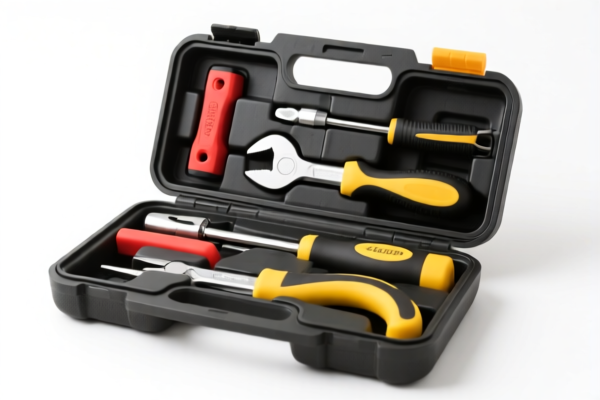
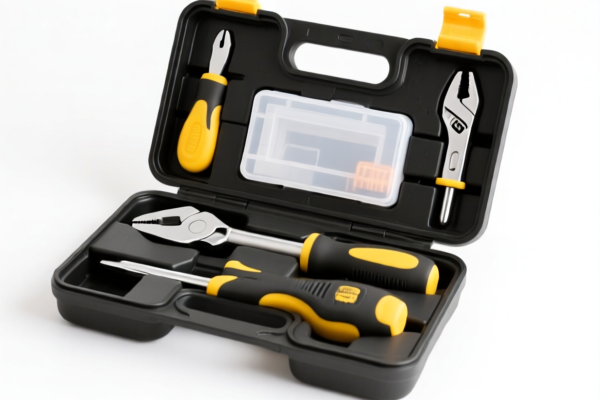
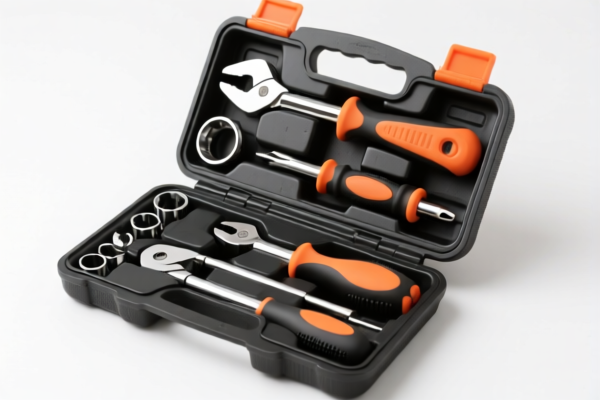

AI Analysis
🛠️ Floor Repair Kit (Restoration & Adhesive Solutions)
🌐 HS Code Reference & Customs Clearance Guide | 2026 Latest Tariff Analysis | Professional Clearance Strategy
📌 One, Product Definition & Classification: Do You Really Understand "Floor Repair Kits"?
Floor Repair Kits are versatile composite products used for fixing damaged surfaces in residential, commercial, and industrial settings. They are not a single entity but a collection of materials designed to restore integrity and aesthetics to floors. In international trade, they are primarily classified based on their dominant functional component or the primary chemical composition.
1. Caulking Compounds & Mastics (Sealing & Filling):
These kits typically contain polyurethane, acrylic, or silicone-based compounds used to fill gaps, seal joints, or repair cracks in wood, tile, or concrete floors. If the kit is dominated by these sealing agents, it falls under Chapter 32.
2. Prepared Adhesives (Bonding):
Many floor repair kits rely heavily on strong industrial glues (e.g., epoxy resins, polymer-based adhesives) to bond tiles, wood planks, or patches. If the adhesive is the primary functional element, it may fall under Chapter 35.
⚠️ Key Distinction:
- If the product is primarily a sealant, filler, or mastic (e.g., silicone caulk, acrylic filler) → Classify under HS 3214 (Glaziers’ putty, caulking compounds).
- If the product is primarily a glue or adhesive (e.g., epoxy bonding agent, polymer glue) → Classify under HS 3506 (Prepared glues).
📦 Two, HS Code Classification Details (2026 Latest Tariff Authoritative Comparison)
| HS Code | Product Description | Applicable Scenario | Key Feature |
|---|---|---|---|
3214.10.00.10 |
Caulking compounds (part of Glaziers’ putty, grafting putty, resin cements, caulking compounds and other mastics) | Kits containing silicone, polyurethane, or acrylic sealants for filling cracks/joints in floors/walls | ✅ Primary: Sealing/Filling |
3214.10.00.90 |
Painters’ fillings (part of Glaziers’ putty, grafting putty, resin cements, caulking compounds and other mastics) | Kits containing wood fillers, spackling paste, or non-refractory surfacing preparations for floors | ✅ Primary: Filling/Surfacing |
3506.10.50.00 |
Other prepared glues (not elsewhere specified or included; retail sale ≤ 1 kg) | Small retail kits containing generic adhesives (e.g., contact cement, multi-purpose glue) | ✅ Primary: General Adhesion |
3506.91.50.00 |
Other adhesives based on polymers (based on polymers of headings 3901–3913 or rubber) | Kits containing epoxy resins, polyurethane adhesives, or rubber-based bonding agents | ✅ Primary: Polymer-Based Bonding |
🔍 Key Reminder:
- If a kit contains both sealant and glue, customs authorities will classify it based on the essential character or the component by value/quantity.
- For floor-specific kits, if the primary action is filling/leveling, use 3214. If the primary action is bonding/repairing via adhesion, use 3506.
💰 Three, 2026 Latest Tariff Rate Details (Including Surcharges, Policy Add-ons)
✅ Applicable Country: United States (US)
✅ Origin: China (CN)
✅ Effective Time: From November 10, 2025 (including subsequent imports)
🎯 1. 3214.10.00.10 —— Caulking Compounds
| Item | Content |
|---|---|
| Base Tariff | 0.0% |
| USITC Surtax | +25% (from USITC Footnote 9903.88.01) |
| IEEPA Surtax | +10% (for Chinese/HK products, effective Nov 10, 2025) |
| Total Tax Rate | 35% |
| Tax Calculation | CIF Value × 35% |
| De Minimis Exemption | ❌ Not Available (deny_de_minimis) |
| Legal Basis Path | IEEPA:9903.01.25 → IEEPA:9903.01.24 → USITC:3214.10.00.10 → FOOTNOTE:9903.88.01 |
📌 Explanation:
- Although the base tariff is 0%, the 35% total tax is significant for DIY consumers and B2B buyers.
- This classification applies to silicone, polyurethane, and acrylic sealants used for floor gap filling.
🎯 2. 3214.10.00.90 —— Painters’ Fillings
| Item | Content |
|---|---|
| Base Tariff | 0.0% |
| USITC Surtax | +25% |
| IEEPA Surtax | +10% |
| Total Tax Rate | 35% |
| Tax Calculation | CIF Value × 35% |
| De Minimis Exemption | ❌ Not Available (deny_de_minimis) |
| Legal Basis Path | IEEPA:9903.01.25 → IEEPA:9903.01.24 → USITC:3214.10.00.90 → FOOTNOTE:9903.88.01 |
📌 Note:
- This applies to wood fillers, spackling pastes, and epoxy fillers used for repairing holes or cracks in wooden or laminate floors.
- Tax rate is identical to caulking compounds due to the same surcharge structure.
🎯 3. 3506.10.50.00 —— Other Prepared Glues (Retail ≤ 1 kg)
| Item | Content |
|---|---|
| Base Tariff | 0.0% |
| USITC Surtax | +25% |
| IEEPA Surtax | +10% |
| Total Tax Rate | 35% |
| Tax Calculation | CIF Value × 35% |
| De Minimis Exemption | ❌ Not Available (deny_de_minimis) |
| Legal Basis Path | IEEPA:9903.01.25 → IEEPA:9903.01.24 → USITC:3506.10.50.00 → FOOTNOTE:9903.88.01 |
📌 Note:
- Applies to generic retail adhesives (e.g., contact cement, spray glue) in small packages.
🎯 4. 3506.91.50.00 —— Polymer-Based Adhesives
| Item | Content |
|---|---|
| Base Tariff | 0.0% |
| USITC Surtax | +25% |
| IEEPA Surtax | +10% |
| Total Tax Rate | 35% |
| Tax Calculation | CIF Value × 35% |
| De Minimis Exemption | ❌ Not Available (deny_de_minimis) |
| Legal Basis Path | IEEPA:9903.01.25 → IEEPA:9903.01.24 → USITC:3506.91.50.00 → FOOTNOTE:9903.88.01 |
📌 Note:
- Applies to epoxy resins, polyurethane adhesives, and rubber-based glues used for bonding tiles, wood, or concrete.
🛠️ Four, Customs Clearance Practical Advice (Battle-Tested Pitfall Guide)
✅ 1. Documentation Checklist (All Are Mandatory)
| Document | Required | Description |
|---|---|---|
| ✅ Product Spec Sheet | ✔️ | Must detail chemical composition, primary use (sealant vs. glue), and net weight. |
| ✅ SDS (Safety Data Sheet) | ✔️ | Crucial for identifying hazardous materials and confirming chemical classification. |
| ✅ Product Photos | ✔️ | Clear images of packaging, label, and contents (show if it’s a kit or single product). |
| ✅ Commercial Invoice | ✔️ | Must specify “Floor Repair Kit” or “Adhesive/Caulking Compound” – avoid vague terms like “General Supplies”. |
| ✅ Packing List | ✔️ | Detail components: e.g., “1x Caulk Tube, 1x Applicator Gun” vs. “1x Epoxy Resin Kit”. |
| ✅ Origin Certificate | ✔️ | If non-China origin, may qualify for reduced tariffs (verify specific FTAs). |
✅ 2. Declaration Tips (Key Mantra)
🔥 “Sealant is 3214, Glue is 3506, Don’t Mix Them Up! Base Rate Zero, Surtax 35%, De Minimis is Gone!”
| Scenario | Correct Declaration | Wrong Approach |
|---|---|---|
| Kit contains silicone sealant for floor gaps | 3214.10.00.10 |
Declare as “Glue” → Potential misclassification risk |
| Kit contains wood filler/spackle | 3214.10.00.90 |
Declare as “Paint” → Incorrect Chapter |
| Kit contains epoxy adhesive for tile bonding | 3506.91.50.00 |
Declare as “Sealant” → Incorrect Chapter |
| Kit is a mixed box with both sealant and glue | Classify by Essential Character | Declare as “Miscellaneous” → High risk of audit |
✅ 3. Special Handling Scenarios
| Scenario | Recommendation |
|---|---|
| Mixed Kits (Sealant + Glue + Tools) | If sealant/filler constitutes >50% by value or function, use 3214. If glue dominates, use 3506. Provide a breakdown in the invoice. |
| Small Retail Packages (<1kg) | Still subject to 35% total tax. No de minimis exemption for Chinese-origin goods under current IEEPA/USITC rules. |
| Epoxy Floor Coatings (Not Repair Kits) | If it’s a large-volume coating for sealing/finishing entire floors, it may fall under 3214 or 3906 (depending on polymer type). Verify chemical structure. |
| Non-Chinese Origin | If manufactured in Vietnam, Malaysia, or Thailand, verify eligibility for IEEPA exemption. Tariff may drop to 0%~25%. |
🌍 Five, Global Market Customs Comparison (2026 Latest)
| Country/Region | Recommended HS Code | Tariff (China Origin) | Certification Requirements | Notes |
|---|---|---|---|---|
| 🇺🇸 United States | 3214.10.00.10 / 3506.91.50.00 |
35% (Total) | None specific for customs, but SDS mandatory | High surcharge; No de minimis |
| 🇨🇳 China | 3214.10.00 / 3506.91.00 |
~5-7% | CCC (if applicable) | No extra surcharges |
| 🇪🇺 European Union | 3214.10.00 / 3506.91.00 |
~0-6% | REACH, CLP | Generally lower tariffs, strict chemical compliance |
| 🇬🇧 United Kingdom | 3214.10.00 / 3506.91.00 |
~0-6% | UKCA, REUK | Post-Brexit rules apply |
| 🇦🇺 Australia | 3214.10.00 / 3506.91.00 |
~5% | GHS Labeling | Moderate tariffs |
📌 Conclusion:
- The US is the most expensive market for these products due to the 35% total tax burden (0% base + 25% USITC + 10% IEEPA).
- China, EU, and UK offer significantly lower tariffs, making them more competitive for exporters.
- Chemical compliance (REACH in EU, SDS in US) is critical regardless of tariff.
📌 Six, Common Errors & Pitfall Guide (Lessons from Experience)
❌ Error 1: Declaring a Caulking Compound as “Paint” or “Painting Supplies”
👉 Consequence: Misclassification under Chapter 32 or 35 errors → Delays, fines, or re-export.
❌ Error 2: Ignoring the 35% Total Tax in the US
👉 Consequence: Profit margin erosion. Many importers assume “Base 0% = 0% Tax” → Unexpected customs bills.
❌ Error 3: Using “Floor Glue” as the only description without specifying Chemical Type
👉 Consequence: Customs may delay classification request → Holding fees at port.
❌ Error 4: Assuming De Minimis Exemption applies to small kits
👉 Consequence: All Chinese-origin goods under 800 Series (including 3214 and 3506) are subject to full taxation in the US. No $800 exemption.
✅ Correct Approach:
“Floor Repair Kit: 500g Polyurethane Caulking Compound, Silicone-Free, for Wood and Tile Gaps, MSDS Provided, HS Code 3214.10.00.10”
🎯 Seven, Conclusion: Professional Declaration, Save Time & Money!
🎯 Remember the Mantra:
🔹 “Sealant 3214, Glue 3506, Tax 35%, No De Minimis!”
🔹 “HS Code determines destiny, 35% tax is a trap, accurate declaration saves thousands!”
📌 Pro Tip:
If your Floor Repair Kit originates from Vietnam, Mexico, Thailand, or Malaysia, you may qualify for IEEPA Exemption, reducing the tariff to 0%~25%.
Recommendation: Apply for an Advance Ruling (Pre-classification) with US Customs (CBP) before shipment to avoid clearance risks.
📣 Immediate Action:
📞 Contact a professional customs broker + Provide SDS + Apply for HS Code Pre-classification
🚀 Ensure your Floor Repair Kits clear customs smoothly, maximize profit margins, and avoid surprises!
✨ Professional clearance starts with precise classification!
💼 Every dollar of your cost deserves accurate calculation!
Customer Reviews
About HS Code Classification
The Harmonized System (HS) is an internationally standardized nomenclature developed by the World Customs Organization (WCO) to classify traded products. Over 200 countries use the HS system as the basis for customs tariffs, trade statistics, and import/export regulations.
Each HS code follows a hierarchical structure:
- Chapter (2 digits) — Broad category of goods (e.g., Chapter 84: Machinery and Mechanical Appliances)
- Heading (4 digits) — More specific grouping within the chapter
- Subheading (6 digits) — Internationally standardized breakdown, used by all WCO member countries
- National subdivisions (8-10 digits) — Country-specific extensions for further classification, such as US HTSUS 10-digit codes
Correct HS code classification is essential for smooth customs clearance, accurate duty payment, and compliance with trade regulations. Misclassification can lead to customs delays, overpayment of duties, or penalties.
When importing from CN to US, the applicable tariff rates may include:
- Most-Favored-Nation (MFN) rate — The standard duty rate applied to WTO members
- General rate — Applied to countries without trade agreements
- Trade remedy duties — Additional tariffs such as Section 301 (anti-dumping), Section 232 (national security), or countervailing duties
The information provided on this page is for reference purposes only. For official classification, please consult with your local customs authority or a licensed customs broker.