Floral Handbag
CN → US| HS Code | Tariff Rate | Origin | Destination | Doc |
|---|---|---|---|---|
| 6702104000 | 13.4% | CN | US | Official Doc |
| 6702906500 | 34.5% | CN | US | Official Doc |
| 4202224020 | 42.4% | CN | US | Official Doc |
| 4202228930 | 52.6% | CN | US | Official Doc |
| 3926903300 | 16.5% | CN | US | Official Doc |
| 3926909989 | 22.8% | CN | US | Official Doc |
Product Images
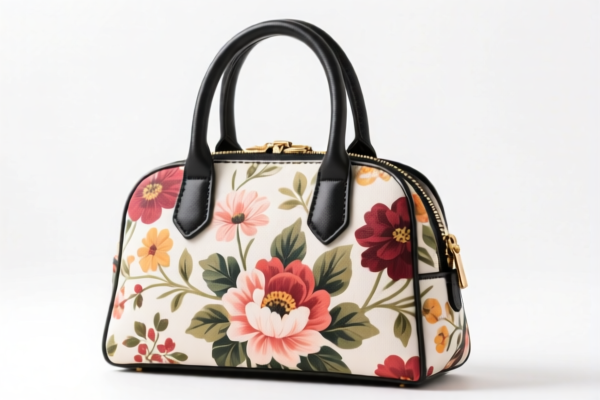
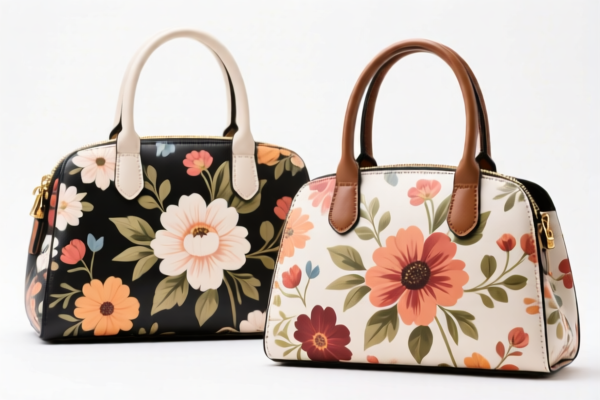
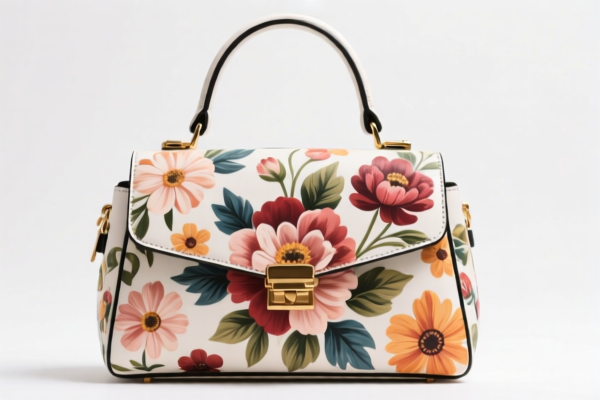
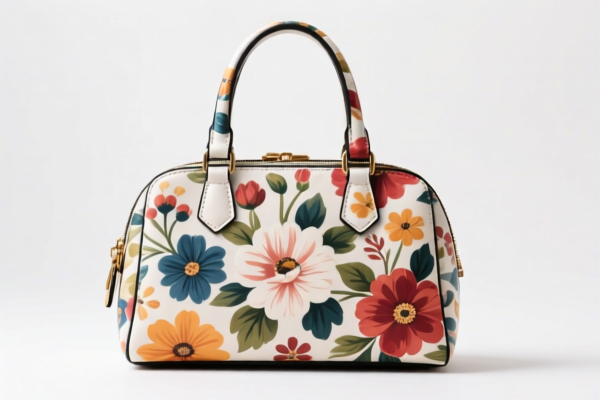
AI Analysis
💐 The "Floral Handbag" Classification Puzzle: Plastic, Artificial Flowers, or Textile?
🌐 HS Code Reference & Customs Clearance Guide | 2026 Latest Tariff Analysis | Professional Clearance Strategy
📌 I. Product Definition: Is It a Handbag, a Decoration, or a Mix?
A "Floral Handbag" is a ambiguous term in international trade. It generally falls into two distinct categories, leading to vastly different HS Codes and Tax Rates. The key differentiator is the primary material and function:
- Artificial Floral Handbags (Plastic/Resin): Handbags shaped like flowers or made primarily of artificial plastic flowers/leaves. These are often decorative or novelty items.
- Textile/Leather Handbags with Floral Patterns: Standard handbags made of textile, leather, or plastics, where the "floral" aspect is just a print or embroidery on the surface.
⚠️ Critical Distinction:
- If the bag is made of artificial flowers/plastics → Classified under Chapter 67 (Artificial Flowers) or Chapter 39 (Plastics).
- If the bag is made of textile/leather/plastic sheeting with a floral design → Classified under Chapter 42 (Leather Goods) or Chapter 39 (Plastic Articles).
📦 II. HS Code Classification Details (Based on Provided DATA)
Based on the provided JSON data, here are the specific HS Codes and tax implications for "Floral Handbags" depending on their material composition.
| HS Code | Product Description | Material Composition | Tax Breakdown (Base + Additional) |
|---|---|---|---|
6702.10.40.00 |
Artificial flowers, foliage and fruit... of plastics: Other, including parts | Primary Material: Artificial plastic flowers, leaves, or stems. The "bag" might be a small container or pouch made entirely of these materials. | Total Tax: 3.4% (Base: 3.4%, Additional: 0.0%) |
6702.90.65.00 |
Artificial flowers, foliage and fruit... of other materials: Other: Other | Primary Material: Artificial flowers made of non-plastic materials (e.g., fabric, paper, wood). | Total Tax: 24.5% (Base: 17.0%, Additional: 7.5%) |
3926.90.33.00 |
Other articles of plastics...: Beads, bugles and spangles...: Handbags | Primary Material: Plastics (Chapter 39). Specifically, handbags made of plastic materials that are not classified elsewhere. | Total Tax: 6.5% (Base: 6.5%, Additional: 0.0%) |
3926.90.99.89 |
Other articles of plastics...: Other Other | Primary Material: Plastic articles not specified elsewhere. Generic plastic handbags. | Total Tax: 12.8% (Base: 5.3%, Additional: 7.5%) |
4202.22.40.30 |
Handbags... of textile materials: Of man-made fibers | Primary Material: Textile (Man-made fibers). Standard handbags with floral prints/patterns. | Total Tax: 0.0% (Base: 0.0%, Additional: 0.0%) |
4202.22.40.20 |
Handbags... of textile materials: Of cotton | Primary Material: Textile (Cotton). Standard handbags with floral prints/patterns. | Total Tax: 0.0% (Base: 0.0%, Additional: 0.0%) |
🔍 Key Insight:
- "Floral" as Decoration (Prints/Embroidery): If the handbag is made of textile (cotton or synthetic) or plastic sheeting, but the "floral" part is just a design, it falls under Chapter 42 or Chapter 39.
- "Floral" as Structure: If the handbag is constructed from artificial flowers, it falls under Chapter 67.
💰 III. Detailed Tariff Analysis (2026 Latest Rates)
✅ Scope: Analysis based on the provided
taxfields in the JSON data.
✅ Note: The provided data includes "Additional Tariffs" (加征关税), which likely reflect current trade tensions (e.g., US-China trade war).
🎯 1. 4202.22.40.20 & 4202.22.40.30 — Textile Handbags (Cotton / Man-made Fibers)
Best for: Standard handbags with floral prints, embroidery, or woven floral patterns.
| Item | Details |
|---|---|
| Base Tariff | 0.0% |
| Additional Tariff | 0.0% |
| Total Tax | 0.0% |
| Why 0%? | Textile handbags (Chapter 42) often enjoy low or zero duties under certain trade agreements or specific subheadings. The provided data explicitly states 0.0% for both base and additional. |
| Clearance Tip | Ensure the outer surface is truly textile (cotton or synthetic fibers). If it has a plastic coating that makes it waterproof, it might be reclassified as plastic (Chapter 39). |
🎯 2. 6702.10.40.00 — Plastic Artificial Flowers Handbags
Best for: Handbags made entirely or primarily of artificial plastic flowers/leaves.
| Item | Details |
|---|---|
| Base Tariff | 3.4% |
| Additional Tariff | 0.0% |
| Total Tax | 3.4% |
| Why Low? | Artificial flowers of plastics have a relatively low base duty. No additional tariff is applied in this dataset. |
| Clearance Tip | Must be classified as "Artificial Flowers" (Chapter 67). If the bag function dominates (e.g., large storage capacity), customs may argue for Chapter 39 or 42. |
🎯 3. 3926.90.33.00 — Plastic Handbags (Specific Subheading)
Best for: Handbags made of plastics, specifically falling under "Beads, bugles, spangles" or similar plastic articles.
| Item | Details |
|---|---|
| Base Tariff | 6.5% |
| Additional Tariff | 0.0% |
| Total Tax | 6.5% |
| Why 6.5%? | This is a specific subheading for plastic articles. No additional tariff is applied. |
| Clearance Tip | Ensure the product is not a textile bag with a plastic lining. It must be primarily plastic. |
🎯 4. 3926.90.99.89 — Other Plastic Articles
Best for: Generic plastic handbags not covered by specific subheadings.
| Item | Details |
|---|---|
| Base Tariff | 5.3% |
| Additional Tariff | 7.5% |
| Total Tax | 12.8% |
| Why High? | The 7.5% additional tariff significantly increases the cost. This is likely due to trade restrictions. |
| Clearance Tip | Avoid this code if possible. Check if your product fits 3926.90.33.00 (6.5%) or a textile code (0-3.4%). |
🎯 5. 6702.90.65.00 — Non-Plastic Artificial Flowers
Best for: Handbags made of artificial flowers made from non-plastic materials (e.g., fabric flowers).
| Item | Details |
|---|---|
| Base Tariff | 17.0% |
| Additional Tariff | 7.5% |
| Total Tax | 24.5% |
| Why High? | High base duty (17%) + additional tariff (7.5%). |
| Clearance Tip | This is the most expensive category. Only use if the product is unequivocally "Artificial Flowers" made of non-plastic materials. |
🛠️ IV. Customs Clearance Practical Advice
✅ 1. Preparation Checklist (Must-Have Documents)
| Document | Requirement | Notes |
|---|---|---|
| Product Photos | High-resolution images showing material texture | Clearly show if the "floral" part is a print, embroidery, or 3D artificial flowers. |
| Material Composition Statement | Detailed breakdown of outer material | Example: "Outer surface: 100% Polyester with Floral Print; Lining: Polyester." |
| Product Structure Diagram | Cross-section or exploded view | Helps customs determine if it's a "bag" or "artificial flower arrangement." |
| Commercial Invoice | Accurate description | Use precise HS Code descriptions. Avoid vague terms like "Floral Bag." |
| Packing List | Quantity and weight | Ensure consistency with invoice. |
| Origin Certificate | If applicable | For potential duty exemptions. |
✅ 2. Classification Strategy (Avoid Pitfalls)
| Scenario | Recommended HS Code | Reason |
|---|---|---|
| Standard Handbag with Floral Print | 4202.22.40.20 (Cotton) or 4202.22.40.30 (Synthetic) |
Outer surface is textile. Floral is just a design. Lowest Tax (0%). |
| Handbag Made of Plastic Flowers | 6702.10.40.00 |
Primary material is artificial plastic flowers. Low Tax (3.4%). |
| Hard Plastic Handbag | 3926.90.33.00 |
Primary material is plastic. Avoid 3926.90.99.89 due to high additional tax. |
| Handbag with Fabric Flowers | 6702.90.65.00 |
Artificial flowers made of fabric (non-plastic). High Tax (24.5%). Avoid if possible. |
✅ 3. Critical Warnings
🔥 Pitfall 1: Misclassifying Textile Bags as Plastic
- Risk: If you declare a textile handbag with a floral print as plastic (3926.90.33.00), customs may reject it or impose penalties.
- Solution: Provide material test reports or detailed component breakdowns.🔥 Pitfall 2: Ignoring Additional Tariffs
- Risk:3926.90.99.89has a 7.5% additional tariff.6702.90.65.00has a 7.5% additional tariff.
- Solution: Always check for "加征关税" (Additional Tariffs) in your country's trade policy.🔥 Pitfall 3: Vague Descriptions
- Risk: Using "Floral Handbag" without specifying material leads to customs discretion, which may result in higher duties.
- Solution: Use precise descriptions:
- "Women's Handbag, 100% Polyester with Floral Print, Plastic Hardware" →4202.22.40.30
- "Handbag made of Artificial Plastic Roses" →6702.10.40.00
🌍 V. Global Market Comparison (2026 Outlook)
| Market | Recommended HS Code | Estimated Total Tax (China Origin) | Notes |
|---|---|---|---|
| USA | 4202.22.40.30 (Textile) |
0% | Based on provided data. Verify USITC additional tariffs. |
| USA | 6702.10.40.00 (Plastic Flowers) |
3.4% | Low base tax, no additional tariff in data. |
| USA | 3926.90.99.89 (Plastic) |
12.8% | High due to 7.5% additional tariff. |
| EU | Depends on EU Tariff Schedule | Check EU Tariff | EU may have different duties for textile vs. plastic. |
| China | Depends on China Tariff Schedule | Check China Tariff | China may have favorable rates for imports from ASEAN. |
📌 Conclusion:
- Textile Handbags (4202.22.40.20/30) are the most tax-efficient (0%) if the outer material is textile.
- Plastic Flower Handbags (6702.10.40.00) are the second best (3.4%).
- Avoid Generic Plastic Codes (3926.90.99.89) due to high additional tariffs.
- Avoid Non-Plastic Artificial Flower Codes (6702.90.65.00) due to high base and additional tariffs.
📌 VI. Common Errors & How to Avoid Them
❌ Error 1: Declaring a textile bag as "Plastic Article" to avoid higher textile duties.
👉 Consequence: Customs inspection reveals textile material → Penalty + Back Taxes.
❌ Error 2: Declaring a plastic flower bag as "Handbag (Chapter 42)".
👉 Consequence: Customs reclassifies as "Artificial Flowers" (Chapter 67) → Potential dispute if descriptions don't match.
❌ Error 3: Ignoring "Additional Tariffs" (加征关税).
👉 Consequence: Unexpected 7.5% extra cost → Profit margin erosion.
✅ Correct Approach:
"Material First, Function Second."
- Is the outer surface textile? →4202.22.40.20/30
- Is the product made of artificial flowers? →6702.10.40.00or6702.90.65.00
- Is it a generic plastic bag? →3926.90.33.00(avoid3926.90.99.89)
🎯 VII. Final Recommendation
For a "Floral Handbag", the optimal HS Code depends entirely on the primary material:
-
If it's a standard handbag with a floral print:
- Use
4202.22.40.20(Cotton) or4202.22.40.30(Man-made Fibers). - Tax: 0.0%. This is the cheapest and safest option.
- Use
-
If it's made of artificial plastic flowers:
- Use
6702.10.40.00. - Tax: 3.4%.
- Use
-
If it's made of generic plastic:
- Use
3926.90.33.00if possible. - Tax: 6.5%. Avoid
3926.90.99.89(12.8%) due to high additional tariffs.
- Use
🚀 Action Plan:
1. Inspect the product's outer material.
2. Document the material composition clearly.
3. Select the HS Code that matches the primary material.
4. Verify if any additional tariffs apply (check the 7.5% flags in the data).
5. Consult a customs broker if the material is mixed (e.g., plastic flowers on a textile bag).
✨ Professional Clearance, Starting with Accurate Classification!
💼 Every dollar saved on duty is pure profit!
Customer Reviews
About HS Code Classification
The Harmonized System (HS) is an internationally standardized nomenclature developed by the World Customs Organization (WCO) to classify traded products. Over 200 countries use the HS system as the basis for customs tariffs, trade statistics, and import/export regulations.
Each HS code follows a hierarchical structure:
- Chapter (2 digits) — Broad category of goods (e.g., Chapter 84: Machinery and Mechanical Appliances)
- Heading (4 digits) — More specific grouping within the chapter
- Subheading (6 digits) — Internationally standardized breakdown, used by all WCO member countries
- National subdivisions (8-10 digits) — Country-specific extensions for further classification, such as US HTSUS 10-digit codes
Correct HS code classification is essential for smooth customs clearance, accurate duty payment, and compliance with trade regulations. Misclassification can lead to customs delays, overpayment of duties, or penalties.
When importing from CN to US, the applicable tariff rates may include:
- Most-Favored-Nation (MFN) rate — The standard duty rate applied to WTO members
- General rate — Applied to countries without trade agreements
- Trade remedy duties — Additional tariffs such as Section 301 (anti-dumping), Section 232 (national security), or countervailing duties
The information provided on this page is for reference purposes only. For official classification, please consult with your local customs authority or a licensed customs broker.