Flow Controller
CN → US| HS Code | Tariff Rate | Origin | Destination | Doc |
|---|---|---|---|---|
| 9032896060 | 36.7% | CN | US | Official Doc |
| 9026102080 | 35.0% | CN | US | Official Doc |
| 9026102040 | 35.0% | CN | US | Official Doc |
| 9032896075 | 36.7% | CN | US | Official Doc |
| 8481809020 | 37.0% | CN | US | Official Doc |
Product Images
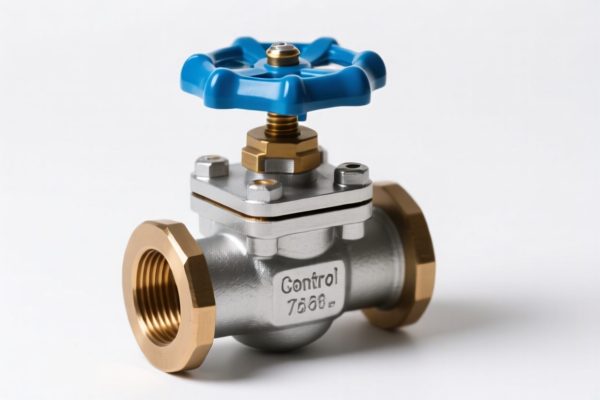
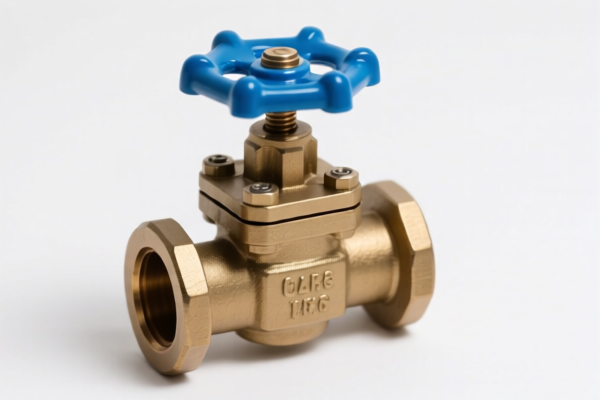
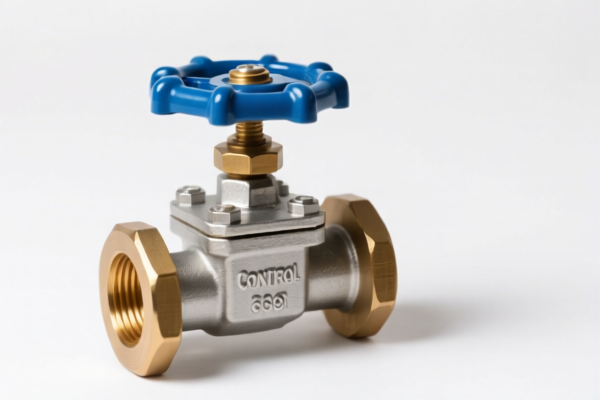
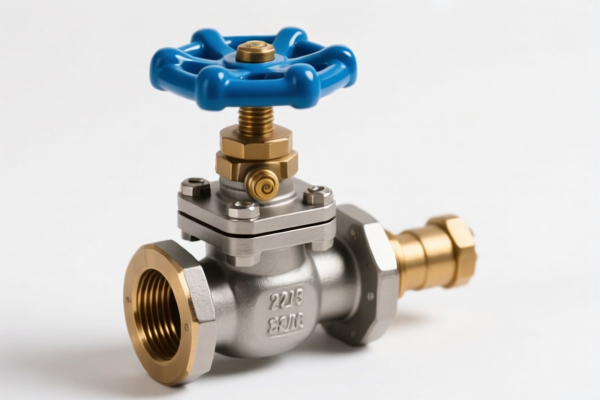
AI Analysis
⚙️ Flow Controller (Industrial Flow Control Devices)
🌐 HS Code Reference & Customs Clearance Guide | 2026 Latest Tariff Analysis | Professional Clearance Strategy
📌 I. Product Definition & Classification: What Exactly is a "Flow Controller"?
A Flow Controller is a critical component in industrial automation, used to regulate the rate of fluid (liquid, gas, or steam) flow within piping systems. In international trade, these devices are often ambiguous because they blend mechanical valve functions with electronic control logic.
Key Distinctions: * Pure Mechanical Valves (8481): Devices that control flow purely through mechanical means (e.g., manual knobs, pressure-balanced springs) without external electronic input signals. * Measurement Instruments (9026): Devices primarily designed to measure or check flow rates, even if they have some control features. * General Control Devices (9032): Devices that automatically control the flow of liquids or gases based on a detected variation (e.g., temperature, pressure) or an external signal, without necessarily measuring the flow itself first.
⚠️ Critical Classification Point:
- If the device is primarily a valve actuated by a control signal → Likely 8481.80.
- If the device is primarily a sensor/meter that outputs a signal → Likely 9026.10.
- If the device is a regulator/controller that maintains flow/level automatically → Likely 9032.89.
📦 II. HS Code Classification Details (2026 Latest Tariff Alignment)
Based on the provided data, here are the five most relevant HS Codes for "Flow Controllers," along with their specific justifications and tax implications for US Imports from China.
| HS Code | Product Description | Classification Logic (Why it fits) | Tax Implication |
|---|---|---|---|
9032.89.60.60 |
Flow & Level Control Instruments | Direct Match: The term "Flow Control" aligns perfectly with "Instruments and apparatus for flow and level control" in the HS explanatory notes. As a control device, there is no material conflict. | 36.7% |
9026.10.20.80 |
Instruments for Flow Measurement | Functional Match: "Flow Control" matches the use case of "Flow Measurement/Check" in heading 9026.10. Since it’s a controller (device/component) and no electrical material conflict is obvious, it is deemed a "possible match." | 35.0% |
9026.10.20.40 |
Other Electrical Flow Measurement | Industry Inference: "Flow Controller" is highly consistent with "Flowmeters" in function. Although "electrical" isn't explicitly stated in the name, industry常识 (common sense) infers electronic control logic. No conflict with "electrical" or "liquid measurement" attributes. | 35.0% |
9032.89.60.75 |
Other Process Control Instruments | Purpose Fit: The item belongs to the category of process control instruments and devices. Since there is no specific material conflict, it is judged as a "possible match" under the principle of fit. | 36.7% |
8481.80.90.20 |
Valves and Similar Devices | Mechanical Basis: "Flow Controller" falls under the control function scope of valves. The "target" can be inferred as the specific control object, and its working principle aligns with "proportionally operated control valves." No material conflict identified. | 37.0% |
🔍 Key Takeaway:
- The choice between 9026 (Measurement), 9032 (General Control), and 8481 (Valves) depends on the primary function of the specific product. - If it measures and controls, 9026 is strong. - If it regulates based on a signal without measuring, 9032 is appropriate. - If it is a valve actuated by a signal, 8481 is the safest mechanical classification.
💰 III. 2026 Latest Tariff Rate Breakdown (Detailed Tax Structure)
✅ Applicable Country: United States (US)
✅ Country of Origin: China (CN)
✅ Effective Date: November 10, 2025 (and onwards)
All the above HS Codes incur significant additional tariffs due to US trade policies. Here is the detailed breakdown:
🎯 1. 9032.89.60.60 & 9032.89.60.75 (General Control Instruments)
| Item | Detail |
|---|---|
| Basic Duty Rate | 1.7% (Ad Valorem) |
| Section 301 Duty (USITC) | +25.0% (From USITC Footnote 9903.88.01) |
| IEEPA Duty | +10.0% (针对中国/香港产品, Effective Nov 10, 2025) |
| Total Effective Rate | 36.7% |
| Tax Calculation | CIF Value × 36.7% |
| De Minimis Exemption | ❌ Not Eligible |
📌 Explanation:
- The 1.7% is the standard Most Favored Nation (MFN) rate for "Other instruments and apparatus."
- The 25% is the Section 301 tariff for industrial control equipment.
- The 10% is the new IEEPA tariff specifically targeting Chinese-origin goods in this category.
🎯 2. 9026.10.20.80 & 9026.10.20.40 (Flow Measurement Instruments)
| Item | Detail |
|---|---|
| Basic Duty Rate | 0.0% (Ad Valorem) |
| Section 301 Duty (USITC) | +25.0% |
| IEEPA Duty | +10.0% |
| Total Effective Rate | 35.0% |
| Tax Calculation | CIF Value × 35.0% |
| De Minimis Exemption | ❌ Not Eligible |
📌 Explanation:
- These codes have a 0% basic rate, which is the lowest among the options.
- However, the 25% + 10% surcharges still apply, resulting in a 35% total rate.
- This is 1.7% cheaper than the 9032 codes, making it a potentially cost-effective choice if the product can be justified as a "flow measurement instrument."
🎯 3. 8481.80.90.20 (Valves and Similar Devices)
| Item | Detail |
|---|---|
| Basic Duty Rate | 2.0% (Ad Valorem) |
| Section 301 Duty (USITC) | +25.0% |
| IEEPA Duty | +10.0% |
| Total Effective Rate | 37.0% |
| Tax Calculation | CIF Value × 37.0% |
| De Minimis Exemption | ❌ Not Eligible |
📌 Explanation:
- This code has the highest total rate (37.0%) due to its slightly higher base rate (2.0%).
- Only use this if the product is indisputably a "valve" and cannot be classified as a control instrument or measuring device.
🛠️ IV. Customs Clearance Practical Advice (Pitfall Avoidance Guide)
✅ 1. Required Documentation Checklist (Mandatory)
| Document | Required? | Explanation |
|---|---|---|
| ✅ Product Specifications | ✔️ | Must include: Type (liquid/gas), control mechanism (electrical/pneumatic), flow range, pressure rating. |
| ✅ Circuit Diagram / Control Logic | ✔️ | Crucial for distinguishing between 9026 (measurement) and 9032/8481 (control/valve). |
| ✅ Product Photos (with Nameplate) | ✔️ | Clear view of model number, brand, input/output signals (e.g., 4-20mA, 0-10V). |
| ✅ Third-Party Test Report | ✔️ | CE, RoHS, UL, or FCC certifications if applicable. |
| ✅ Commercial Invoice | ✔️ | Must clearly state "Flow Controller" and specify the primary function (e.g., "For flow measurement and regulation"). |
| ✅ Certificate of Origin (CO) | ✔️ | Required to confirm Chinese origin for IEEPA/Section 301 application. |
| ✅ Packing List | ✔️ | Detail if accessories (sensors, actuators) are included, as they may affect classification. |
✅ 2. Classification Strategy (Key Mantras)
🔥 "Function is King, Signal Defines Path!"
| Scenario | Recommended HS Code | Reason |
|---|---|---|
| Device measures flow AND sends a signal to adjust it | 9026.10.20.40 / 80 |
Primary function is measurement; control is secondary. Lowest tariff (35%). |
| Device receives a signal to open/close a valve | 8481.80.90.20 |
It is fundamentally a valve actuated by a controller. Highest tariff (37%). |
| Device automatically maintains flow/level based on process changes | 9032.89.60.60 / 75 |
It is a process control instrument. Moderate tariff (36.7%). |
| Device is purely mechanical (no electronics) | 8481.80.90.20 |
If no external signal is used, it’s a valve/regulator. |
📌 Warning:
- Misclassifying a 9032 device as 9026 to save 1.7% can lead to audits if the product lacks measurement sensors.
- Misclassifying a Valve as a Controller may result in penalties if the device lacks the necessary control logic components.
✅ 3. Special Cases
| Scenario | Advice |
|---|---|
| Integrated Controller + Valve | If sold as a single unit, classify based on the essential character. If the controller is integral and essential, 9032 may apply. If it’s just a valve with a separate actuator, 8481 is safer. |
| OEM Custom Controllers | Provide customer design specs to prove the specific function (measurement vs. control). |
| Components vs. Whole Unit | Do not split shipments. A "flow controller" kit should be declared as one unit under the most appropriate code. |
🌍 V. Global Market Comparison (2026)
| Country/Region | Recommended HS Code | Approx. Tariff (China Origin) | Notes |
|---|---|---|---|
| 🇺🇸 USA | 9026.10.20.40 |
35.0% | Best rate among options. Verify measurement function. |
| 🇨🇳 China | 9026.10.20.40 |
Low | Domestic trade rates vary; export focus is on US tariffs. |
| 🇪🇺 EU | 9026.10 |
0% - 2.7% | No Section 301 equivalent. Lower barriers. |
| 🇬🇧 UK | 9026.10 |
0% - 2.7% | Post-Brexit tariffs align closely with EU for this category. |
| 🇨🇦 Canada | 9026.10 |
0% | CUSMA may allow 0% if rules of origin are met. |
📌 Conclusion:
- The US market is the most challenging due to Section 301 and IEEPA tariffs.
-9026.10.20.40offers the lowest total duty (35%) if the product can be justified as a flow measurement instrument.
- If the product is purely a control valve,8481.80.90.20(37%) is unavoidable.
📌 VI. Common Errors & Pitfalls (Lessons Learned)
❌ Error 1: Calling a "Control Valve" a "Flow Meter" to get 35% instead of 37%.
👉 Consequence: Customs may reject the declaration if the device has no measurement sensor. Penalties + Back Taxes.
❌ Error 2: Ignoring the IEEPA 10% surcharge.
👉 Consequence: Underpayment of duties. The 10% applies to all Chinese-origin goods in these categories as of Nov 2025.
❌ Error 3: Splitting "Controller" and "Valve" into separate shipments.
👉 Consequence: Customs may consolidate them and charge higher rates on accessories or deny de minimis for the whole assembly.
✅ Correct Approach:
"Flow Controller, Electrical, Model XYZ, for Liquid Regulation, Includes Sensor and Actuator, FCC Certified"
🎯 VII. Conclusion: Precise Classification Saves Money!
🎯 Remember the Mantra:
🔹 "Measure = 9026 (35%), "Control = 9032 (36.7%), "Valve = 8481 (37%)"
🔹 "IEEPA 10% is Non-Negotiable for China."
🔹 "Document the Function, Not Just the Name!"
📌 Pro Tip:
If your flow controller is originally manufactured in Vietnam, Mexico, or Thailand, you may be eligible for IEEPA Exemptions, reducing the total rate to 25% - 27% (Section 301 only).
Recommendation: Apply for a Customs Ruling (Pre-Ruling) from US CBP before shipping to ensure the HS Code is accepted and tariffs are calculated correctly.
📣 Immediate Action Required:
📞 Consult a licensed customs broker.
📤 Provide detailed technical drawings showing measurement capabilities.
🚀 Ensure smooth customs clearance, avoid delays, and protect your margins!
✨ Professional Clearance Starts with Accurate Classification!
💼 Every percentage point of duty impacts your bottom line!
Customer Reviews
About HS Code Classification
The Harmonized System (HS) is an internationally standardized nomenclature developed by the World Customs Organization (WCO) to classify traded products. Over 200 countries use the HS system as the basis for customs tariffs, trade statistics, and import/export regulations.
Each HS code follows a hierarchical structure:
- Chapter (2 digits) — Broad category of goods (e.g., Chapter 84: Machinery and Mechanical Appliances)
- Heading (4 digits) — More specific grouping within the chapter
- Subheading (6 digits) — Internationally standardized breakdown, used by all WCO member countries
- National subdivisions (8-10 digits) — Country-specific extensions for further classification, such as US HTSUS 10-digit codes
Correct HS code classification is essential for smooth customs clearance, accurate duty payment, and compliance with trade regulations. Misclassification can lead to customs delays, overpayment of duties, or penalties.
When importing from CN to US, the applicable tariff rates may include:
- Most-Favored-Nation (MFN) rate — The standard duty rate applied to WTO members
- General rate — Applied to countries without trade agreements
- Trade remedy duties — Additional tariffs such as Section 301 (anti-dumping), Section 232 (national security), or countervailing duties
The information provided on this page is for reference purposes only. For official classification, please consult with your local customs authority or a licensed customs broker.