Flower Basket Liner
CN → US| HS Code | Tariff Rate | Origin | Destination | Doc |
|---|---|---|---|---|
| 6307908995 | 17.0% | CN | US | Official Doc |
| 6307909891 | 24.5% | CN | US | Official Doc |
| 3926903300 | 16.5% | CN | US | Official Doc |
| 3926901000 | 20.9% | CN | US | Official Doc |
| 4823908000 | 35.0% | CN | US | Official Doc |
| 4823908620 | 35.0% | CN | US | Official Doc |
Product Images
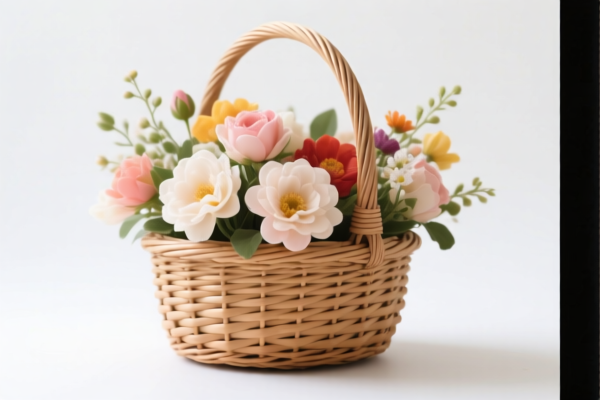

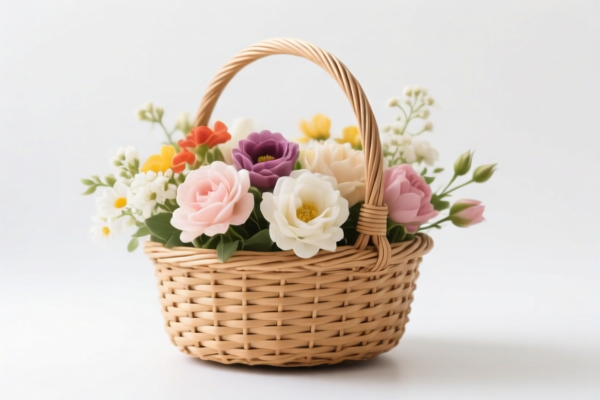
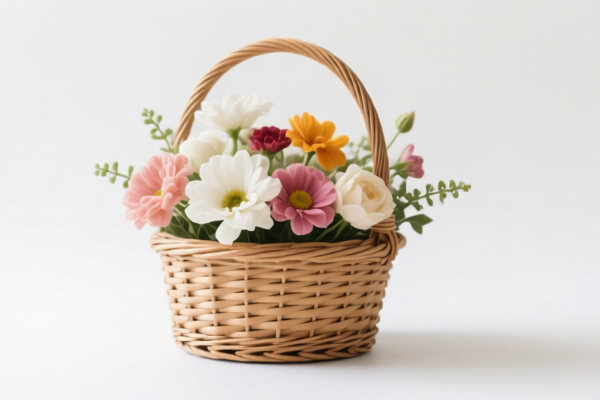
AI Analysis
🌸 Flower Basket Liners (Florist Supplies & Packaging)
🌐 HS Code Reference & Customs Clearance Guide | 2026 Latest Tariff Analysis | Professional Strategy for Floral Logistics
📌 I. Product Definition & Classification: What Exactly is a "Flower Basket Liner"?
Flower basket liners are essential accessories in the floral industry, used to line baskets, vases, or containers to hold water, protect the container, and enhance aesthetic presentation. In international trade, these items are NOT classified as fresh flowers (Chapter 6) or live plants. Instead, they fall under manufactured goods made from paper, plastics, or textile materials.
The critical classification depends on the material composition and finished form of the liner:
Paper-Based Liners:
Made from paper pulp, coated paper, or cellulose wadding. These are often crinkled, textured, or printed decorative papers used for rustic or eco-friendly floral arrangements.
→ Likely Chapter 48 (Paper & Paperboard).
Plastic-Based Liners:
Made from polyethylene (PE), PVC, or other plastics. These are often clear, watertight bags or cellophane wraps.
→ Likely Chapter 39 (Plastics).
Textile/Other Fabric Liners:
Made from cotton, synthetic fibers, or non-woven fabrics. These may be decorative pouches or reusable liners.
→ Likely Chapter 63 (Made-up Textile Articles).
⚠️ Key Distinction Point:
- If the liner is paper-based and cut to size → Chapter 48.
- If the liner is plastic (e.g., cellophane, PE bags) → Chapter 39.
- If the liner is textile-based (e.g., fabric pots, decorative cloth liners) → Chapter 63.
📦 II. HS Code Classification Details (2026 Latest Tariff Authority对照)
Based on the provided , here are the specific HS Codes and corresponding tax rates for flower basket liners, categorized by material type:
1. Paper-Based Liners (Decorative Paper, Cellulose Wadding)
| HS Code | Product Description | Material Type | Tax Rate (US Import from CN) |
|---|---|---|---|
4823.90.80.00 |
Other paper, paperboard, cellulose wadding...: Other: Other: Other: Other: Gaskets, washers and other seals | Paper/Cellulose | 25.0% |
4823.90.86.20 |
Other paper, paperboard...: Other: Other Shoe covers (booties) | Paper/Cellulose | 25.0% |
🔍 Analysis:
-4823.90.80.00: This is a "basket" category for other paper articles. If your flower liner is made of decorative paper, coated paper, or cellulose wadding and does not fit specific sub-categories (like printed books or technical drawings), it often falls here as "Other paper articles."
-4823.90.86.20: Specifically for Shoe Covers. Only use this if the product is explicitly marketed and designed as a paper shoe cover. Do NOT use this for flower liners unless it is literally a shoe cover mislabeled.
- Tax: Both carry a 25% total tax (0% base + 25% Section 301 tariff).
2. Plastic-Based Liners (Cellophane, PE Bags, Buckets)
| HS Code | Product Description | Material Type | Tax Rate (US Import from CN) |
|---|---|---|---|
3926.90.33.00 |
Other articles of plastics...: Handbags | Plastics | 6.5% |
3926.90.10.00 |
Other articles of plastics...: Buckets and pails | Plastics | 0.0% |
🔍 Analysis:
-3926.90.33.00: Classified as Handbags. This is a common misclassification trap. Some clear plastic floral liners might be incorrectly declared as "handbags" or "plastic pouches" to attract lower duties, but if it lacks handles/zippers for carrying personal items, this is high-risk for customs audit.
-3926.90.10.00: Classified as Buckets and pails. This applies if the liner is a rigid or semi-rigid plastic container designed to hold water (e.g., a plastic insert bucket for a basket).
- Tax:
-3926.90.33.00: 6.5% (6.5% base + 0% Section 301).
-3926.90.10.00: 0% (0% base + 0% Section 301).
3. Textile/Other Fabric Liners
| HS Code | Product Description | Material Type | Tax Rate (US Import from CN) |
|---|---|---|---|
6307.90.89.95 |
Other made up articles...: Shells for quilts, eiderdowns, comforters... | Textile/Cotton | 0.0% |
6307.90.98.91 |
Other made up articles...: Other | Other Textiles | 14.5% |
🔍 Analysis:
-6307.90.89.95: Specifically for Shells for quilts/comforters. Only use if the liner is a fabric shell designed to hold bedding. Not applicable for flower liners.
-6307.90.98.91: This is a "Other" category for made-up textile articles. If your flower liner is made of non-woven fabric, burlap, or cotton cloth and doesn’t fit specific categories (like towels or sacks), it likely falls here.
- Tax: 14.5% (7.0% base + 7.5% Section 301 tariff).
💰 III. 2026 Latest Tariff Rate Breakdown (Detailed Tax Clauses)
✅ Applicable Country: United States (US)
✅ Origin: China (CN)
✅ Effective Date: Post-2025 policies (Section 301 Tariffs)
🎯 1. 4823.90.80.00 – Paper-Based Flower Liners
| Item | Detail |
|---|---|
| Base Duty | 0% |
| Section 301 Add-on | +25.0% |
| Total Tax Rate | 25.0% |
| Calculation | CIF Value × 25% |
| De Minimis Exemption | ❌ Not Eligible (if value > $800, standard; if < $800, may still be scrutinized for paper articles) |
| Legal Basis | USITC:4823.90.80.00 → Footnote 9903.88.01 (Section 301) |
📌 Explanation:
- Paper floral supplies from China face a 25% penalty tariff under Section 301.
- This is a high-cost category for exporters. Consider sourcing paper liners from non-China countries (e.g., Vietnam, Indonesia) to avoid this tariff.
🎯 2. 3926.90.10.00 – Plastic Bucket/Container Liners
| Item | Detail |
|---|---|
| Base Duty | 0% |
| Section 301 Add-on | 0.0% |
| Total Tax Rate | 0.0% |
| Calculation | CIF Value × 0% |
| De Minimis Exemption | ✅ Eligible (if under $800) |
| Legal Basis | USITC:3926.90.10.00 (No Section 301 footnote) |
📌 Explanation:
- If your plastic liner is classified as a "bucket" or "pail" (e.g., a rigid plastic insert), it enjoys zero tariff.
- Warning: Ensure the product is indeed a "bucket/pail" (holding capacity > simple bag). If it’s just a thin plastic bag, customs may reclassify it to3926.90.33.00(Handbags/Pouches) or3926.90.99.99(Other plastics), which may have different rates.
🎯 3. 3926.90.33.00 – Plastic Liners Classified as Handbags/Pouches
| Item | Detail |
|---|---|
| Base Duty | 6.5% |
| Section 301 Add-on | 0.0% |
| Total Tax Rate | 6.5% |
| Calculation | CIF Value × 6.5% |
| De Minimis Exemption | ✅ Eligible (if under $800) |
| Legal Basis | USITC:3926.90.33.00 |
📌 Explanation:
- Clear plastic floral sleeves might be declared as "plastic handbags" or "pouches" to secure this rate.
- Risk: High scrutiny. Must prove it has handles, zippers, or is marketed as a fashion accessory.
🎯 4. 6307.90.98.91 – Fabric/Non-Woven Liners
| Item | Detail |
|---|---|
| Base Duty | 7.0% |
| Section 301 Add-on | 7.5% |
| Total Tax Rate | 14.5% |
| Calculation | CIF Value × 14.5% |
| De Minimis Exemption | ❌ Not Eligible (if subject to Section 301) |
| Legal Basis | USITC:6307.90.98.91 → Footnote 9903.07.98 |
📌 Explanation:
- Fabric liners (burlap, cotton, non-woven) incur a 14.5% total tariff.
- This is moderate. Consider using alternative materials (plastic buckets) if tariff avoidance is critical.
🛠️ IV. Customs Clearance Practical Advice (Battle-Tested Guide)
✅ 1. Documentation Checklist (Must-Have)
| Document | Required? | Notes |
|---|---|---|
| ✅ Product Specification Sheet | ✔️ | Detail material (e.g., "100% Virgin Paper," "LDPE Plastic," "Non-Woven Polypropylene"). |
| ✅ Material Composition Label | ✔️ | Must clearly state % of paper, plastic, or textile. |
| ✅ Product Photos | ✔️ | Show the liner in use (in a flower basket) and flat to demonstrate shape/structure. |
| ✅ Commercial Invoice | ✔️ | Use precise terms: "Paper Floral Liner," "Plastic Bucket Insert," "Fabric Basket Wrap." Avoid vague "Flower Supplies." |
| ✅ HS Code Declaration | ✔️ | Pre-select the most accurate HS Code from the table above. |
| ✅ Customs Bond | ✔️ | Required for commercial imports > $2,500. |
✅ 2. Declaration Tips (Golden Rules)
🔥 "Material First, Function Second. Name Specific, Rate Clear!"
| Scenario | Correct Declaration | Wrong Declaration | Consequence |
|---|---|---|---|
| Paper Liner | "Decorative Paper Liner for Floral Baskets, 4823.90.80.00" | "Flower Pot" | Misclassification → 25% Tariff + Audit |
| Plastic Insert (Bucket) | "Rigid Plastic Bucket Insert for Flower Basket, 3926.90.10.00" | "Plastic Bag" | 0% vs. 6.5%+ |
| Plastic Sleeve (Bag) | "Clear Plastic Pouch for Flowers, 3926.90.33.00" | "Handbag" | High Audit Risk |
| Fabric Liner | "Non-Woven Fabric Floral Wrap, 6307.90.98.91" | "Cotton Towel" | 14.5% vs. 0% (if misclassified) |
✅ 3. Special Case Handling
| Situation | Strategy |
|---|---|
| Mixed Materials | If liner has paper + plastic trim, declare based on essential character. Usually, the main body material dictates the HS Code. |
| Custom Printed Design | Ensure prints are ink-only. If prints involve metallic leaf or complex embroidery, it may shift to Chapter 48 (paper) or 63 (textile). |
| Eco-Friendly Claims | If marketed as "Biodegradable," provide compostability certificate (e.g., BPI Certified). This does not change HS Code but helps with marketing and potential green trade agreements. |
| Dropshipping (De Minimis) | If shipping directly to US consumer < $800, use Section 321 entry. However, Section 301 tariffs still apply if origin is China. For $<800, most carriers handle it, but ensure HS Code is correct to avoid customs holds. |
🌍 V. Global Market Comparison (2026)
| Market | Recommended HS Code | Total Tax (China Origin) | Certification |
|---|---|---|---|
| 🇺🇸 USA | 4823.90.80.00 (Paper) |
25.0% | None |
| 🇪🇺 EU | 4823.90.80 (Paper) |
0% – 6% | CE (if plastic) |
| 🇨🇦 Canada | 4823.90.80 (Paper) |
0% – 5% | None |
| 🇬🇧 UK | 4823.90.80 (Paper) |
0% – 6% | None |
| 🇯🇵 Japan | 4823.90.80 (Paper) |
0% – 8% | None |
📌 Key Insight:
- USA is the most expensive market for paper floral supplies due to Section 301 tariffs.
- EU/Canada/UK offer much better tax rates for similar goods. Consider supply chain diversification if exporting primarily to the US.
📌 VI. Common Mistakes & Pitfalls (Learn from Others' Pain)
❌ Mistake 1: Declaring Plastic Liners as "Paper" to avoid plastic tariffs.
👉 Result: Customs will reject, inspect, and fine. Tax discrepancy + storage fees.
❌ Mistake 2: Declaring Paper Liners as "Plastic Handbags" (3926.90.33.00).
👉 Result: Audit. Paper is not plastic. 25% tariff vs. 6.5% tariff. You pay back-duties + penalties.
❌ Mistake 3: Vague Description "Flower Accessory."
👉 Result: Customs will classify under the highest possible tariff rate. Always specify material.
✅ Correct Practice:
"Decorative Crinkled Paper Liner for Floral Baskets, 100% Virgin Wood Pulp, Unprinted, Sheet Form"
OR
"Clear LDPE Plastic Bucket Insert, Reusable, for Flower Arrangements"
🎯 VII. Conclusion: Optimize Your Floral Supply Chain
🎯 Remember:
🔹 "Paper = 25%, Plastic Bucket = 0%, Fabric = 14.5%."
🔹 "Be Specific: Material, Form, Function."
🔹 "Avoid Misclassification: It Costs More Than It Saves!"
📌 Pro Tip:
If you are exporting paper-based liners to the US, consider:
1. Sourcing from Non-China Origins (e.g., Vietnam, Malaysia) to avoid 25% tariff.
2. Using Plastic Buckets if cost-effective (0% tariff).
3. Applying for a Pre-Ruling from US Customs (CBP) if unsure about HS Code classification.
📣 Immediate Action:
📞 Consult a Customs Broker with product samples.
📄 Prepare Detailed Material Specs.
🚀 Ensure Accurate HS Code Declaration to avoid delays and fines.
✨ Professional Clearance, Start with Accurate Classification!
💼 Your Profit Margin Depends on the Right HS Code!
Customer Reviews
About HS Code Classification
The Harmonized System (HS) is an internationally standardized nomenclature developed by the World Customs Organization (WCO) to classify traded products. Over 200 countries use the HS system as the basis for customs tariffs, trade statistics, and import/export regulations.
Each HS code follows a hierarchical structure:
- Chapter (2 digits) — Broad category of goods (e.g., Chapter 84: Machinery and Mechanical Appliances)
- Heading (4 digits) — More specific grouping within the chapter
- Subheading (6 digits) — Internationally standardized breakdown, used by all WCO member countries
- National subdivisions (8-10 digits) — Country-specific extensions for further classification, such as US HTSUS 10-digit codes
Correct HS code classification is essential for smooth customs clearance, accurate duty payment, and compliance with trade regulations. Misclassification can lead to customs delays, overpayment of duties, or penalties.
When importing from CN to US, the applicable tariff rates may include:
- Most-Favored-Nation (MFN) rate — The standard duty rate applied to WTO members
- General rate — Applied to countries without trade agreements
- Trade remedy duties — Additional tariffs such as Section 301 (anti-dumping), Section 232 (national security), or countervailing duties
The information provided on this page is for reference purposes only. For official classification, please consult with your local customs authority or a licensed customs broker.