Flower and Tree Slices
CN → US| HS Code | Tariff Rate | Origin | Destination | Doc |
|---|---|---|---|---|
| 4404100090 | 35.0% | CN | US | Official Doc |
| 4407990295 | 35.0% | CN | US | Official Doc |
| 4420190000 | 13.2% | CN | US | Official Doc |
| 4404200090 | 35.0% | CN | US | Official Doc |
| 4407190093 | 35.0% | CN | US | Official Doc |
| 4420908000 | 38.2% | CN | US | Official Doc |
Product Images

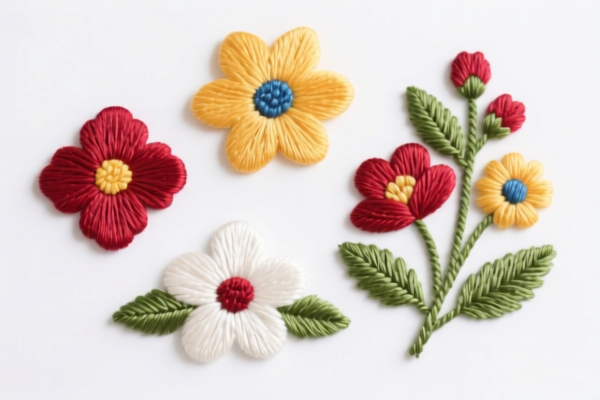

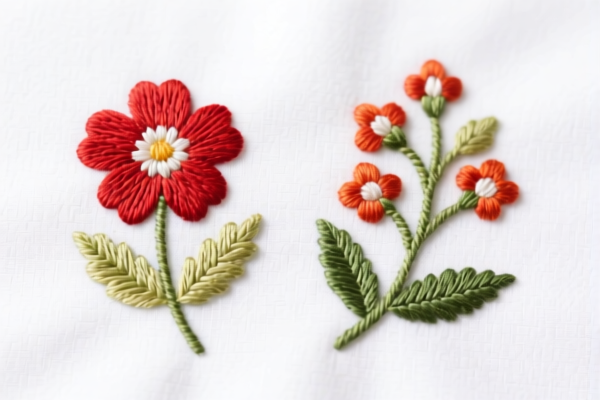
AI Analysis
🌸 Flower and Tree Slices (Wooden Decorative Elements)
🌐 HS Code Reference & Clearance Guide | 2026 Latest Tariff Analysis | Professional Customs Strategy
📌 1. Product Definition & Classification: What Are "Flower and Tree Slices"?
"Flower and Tree Slices" typically refer to decorative wooden pieces cut from tree branches, trunks, or logs, featuring natural or carved floral and arboreal patterns. In international trade, these items are classified based on:
- Material: Wood (coniferous or non-coniferous).
- Form: Slices, chips, or cut shapes.
- Usage: Decorative, craft materials, or landscaping.
⚠️ Key Distinction Points:
- If the product is unworked wood chips/slices for industrial processing →归入 4404 or 4407.
- If the product is worked/decorative wooden articles →归入 4420.
- Coniferous vs. Non-Coniferous: Critical for determining base tariff rates.
📦 2. HS Code Classification Details (2026 Latest Tariff Alignment)
| HS Code | Product Description | Application Scenario | Material/State |
|---|---|---|---|
4404.10.00.90 |
Charcoal wood; other coniferous wood, not mechanically chopped but longitudinally split, chipped, or cut (e.g., shavings, slices) | Decorative wood slices, coniferous wood chips | ✅ Coniferous |
4407.99.02.95 |
Wood and articles of wood, not further worked than sawn or chipped, of other wood (non-coniferous), sliced or chipped | Non-coniferous wood slices, generic wood chips | ✅ Non-Coniferous |
4420.19.00.00 |
Wood veneer and other wood-working materials, veneered sheets; other articles of wood (decorative) | Decorative wooden slices with flower/tree patterns, carved wood pieces | ✅ Worked/Decorative |
4404.20.00.90 |
Charcoal wood; other wood, not mechanically chopped but longitudinally split, chipped, or cut, of other wood | Non-coniferous wood chips/slices (similar to 4404.10 but non-coniferous) | ✅ Non-Coniferous |
4407.19.00.93 |
Wood sawn or chipped lengthwise, sliced or peeled, whether or not planed, sanded or finger-jointed, of other wood | Sliced wood veneers or decorative wood slices | ✅ Non-Coniferous |
🔍 Important Reminder:
- If the "flower and tree slices" are natural wood slices with minimal processing → 4404 or 4407.
- If they are decorative items (e.g., carved, painted, or assembled into ornaments) → 4420 is more appropriate.
- Coniferous wood (pine, fir, spruce) generally has different base tariffs than non-coniferous wood (oak, maple, etc.).
💰 3. 2026 Latest Tariff Rate Breakdown (Including Surcharges)
✅ Applicable Country: United States (US)
✅ Country of Origin: China (CN)
✅ Effective Date: From November 10, 2025 (and onwards)
🎯 1. 4404.10.00.90 —— Coniferous Wood Slices/Chips
| Item | Detail |
|---|---|
| Base Tariff | 0.0% (ad valorem) |
| USITC Surcharge | +25.0% (under USITC Footnote 9903.88.01) |
| IEEPA Surcharge | +10.0% (针对中国/香港产品,自2025年11月10日起) |
| Total Rate | 35.0% |
| Tax Calculation | CIF Value × 35% |
| De Minimis Eligibility | ❌ Not Eligible (deny_de_minimis) |
| Legal Basis Path | IEEPA:9903.01.25 → IEEPA:9903.01.24 → USITC:4404.10.00.90 → FOOTNOTE:9903.88.01 |
📌 Explanation:
- "25% USITC Surcharge" is from the Section 301 tariffs under the U.S. Trade Act;
- "10% IEEPA Surcharge" is the additional tariff on Chinese products under the International Emergency Economic Powers Act;
- Total 35% is a high tariff, requiring advance planning!
🎯 2. 4407.99.02.95 —— Non-Coniferous Wood Slices/Chips
| Item | Detail |
|---|---|
| Base Tariff | 0.0% |
| USITC Surcharge | +25.0% |
| IEEPA Surcharge | +10.0% |
| Total Rate | 35.0% |
| Tax Calculation | CIF × 35% |
| De Minimis Eligibility | ❌ Not Eligible |
| Legal Basis Path | IEEPA:9901.25 → IEEPA:9903.01.24 → USITC:4407.99.02.95 → FOOTNOTE:9903.88.01 |
📌 Note:
- Same as above, applies to non-coniferous wood chips/slices;
- Even if processed into decorative shapes, if not considered "worked articles," this code applies.
🎯 3. 4420.19.00.00 —— Decorative Wooden Articles (Flower/Tree Slices)
| Item | Detail |
|---|---|
| Base Tariff | 3.2% |
| USITC Surcharge | +0.0% |
| IEEPA Surcharge | +10.0% |
| Total Rate | 13.2% |
| Tax Calculation | CIF × 13.2% |
| De Minimis Eligibility | ❌ Not Eligible |
| Legal Basis Path | IEEPA:9903.01.24 → USITC:4420.19.00.00 |
📌 Key Advantage:
- This code has a lower total tariff (13.2%) compared to raw wood chips (35%).
- Justification: If the slices are decorative (e.g., carved, painted, or specifically designed as ornaments), they fall under "articles of wood," not raw materials.
- Recommendation: Use this code if the product is clearly decorative to reduce tax burden.
🎯 4. 4404.20.00.90 —— Non-Coniferous Wood Chips (Unworked)
| Item | Detail |
|---|---|
| Base Tariff | 0.0% |
| USITC Surcharge | +25.0% |
| IEEPA Surcharge | +10.0% |
| Total Rate | 35.0% |
| Tax Calculation | CIF × 35% |
| De Minimis Eligibility | ❌ Not Eligible |
| Legal Basis Path | IEEPA:9901.25 → IEEPA:9903.01.24 → USITC:4404.20.00.90 → FOOTNOTE:9903.88.01 |
📌 Note:
- Similar to4404.10.00.90but for non-coniferous wood;
- High tariff due to being classified as raw wood chips.
🎯 5. 4407.19.00.93 —— Sliced Wood (Non-Coniferous)
| Item | Detail |
|---|---|
| Base Tariff | 0.0% |
| USITC Surcharge | +25.0% |
| IEEPA Surcharge | +10.0% |
| Total Rate | 35.0% |
| Tax Calculation | CIF × 35% |
| De Minimis Eligibility | ❌ Not Eligible |
| Legal Basis Path | IEEPA:9901.25 → IEEPA:9903.01.24 → USITC:4407.19.00.93 → FOOTNOTE:9903.88.01 |
📌 Note:
- Applies to sliced wood veneers or decorative wood slices that are not considered "worked articles";
- High tariff due to classification as raw material.
🛠️ 4. Clearance Practical Advice (Real-World Pitfall Guide)
✅ 1. Required Documentation Checklist
| Document | Mandatory | Description |
|---|---|---|
| ✅ Product Specification Sheet | ✔️ | Includes dimensions, wood type, processing level |
| ✅ Product Photos (with labels) | ✔️ | Clear images of the flower/tree patterns, wood grain |
| ✅ Commercial Invoice | ✔️ | Clearly state "Decorative Wooden Slices" or "Wood Chips" |
| ✅ Packing List | ✔️ | Indicate relationship between components |
| ✅ Certificate of Origin (CO) | ✔️ | If non-Chinese origin, may qualify for preferential rates |
✅ 2. Declaration Tips (Key Mnemonics)
🔥 "Raw Chips 35%, Decorative 13% - Choose Wisely!"
| Scenario | Correct Declaration | Wrong Practice |
|---|---|---|
| Raw wood slices (no decoration) | 4404.10.00.90 or 4404.20.00.90 |
Misdeclare as decorative → 35% |
| Decorative carved slices | 4420.19.00.00 |
Misdeclare as raw chips → 35% |
| Wood veneers/slices | 4407.19.00.93 or 4407.99.02.95 |
Misdeclare as decorative → 35% |
| Industrial wood chips | 4404.10.00.90 |
Misdeclare as decorative → 35% |
✅ 3. Special Handling Cases
| Scenario | Handling Advice |
|---|---|
| OEM Custom Decorative Slices | Provide design drawings + client orders to prove decorative intent |
| Mixed Raw & Decorative Slices | Declare separately; do not mix codes in one shipment |
| Wood Treatment (Chemical/Heat) | Provide treatment certificates to prove compliance with ISPM 15 (if applicable) |
| Small Quantity Gifts | Still subject to 35% or 13%; de minimis does not apply |
🌍 5. Global Market Comparison (2026 Latest)
| Country/Region | Recommended HS Code | Tariff | Certification | Notes |
|---|---|---|---|---|
| 🇺🇸 USA | 4420.19.00.00 |
13.2% (if decorative) | No specific | 35% if raw chips |
| 🇨🇳 China | 4420.19.00.00 |
3.2% | FSC (if exported) | No surcharges |
| 🇪🇺 EU | 4420.19.00.00 |
0% (if FSC certified) | CE (if applicable) | No surcharges |
| 🇦🇺 Australia | 4420.19.00.00 |
5% | FSC | No surcharges |
| 🇯🇵 Japan | 4420.19.00.00 |
0% | FSC | No surcharges |
📌 Conclusion:
- USA is the only market with significant surcharges;
- Decorative classification (4420) saves 21.8% in tariffs;
- Ensure products are clearly decorative to justify lower rates.
📌 6. Common Mistakes & Pitfalls (Lessons Learned)
❌ Mistake 1: Declaring decorative slices as "raw wood chips"
👉 Consequence: 35% tariff instead of 13.2% → Overpayment of 21.8%!
❌ Mistake 2: Mixing raw and decorative slices in one HS code
👉 Consequence: Customs may audit and reclassify entire shipment → Delays + Penalties!
❌ Mistake 3: Using vague names like "Wood Pieces"
👉 Consequence: Customs cannot determine if decorative or raw → Uncertainty + Risk!
✅ Correct Practice:
"Decorative Wooden Flower and Tree Slices, Carved/Painted, for Craft/DIY Use, Model XYZ, FSC Certified"
🎯 7. Conclusion: Precise Classification, Lower Costs, Smoother Clearance!
🎯 Remember This Mnemonic:
🔹 "Decorative = 13.2%, Raw = 35%, Choose Right, Save Big!"
🔹 "HS Code Determines Cost, Mistake Costs Thousands!"
📌 Pro Tip:
If your decorative wooden slices are originated from Vietnam, Mexico, Thailand, or Malaysia, you may qualify for IEEPA exemptions, reducing tariffs to 0%~5%.
Consider applying for Advance Rulings (Pre-classification) to avoid customs risks.
📣 Act Now:
📞 Contact a professional customs broker + Provide product photos + Apply for HS Code Pre-classification
🚀 Let your decorative wooden slices clear customs smoothly, boost profits!
✨ Professional Clearance Starts with Accurate Classification!
💼 Every Cent Counts – Optimize Your Tariff Strategy!
Customer Reviews
About HS Code Classification
The Harmonized System (HS) is an internationally standardized nomenclature developed by the World Customs Organization (WCO) to classify traded products. Over 200 countries use the HS system as the basis for customs tariffs, trade statistics, and import/export regulations.
Each HS code follows a hierarchical structure:
- Chapter (2 digits) — Broad category of goods (e.g., Chapter 84: Machinery and Mechanical Appliances)
- Heading (4 digits) — More specific grouping within the chapter
- Subheading (6 digits) — Internationally standardized breakdown, used by all WCO member countries
- National subdivisions (8-10 digits) — Country-specific extensions for further classification, such as US HTSUS 10-digit codes
Correct HS code classification is essential for smooth customs clearance, accurate duty payment, and compliance with trade regulations. Misclassification can lead to customs delays, overpayment of duties, or penalties.
When importing from CN to US, the applicable tariff rates may include:
- Most-Favored-Nation (MFN) rate — The standard duty rate applied to WTO members
- General rate — Applied to countries without trade agreements
- Trade remedy duties — Additional tariffs such as Section 301 (anti-dumping), Section 232 (national security), or countervailing duties
The information provided on this page is for reference purposes only. For official classification, please consult with your local customs authority or a licensed customs broker.