Fluffy Cat Socks
CN → US| HS Code | Tariff Rate | Origin | Destination | Doc |
|---|---|---|---|---|
| 6117809510 | 32.1% | CN | US | Official Doc |
| 6117809570 | 32.1% | CN | US | Official Doc |
| 6115969020 | 24.6% | CN | US | Official Doc |
| 6115959000 | 31.0% | CN | US | Official Doc |
| 6115959000 | 31.0% | CN | US | Official Doc |
Product Images
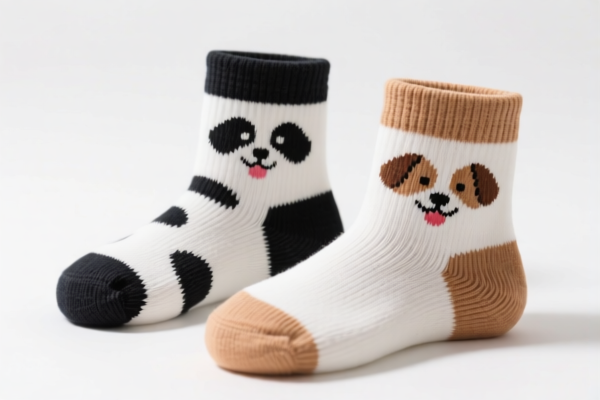
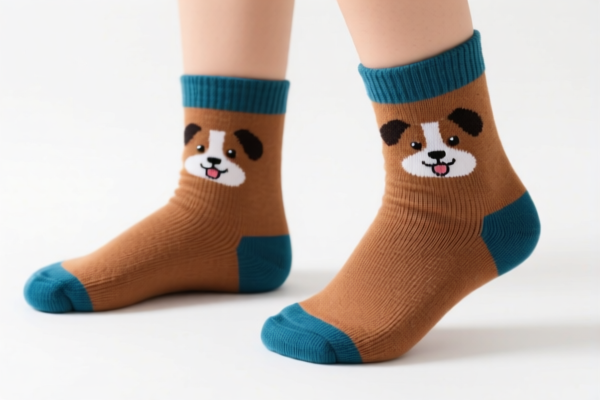
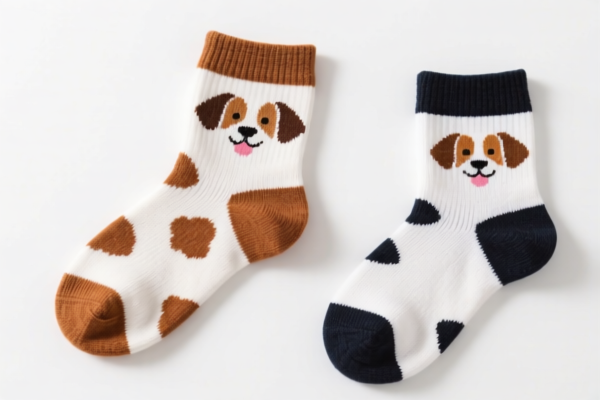
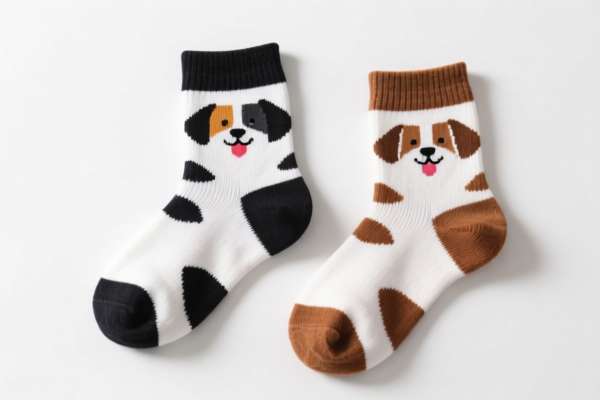
AI Analysis
🐱 Fluffy Cat Socks (Plush Feline Footwear Accessories)
🌐 HS Code Reference & Clearance Guide | 2026 Latest Tariff Analysis | Strategic Customs Compliance
📌 I. Product Definition & Classification: What Exactly Are "Fluffy Cat Socks"?
"Fluffy Cat Socks" are knit or crocheted footwear accessories designed for domestic cats (or potentially novelty human socks, but here treated as accessories/apparel for animals or socks for humans depending on material composition). In international trade, their classification hinges critically on material composition (Cotton vs. Synthetic/Man-made fibers) and form (Appended accessories vs. Standard socks).
Key Distinction Criteria: * Material: Is it primarily Cotton (6115) or Synthetic/Man-made (6117)? * Form: Are they classified as Socks (foot coverings) or Other Made-up Clothing Accessories (apparel accessories)? * Origin Impact: The presence of Section 301/122 Tariffs significantly impacts the final landed cost, especially for US imports from China.
⚠️ Critical Classification Point:
- If made of Cotton and classified as Socks → Likely 6115.95.90.00 or 6115.96.90.20 (depending on specific knit structure).
- If made of Synthetic Fibers and classified as Accessories (not standard socks) → Likely 6117.80.95.10 or 6117.80.95.70.
- Note: The same physical item can have different HS codes based on how customs interprets "Sock" vs. "Accessory."
📦 II. HS Code Classification Matrix (2026 Latest Tariff Authority)
| HS Code | Product Description | Material Inference | Tax Rate (Total) | Tax Breakdown |
|---|---|---|---|---|
6117.80.95.10 |
Fluffy cat socks, form: Clothing Accessory (Socks) | Cotton/Fiber inferred | 32.1% | Base: 14.6% + 301/122: 17.5% (7.5% + 10%) |
6117.80.95.70 |
Fluffy cat socks, form: Clothing Accessory/Sock | Synthetic/Man-made Fiber (Non-cotton/wool) | 32.1% | Base: 14.6% + 301/122: 17.5% (7.5% + 10%) |
6115.96.90.20 |
Fluffy cat socks, form: Sock Class | Synthetic Fiber content, no wool/fine animal hair | 24.6% | Base: 14.6% + 122: 10% (NO 7.5% add-on) |
6115.95.90.00 |
Fluffy cat socks, form: Sock Class | Cotton/Fiber class | 31.0% | Base: 13.5% + 301/122: 17.5% (7.5% + 10%) |
6115.96.90.20 |
Fluffy cat socks, form: Sock Class | Synthetic Fiber made | 24.6% | Base: 14.6% + 122: 10% (NO 7.5% add-on) |
🔍 Key Insight:
-6117.80.95.xxcodes treat the product as a "Made-up Clothing Accessory" rather than a standard sock. This triggers the 7.5% additional tariff under Section 301/122, resulting in a 32.1% total rate.
-6115.95/96codes treat the product as a "Sock" (Hosiery). These codes exclude the 7.5% add-on, resulting in lower rates (24.6% - 31.0%).
- Material matters: Cotton-based socks (6115.95) pay 31.0%, while Synthetic-based socks (6115.96) pay only 24.6%.
💰 III. 2026 Latest Tariff Rate Detail (Including Surcharges & Policy Add-ons)
✅ Applicable Country: United States (US)
✅ Origin: China (CN)
✅ Effective Date: Post-2025 (Including subsequent imports)
🎯 1. 6117.80.95.10 & 6117.80.95.70 —— As "Clothing Accessory" (Plush/Synthetic/Cotton)
| Item | Content |
|---|---|
| Base Tariff | 14.6% (Ad Valorem) |
| Section 301/122 Add-on | +17.5% (7.5% + 10%) |
| Total Tariff Rate | 32.1% |
| Tax Calculation | CIF Value × 32.1% |
| De Minimis Eligibility | ❌ Not Eligible (High tariff category) |
| Legal Basis Path | HTSUS:6117.80.95 → USITC Footnote 301 → IEEPA 122 Section |
📌 Explanation:
- The 14.6% is the standard MFN (Most Favored Nation) rate for "Other made-up clothing accessories."
- The 17.5% is a combined surcharge: 7.5% (Section 301) + 10% (Section 122/Trade Act).
- Why 32.1%? This is the highest burden category. Customs must clearly define the item as an "accessory" rather than a "sock" to apply this code, which often invites stricter scrutiny.
🎯 2. 6115.95.90.00 —— As "Sock" (Cotton/Fiber)
| Item | Content |
|---|---|
| Base Tariff | 13.5% (Ad Valorem) |
| Section 301/122 Add-on | +17.5% (7.5% + 10%) |
| Total Tariff Rate | 31.0% |
| Tax Calculation | CIF Value × 31.0% |
| De Minimis Eligibility | ❌ Not Eligible |
| Legal Basis Path | HTSUS:6115.95 → USITC Footnote 301 → IEEPA 122 Section |
📌 Explanation:
- Socks are generally classified under Chapter 61.
- Even as a sock, Cotton-based items still face the 17.5% add-on.
- Savings: $1.1\%$ lower than the accessory code due to a 1.1% lower base rate (13.5% vs 14.6%).
🎯 3. 6115.96.90.20 —— As "Sock" (Synthetic Fiber)
| Item | Content |
|---|---|
| Base Tariff | 14.6% (Ad Valorem) |
| Section 301/122 Add-on | +10% (122 Only) |
| Section 301 Add-on | 0.0% (Excluded) |
| Total Tariff Rate | 24.6% |
| Tax Calculation | CIF Value × 24.6% |
| De Minimis Eligibility | ❌ Not Eligible |
| Legal Basis Path | HTSUS:6115.96 → USITC Footnote 122 Only |
📌 Explanation:
- This is the MOST COST-EFFICIENT classification if the product is truly a "Sock" and made of "Synthetic Fibers."
- Why only 10%? Section 301 (7.5%) does not apply to certain sock subheadings under specific conditions, leaving only the 122 tariff (10%).
- Savings: $7.5\%$ vs. Accessory codes, and $6.4\%$ vs. Cotton Socks.
🛠️ IV. Clearance Practical Advice (Battle-Proven Pitfall Guide)
✅ 1. Documentation Checklist (Mandatory)
| Document | Must Provide | Notes |
|---|---|---|
| ✅ Product Spec Sheet | ✔️ | Must specify Material Composition (e.g., "80% Polyester, 20% Cotton") |
| ✅ Photos (Clear & Detailed) | ✔️ | Show shape, stitching, and labels. Proves it's a "Sock" (foot-shaped) vs. "Accessory" (decorative) |
| ✅ Commercial Invoice | ✔️ | Description must match HS Code logic (e.g., "Synthetic Knit Socks for Cats") |
| ✅ Certificate of Origin | ✔️ | If applicable, to verify CN origin for surcharge calculation |
| ✅ Packing List | ✔️ | Item count, weight, dimensions |
✅ 2. Declaration Strategy (Key Mantra)
🔥 "Material Defines Base, Form Defines Add-on, Accurate Descriptions Prevent Penalties!"
| Scenario | Correct Declaration | Wrong Action |
|---|---|---|
| Product is clearly foot-shaped | Classify as Sock (6115.xx) |
Misdeclare as "Accessory" (6117.xx) → Higher Tax! |
| Made of Synthetic Fibers | Use 6115.96.90.20 |
Use Cotton code → Overpay 6.4% |
| Made of Cotton | Use 6115.95.90.00 |
Use Accessory code → Overpay 1.1% |
| Vague Description ("Fluffy Cat Item") | ❌ High Risk | Customs may assign worst-case code (32.1%) + Delays |
✅ 3. Special Cases Handling
| Case | Handling Advice |
|---|---|
| OEM Custom Design | Provide design files to prove "Sock" structure. If it lacks a heel/toe shape, it might be deemed an "Accessory." |
| Mixed Materials | If >50% synthetic by weight, use 6115.96. If >50% cotton, use 6115.95. |
| Novelty Human Socks | If marketed as "Cat Socks" but sized for humans, still 6115.xx. Do not let marketing fool the HS code logic. |
| Non-Textile Add-ons | If the sock has glued-on plastic eyes/bows, ensure the textile part is the essential character. |
🌍 V. Global Market Clearance Comparison (2026 Latest)
| Country/Region | Recommended HS Code | Tariff Rate (China Origin) | Certification Req. | Notes |
|---|---|---|---|---|
| 🇺🇸 USA | 6115.96.90.20 (Synthetic Sock) |
24.6% (Lowest) | None specific for socks | Avoid 6117 if possible to save 7.5% |
| 🇨🇳 China | 6115.96.90.20 |
~8-10% (Import Duty) | None | Low barrier to entry |
| 🇪🇺 EU | 6115.96.00 |
12% | REACH (Textiles) | No Section 301 equivalent, but check CE for non-toxic materials |
| 🇬🇧 UK | 6115.96.00 |
12% | UKCA (if applicable) | Post-Brexit rules similar to EU |
📌 Conclusion:
- USA is the most complex market due to Section 301/122 tariffs.
- Maximize Savings: Ensure your product is classified as a "Sock" (not accessory) and made of "Synthetic Fibers" to hit the 24.6% rate.
- Avoid: Classifying as "Accessories" (6117) unless the product is clearly not a standard sock shape.
📌 VI. Common Errors & Pitfall Guide (Blood & Tears Lessons)
❌ Mistake 1: Calling them "Cat Accessories" in the description
👉 Consequence: Customs may classify under 6117.80.95 → 32.1% Tax.
✅ Fix: Use "Knit Socks for Cats" or "Plush Socks."
❌ Mistake 2: Ignoring Material Composition
👉 Consequence: If you declare "Cotton" but it's "Polyester," you get 31.0% instead of 24.6%.
✅ Fix: Provide a fiber content label in photos/docs.
❌ Mistake 3: Vague Product Name ("Fluffy Cat Toy")
👉 Consequence: Customs assigns 9801.00.00 (Miscellaneous) or similar, leading to audits and delays.
✅ Fix: Be specific: "Cat Footwear, Knit, Synthetic, Size M."
❌ Mistake 4: Assuming All Socks Are the Same
👉 Consequence: Mixing up 6115.95 (Cotton) and 6115.96 (Synthetic).
✅ Fix: Check the hangtag or material spec sheet.
🎯 VII. Conclusion: Precision Coding, Maximum Profit!
🎯 Remember the Mantra:
🔹 "Sock Shape + Synthetic Fiber = 24.6% (Best Case)"
🔹 "Accessory Shape = 32.1% (Worst Case)"
🔹 "Savings of 7.5% is worth the documentation effort!"
📌 Pro Tip:
If your socks are made of Cotton, you cannot avoid the 17.5% add-on (Total 31.0%). However, if you can switch material to Synthetic (e.g., Polyester, Acrylic) while maintaining the "Sock" classification, you save 6.4% on every unit.
For high-volume shipments, this difference is significant.
📣 Immediate Action:
📞 Contact Your Broker: Confirm if "Fluffy Cat Socks" qualify as Hosiery (6115) or Accessories (6117).
🚀 Update Product Descriptions: Use "Knit Socks" rather than "Accessories" if the shape permits.
📊 Audit Materials: Ensure your supplier provides accurate fiber composition.
✨ Professional Clearance Starts with Accurate Classification!
💼 Every Percent Saved is Pure Profit!
Customer Reviews
About HS Code Classification
The Harmonized System (HS) is an internationally standardized nomenclature developed by the World Customs Organization (WCO) to classify traded products. Over 200 countries use the HS system as the basis for customs tariffs, trade statistics, and import/export regulations.
Each HS code follows a hierarchical structure:
- Chapter (2 digits) — Broad category of goods (e.g., Chapter 84: Machinery and Mechanical Appliances)
- Heading (4 digits) — More specific grouping within the chapter
- Subheading (6 digits) — Internationally standardized breakdown, used by all WCO member countries
- National subdivisions (8-10 digits) — Country-specific extensions for further classification, such as US HTSUS 10-digit codes
Correct HS code classification is essential for smooth customs clearance, accurate duty payment, and compliance with trade regulations. Misclassification can lead to customs delays, overpayment of duties, or penalties.
When importing from CN to US, the applicable tariff rates may include:
- Most-Favored-Nation (MFN) rate — The standard duty rate applied to WTO members
- General rate — Applied to countries without trade agreements
- Trade remedy duties — Additional tariffs such as Section 301 (anti-dumping), Section 232 (national security), or countervailing duties
The information provided on this page is for reference purposes only. For official classification, please consult with your local customs authority or a licensed customs broker.