Fluorescent Lamp Tube
CN → USProduct Images
AI Analysis
💡 Fluorescent Lamp Tube (Lighting Fixtures and Lamps)
🌐 HS Code Reference & Customs Clearance Guide | 2026 Latest Tariff Analysis | Professional Clearance Strategy
📌 Part 1: Product Definition & Classification: Do You Really Understand "Fluorescent Tubes"?
Fluorescent lamps are gas-discharge lamps that use electricity to excite mercury vapor, producing short-wave ultraviolet light that then causes a phosphor coating on the inside of the lamp to glow (fluoresce), producing visible light. In international trade, precise classification is critical because the form of the lamp (straight vs. compact) and voltage type dictate entirely different duty rates.
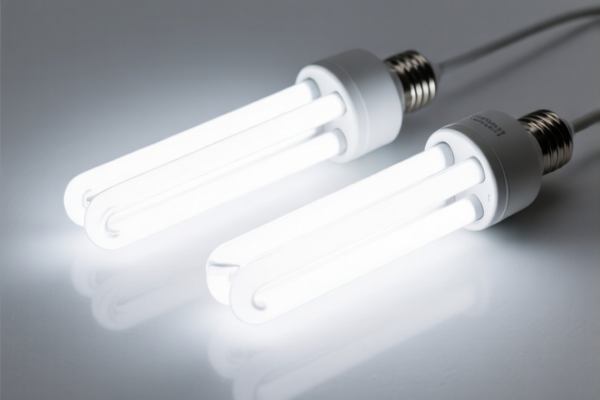
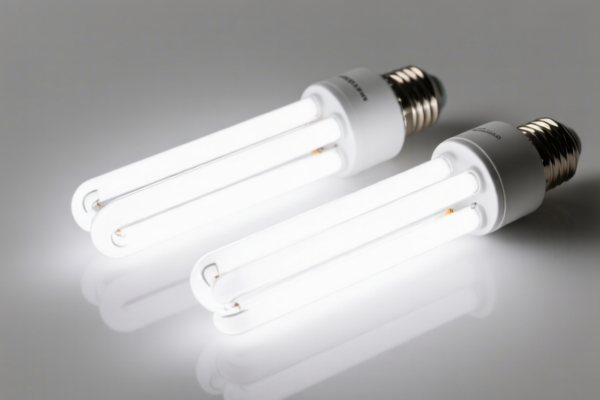
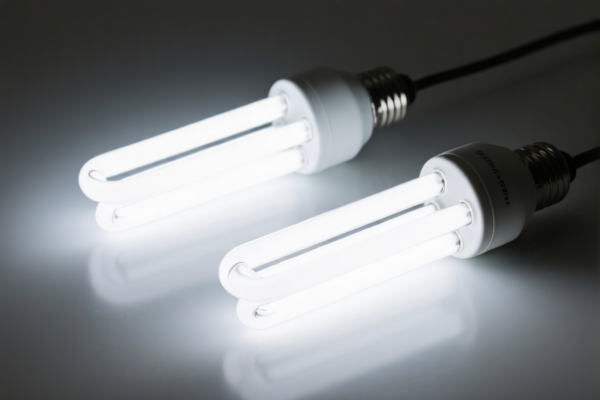
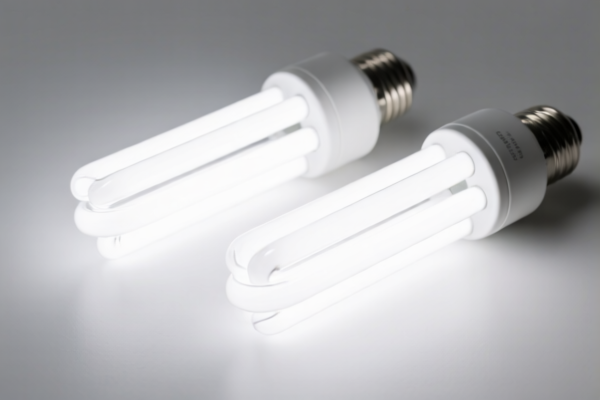
Key Classification Distinction: * Straight Tubes (Fluorescent Tubes): Linear tubes, typically used in commercial/industrial fixtures. Generally fall under HS 8539.31 or 8539.29 depending on wattage and type. * Compact Fluorescent Lamps (CFLs): Self-ballasted lamps (integrated circuit/base). Fall under HS 8539.31.90. * Voltage Matters: Low voltage (≤ 1000V) vs. High voltage. Most standard fluorescent tubes are low voltage.
⚠️ Critical Distinction:
- If it is a straight tube without a built-in ballast/basis (just the glass tube with electrodes) → Often 8539.31.00.00 (Mercury-vapour or metal-halide) or 8539.29 (Other). Note: Many straight fluorescent tubes are classified under 8539.29.90 if not specifically mercury-vapour.
- If it is a CFL (screw base, compact) → 8539.31.90.00.
- If it contains Mercury → Special hazardous material handling required for customs declaration in many countries.
📦 Part 2: Detailed HS Code Classification (2026 Official Tariff Schedule)
| HS Code | Product Description | Application Scenario | Voltage/Type | Integrated Ballast? |
|---|---|---|---|---|
8539.31.00.00 |
Mercury-vapour or metal-halide lamps | Industrial high-bay lighting, street lights | Low Voltage (≤1000V) | ❌ No (often) |
8539.29.90.00 |
Other electric filament/discharge lamps (incl. fluorescent tubes) | Standard commercial T8/T5 straight tubes | Low Voltage | ❌ No (Tube only) |
8539.31.90.00 |
Other sealed beam lamps or lamps with parts of glass (CFLs) | Home lighting, screw-base CFLs | Low Voltage | ✅ Yes (Integrated) |
9013.20.00.00 |
Laser appliances and lasers | Not applicable unless labeled as laser source | N/A | N/A |
8543.70.90.00 |
Electrical machines with individual functions | Ballasts, drivers, inverters | N/A | N/A |
🔍 Key Reminder:
- Straight Fluorescent Tubes (T8, T5, T12) are typically classified under 8539.29.90.00 ("Other") because they are not mercury-vapour discharge lamps in the strict sense of 8539.31 (which often refers to HID lamps). However, some jurisdictions may accept 8539.31.00.00 if explicitly marketed as "Mercury-vapour fluorescent." Always verify with local customs.
- CFLs are definitively 8539.31.90.00.
- Ballasts/Drivers (if sold separately) fall under 8504.40 or 8543.70. Do not mix them with the lamp HS code unless sold as a complete set (which may still be classified by the essential character).
💰 Part 3: 2026 Latest Tariff Rates Detail (Including Surcharges, Policy Surcharges)
✅ Applicable Country: United States (US)
✅ Country of Origin: China (CN)
✅ Effective Date: From November 10, 2025 (including subsequent imports)
🎯 1. 8539.29.90.00 —— Other Electric Lamps (Straight Fluorescent Tubes)
| Item | Content |
|---|---|
| Base Rate | 0% (ad valorem) |
| USITC Additional Duty | +25% (From USITC Footnote 9903.88.01) |
| IEEPA Additional Duty | +10% (For China/HK products, from Nov 10, 2025) |
| Total Rate | 35% |
| Tax Calculation | CIF Value × 35% |
| De Minimis Exemption? | ❌ No (deny_de_minimis) |
| Legal Basis Path | IEEPA:9903.01.25 → IEEPA:9903.01.24 → USITC:8539.29.90.00 → FOOTNOTE:9903.88.01 |
📌 Explanation:
- Straight fluorescent tubes are considered general consumer/industrial goods.
- The 35% total rate is high compared to base 0%, driven by the 301 tariffs (25%) and IEEPA (10%).
- Mercury Content: If the tube contains mercury, it may be subject to additional EPA/DOT hazardous material regulations, but the tariff remains 35%.
🎯 2. 8539.31.90.00 —— Compact Fluorescent Lamps (CFLs)
| Item | Content |
|---|---|
| Base Rate | 0% |
| USITC Additional Duty | +25% |
| IEEPA Additional Duty | +10% |
| Total Rate | 35% |
| Tax Calculation | CIF Value × 35% |
| De Minimis Exemption? | ❌ No |
| Legal Basis Path | IEEPA:9903.01.25 → IEEPA:9903.01.24 → USITC:8539.31.90.00 → FOOTNOTE:9903.88.01 |
📌 Note:
- CFLs face the same punitive tariffs as straight tubes.
- Note: LED lamps (HS 8539.50) have different rates. Do not misclassify CFLs as LEDs.
- If the product is LED instead of Fluorescent, see below:⚡ Cross-Reference: If your product is actually an LED Lamp (HS 8539.50), the rate is typically 0% base + 25% USITC + 10% IEEPA = 35% as well, but LED is increasingly favored due to energy efficiency standards.
🎯 3. 8539.31.00.00 —— Mercury-Vapour Lamps (If applicable)
| Item | Content |
|---|---|
| Base Rate | 0% |
| USITC Additional Duty | +25% |
| IEEPA Additional Duty | +10% |
| Total Rate | 35% |
| De Minimis Exemption? | ❌ No |
📌 Note: Even if classified under mercury-vapour, the surcharge structure remains identical for Chinese-origin goods under the current 2026 framework.
🛠️ Part 4: Customs Clearance Practical Advice (Battle-Tested Pitfall Guide)
✅ 1. Required Documentation Checklist (Non-Negotiable)
| Document | Mandatory | Explanation |
|---|---|---|
| ✅ Product Specification Sheet | ✔️ | Must specify: Type (CFL vs. Tube), Wattage, Voltage, Mercury Content (mg). |
| ✅ Mercury Declaration | ✔️ | CRITICAL: If mercury > 0, must declare exact mg per lamp. US Customs may require EPA compliance docs. |
| ✅ Product Photos | ✔️ | Clear shot of base, tube shape, and label (model, ratings). |
| ✅ Third-Party Test Report | ✔️ | UL, ETL, FCC (for electronic ballasts in CFLs), Energy Star (optional but helpful). |
| ✅ Commercial Invoice | ✔️ | Description: "Fluorescent Lamp Tube, T8, 32W, Low Mercury, HS 8539.29.90". |
| ✅ Packing List | ✔️ | Indicate fragile nature and mercury content per box. |
✅ 2. Declaration Tips (Key Mantra)
🔥 “Mercury Must Be Declared, CFL vs. Tube Different, Base Rate 0, Surcharges 35, Don’t Split Shipment!”
| Scenario | Correct Declaration Method | Wrong Practice |
|---|---|---|
| Straight Tube (T8/T5) | HS 8539.29.90.00 |
Misclassifying as 8539.50 (LED) → Audit Risk |
| CFL (Screw Base) | HS 8539.31.90.00 |
Misclassifying as 8539.29 → Potential penalty |
| Tube + Separate Ballast | Declare Separately Tube: 8539.29.90Ballast: 8504.40 or 8543.70 |
Bundling into one HS → Classification error |
| LED vs. Fluorescent | Check Label! If "Fluorescent" → 8539 If "LED" → 8539.50 |
Assuming all "light tubes" are the same |
✅ 3. Special Circumstances Handling
| Situation | Handling Advice |
|---|---|
| High Mercury Content | Provide a "Mercury-Free" certificate if possible. If not, ensure DOT Hazmat documentation is ready. US Customs may inspect for spills. |
| OEM Custom Tubes | Provide client PO + technical drawing. Avoid generic "Lighting Parts" description. |
| Used/Refurbished Lamps | Prohibited in many US channels or requires specific EPA registration. New only recommended. |
| Lamps with Electronic Ballast (CFL) | Must have FCC Certification since it generates RF noise. Ensure FCC ID is on product/packaging. |
🌍 Part 5: Global Market Customs Comparison (2026 Latest)
| Country/Region | Recommended HS Code | Tariff (China Origin) | Certification Required | Remarks |
|---|---|---|---|---|
| 🇺🇸 USA | 8539.29.90.00 / 8539.31.90.00 |
35% (25% + 10%) | FCC + UL/ETL | Mercury declaration strict |
| 🇨🇳 China | 8539.29.90.00 |
0% - 5% | CCC (if applicable) | No surcharges |
| 🇪🇺 EU | 8539.31 / 8539.29 |
0% (if RoHS/ErP compliant) | CE + RoHS + WEEE | Mercury limits strict |
| 🇦🇺 Australia | 8539.31 |
5% | RCM | Mercury disposal laws |
| 🇯🇵 Japan | 8539.31 |
0% - 3% | PSE | Mercury management law |
📌 Conclusion:
- USA is the most expensive market for fluorescent tubes due to the 35% total rate.
- EU/Japan have low tariffs but strict environmental regulations (mercury limits, recycling fees).
- China has no surcharges, but domestic consumption is shifting to LED.
📌 Part 6: Common Mistakes & Pitfall Guide (Blood & Tears Lessons)
❌ Mistake 1: Failing to declare mercury content
👉 Consequence: Goods detained by US Customs/Border Protection (CBP) or EPA. Fines up to $10,000+ per violation.
❌ Mistake 2: Misclassifying CFL as LED to avoid scrutiny
👉 Consequence: If caught, back taxes + penalties. CFL and LED have different testing requirements (FCC vs. others).
❌ Mistake 3: Splitting a shipment of "Tube + Ballast" into one line item
👉 Consequence: Customs may reclassify the whole lot to the higher-tariff item or demand separate documentation, causing delays.
❌ Mistake 4: Using "Lighting Accessory" as the description
👉 Consequence: Vague description leads to "Request for Information" (RFI), delaying clearance by weeks.
✅ Correct Practice:
"Fluorescent Lamp Tube, T8, 32W, 4ft, Low Mercury (1mg), HS 8539.29.90.00, Brand XYZ, FCC ID: ABC123 (if CFL)"
🎯 Part 7: Conclusion: Precise Classification Saves Money!
🎯 Remember the Mantra:
🔹 "Mercury Must Declare, CFL vs Tube Differentiate, 35% Tax is Real, LED is Safer!"
🔹 "HS Code Defines Duty, Misclassification Costs Triple, Documentation is Key!"
📌 Pro Tip:
If your product is LED-based, switch to HS 8539.50. While still subject to 35% (25% + 10%), it is future-proof against mercury regulations and often preferred by retailers.
For fluorescent, ensure Mercury Declaration is flawless to avoid EPA hurdles.
📣 Immediate Action:
📞 Contact a licensed customs broker + Provide Mercury mg spec + Apply for Pre-Ruling (ACE Portal)
🚀 Ensure smooth customs clearance, avoid EPA holds, and protect your margins!
✨ Professional Clearance Starts with Accurate Classification!
💼 Every Penny of Duty is Worth Calculating!
Customer Reviews
About HS Code Classification
The Harmonized System (HS) is an internationally standardized nomenclature developed by the World Customs Organization (WCO) to classify traded products. Over 200 countries use the HS system as the basis for customs tariffs, trade statistics, and import/export regulations.
Each HS code follows a hierarchical structure:
- Chapter (2 digits) — Broad category of goods (e.g., Chapter 84: Machinery and Mechanical Appliances)
- Heading (4 digits) — More specific grouping within the chapter
- Subheading (6 digits) — Internationally standardized breakdown, used by all WCO member countries
- National subdivisions (8-10 digits) — Country-specific extensions for further classification, such as US HTSUS 10-digit codes
Correct HS code classification is essential for smooth customs clearance, accurate duty payment, and compliance with trade regulations. Misclassification can lead to customs delays, overpayment of duties, or penalties.
When importing from CN to US, the applicable tariff rates may include:
- Most-Favored-Nation (MFN) rate — The standard duty rate applied to WTO members
- General rate — Applied to countries without trade agreements
- Trade remedy duties — Additional tariffs such as Section 301 (anti-dumping), Section 232 (national security), or countervailing duties
The information provided on this page is for reference purposes only. For official classification, please consult with your local customs authority or a licensed customs broker.