Fluorescent Powder
CN → US| HS Code | Tariff Rate | Origin | Destination | Doc |
|---|---|---|---|---|
| 3204208000 | 41.5% | CN | US | Official Doc |
| 3204179086 | 41.5% | CN | US | Official Doc |
| 3204208000 | 41.5% | CN | US | Official Doc |
| 3204179086 | 41.5% | CN | US | Official Doc |
Product Images
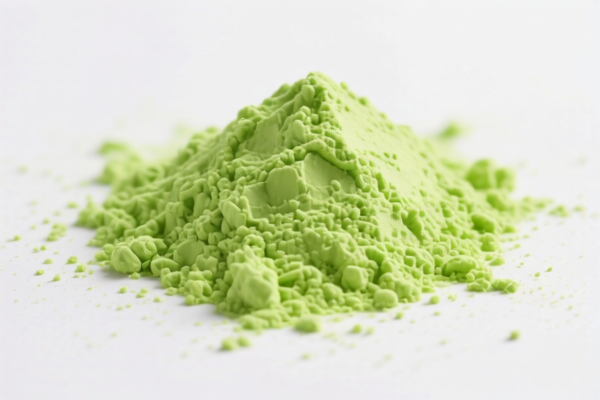
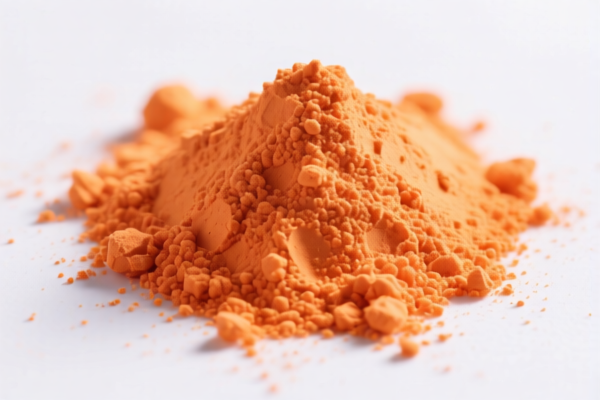
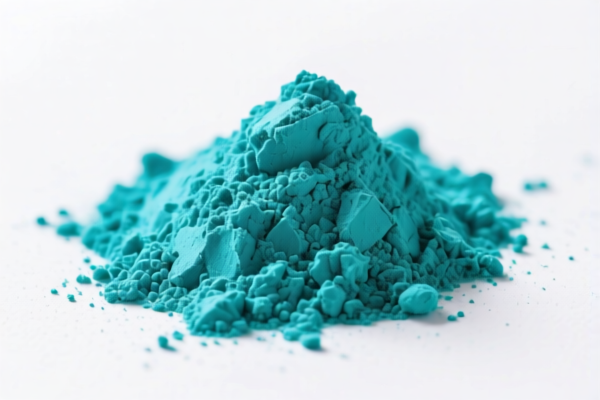
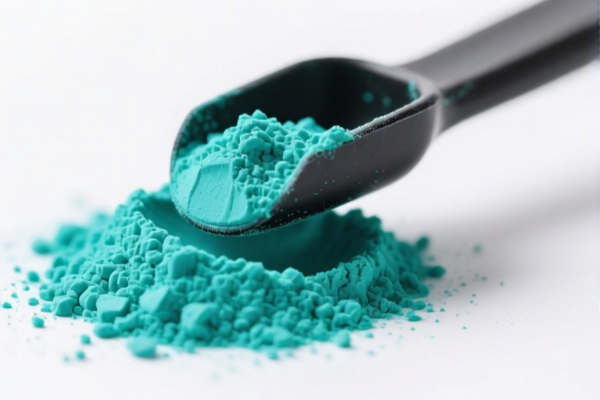
AI Analysis
🌟 Fluorescent Powder (荧光粉/增白剂粉末)
🌐 HS Code Classification & Customs Clearance Guide | 2026 Tariff Analysis | Professional Compliance Strategy
📌 I. Product Definition & Classification: What Exactly Is "Fluorescent Powder"?
"Fluorescent Powder" is a broad term in international trade that generally refers to two distinct categories of synthetic organic materials, both falling under Chapter 32 (Tanning or Dyeing Extracts; Tannins and Their Derivatives; Dyes, Pigments and Other Colouring Matter; Paints and Varnishes; Putty and Other Mastics; Inks).
The critical distinction for customs classification lies in the function and chemical definition:
- Fluorescent Brightening Agents (Optical Brighteners):
Synthetic organic compounds that absorb UV light and re-emit it as visible blue light, making materials appear whiter and brighter. These are chemically defined or specific preparations. - Synthetic Pigments (Luminophores/Colorants):
Synthetic organic coloring matters used for coloration, which may also have luminous or fluorescent properties but are primarily classified as pigments based on their specific color index (CI) numbers.
⚠️ Key Classification Pivot:
- If the primary function is brightening/whitening via fluorescence → HS 3204.20
- If the primary function is coloring/pigmentation (even if fluorescent) → HS 3204.17
📦 II. HS Code Classification Details (2026 Latest Tariff Authority)
Based on the provided data, there are two potential HS Codes for "Fluorescent Powder," depending on its specific use and chemical nature.
| HS Code | Product Description | Primary Function | Key Characteristics |
|---|---|---|---|
3204.20.80.00 |
Synthetic organic products of a kind used as fluorescent brightening agents, other | Brightening/Whitening | - Not chemically defined or specific preparations based on synthetic organic coloring matter. - Typically used in detergents, textiles, plastics, and paper to enhance whiteness. - No specific CI number listed in this subheading. |
3204.17.04.85 |
Synthetic organic coloring matter; Pigments and preparations based thereon: Other | Coloring/Pigmentation | - Specifically includes pigments like Black 1, Blue 16/18, Brown 22/23/25/32, Green 8, Orange 31/34/36/51, Red 9/14/34... (long list of CI numbers), Violet 32, Yellow 16/24... - Includes pigments with specific Luminophore properties but categorized under "Pigments". - Must match specific CI pigment codes. |
🔍 Critical Distinction:
- HS 3204.20.80.00 is for "Other" fluorescent brightening agents not specified elsewhere. This is the most common code for general-purpose optical brighteners (e.g., stilbene derivatives, coumarin derivatives) used in industrial applications.
- HS 3204.17.04.85 is a "Catch-all" for specific pigments. If your "fluorescent powder" is a specific pigment (e.g., Pigment Red 177, Pigment Yellow 153), it falls here. If it’s a generic brightener, it does not belong here unless it’s explicitly listed as a pigment.
💰 III. 2026 Tariff Rate Breakdown (Including Surtaxes & Policy Surcharges)
✅ Applicable Country: United States (US)
✅ Country of Origin: China (CN)
✅ Effective Date: Current rates apply as per 2026 data.
🎯 1. 3204.20.80.00 —— Fluorescent Brightening Agents (Other)
| Item | Detail |
|---|---|
| Base Tariff | 0.0% |
| Additional Tariff (Section 301) | 0.0% |
| Total Tax Rate | 0.0% |
| Tax Calculation | CIF Value × 0% = $0 |
| De Minimis Eligibility | ✅ Yes (If shipped via Section 321/De Minimis, often exempt if under $800) |
| Legal Basis | No additional surtaxes listed in provided data for this specific code. |
📌 Explanation:
- This code enjoys zero tariff for Chinese-origin goods under the provided data.
- This makes it a highly competitive product for importers seeking to minimize duty costs.
- No 25% Section 301 surcharge applies to this specific subheading.
🎯 2. 3204.17.04.85 —— Other Synthetic Organic Coloring Matter (Pigments)
| Item | Detail |
|---|---|
| Base Tariff | 6.5% |
| Additional Tariff (Section 301) | 25.0% |
| Total Tax Rate | 31.5% |
| Tax Calculation | CIF Value × 31.5% |
| De Minimis Eligibility | ❌ No (Subject to high duties) |
| Legal Basis | USITC:3204.17.04.85 → FOOTNOTE:301 Section 301 Surtax |
📌 Explanation:
- This code is subject to the standard 6.5% MFN duty.
- Additionally, it is hit with a 25% Section 301 surcharge due to its origin from China.
- Total effective duty is 31.5%, which is significant and impacts profit margins.
- This applies to specific pigment codes (e.g., Pigment Red, Blue, Yellow variants listed in the description).
🛠️ IV. Customs Clearance Practical Advice (Pitfall Avoidance Guide)
✅ 1. Preparation Checklist (Must-Haves)
| Document | Required? | Notes |
|---|---|---|
| ✅ Product Specification Sheet | ✔️ | Must clearly state: "Fluorescent Brightening Agent" OR "Synthetic Organic Pigment". |
| ✅ Chemical Structure / CAS Number | ✔️ | Crucial for distinguishing between Brightening Agents (3204.20) and Pigments (3204.17). |
| ✅ Function Statement | ✔️ | Explicitly state: "Used for whitening/brightening" (for 3204.20) or "Used for coloring" (for 3204.17). |
| ✅ Commercial Invoice | ✔️ | Description must match HS code logic. Avoid vague terms like "Fluorescent Powder" alone. |
| ✅ Packing List | ✔️ | Ensure weight/volume matches declaration. |
| ✅ Third-Party Test Report | ✔️ | Preferably from a lab confirming fluorescence vs. pigment properties. |
✅ 2. Declaration Tips (Key Phrases to Use)
🔥 “Function Determines Code: Brighten vs. Color!”
| Scenario | Correct HS Code | Declaration Description Example |
|---|---|---|
| Generic Brightener (e.g., in detergent/plastic) | 3204.20.80.00 |
"Synthetic Organic Fluorescent Brightening Agent, Non-Specified, For Whitening Textiles" |
| Specific Pigment (e.g., Pigment Red 177) | 3204.17.04.85 |
"Synthetic Organic Pigment, Pigment Red 177, For Paints/Inks" |
| Unknown/Mixed | ❌ High Risk | "Fluorescent Powder" → DO NOT USE. Customs will reject or reclassify with penalties. |
⚠️ Warning:
- Do not declare "Fluorescent Powder" generically.
- If it’s a brightener, emphasize "Brightening Agent".
- If it’s a pigment, specify the CI Number (e.g., Pigment Red 177).
✅ 3. Special Cases & Handling
| Case | Handling Advice |
|---|---|
| OEM Custom Brightener | Provide formula or CAS number to prove it’s a brightening agent (3204.20), not a pigment (3204.17). |
| Dual-Use Product (Brightens + Colors) | Prioritize the primary function. If mainly for whitening, use 3204.20. If mainly for color, use 3204.17. |
| Small Samples (<$800) | For 3204.20.80.00, may qualify for De Minimis exemption (0% duty). For 3204.17.04.85, 31.5% duty still applies even if small, unless specific exemptions apply. |
| Chemically Defined vs. Not | If the product is a single, chemically defined compound, ensure it’s not excluded from 3204.20. If it’s a mixture, 3204.20 is likely correct. |
🌍 V. Global Market Comparison (2026)
| Country/Region | Recommended HS Code | Duty Rate (China Origin) | Key Requirements |
|---|---|---|---|
| 🇺🇸 USA | 3204.20.80.00 |
0.0% | Clear "Brightening Agent" declaration. |
| 🇺🇸 USA | 3204.17.04.85 |
31.5% | Specific CI pigment numbers required. |
| 🇨🇳 China | 3204.20.80.00 |
~6% (Import Duty) | Standard chemical import docs. |
| 🇨🇳 China | 3204.17.04.85 |
~6% (Import Duty) | Standard chemical import docs. |
| 🇪🇺 EU | 3204.20 |
~0-6% | REACH compliance required. |
| 🇪🇺 EU | 3204.17 |
~0-6% | REACH compliance required. |
📌 Conclusion:
- USA offers 0% duty for fluorescent brighteners (3204.20.80.00), making it the most cost-effective classification.
- USA imposes 31.5% duty on specific pigments (3204.17.04.85), so accurate classification is critical to avoid overpayment.
- EU and China have lower duties but require strict chemical registration (REACH/EHS).
📌 VI. Common Errors & Pitfalls (Blood & Tears Lessons)
❌ Error 1: Declaring "Fluorescent Powder" without specifying function.
👉 Result: Customs flags for inspection → Delays → Potential reclassification to 3204.17 (31.5%) → Penalties.
❌ Error 2: Misclassifying a Brightener as a Pigment (or vice versa).
👉 Result: Paying 31.5% when you should pay 0% → Overpayment. Or underpaying → Back taxes + fines.
❌ Error 3: Not providing CAS numbers or chemical structure.
👉 Result: Customs cannot verify function → Seizure or Return.
✅ Correct Approach:
“Synthetic Organic Fluorescent Brightening Agent, CAS No. XXXXX, Used for Whitening Paper, Non-Chemically Defined Mixture” → HS 3204.20.80.00
🎯 VII. Conclusion: Precise Classification Saves Money!
🎯 Key Takeaway:
🔹 “Brightener = 0% Duty (USA)”
🔹 “Pigment = 31.5% Duty (USA)”
🔹 “Specify Function & CAS Number to Prove It!”
📌 Pro Tip:
If your product is a brightening agent, ensure your commercial invoice and packing list explicitly state “Fluorescent Brightening Agent” and provide a CAS number or technical datasheet proving its whitening function. This allows you to benefit from the 0% tariff.
For pigments, expect the 31.5% duty and budget accordingly. Consider supply chain diversification if margins are tight.
📣 Immediate Action:
📞 Consult a customs broker with your Product Datasheet and CAS Number.
📝 Apply for an Advance Ruling if unsure.
🚀 Optimize Your Cost: Choose the Right HS Code!
✨ Professional Customs Clearance Starts with Accurate Classification!
💼 Your Profit Margin Depends on Your HS Code Choice!
Customer Reviews
About HS Code Classification
The Harmonized System (HS) is an internationally standardized nomenclature developed by the World Customs Organization (WCO) to classify traded products. Over 200 countries use the HS system as the basis for customs tariffs, trade statistics, and import/export regulations.
Each HS code follows a hierarchical structure:
- Chapter (2 digits) — Broad category of goods (e.g., Chapter 84: Machinery and Mechanical Appliances)
- Heading (4 digits) — More specific grouping within the chapter
- Subheading (6 digits) — Internationally standardized breakdown, used by all WCO member countries
- National subdivisions (8-10 digits) — Country-specific extensions for further classification, such as US HTSUS 10-digit codes
Correct HS code classification is essential for smooth customs clearance, accurate duty payment, and compliance with trade regulations. Misclassification can lead to customs delays, overpayment of duties, or penalties.
When importing from CN to US, the applicable tariff rates may include:
- Most-Favored-Nation (MFN) rate — The standard duty rate applied to WTO members
- General rate — Applied to countries without trade agreements
- Trade remedy duties — Additional tariffs such as Section 301 (anti-dumping), Section 232 (national security), or countervailing duties
The information provided on this page is for reference purposes only. For official classification, please consult with your local customs authority or a licensed customs broker.