Fluoroelastomer Raw Material for Film Formation
CN → US| HS Code | Tariff Rate | Origin | Destination | Doc |
|---|---|---|---|---|
| 2942003500 | 41.5% | CN | US | Official Doc |
| 3824991100 | 35.0% | CN | US | Official Doc |
| 3904691000 | 35.0% | CN | US | Official Doc |
| 3824992900 | 41.5% | CN | US | Official Doc |
| 2942005000 | 38.7% | CN | US | Official Doc |
Product Images
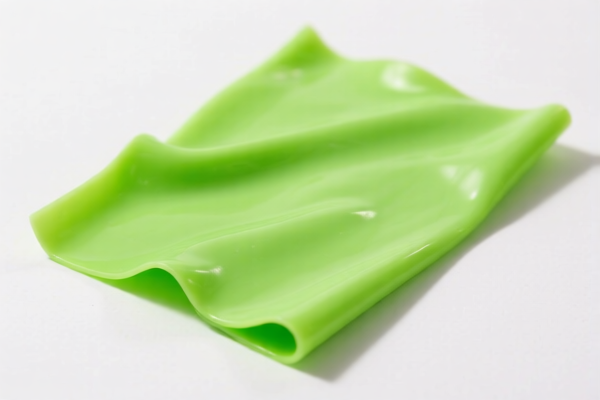

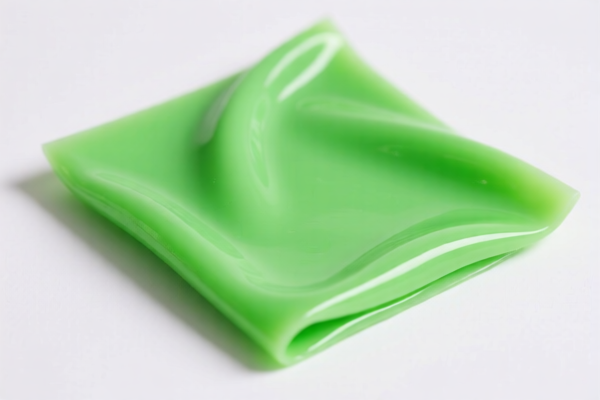
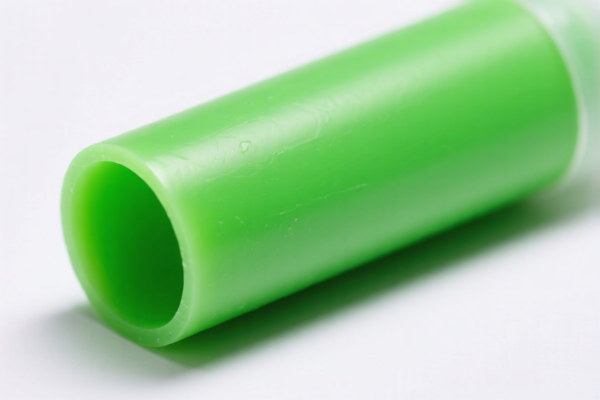
AI Analysis
🧪 Fluoroelastomer Raw Material for Film Formation (FKM Adhesive/Rubber)
🌐 HS Code Reference & Clearance Guide | 2026 Latest Tariff Analysis | Professional Customs Strategy
Fluoroelastomer (FKM) raw materials are high-performance synthetic rubbers resistant to heat, oil, and chemicals. When used for film formation or adhesive bonding, the classification hinges on three factors: 1. Chemical Structure (Is it a pure polymer or a mixture?) 2. Function (Is it a primary substance or a prepared adhesive?) 3. State of Matter (Powder, liquid, or mixed?)
⚠️ Critical Distinction: * If it is a pure chemical compound (primary form) → Chapter 29 * If it is a mixture/preparation (adhesive/paste) → Chapter 38 * If it is a polymer resin (fluoropolymer form) → Chapter 39
📦 I. HS Code Classification Matrix (2026 Latest Tariff Authority)
Based on the specific attributes of "Fluoroelastomer Raw Material for Film Formation," here are the precise HS Code mappings and corresponding tax rates from the provided data.
| HS Code | Product Description / Attribute Match | Tax Rate | Legal Basis / Notes |
|---|---|---|---|
| 2942.00.35.00 | Primary Organic Compound Form (Fluorine-containing organic compounds) |
41.5% | Base: 6.5% + Trade Wars: 25% + Sec 301: 10% |
| 3824.99.11.00 | Prepared Adhesive Use (Matched for adhesive purposes) |
35.0% | Base: 0% + Trade Wars: 25% + Sec 301: 10% |
| 3904.69.10.00 | Fluoropolymer Physical Form (Polymer resin/raw material) |
35.0% | Base: 0% + Trade Wars: 25% + Sec 301: 10% |
| 3824.99.29.00 | Chemical Preparation/Mixture (General chemical products) |
41.5% | Base: 6.5% + Trade Wars: 25% + Sec 301: 10% |
| 2942.00.50.00 | Other Organic Compounds (Non-specific fluoro-compounds) |
38.7% | Base: 3.7% + Trade Wars: 25% + Sec 301: 10% |
🔍 Key Insight: * Cheapest Option (35.0%): If you can classify as a Prepared Adhesive (3824.99.11.00) or Fluoropolymer (3904.69.10.00), you save 6.5% compared to pure organic compounds. * Riskiest Option (41.5%): Classifying under 2942.00.35.00 or 3824.99.29.00 incurs the highest burden due to the 6.5% base duty.
💰 II. 2026 Tariff Structure Breakdown (US Market Focus)
✅ Origin: China (CN)
✅ Destination: United States (US)
✅ Effective Date: Post-November 2025 (Current Trade War Context)
🎯 Scenario A: The "Base Duty" Trap (41.5% Total)
Applicable to HS Codes: 2942.00.35.00 & 3824.99.29.00
| Component | Rate | Source |
|---|---|---|
| MFN Base Duty | 6.5% | Standard WTO Most Favored Nation rate for these specific organic/chemical prep codes. |
| Section 301 Duty | 25.0% | USITC Footnote (Trade War Tariff on Chinese Chemicals). |
| IEEPA / 122 Clause | 10.0% | Additional surcharge on specific chemical categories. |
| TOTAL EFFECTIVE RATE | 41.5% | High Impact |
🎯 Scenario B: The "Zero Base" Advantage (35.0% Total)
Applicable to HS Codes: 3824.99.11.00 & 3904.69.10.00
| Component | Rate | Source |
|---|---|---|
| MFN Base Duty | 0.0% | Many fluoropolymers and specific adhesives enjoy 0% base duty. |
| Section 301 Duty | 25.0% | USITC Footnote (Trade War Tariff on Chinese Chemicals). |
| IEEPA / 122 Clause | 10.0% | Additional surcharge. |
| TOTAL EFFECTIVE RATE | 35.0% | Optimal Choice |
🎯 Scenario C: The "Middle Ground" (38.7% Total)
Applicable to HS Code: 2942.00.50.00
| Component | Rate | Source |
|---|---|---|
| MFN Base Duty | 3.7% | Lower than 6.5%, but higher than 0%. |
| Section 301 Duty | 25.0% | USITC Footnote. |
| IEEPA / 122 Clause | 10.0% | Additional surcharge. |
| TOTAL EFFECTIVE RATE | 38.7% | Moderate Impact |
🛠️ III. Clearance实操建议 (Practical Clearance Strategy)
✅ 1. How to Justify the Lower 35.0% Rate?
Strategy A: Classify as "Prepared Adhesive" (3824.99.11.00)
* Condition: The product must be a mixture (e.g., FKM rubber powder mixed with solvents, plasticizers, or cross-linking agents) intended specifically for bonding/filming.
* Documentation Required:
* Formula Sheet: Must show it is a mixture, not a pure chemical.
* Technical Data Sheet (TDS): Explicitly state "Adhesive," "Bonding Agent," or "Film-Forming Preparation."
* Usage Statement: "Used for bonding metal/rubber components."
Strategy B: Classify as "Fluoropolymer" (3904.69.10.00)
* Condition: The product is a polymer in primary form (e.g., dispersion, powder, or granules) used to make films.
* Documentation Required:
* CAS Number: Must match a fluoropolymer (e.g., PVDF, PTFE, or specific FKM copolymers).
* Structure Proof: Show it is a long-chain polymer, not a small organic molecule.
* Form: Powder, granules, or latex dispersion.
⚠️ Avoid
2942.00.35.00Unless Necessary: Only use this if the product is a pure, single-component organic fluorine compound (e.g., a specific fluoro-hydrocarbon) that is not a polymer and not a mixture. This carries the highest base duty (6.5%).
✅ 2. Document Checklist for Smooth Clearance
| Document | Requirement | Purpose |
|---|---|---|
| Commercial Invoice | Clearly describe as "Fluoroelastomer Adhesive Preparation" or "Fluoropolymer Dispersion" | Aligns with HS Code description. Avoid vague terms like "Rubber Glue." |
| Technical Data Sheet (TDS) | Must show Composition, Form (Liquid/Powder), and Intended Use (Adhesive/Film) | Critical for proving 3824 or 3904 classification. |
| Formula/Material Safety Data Sheet (MSDS) | List all ingredients and percentages | Proves it is a "Preparation" (Mixture) for Chapter 38, or "Polymer" for Chapter 39. |
| Certificate of Analysis (COA) | Purity level, Molecular Weight, Viscosity | Helps Customs distinguish between primary forms (3904) and mixtures (3824). |
| Product Photos | Show packaging, label, and physical state | Visual proof of "Preparation" vs. "Pure Chemical." |
✅ 3. Common Pitfalls & How to Avoid Them
❌ Pitfall 1: Calling it "Rubber Glue" without a formula
* Risk: Customs may assume it's a simple mixture and assign 3824.99.29.00 (41.5%) if they suspect it doesn't meet the specific "adhesive" definition for 3824.99.11.00.
* Fix: Provide a clear formula showing it is a prepared adhesive.
❌ Pitfall 2: Claiming "Organic Compound" (2942) when it's a Polymer
* Risk: Misclassification. Fluoroelastomers are often copolymers. If you declare it as a simple organic compound (2942), you pay 6.5% base duty instead of 0%.
* Fix: If it's a polymer (chain of monomers), fight for 3904.69.10.00 (0% base).
❌ Pitfall 3: Ignoring the "122 Clause" (10%) * Risk: Assuming 25% Section 301 is the only extra tax. * Fix: All options above include the 10% IEEPA/122 Clause. Ensure your cost model includes this total 35-41.5% burden.
🌍 IV. Global Market Comparison (2026)
| Market | Recommended HS Code | Est. Total Tax | Key Requirement |
|---|---|---|---|
| 🇺🇸 USA | 3824.99.11.00 or 3904.69.10.00 |
35.0% | Prove Adhesive/Polymer Status. Avoid 2942 unless strictly a pure compound. |
| 🇨🇳 China | Varies | ~0-6.5% | Standard Import Duty. No 25% Section 301. |
| 🇪🇺 EU | 3901-3913 Range |
~0-4% | No Section 301. Focus on chemical composition. |
| 🇯🇵 Japan | 3913 or 3824 |
~0-4% | Low base duty. No trade war tariffs. |
📌 Conclusion for US Importers: * Target: Aim for 35.0% (
3824.99.11.00or3904.69.10.00). * Why: Saves 6.5% annually on high-value chemical imports. * How: Ensure your Technical Data Sheet explicitly states the product is a Preparation or Polymer, not a pure organic compound.
📌 V. Final Verdict & Action Plan
- Audit Your Formula: Is it a pure molecule? →
2942. Is it a polymer? →3904. Is it a mixed adhesive? →3824. - Update Documentation: Rewrite the "Product Description" on invoices to match the chosen HS Code (e.g., "Fluoropolymer Dispersion" vs. "Fluoro-organic Compound").
- Calculate Landed Cost:
- If
3824.99.11.00: Cost = CIF × 35% - If
2942.00.35.00: Cost = CIF × 41.5% - Difference: 6.5% of CIF value can be significant for bulk shipments.
- If
- Pre-Ruling: Consider applying for a US Customs Border Protection (CBP) Ruling to lock in the 35.0% classification before shipping large volumes.
✨ Professional Clearance Starts with Precise Classification!
💼 Don't let a 6.5% base duty mistake eat your margins!
Customer Reviews
About HS Code Classification
The Harmonized System (HS) is an internationally standardized nomenclature developed by the World Customs Organization (WCO) to classify traded products. Over 200 countries use the HS system as the basis for customs tariffs, trade statistics, and import/export regulations.
Each HS code follows a hierarchical structure:
- Chapter (2 digits) — Broad category of goods (e.g., Chapter 84: Machinery and Mechanical Appliances)
- Heading (4 digits) — More specific grouping within the chapter
- Subheading (6 digits) — Internationally standardized breakdown, used by all WCO member countries
- National subdivisions (8-10 digits) — Country-specific extensions for further classification, such as US HTSUS 10-digit codes
Correct HS code classification is essential for smooth customs clearance, accurate duty payment, and compliance with trade regulations. Misclassification can lead to customs delays, overpayment of duties, or penalties.
When importing from CN to US, the applicable tariff rates may include:
- Most-Favored-Nation (MFN) rate — The standard duty rate applied to WTO members
- General rate — Applied to countries without trade agreements
- Trade remedy duties — Additional tariffs such as Section 301 (anti-dumping), Section 232 (national security), or countervailing duties
The information provided on this page is for reference purposes only. For official classification, please consult with your local customs authority or a licensed customs broker.