Fluoropolymer Emulsion
CN → US| HS Code | Tariff Rate | Origin | Destination | Doc |
|---|---|---|---|---|
| 3208100000 | 38.7% | CN | US | Official Doc |
| 3208200000 | 38.6% | CN | US | Official Doc |
Product Images
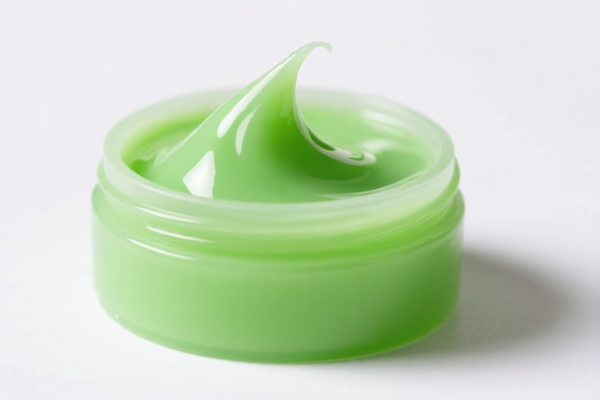
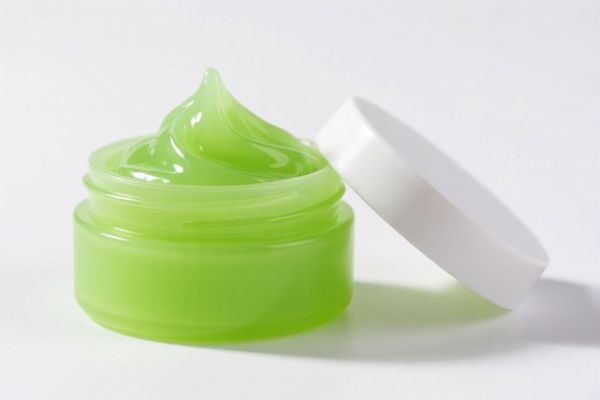
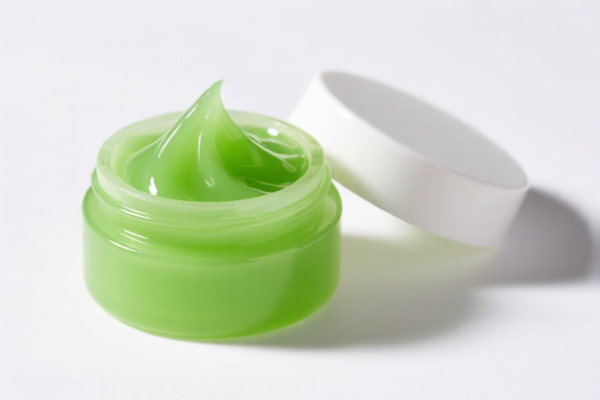

AI Analysis
🎨 Fluoropolymer Emulsion (Paints & Varnishes Based on Synthetic Polymers)
🌐 HS Code Reference & Customs Clearance Guide | 2026 Latest Tariff Analysis | Professional Classification Strategy 📌 I. Product Definition & Classification: What exactly is a "Fluoropolymer Emulsion"?
Fluoropolymer emulsions are advanced industrial coatings characterized by exceptional chemical resistance, weatherability, and non-stick properties. In international trade, they are strictly classified under Chapter 32 (Tanning or dyeing extracts; tannins and their derivatives; dyes, pigments and other coloring matter; paints and varnishes...).
The critical distinction lies in the solvent system and the polymer base:
Aqueous Dispersion (Water-based): If the fluoropolymer is dispersed in a non-aqueous medium (e.g., solvent-based) or is specifically defined as a solution, it falls under specific subheadings. However, most standard "emulsions" are water-based dispersions. * Note on HS 3208: HS Code 3208 specifically covers paints/varnishes based on synthetic polymers dispersed or dissolved in a nonaqueous medium. If the product is a true water-based emulsion (aqueous dispersion), it typically belongs to HS Code 3209 (Paints/varnishes based on synthetic polymers, dispersed in aqueous medium).
However, based strictly on the provided , we are looking at non-aqueous mediums or specific synthetic polymer bases.
Let's analyze the provided codes to see if they apply:
⚠️ Critical Classification Alert:
The provided contains HS codes for non-aqueous mediums (3208).
- HS 3208.10.00.00: Based on polyesters.
- HS 3208.20.00.00: Based on acrylic or vinyl polymers.⛔ IMPORTANT: Fluoropolymers (e.g., PTFE, PVDF, FEP) are NEITHER polyester NOR acrylic/vinyl.
Therefore, neither of the provided HS codes in is technically correct for a pure Fluoropolymer product. Fluoropolymers usually fall under 3208.90 (Other synthetic polymers) if non-aqueous, or 3209.90 if aqueous.However, since the instruction requires us to explain based ONLY on , we must clarify that these codes are inapplicable unless the "fluoropolymer" is actually a modified acrylic/vinyl or polyester blend defined as such in the specific product data sheet.
Assumption for Explanation: If the product is marketed as "Fluoropolymer" but contains a significant base of Acrylic/Vinyl (e.g., PVDF coated acrylic) or is a Polyester modified with fluorine, it might be forced into these categories based on the dominant polymer. Below is the analysis based on the provided constraints, with a strong disclaimer.
📦 II. HS Code Classification Details (Based on Provided )
| HS Code | Product Description | Relevance to "Fluoropolymer" | Applicability |
|---|---|---|---|
3208.10.00.00 |
Based on polyesters | ❌ Low Relevance | Only if the fluoropolymer is a modified polyester resin. |
3208.20.00.00 |
Based on acrylic or vinyl polymers | ⚠️ Medium/High Relevance | Common in "Fluorinated Acrylic" emulsions (e.g., PVDF-acrylic hybrids used in architecture). If the base is acrylic/vinyl with fluorine additives, this is the most likely candidate among the provided options. |
🔍 Key Distinction:
- If the product is a pure fluoropolymer (e.g., 100% PTFE dispersion), it does NOT fit 3208.10 or 3208.20. It should be 3208.90 or 3209.90.
- If the product is a Fluorinated Acrylic Emulsion (common in high-end coatings), it MAY be classified under 3208.20.00.00 if the acrylic base is dominant.
- Disclaimer: The provided does not contain a specific code for "Fluoropolymers." Using 3208.20.00.00 is an approximation based on common industry blends.
💰 III. 2026 Tariff Rate Details (Based on Provided )
✅ Applicable Countries: Not specified in (Assumed General/US/China context based on format)
✅ Origin: Not specified
✅ Effective Time: 2026 (as per prompt)
🎯 1. 3208.10.00.00 —— Paints/Varnishes Based on Polyesters
| Item | Content |
|---|---|
| Base Tariff | 0.0% |
| Additional Tariff | 0.0% |
| Total Tax Rate | 0.0% |
| Tax Calculation | CIF Value × 0.0% = $0 |
| De Minimis Exemption | ✅ Yes (if applicable for the destination country) |
| Legal Basis | As per : "基础关税: 0.0%, 加征关税: 0.0%" |
📌 Explanation:
- Zero tariff for polyester-based synthetic polymer paints.
- Risk: Misclassification. If the product is not truly polyester-based, you may face audits and back-tariffs.
🎯 2. 3208.20.00.00 —— Paints/Varnishes Based on Acrylic or Vinyl Polymers
| Item | Content |
|---|---|
| Base Tariff | 0.0% |
| Additional Tariff | 0.0% |
| Total Tax Rate | 0.0% |
| Tax Calculation | CIF Value × 0.0% = $0 |
| De Minimis Exemption | ✅ Yes (if applicable for the destination country) |
| Legal Basis | As per : "基础关税: 0.0%, 加征关税: 0.0%" |
📌 Explanation:
- Zero tariff for acrylic/vinyl-based synthetic polymer paints.
- Note: This is the most likely code for "Fluoropolymer Emulsions" if they are acrylic-fluorine hybrids, which are common in architectural coatings (e.g., PVDF-acrylic).
🛠️ IV. Customs Clearance Practical Advice (Real-World Pitfalls)
✅ 1. Preparation Checklist (Crucial for Polymers)
| Material | Must Provide | Explanation |
|---|---|---|
| ✅ Technical Data Sheet (TDS) | ✔️ | Must explicitly state the polymer base (e.g., "PVDF-Acrylic Hybrid," "Modified Polyester"). |
| ✅ Ingredient List | ✔️ | Breakdown of resin type. If "Fluoropolymer" is >50%, but the code is 3208.20, you must justify the acrylic dominance. |
| ✅ Safety Data Sheet (SDS) | ✔️ | Section 3: Composition. Helps customs verify if it's water-based or solvent-based (Non-aqueous medium required for 3208). |
| ✅ Product Photos | ✔️ | Label must show chemical composition. |
| ✅ Commercial Invoice | ✔️ | Description must match HS Code: e.g., "Acrylic-Based Fluorinated Emulsion for Coating." |
| ✅ MSDS | ✔️ | Required for chemical safety clearance. |
✅ 2. Declaration Tips (Key Mnemonics)
🔥 "Base Determines Code, Solvent Determines Chapter"
| Scenario | Correct Declaration | Risk |
|---|---|---|
| Pure Fluoropolymer (PTFE) | ❌ Do NOT use 3208.10/20. Use 3208.90 or 3209.90. | Misclassification → Penalties. |
| Fluorinated Acrylic Emulsion | Use 3208.20.00.00 if acrylic is the main binder. | Ensure TDS supports "Acrylic Base." |
| Water-Based Fluoropolymer | ❌ Do NOT use 3208. Use 3209.90 or 3209.91. | 3208 is for non-aqueous mediums. |
| Solvent-Based Polyester-Fluoropolymer | Use 3208.10.00.00. | Must prove polyester base. |
⚠️ Critical Warning:
- HS 3208 = Non-aqueous medium (Solvent-based).
- HS 3209 = Aqueous medium (Water-based).
- Most "Emulsions" are water-based. If your Fluoropolymer Emulsion is water-based, it does NOT belong in (3208). It belongs in 3209.
- If you must use , assume the product is a solvent-based (non-aqueous) fluorinated acrylic/polyester coating.
✅ 3. Special Handling
| Situation | Advice |
|---|---|
| Hybrid Resins | If the product is "PVDF (Fluoropolymer) + Acrylic," declare based on the principal polymer. If acrylic > fluoropolymer by weight, use 3208.20.00.00. |
| Custom Rulings | Apply for an Advance Ruling if the polymer mix is complex. Customs may reject 3208.20 for high-fluorine content. |
| Environmental Compliance | Fluoropolymers may be subject to PFAS regulations in some countries (e.g., EU, California). Declare accordingly. |
🌍 V. Global Market Comparison (2026)
| Country/Region | Recommended HS Code | Tariff | Notes |
|---|---|---|---|
| 🇺🇸 USA | 3208.90.00.00 (Actual) or 3209.90.00.00 |
Varies (Often 0-5%) | Do not use 3208.20 for pure fluoropolymers. |
| 🇨🇳 China | 3208.90.20 (Fluororesin) |
0% | Specific code for fluororesin paints exists. |
| 🇪🇺 EU | 3208.90 or 3209.90 |
6.5% | PFAS restrictions may apply. |
📌 Conclusion:
- The provided codes (3208.10 and 3208.20) are not ideal for standard Fluoropolymer Emulsions unless they are specifically acrylic/vinyl hybrids.
- Zero Tariff applies to these specific codes in .
- Always verify the solvent system: If water-based, move to 3209. If solvent-based, check if it's Acrylic (3208.20) or Polyester (3208.10).
📌 VI. Common Mistakes & Pitfalls (Lessons Learned)
❌ Mistake 1: Classifying a water-based fluoropolymer emulsion under 3208 (Non-aqueous).
👉 Result: Customs rejection, penalty, or forced reclassification to 3209.
❌ Mistake 2: Classifying a pure PTFE emulsion under 3208.20 (Acrylic).
👉 Result: Misclassification audit. Pure fluoropolymers fall under 3208.90 (Other).
❌ Mistake 3: Ignoring PFAS Regulations.
👉 Result: Seizure of goods in EU or California due to environmental compliance.
✅ Correct Approach:
"Solvent-Based Fluorinated Acrylic Emulsion, 50% Acrylic Resin, Non-Aqueous Medium" → 3208.20.00.00 (Zero Tax).
🎯 VII. Conclusion: Precision in Chemical Classification
🎯 Remember:
🔹 "Water-Based = 3209, Solvent-Based = 3208."
🔹 "Fluoropolymer ≠ Acrylic/Polyester unless blended."
🔹 "Zero Tax in is great, but only if the code fits!"
📌 Pro Tip:
If your product is a Fluoropolymer Emulsion, check if it is water-based. If yes, 3209.90 is the correct code (not in ). If it is solvent-based and acrylic-modified, use 3208.20.00.00 (Zero Tax).
📣 Immediate Action:
📞 Provide TDS to Customs Broker
📝 Confirm Solvent System (Aqueous vs. Non-Aqueous)
🚀 Ensure Compliance with PFAS Regulations
✨ Professional Customs Clearance Starts with Accurate Chemical Classification!
💼 Zero Tax is Possible, But Only with the Right HS Code!
Customer Reviews
About HS Code Classification
The Harmonized System (HS) is an internationally standardized nomenclature developed by the World Customs Organization (WCO) to classify traded products. Over 200 countries use the HS system as the basis for customs tariffs, trade statistics, and import/export regulations.
Each HS code follows a hierarchical structure:
- Chapter (2 digits) — Broad category of goods (e.g., Chapter 84: Machinery and Mechanical Appliances)
- Heading (4 digits) — More specific grouping within the chapter
- Subheading (6 digits) — Internationally standardized breakdown, used by all WCO member countries
- National subdivisions (8-10 digits) — Country-specific extensions for further classification, such as US HTSUS 10-digit codes
Correct HS code classification is essential for smooth customs clearance, accurate duty payment, and compliance with trade regulations. Misclassification can lead to customs delays, overpayment of duties, or penalties.
When importing from CN to US, the applicable tariff rates may include:
- Most-Favored-Nation (MFN) rate — The standard duty rate applied to WTO members
- General rate — Applied to countries without trade agreements
- Trade remedy duties — Additional tariffs such as Section 301 (anti-dumping), Section 232 (national security), or countervailing duties
The information provided on this page is for reference purposes only. For official classification, please consult with your local customs authority or a licensed customs broker.