Fluoropolymer Injection Molding Compound
CN → USProduct Images

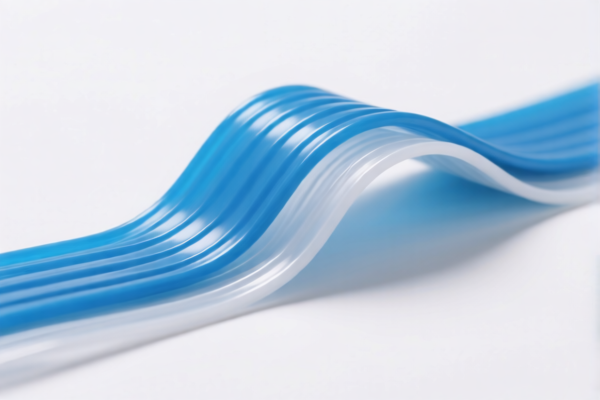
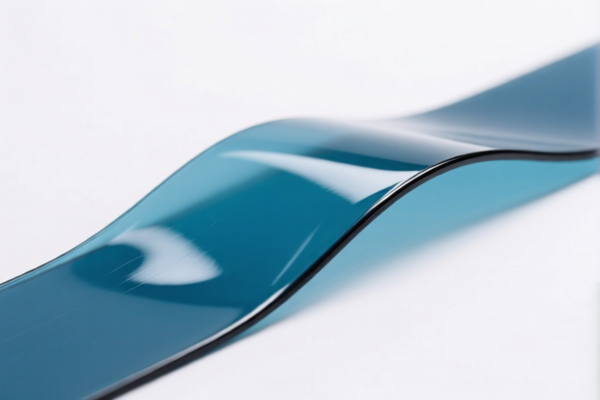
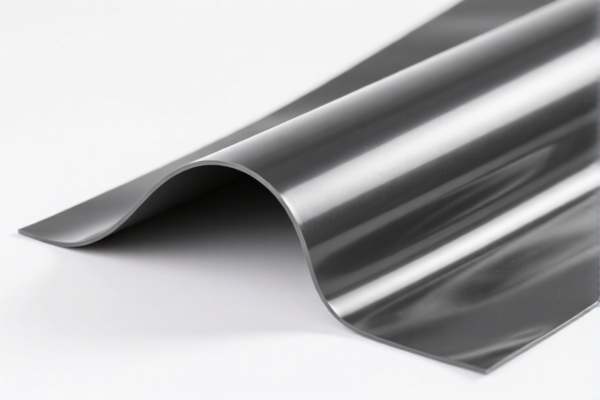
AI Analysis
🧪 Fluoropolymer Injection Molding Compound (PTFE/PFA/FEPM)
🌐 HS Code Reference & Customs Clearance Guide | 2026 Latest Tariff Analysis | Professional-Level Clearance Strategy
📌 I. Product Definition & Classification: Do You Truly Understand "Fluoropolymer"?
Fluoropolymer Injection Molding Compounds are high-performance thermoplastic materials primarily composed of polytetrafluoroethylene (PTFE), perfluoroalkoxy (PFA), or fluoroelastomers (FEPM). They are renowned for extreme chemical resistance, high-temperature stability, and low friction coefficients.
In international trade, these materials are rarely classified as simple "plastics." They are distinct categories based on their chemical composition and physical form:
- Primary PTFE/PFA Resins: Unmolded, raw compound powders or granules intended for subsequent processing.
- Semifinished Articles: Rods, sheets, or tubes that are already shaped but require further manufacturing.
- Finished Parts: Gaskets, seals, or specific components (if imported as such).
⚠️ Critical Distinction Point:
- If the product is raw powder/granules in plastic bags/drums → Classify under Chapter 39 (Articles of Plastics).
- If the product is pre-shaped rods/tubes → Classify under Chapter 39 (Semicircles/Rods).
- If the product is finished gaskets/seals → Classify under Chapter 40 (Rubber Articles) or 3926 (Other Plastic Articles), depending on material composition.
📦 II. HS Code Classification Details (2026 Latest Tariff Authority Comparison)
| HS Code | Product Description | Application Scenario | Form |
|---|---|---|---|
3901.10.00.00 |
Polyethylene, primary form (Note: Rare for Fluoropolymers, but check base polymer if copolymer) | Not typically applicable for pure PTFE | ❌ N/A |
3904.21.00.00 |
Polytetrafluoroethylene (PTFE), in primary forms | Raw PTFE powder, granules, pellets for injection molding | ✅ Primary Form |
3904.30.00.00 |
Fluoropolymers other than PTFE (e.g., PVDF, PFA, FEP) in primary forms | Raw PFA/PVDF granules for molding | ✅ Primary Form |
3926.90.97.95 |
Other articles of plastics (Semicircles, Rods, Tubes) | Pre-extruded PTFE rods/tubes for machining | ✅ Semi-finished |
4016.93.00.00 |
Other articles of vulcanized rubber having special properties | Fluoroelastomer (FKM/Viton) seals/gaskets | ✅ Finished Part |
🔍 Key Reminder:
- PTFE falls under 3904.21.
- PFA/FEP/PVDF fall under 3904.30.
- Never classify raw fluoropolymer powder under "Chemicals" (Chapter 29) or "Miscellaneous" (Chapter 38). It is strictly an article of plastic (Chapter 39) in primary form.
💰 III. 2026 Latest Tariff Rate Breakdown (Including Additional Duties & Policy Surcharges)
✅ Applicable Country: United States (US)
✅ Country of Origin: China (CN)
✅ Effective Date: From November 10, 2025 (including subsequent imports)
🎯 1. 3904.21.00.00 —— Polytetrafluoroethylene (PTFE), in primary forms
| Item | Content |
|---|---|
| Base Tariff Rate | 5.3% (ad valorem) |
| USITC Additional Tariff | +25% (Under Section 301, USITC Footnote 9903.88.01) |
| IEEPA Additional Tariff | +10% (Targeting China/HK products, effective from Nov 10, 2025) |
| Total Tariff Rate | 40.3% |
| Tax Calculation | CIF Value × 40.3% |
| De Minimis Exemption | ❌ Not Eligible (deny_de_minimis) |
| Legal Basis Path | IEEPA:9903.01.25 → IEEPA:9903.01.24 → USITC:3904.21.00.00 → FOOTNOTE:9903.88.01 |
📌 Explanation:
- The 25% USITC surcharge is part of the Section 301 tariffs on Chinese goods.
- The 10% IEEPA surcharge is a new layer targeting specific strategic materials, including high-performance polymers.
- Total of 40.3% is a high-cost barrier. Pre-calculation is essential for margin analysis.
🎯 2. 3904.30.00.00 —— Fluoropolymers other than PTFE (e.g., PFA, FEP)
| Item | Content |
|---|---|
| Base Tariff Rate | 5.3% (ad valorem) |
| USITC Additional Tariff | +25% |
| IEEPA Additional Tariff | +10% |
| Total Tariff Rate | 40.3% |
| Tax Calculation | CIF × 40.3% |
| De Minimis Exemption | ❌ Not Eligible |
| Legal Basis Path | IEEPA:9903.01.25 → IEEPA:9903.01.24 → USITC:3904.30.00.00 → FOOTNOTE:9903.88.01 |
📌 Note:
- PFA (Perfluoroalkoxy) and FEP (Fluorinated Ethylene Propylene) are classified under "Other Fluoropolymers."
- Like PTFE, they face the same heavy tariff burden. Do not confuse them with standard thermoplastics like PE or PP, which may have lower rates.
🛠️ IV. Customs Clearance Practical Advice (Battle-Tested Pitfall Avoidance Guide)
✅ 1. Required Documentation Checklist (All Mandatory)
| Document | Required | Explanation |
|---|---|---|
| ✅ Product Specification Sheet | ✔️ | Must specify exact polymer type (PTFE vs. PFA), melt flow index, filler content (e.g., glass-filled, carbon-filled). |
| ✅ Safety Data Sheet (SDS) | ✔️ | To confirm non-hazardous classification and chemical identity. |
| ✅ Commercial Invoice | ✔️ | Must clearly state "Plastic Material, Primary Form" NOT "Chemical Raw Material." |
| ✅ Certificate of Origin (CO) | ✔️ | Crucial for verifying origin. If re-processed in Vietnam/Malaysia, apply for Form E or AHTCN if applicable. |
| ✅ Packing List | ✔️ | Detail net/gross weight. Ensure packaging is sealed to prevent contamination. |
| ✅ FCC/Proposition 65 Compliance | ✔️ | Some fluoropolymer additives may trigger consumer protection alerts in the US. |
✅ 2. Declaration Tips (Key Mantras)
🔥 "Form Matters, Polymer Name Precise, No 'Chemicals' Ambiguity!"
| Scenario | Correct Declaration | Wrong Practice |
|---|---|---|
| Raw PTFE Powder | 3904.21.00.00 - "PTFE Resin, Primary Form" |
Misdeclare as "Chemical Reagent" (Chapter 29) → Audit risk |
| PFA Granules | 3904.30.00.00 - "PFA Fluoropolymer, Primary Form" |
Misdeclare as "Standard Plastic" → Rate mismatch |
| Pre-cut PTFE Sheets | 3926.90.97.95 - "Plastic Articles, Semi-finished" |
Misdeclare as raw powder → Tariff error |
| Filled PTFE (e.g., Glass-filled) | 3904.21.00.00 (Generally) |
Check specific subheading for composites; usually still 3904.21 if PTFE base |
✅ 3. Special Circumstances Handling
| Situation | Handling Advice |
|---|---|
| OEM Custom Compounds | Provide formula or generic description. Avoid disclosing proprietary formulas unless required. |
| Mixed Shipments (PTFE + Fittings) | Split the declaration. PTFE powder under 3904; Metal fittings under 7307/7318. Do not lump them. |
| Re-export from 3rd Country | If processed in Malaysia, ensure Substantial Transformation occurred. Apply for non-China origin CO to avoid US tariffs. |
| Sample Shipments | Even samples are subject to customs inspection. Mark as "Sample - Not for Resale" but still declare value accurately. |
🌍 V. Global Market Customs Comparison (2026 Latest)
| Country/Region | Recommended HS Code | Tariff (China Origin) | Certification Requirements | Notes |
|---|---|---|---|---|
| 🇺🇸 USA | 3904.21.00.00 |
40.3% (5.3% + 25% + 10%) | FDA Contact (for food grade) | Highest duty; strict origin checks. |
| 🇨🇳 China | 3904.21.00.00 |
5.0% | CNCA (if applicable) | Low tariff; easy import. |
| 🇪🇺 EU | 3904.21.00.00 |
0% (Under GSP/EBA if eligible) | REACH Registration | REACH compliance is critical for EU entry. |
| 🇦🇺 Australia | 3904.21.00.00 |
5.0% | ACER | Moderate tariff. |
| 🇯🇵 Japan | 3904.21.00.00 |
5.5% | JIS Standard | No additional surcharges. |
📌 Conclusion:
- The US market is the most expensive for Chinese fluoropolymer imports due to the triple-layer tariff structure (Base + Section 301 + IEEPA).
- Europe and Japan offer more stable, lower tariff environments, making them attractive alternatives for US-bound supply chains (via re-export, though caution is advised on rules of origin).
📌 VI. Common Mistakes & Pitfall Guide (Blood & Tears Lessons)
❌ Mistake 1: Declaring "Fluoropolymer" as "Chemical Raw Material" (HS 2933/2934)
👉 Consequence: Incorrect classification → Penalty + Back Tax + Shipment Delay.
❌ Mistake 2: Ignoring the "Primary Form" requirement
👉 Consequence: If the powder is in pre-filled bags but clearly labeled for final product, customs may argue it is a "finished article" (HS 3926), changing the duty base or triggering additional scrutiny.
❌ Mistake 3: Assuming "Filled PTFE" falls under Rubber (Chapter 40)
👉 Consequence: Filled PTFE remains a plastic article (Chapter 39) unless it is a vulcanized elastomer (FKM/Viton). Misclassification leads to audit flags.
❌ Mistake 4: Under-declaring Value
👉 Consequence: High-value fluoropolymers attract CBP scrutiny. Undervaluation leads to severe fines and loss of import privileges.
✅ Correct Practice:
"PTFE Resin, PTFE, Primary Form, White Powder, 25kg HDPE Bag, FDA Compliant, Model XYZ, Made in China"
🎯 VII. Conclusion: Precise Classification Saves Millions!
🎯 Remember the Mantra:
🔹 "Primary Form is 3904, Filled is still 3904, Finished Parts are 3926/4016."
🔹 "US Tariff is 40.3%, Avoid if Possible or Optimize Supply Chain."
📌 Pro Tip:
If your fluoropolymer is originating from Vietnam, Thailand, or Malaysia, you may qualify for preferential tariffs (0-5%) under various FTAs, bypassing the US IEEPA/Section 301 duties.
Recommendation: Apply for an Advance Ruling (CBP Ruling Letter) before shipping to mitigate risk.
📣 Immediate Action:
📞 Consult a licensed customs broker + Provide SDS + Verify Origin Status
🚀 Ensure your fluoropolymer compounds clear customs efficiently, legally, and cost-effectively!
✨ Professional Customs Clearance Starts with Accurate Classification!
💼 Your Cost Efficiency Depends on Every Digit of the HS Code!
Customer Reviews
About HS Code Classification
The Harmonized System (HS) is an internationally standardized nomenclature developed by the World Customs Organization (WCO) to classify traded products. Over 200 countries use the HS system as the basis for customs tariffs, trade statistics, and import/export regulations.
Each HS code follows a hierarchical structure:
- Chapter (2 digits) — Broad category of goods (e.g., Chapter 84: Machinery and Mechanical Appliances)
- Heading (4 digits) — More specific grouping within the chapter
- Subheading (6 digits) — Internationally standardized breakdown, used by all WCO member countries
- National subdivisions (8-10 digits) — Country-specific extensions for further classification, such as US HTSUS 10-digit codes
Correct HS code classification is essential for smooth customs clearance, accurate duty payment, and compliance with trade regulations. Misclassification can lead to customs delays, overpayment of duties, or penalties.
When importing from CN to US, the applicable tariff rates may include:
- Most-Favored-Nation (MFN) rate — The standard duty rate applied to WTO members
- General rate — Applied to countries without trade agreements
- Trade remedy duties — Additional tariffs such as Section 301 (anti-dumping), Section 232 (national security), or countervailing duties
The information provided on this page is for reference purposes only. For official classification, please consult with your local customs authority or a licensed customs broker.