Fluoropolymer Sintering Compound
CN → USProduct Images
AI Analysis
🧪 Fluoropolymer Sintering Compound (F4 Powder / PTFE Spherical Powder)
🌐 HS Code Reference & Customs Clearance Guide | 2026 Latest Tariff Analysis | Professional Grade Entry Strategy
📌 I. Product Definition & Classification: What Exactly is "Sintering Compound"?
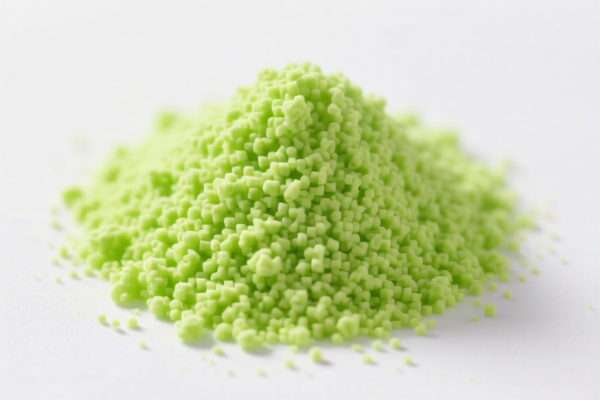
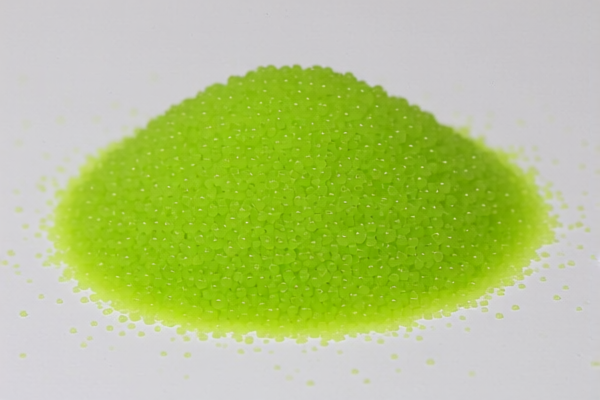
Fluoropolymer Sintering Compound, commonly known as PTFE Spherical Powder or Raw Material for PTFE, is the primary feedstock for producing Polytetrafluoroethylene (PTFE) molded products. It is NOT a finished plastic part, nor is it a mixture with additives that changes its fundamental chemical identity.
In international trade, it is classified based on its polymer type and physical state:
- Core Material: Polytetrafluoroethylene (PTFE).
- Form: Fine powder, spherical, designed for sintering (heating without melting to fuse particles).
- Additives: Pure sintering compounds contain no fillers (like glass fiber, bronze, carbon) that would change their essential character. If fillers >5% by weight are added, it may shift to a "composite material" classification (Chapter 39 vs. Chapter 39 Note 2).
⚠️ Critical Distinction:
- Pure PTFE Powder → Classified under 3904 (Fluoropolymers).
- Filled PTFE Compound (e.g., PTFE + 20% Carbon) → May still fall under 3904 if PTFE is the essential character, but requires strict declaration of composition.
- Finished PTFE Sheets/Rods → Classified under 3920 or 3926 (Plastics in primary forms or articles).
📦 II. HS Code Classification Details (2026 Latest Tariff Authority)
| HS Code | Product Description | Application | Pure/Polymer Status |
|---|---|---|---|
3904.61.00.00 |
Polytetrafluoroethylene (PTFE), in primary forms | Pure PTFE Sintering Powder | ✅ 100% PTF |
3904.69.00.00 |
Other fluoropolymers, in primary forms | PFA, FEP, PVDF, or modified PTFE with minor additives | ✅ Fluoropolymer |
3901.10.00.00 |
Polyethylene, in primary forms | Incorrect Classification (Common Error) | ❌ Wrong Material |
3920.10.00.00 |
Plates, sheets, film of polyethylene | Incorrect Classification | ❌ Wrong Form |
3824.99.99.00 |
Prepared binders for foundry molds | Incorrect Classification (Unless specifically for metal casting) | ❌ Wrong Use |
🔍 Key Reminder:
- Pure PTFE Sintering Powder MUST be classified under 3904.61.00.00.
- Do NOT classify under generic "Plastics" (3901-3914) unless it is not PTFE.
- If the powder is filled (e.g., with PEEK, Carbon, or Glass), verify if the PTFE still provides the essential character. If yes, it remains 3904.69.00.00.
💰 III. 2026 Latest Tariff Rate Breakdown (Including Surtaxes & Policy Surcharges)
✅ Applicable Country: United States (US)
✅ Origin: China (CN)
✅ Effective Date: November 10, 2025 onwards (for subsequent imports)
🎯 1. 3904.61.00.00 —— Polytetrafluoroethylene (PTFE), in primary forms
| Item | Content |
|---|---|
| Base Tariff Rate | 3.4% (ad valorem) |
| USITC Surtax (Section 301) | +7.5% (Footnote 9903.01.25) |
| IEEPA Surtax | +10% (Against China/HK products, from Nov 10, 2025) |
| Total Tariff Rate | 20.9% |
| Tax Calculation | CIF Value × 20.9% |
| De Minimis Exemption | ❌ Not Eligible (deny_de_minimis applies to Section 301 items) |
| Legal Path | IEEPA:9903.01.25 → USITC:3904.61.00.00 → FOOTNOTE:9903.01.25 |
📌 Explanation:
- The base rate is low, but the Section 301 surtax (7.5%) and IEEPA surtax (10%) significantly increase the cost.
- Total 20.9% is high for a raw material, impacting cost-sensitive manufacturing.
- No De Minimis: Small packages (<$800) do NOT escape these tariffs.
🎯 2. 3904.69.00.00 —— Other Fluoropolymers, in primary forms
| Item | Content |
|---|---|
| Base Tariff Rate | 3.4% |
| USITC Surtax (Section 301) | +7.5% |
| IEEPA Surtax | +10% |
| Total Tariff Rate | 20.9% |
| Tax Calculation | CIF Value × 20.9% |
| De Minimis Exemption | ❌ Not Eligible |
| Legal Path | IEEPA:9903.01.25 → USITC:3904.69.00.00 |
📌 Note:
- Filled PTFE compounds (if PTFE is essential) also face 20.9%.
- If the compound is considered a "Preparation" (e.g., with >5% non-fluoropolymer fillers that alter character), it might shift to 3904.90.00.00 (Other Fluoropolymers) or even 3926.90.90.00 (Articles of Plastics), but customs scrutiny is intense here.
🛠️ IV. Customs Clearance Operational Advice (Practical Pitfall Guide)
✅ 1. Documentation Checklist (Non-negotiable)
| Document | Required | Notes |
|---|---|---|
| ✅ Technical Data Sheet (TDS) | ✔️ | Must explicitly state 100% PTFE or list filler percentages. |
| ✅ Certificate of Analysis (COA) | ✔️ | Confirms molecular weight, particle size, and chemical composition. |
| ✅ Product Photo (Packaging + Label) | ✔️ | Label must say "Polytetrafluoroethylene (PTFE)" or "Fluoropolymer". |
| ✅ Commercial Invoice | ✔️ | Description: "PTFE Spherical Powder for Sintering, HS 3904.61.00" |
| ✅ Bill of Lading | ✔️ | Ensure no "Mixed Containers" with other high-tariff goods unless declared separately. |
| ✅ FEMA/Chemical Declaration | ✔️ | PTFE is generally non-hazardous, but EPA/ATSDR forms may be required. |
✅ 2. Declaration Strategy (Key Mnemonic)
🔥 "Pure PTFE, Code 3904; Filled? Check Essential Character; No De Minimis!"
| Scenario | Correct Declaration | Common Mistake |
|---|---|---|
| Pure PTFE Powder | 3904.61.00.00 |
Declaring as "Plastic Raw Material" (3901) → Misclassification |
| PTFE + 5% Carbon | 3904.69.00.00 (if PTFE essential) |
Declaring as "Composite Material" (3926) → Higher Risk |
| PTFE Sheets/Flakes | 3920.10.00.00 (Incorrect) |
❌ Wrong Form. Must be Powder/Spherical for 3904. |
| Mixed with Solvents | 3904.90.00.00 |
❌ PTFE sintering powder is dry. Wet suspensions are different. |
✅ 3. Special Circumstances Handling
| Situation | Handling Advice |
|---|---|
| OEM/Private Label | Provide supplier contract showing origin. Avoid "Made in PRC" if shipped via Vietnam/Malaysia to claim IEEPA Exemption (if eligible). |
| Small Samples (<$800) | Do NOT rely on De Minimis. Section 301 and IEEPA surtaxes apply to all Chinese-origin goods regardless of value. |
| Filled PTFE | Submit Formula Sheet. If filler >5%, customs may challenge the 3904 classification. Be prepared for Ruling Request. |
| Container Loading | Ensure no contamination with other plastics (e.g., PE, PP). Mixed loads can trigger full container inspection. |
🌍 V. Global Market Comparison (2026 Latest)
| Country/Region | Recommended HS Code | Tariff (China Origin) | Certification | Notes |
|---|---|---|---|---|
| 🇺🇸 USA | 3904.61.00.00 |
20.9% | FDA (if food contact) | High surtax. No de minimis. |
| 🇨🇳 China | 3904.61.00.00 |
6.5% | None | Standard import duty. |
| 🇪🇺 EU | 3904.61.00 |
6.5% | REACH | No anti-dumping yet. |
| 🇯🇵 Japan | 3904.61 |
6.0% | JIS | Stable trade relations. |
| 🇻🇳 Vietnam | 3904.61 |
0% (if EAF) | None | Supply Chain Alternative. Transshipment may raise red flags. |
📌 Conclusion:
- USA is the highest-cost market due to Section 301 + IEEPA.
- EU/JP/CN are stable with 6-7%.
- Vietnam/Malaysia offer 0% if genuinely produced there, but transshipment fraud is heavily monitored.
📌 VI. Common Errors & Pitfalls (Lessons Learned)
❌ Error 1: Declaring as "Plastic Pellets" or "Plastic Raw Material" (3901-3914)
👉 Consequence: Misclassification. Customs will reclassify to 3904, apply 20.9%, and fine you.
👉 Correct: Use 3904.61.00.00 for PTFE.
❌ Error 2: Assuming De Minimis applies for small shipments
👉 Consequence: 20.9% tariff + penalties even for $100 samples.
👉 Correct: Pay tariffs on all Chinese-origin goods.
❌ Error 3: Not declaring filler content for "Modified PTFE"
👉 Consequence: Customs may classify as 3926 (Articles) or 3824 (Preparations), leading to higher duties or rejection.
👉 Correct: Provide Formula and TDS to prove PTFE is essential character.
❌ Error 4: Using "Fluoropolymer" vaguely on Invoice
👉 Consequence: Customs delay. Must specify Polytetrafluoroethylene (PTFE).
👉 Correct: Exact chemical name required.
✅ Correct Declaration Example:
"Polytetrafluoroethylene (PTFE) Spherical Powder, for Sintering, 100% Pure, HS 3904.61.00.00, Made in China"
🎯 VII. Conclusion: Precision in Classification Saves Costs!
🎯 Remember Mnemonic:
🔹 "PTFE Powder, 3904; No De Minimis, 20.9%; Pure is Key, Fillers Complicated!"
🔹 "HS Code Defines Tax; 3901 is Wrong; 3904 is Right for PTFE!"
📌 Pro Tip:
If you are sourcing Pure PTFE Powder from China for the USA:
1. Calculate Total Landed Cost including 20.9%.
2. Consider Vietnam/Malaysia sourcing if substantial transformation can be proven (not just transshipment).
3. Apply for Exclusions (if any remain) or Pre-Rulings from CBP to confirm classification.
4. Always provide TDS/COA to avoid delays.
📣 Action Now:
📞 Contact your customs broker + Provide TDS + Declare HS 3904.61.00.00 accurately.
🚀 Ensure compliant clearance, avoid fines, and optimize costs!
✨ Professional Customs Clearance Starts with Accurate Classification!
💼 Your Raw Material Cost Matters—Every Percentage Point Counts!
Customer Reviews
About HS Code Classification
The Harmonized System (HS) is an internationally standardized nomenclature developed by the World Customs Organization (WCO) to classify traded products. Over 200 countries use the HS system as the basis for customs tariffs, trade statistics, and import/export regulations.
Each HS code follows a hierarchical structure:
- Chapter (2 digits) — Broad category of goods (e.g., Chapter 84: Machinery and Mechanical Appliances)
- Heading (4 digits) — More specific grouping within the chapter
- Subheading (6 digits) — Internationally standardized breakdown, used by all WCO member countries
- National subdivisions (8-10 digits) — Country-specific extensions for further classification, such as US HTSUS 10-digit codes
Correct HS code classification is essential for smooth customs clearance, accurate duty payment, and compliance with trade regulations. Misclassification can lead to customs delays, overpayment of duties, or penalties.
When importing from CN to US, the applicable tariff rates may include:
- Most-Favored-Nation (MFN) rate — The standard duty rate applied to WTO members
- General rate — Applied to countries without trade agreements
- Trade remedy duties — Additional tariffs such as Section 301 (anti-dumping), Section 232 (national security), or countervailing duties
The information provided on this page is for reference purposes only. For official classification, please consult with your local customs authority or a licensed customs broker.