Fluororubber Film Raw Material
CN → US| HS Code | Tariff Rate | Origin | Destination | Doc |
|---|---|---|---|---|
| 3824992900 | 41.5% | CN | US | Official Doc |
| 3824991100 | 35.0% | CN | US | Official Doc |
| 3904691000 | 35.0% | CN | US | Official Doc |
| 3904695000 | 41.5% | CN | US | Official Doc |
| 2942003500 | 41.5% | CN | US | Official Doc |
| 2942005000 | 38.7% | CN | US | Official Doc |
Product Images
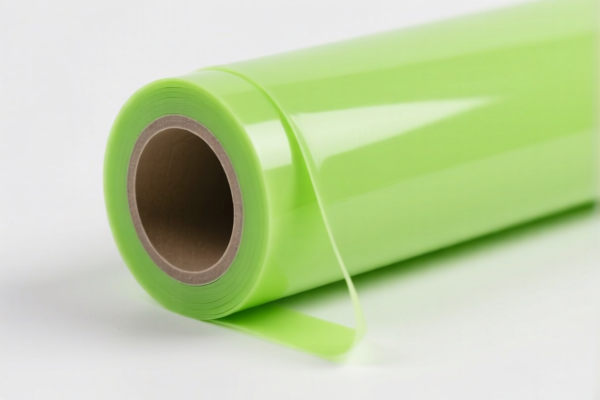
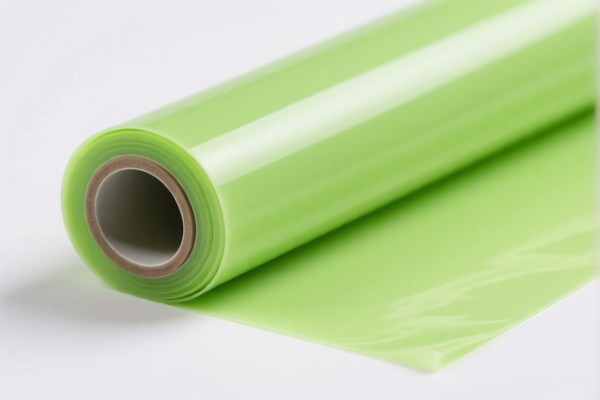
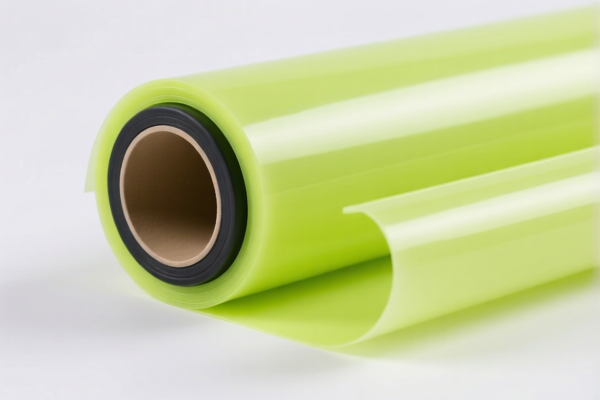
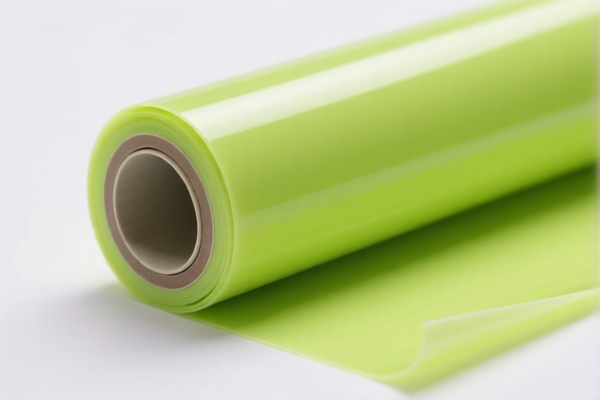
AI Analysis
🧪 Fluororubber Film Raw Material: The "Chemical Chameleon" Guide
🌐 HS Code Reference & Customs Clearance Strategy | 2026 Tariff Analysis | Precision Classification for Chemical Intermediates
📌 I. Product Definition: What Exactly Are We Classifying?
"Fluororubber Film Raw Material" is a broad commercial term that can refer to several distinct chemical forms. In international trade, the physical state (powder, liquid, paste, primary form) and chemical composition (polymer vs. organic intermediate) dictate the HS Code. Misclassification here leads to massive tax discrepancies (from 0% to 6.5% base duty + heavy surcharges).
⚠️ Key Distinction Point:
- Is it a finished adhesive/preparation (mixed with solvents/binders)? → Chapter 38
- Is it a primary fluoropolymer (the plastic/rubber base)? → Chapter 39
- Is it a pure organic chemical intermediate (monomer or specific compound)? → Chapter 29
📦 II. HS Code Classification Matrix (Based on Provided Data)
| HS Code | Summary Description | Key Attributes | Total Tax Rate | Tax Detail Breakdown |
|---|---|---|---|---|
| 3824.99.29.00 | Raw material for fluororubber adhesive | Chemical Preparation: Classified under chemical products/preparations. | 41.5% | Base: 6.5% + Add'l: 25.0% + 122-Clause: 10% |
| 3824.99.11.00 | Raw material for fluororubber adhesive | Adhesive Preparation: Purpose is to formulate adhesives. Matches chemical prep attributes. | 35.0% | Base: 0.0% + Add'l: 25.0% + 122-Clause: 10% |
| 3904.69.10.00 | Raw material for fluororubber film | Fluoropolymer: Material is fluoropolymer; form is primary product. | 35.0% | Base: 0.0% + Add'l: 25.0% + 122-Clause: 10% |
| 3904.69.50.00 | Raw material for fluororubber film | Fluoropolymer: Contains fluorine; form is raw material. | 41.5% | Base: 6.5% + Add'l: 25.0% + 122-Clause: 10% |
| 2942.00.35.00 | Raw material for fluororubber adhesive | Organic Compound: Primary form; Aromatic or modified aromatic organic compound. | 41.5% | Base: 6.5% + Add'l: 25.0% + 122-Clause: 10% |
| 2942.00.50.00 | Raw material for fluororubber adhesive | Organic Compound: Primary form; Other organic compounds category. | 38.7% | Base: 3.7% + Add'l: 25.0% + 122-Clause: 10% |
🔍 Critical Insight:
- 3824 Codes are for preparations/mixtures (e.g., adhesives already mixed).
- 3904 Codes are for polymers/plastics (the base rubber/polymer in primary form).
- 2942 Codes are for pure chemical intermediates (specific organic compounds before polymerization).
- Tax Variance: Base duties range from 0% to 6.5%, but the 25% Additional Tariff and 10% Section 122 Tariff are constant, making the total rate sensitive to the base duty.
💰 III. Detailed Tariff Rate Analysis (US Market Context)
✅ Applicable Country: USA (US)
✅ Origin: China (CN) [Assumed based on "122-Clause" and typical tariff structures in prompt data]
✅ 生效时间: 2025-2026 (Current Tariff Regime)
🎯 1. The "0% Base" Winners (Lowest Total Tax)
A. 3824.99.11.00 – Adhesive Preparation
| Item | Content |
|---|---|
| Base Rate | 0.0% |
| USITC Additional Tariff | +25% |
| Section 122 Tariff | +10% |
| Total Tax | 35.0% |
| Tax Calculation | CIF Value × 35% |
| De Minimis Exemption | ❌ Not Eligible (High duty rate excludes small packages) |
| Legal Path | Chapter 38 → Subheading 99 → Footnote 122 |
📌 Explanation:
- This code benefits from a 0% base duty, which is rare for chemical preparations.
- The 35% total is the lowest among all options.
- Condition: The product must be clearly defined as a "preparation for making adhesives" and not a pure polymer or simple organic compound.
B. 3904.69.10.00 – Primary Fluoropolymer
| Item | Content |
|---|---|
| Base Rate | 0.0% |
| USITC Additional Tariff | +25% |
| Section 122 Tariff | +10% |
| Total Tax | 35.0% |
| Tax Calculation | CIF Value × 35% |
| De Minimis Exemption | ❌ Not Eligible |
| Legal Path | Chapter 39 → Subheading 69 → Footnote 122 |
📌 Explanation:
- If your raw material is a primary fluoropolymer (e.g., FKM/FPM powder or granules) intended for film manufacturing, this is the ideal code.
- Condition: Must be in "primary form" (powders, liquids, pastes) and not yet processed into films or finished goods.
🎯 2. The "6.5% Base" Standard Rates (Higher Total Tax)
A. 3824.99.29.00 – General Chemical Preparation
| Item | Content |
|---|---|
| Base Rate | 6.5% |
| USITC Additional Tariff | +25% |
| Section 122 Tariff | +10% |
| Total Tax | 41.5% |
| Tax Calculation | CIF Value × 41.5% |
📌 Explanation:
- Used when the product is a chemical preparation but doesn't fit the specific "adhesive preparation" subheading (3824.99.11.00).
- The 6.5% base duty adds significantly to the final cost compared to the 0% base options.
B. 3904.69.50.00 – Other Fluoropolymers
| Item | Content |
|---|---|
| Base Rate | 6.5% |
| USITC Additional Tariff | +25% |
| Section 122 Tariff | +10% |
| Total Tax | 41.5% |
📌 Explanation:
- This code is for fluoropolymers that do not fit the specific primary form category of 3904.69.10.00.
- Often used for specific grades or mixed forms of fluoropolymers.
C. 2942.00.35.00 – Aromatic Organic Compounds
| Item | Content |
|---|---|
| Base Rate | 6.5% |
| USITC Additional Tariff | +25% |
| Section 122 Tariff | +10% |
| Total Tax | 41.5% |
📌 Explanation:
- Applies if the raw material is a specific aromatic organic compound (e.g., hexafluoropropylene oxide derivatives) in primary form.
- Must be chemically defined as an aromatic compound, not a polymer.
D. 2942.00.50.00 – Other Organic Compounds
| Item | Content |
|---|---|
| Base Rate | 3.7% |
| USITC Additional Tariff | +25% |
| Section 122 Tariff | +10% |
| Total Tax | 38.7% |
📌 Explanation:
- A "catch-all" for organic compounds that don't fit more specific subheadings in Chapter 29.
- Base duty is 3.7%, which is higher than 0% but lower than 6.5%, resulting in a 38.7% total.
🛠️ IV. Customs Clearance Practical Advice (Avoid Pitfalls!)
✅ 1. Documentation Checklist (Non-Negotiable)
| Document | Requirement | Purpose |
|---|---|---|
| MSDS (SDS) | ✅ Mandatory | Proves chemical composition and hazard classification. Critical for Chapter 29/38/39. |
| Product Specification Sheet | ✅ Mandatory | Defines "Primary Form" vs. "Preparation". Distinguishes between polymer (Ch 39) and prep (Ch 38). |
| Chemical Structure Diagram | ✅ Strongly Recommended | For Chapter 29 codes, proving the specific organic compound. |
| Commercial Invoice | ✅ Mandatory | Must list "Fluororubber Raw Material" AND the correct HS Code. Avoid vague terms like "Chemical Mix". |
| Certificate of Origin | ✅ Mandatory | To apply additional tariffs correctly. |
✅ 2. Declaration Tips (The "Golden Rules")
🔥 "Define Form, Define Function, Avoid Ambiguity!"
| Scenario | Correct Declaration | Wrong Declaration | Consequence |
|---|---|---|---|
| Primary Polymer | "FKM Fluoropolymer Powder, Primary Form" | "Fluororubber Adhesive" | Misclassification → Potential penalty + Back taxes. |
| Adhesive Mix | "Preparation for Making Adhesives, Liquid" | "Fluoropolymer" | Tax increases from 35% to 41.5% or more. |
| Organic Intermediate | "Hexafluoropropylene Oxide, Organic Compound" | "Chemical Raw Material" | Customs may reject vague terms, demanding full chemical ID. |
✅ 3. Special Considerations
| Issue | Handling Advice |
|---|---|
| "122-Clause" Tariff | Ensure the Country of Origin is clearly declared. This 10% tariff applies specifically to certain Chinese goods under Section 122 of the Trade Facilitation and Trade Enforcement Act. |
| Base Duty Dispute | If you believe your product qualifies for 0% base duty (e.g., 3904.69.10.00), provide technical data sheets proving it is in "primary form" and not a "preparation". |
| De Minimis | None of these codes qualify for the $800 de minimis exemption due to high duty rates. All shipments are subject to full duty calculation. |
🌍 V. Global Market Comparison (2026 Outlook)
| Market | Recommended HS Code | Est. Base Duty | Additional Tariffs | Total Est. Rate | Notes |
|---|---|---|---|---|---|
| 🇺🇸 USA | 3904.69.10.00 |
0% | 25% (301) + 10% (122) | 35% | Best option for primary fluoropolymers. |
| 🇺🇸 USA | 3824.99.11.00 |
0% | 25% (301) + 10% (122) | 35% | Best option for adhesive preparations. |
| 🇪🇺 EU | 3904.63 |
5.3% | None | 5.3% | No Section 122 or 301 equivalent. Much lower cost. |
| 🇨🇳 China | 3904.69 |
0-6.5% | None | 0-6.5% | Low duty if imported into China for re-export. |
| 🇬🇧 UK | 3904.63 |
5.3% | None | 5.3% | Post-Brexit, no US-style surcharges. |
📌 Conclusion:
- USA is the highest-cost market due to 35-41.5% total tariffs.
- Strategy: If possible, consider supply chain diversification (e.g., sourcing from Vietnam or Thailand) to avoid US additional tariffs, or pre-clearance rulings to lock in the 35% rate if applicable.
📌 VI. Common Errors & Pitfalls (Learn from Others!)
❌ Error 1: Declaring "Fluoropolymer" for a product that is a mixed adhesive.
👉 Result: Customs may reclassify to 3824.99.29.00 (41.5%) instead of 3904.69.10.00 (35%). Penalty + Back Taxes.
❌ Error 2: Using vague terms like "Chemical Raw Material" on the invoice.
👉 Result: Customs inspection delay. Clear description is key.
❌ Error 3: Assuming all "fluororubber" falls under one code.
👉 Result: Confusion between Chapter 39 (Polymers) and Chapter 29 (Organic Compounds). Check the chemical structure.
✅ Correct Practice:
"FKM Fluoropolymer Powder, Primary Form, CAS No. XXXXX-XX-X, for Film Manufacturing"
🎯 VII. Conclusion: Precision Saves Money!
🎯 Remember This Rule:
🔹 "Form Dictates Code: Primary Form = Ch 39/29, Mixture = Ch 38."
🔹 "0% Base Duty is Key: Aim for 3904.69.10.00 or 3824.99.11.00 to hit 35% Total."
🔹 "122-Clause is Real: Don't ignore the extra 10% if originating from China."
📌 Pro Tip:
If your product is a primary fluoropolymer, aggressively pursue HS Code 3904.69.10.00. The 6.5% base duty difference vs. other codes can save significant money on high-value chemical shipments.
📞 Action Item:
📄 Request a Binding Tariff Ruling from US Customs if your product is complex.
📊 Calculate landed cost using 35% Total Rate (Best Case) vs. 41.5% (Worst Case) for budgeting.
✨ Smart Classification, Smarter Profits!
💼 Every percent of duty saved is pure margin!
Customer Reviews
About HS Code Classification
The Harmonized System (HS) is an internationally standardized nomenclature developed by the World Customs Organization (WCO) to classify traded products. Over 200 countries use the HS system as the basis for customs tariffs, trade statistics, and import/export regulations.
Each HS code follows a hierarchical structure:
- Chapter (2 digits) — Broad category of goods (e.g., Chapter 84: Machinery and Mechanical Appliances)
- Heading (4 digits) — More specific grouping within the chapter
- Subheading (6 digits) — Internationally standardized breakdown, used by all WCO member countries
- National subdivisions (8-10 digits) — Country-specific extensions for further classification, such as US HTSUS 10-digit codes
Correct HS code classification is essential for smooth customs clearance, accurate duty payment, and compliance with trade regulations. Misclassification can lead to customs delays, overpayment of duties, or penalties.
When importing from CN to US, the applicable tariff rates may include:
- Most-Favored-Nation (MFN) rate — The standard duty rate applied to WTO members
- General rate — Applied to countries without trade agreements
- Trade remedy duties — Additional tariffs such as Section 301 (anti-dumping), Section 232 (national security), or countervailing duties
The information provided on this page is for reference purposes only. For official classification, please consult with your local customs authority or a licensed customs broker.