Flush Button
CN → US| HS Code | Tariff Rate | Origin | Destination | Doc |
|---|---|---|---|---|
| 8481809010 | 37.0% | CN | US | Official Doc |
| 8481809050 | 37.0% | CN | US | Official Doc |
| 7326908688 | 87.9% | CN | US | Official Doc |
| 7326908676 | 87.9% | CN | US | Official Doc |
Product Images
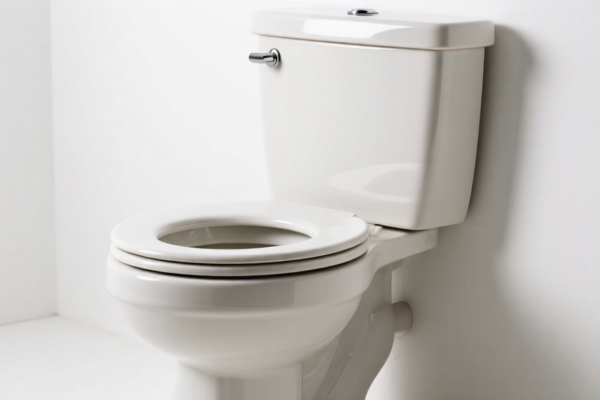
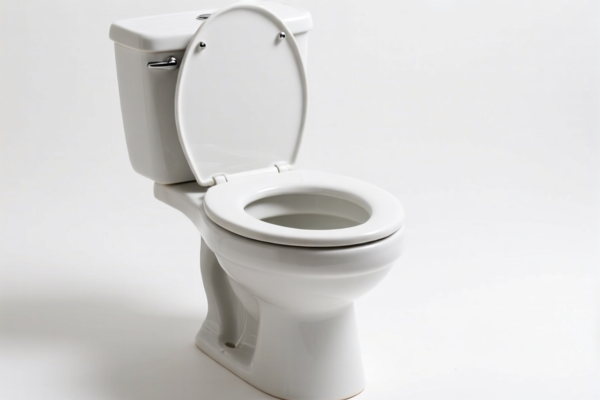
AI Analysis
🚽 Flush Button (Toilet Flush Actuators & Valves)
🌐 HS Code Reference & Customs Clearance Guide | 2024/2025 Latest Tariff Analysis | Professional Clearance Strategy
📌 I. Product Definition & Classification: What exactly is a "Flush Button"?
In international trade, a "Flush Button" is not a single HS Code entity. It is functionally divided into two distinct categories based on its mechanical structure and assembly:
- Valves & Appliance Mechanisms (8481): The complete assembly including the push-button, the linkage rod, and the internal valve mechanism (ballcock, diaphragm, etc.) that controls water flow. This is the most common classification for complete flush valves.
- Metal Articles/Handles (7326): If the product is only the decorative metal/plastic button/handle itself, detached from the valve mechanism, it may be classified under "Other articles of iron or steel." However, most customs authorities prefer classifying the functional unit (the valve) rather than just the handle, especially if sold as a kit.
⚠️ Key Distinction Point:
- If the product includes the valve body, spring, or mechanism to control water flow →归入 8481.80.90 (Valves)
- If the product is solely a metal handle/plug with no internal valve mechanism →归入 7326.90.86 (Other metal articles)
- Note: Many suppliers misclassify flush valves as "Plumbing Fittings" (9013/7326) to avoid higher tariffs. Do not do this. If it has a valve function, it is 8481.
📦 II. HS Code Classification Details (Based on Provided Data)
| HS Code | Product Description | Application Scenario | Key Feature |
|--------|--------------------------|--------------------------|
| 8481.80.90.10 | Taps, cocks, valves... Other appliances: Other Ballcock mechanisms | Traditional toilet tanks with float-ball valves; mechanical flush systems | ✅ Contains valve mechanism |
| 8481.80.90.50 | Taps, cocks, valves... Other appliances: Other: Other | Modern electronic or pneumatic flush valves; pressure-reducing valves for plumbing | ✅ Contains valve mechanism |
| 7326.90.86.76 | Other articles of iron or steel: Other: Other: Metal handles for brooms, mops, paint applicators... | Misclassification Risk! Usually for household tools. Rarely applicable to flush buttons unless strictly defined as a "handle" for non-plumbing tools. | ❌ No valve function |
| 7326.90.86.88 | Other articles of iron or steel: Other: Other: Other: Other | Decorative metal flush buttons (chrome/plastic) sold separately without the valve | ❌ No valve function (Purely decorative/structural) |
🔍 Critical Reminder:
- If your "Flush Button" includes the internal spring, diaphragm, or connection to the water pipe to stop/start flow, it IS A VALVE. It must be classified under 8481. - Classifying a complete flush valve as7326.90.86.88(Metal Article) is a high-risk misclassification that can lead to customs audits, penalties, and detention. - The7326codes in the data are for other metal items. While a pure plastic/metal button might fit 7326.90.86.88, the functional unit (valve) is 8481.
💰 III. 2024/2025 Latest Tariff Rate Details (For US Imports from China)
✅ Applicable Country: United States (US)
✅ Origin: China (CN)
✅ Effective Time: Current Trade War Tariffs Apply
🎯 1. For Complete Flush Valves (HS 8481)
Recommended Classification for functional flush mechanisms
| Item | Content |
|---|---|
| HS Code | 8481.80.90.10 or 8481.80.90.50 |
| Base Tariff | 2.0% (General Rate) |
| Section 301 Additional Tariff | +25.0% |
| Total Tariff Rate | 27.0% |
| Tax Calculation | CIF Value × 27% |
| De Minimis Eligibility | ❌ No (Value > $800 threshold for Section 301 exemption) |
| Legal Basis | USITC Tariff Schedule + Section 301 List 4B |
📌 Explanation:
- Valve mechanisms are considered "plumbing valves."
- The base rate is low (2%), but the 25% Section 301 tariff is mandatory for Chinese-origin plumbing valves.
- Total cost impact: 27%.
🎯 2. For Decorative Metal Buttons Only (HS 7326)
Only if the valve mechanism is excluded
| Item | Content |
|---|---|
| HS Code | 7326.90.86.88 |
| Base Tariff | 2.9% |
| Section 301 Additional Tariff | +25.0% |
| Steel/Aluminum/Copper Surcharge | +50% (If applicable under specific steel/aluminum rules) |
| Total Tariff Rate | 77.9% |
| Tax Calculation | CIF Value × 77.9% |
| De Minimis Eligibility | ❌ No |
| Legal Basis | USITC Tariff Schedule + Section 301 + Steel/Aluminum Rules |
📌 Explanation:
- If classified as a generic metal article, the tariff jumps to 77.9% due to the additional 50% surcharge on certain steel/aluminum products combined with Section 301.
- Do NOT use this unless you are 100% sure the product has no valve function.
🎯 3. For Metal Handles (HS 7326.90.86.76)
Unlikely for flush buttons, but listed in data
| Item | Content |
|---|---|
| HS Code | 7326.90.86.76 |
| Base Tariff | 2.9% |
| Section 301 Additional Tariff | 0.0% (Specific exemption for certain handles?) |
| Steel/Aluminum/Copper Surcharge | +50% |
| Total Tariff Rate | 52.9% |
| Tax Calculation | CIF Value × 52.9% |
| Legal Basis | Specific sub-heading rules |
📌 Note: This rate is 52.9%, which is still very high due to the 50% steel/aluminum surcharge. It is not a low-tariff loophole.
🛠️ IV. Customs Clearance Practical Advice
✅ 1. Documentation Checklist (Non-negotiable)
| Document | Must Provide | Description |
|---|---|---|
| ✅ Product Specification Sheet | ✔️ | Clearly state: "Plastic/Metal Flush Button" OR "Complete Flush Valve Assembly" |
| ✅ Bill of Materials (BOM) | ✔️ | Show if internal springs, diaphragms, or valve seats are included. |
| ✅ Product Photos | ✔️ | Front, back, and internal mechanism if disassembled. |
| ✅ Commercial Invoice | ✔️ | Must use precise description: "Plastic Toilet Flush Valve, Model XYZ, Chinese Origin" |
| ✅ Certificate of Origin (CO) | ✔️ | Required for Section 301 determination. |
| ✅ Packing List | ✔️ | Weight, dimensions, unit count. |
✅ 2. Declaration Strategy (Critical Warnings)
| Scenario | Correct Declaration | Wrong Declaration | Consequence |
|---|---|---|---|
| Complete Flush Valve | 8481.80.90.10/50Desc: "Toilet Flush Valve Assembly" |
7326.90.86.88Desc: "Metal Plastic Button" |
77.9% Tax + Penalties for misclassification |
| Decorative Button Only | 7326.90.86.88Desc: "Plastic Flush Actuator Button, No Valve" |
8481.80.90 |
52.9% Tax (if steel/aluminum surcharge applies) or audit |
| Mixed Container | Split invoices clearly | Mixed B/L | Customs Hold for inspection |
🔥 "Valve is Valve, Handle is Handle!"
If it controls water flow, it’s a valve. If it’s just a piece you push with no internal mechanism, it’s an article.
✅ 3. Special Circumstances
| Situation | Recommendation |
|---|---|
| OEM Custom Buttons | Provide customer design specs to prove it’s a generic part, not a specialized valve. |
| Electronic Flush Sensors | If it includes a PCB/sensor, it may fall under 8537 (Programmable Controllers) or 9032 (Automatic Regulating Instruments). Not 8481 or 7326. |
| Plastic vs. Metal | Plastic parts are less likely to trigger the 50% steel/aluminum surcharge, but Section 301 (25%) still applies if misclassified as a valve. |
🌍 V. Global Market Comparison (2024/2025)
| Country/Region | Recommended HS Code | Tariff (China Origin) | Certification | Notes |
|---|---|---|---|---|
| 🇺🇸 USA | 8481.80.90 |
27% | None required | High Section 301 tariff. Avoid 7326 misclassification. |
| 🇨🇳 China | 8481.80.90 |
5-7% | CCC (if applicable) | Low import duty. |
| 🇪🇺 EU | 8481.80.90 |
2.7% | CE, Water Mark | No additional tariffs. |
| 🇬🇧 UK | 8481.80.90 |
2.7% | UKCA | Post-Brexit standards. |
| 🇦🇺 Australia | 8481.80.90 |
5% | WELS, WaterMark | Mandatory water efficiency labeling. |
📌 Conclusion:
- The US market is the most expensive due to the 27% total tariff on valves.
- Misclassifying as metal articles (7326) is dangerous due to potential 77.9% rates or penalties.
- Electronic flush valves should be checked under 8537/9032 for potential lower tariffs in some regions, but still subject to Section 301 in the US.
📌 VI. Common Mistakes & Pitfalls (Blood & Tears Lessons)
❌ Mistake 1: Calling a complete flush valve a "Button" or "Plastic Part" to avoid high tariffs.
👉 Result: Customs seizes shipment, demands 77.9% tax + fines.
❌ Mistake 2: Ignoring the 50% Steel/Aluminum Surcharge on 7326.90.86.88.
👉 Result: Unexpected 77.9% tariff even if base rate seems low.
❌ Mistake 3: Using generic description "Toilet Part."
👉 Result: Customs cannot classify, leads to delay and storage fees.
✅ Correct Practice:
"Automated Toilet Flush Valve, Plastic Actuator, No Electronic Components, Model XYZ, Chinese Origin"
🎯 VII. Conclusion: Precision in Classification Saves Money
🎯 Remember the Golden Rules:
🔹 "If it stops water, it’s a Valve (8481)."
🔹 "If it’s just a button, check if it’s metal/plastic (7326)."
🔹 "US Tariff for Valves: 27%. For Metal Articles: Up to 77.9%."
🔹 "Never misclassify to save pennies, you’ll lose thousands."
📌 Pro Tip:
If your product is electronic (sensor-operated), do not use 8481 or 7326. Check 8537.10 or 9032.89. This may change the tariff profile entirely.
📣 Immediate Action:
📞 Consult a licensed customs broker.
📦 Provide a disassembled view of your product to the broker.
📄 Request an Advance Ruling from US Customs if importing large volumes.
✨ Accurate Classification is the First Step to Profitable Trade!
💼 Every Percent Matters in International Trade!
Customer Reviews
About HS Code Classification
The Harmonized System (HS) is an internationally standardized nomenclature developed by the World Customs Organization (WCO) to classify traded products. Over 200 countries use the HS system as the basis for customs tariffs, trade statistics, and import/export regulations.
Each HS code follows a hierarchical structure:
- Chapter (2 digits) — Broad category of goods (e.g., Chapter 84: Machinery and Mechanical Appliances)
- Heading (4 digits) — More specific grouping within the chapter
- Subheading (6 digits) — Internationally standardized breakdown, used by all WCO member countries
- National subdivisions (8-10 digits) — Country-specific extensions for further classification, such as US HTSUS 10-digit codes
Correct HS code classification is essential for smooth customs clearance, accurate duty payment, and compliance with trade regulations. Misclassification can lead to customs delays, overpayment of duties, or penalties.
When importing from CN to US, the applicable tariff rates may include:
- Most-Favored-Nation (MFN) rate — The standard duty rate applied to WTO members
- General rate — Applied to countries without trade agreements
- Trade remedy duties — Additional tariffs such as Section 301 (anti-dumping), Section 232 (national security), or countervailing duties
The information provided on this page is for reference purposes only. For official classification, please consult with your local customs authority or a licensed customs broker.