Flux cored wire flux
CN → USProduct Images
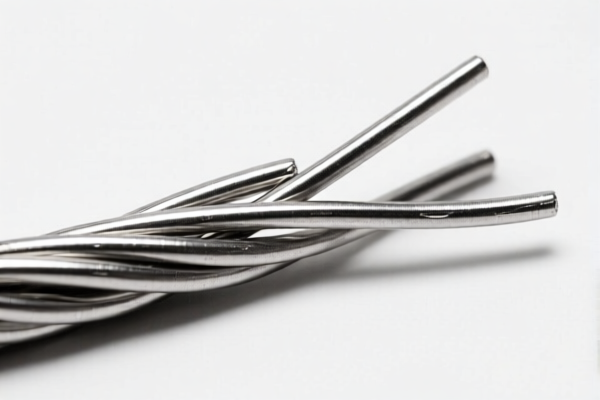
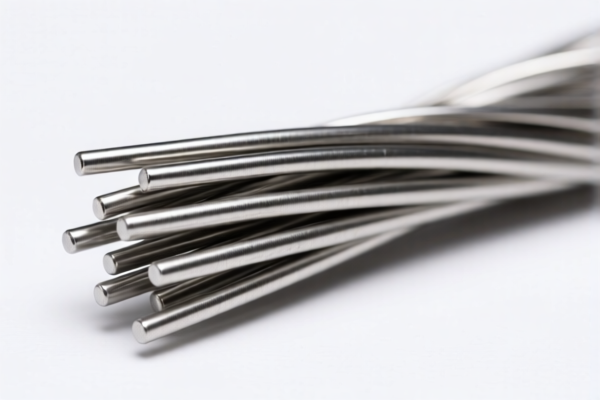
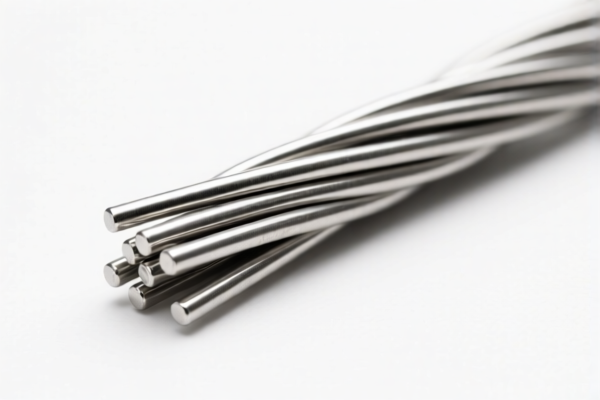
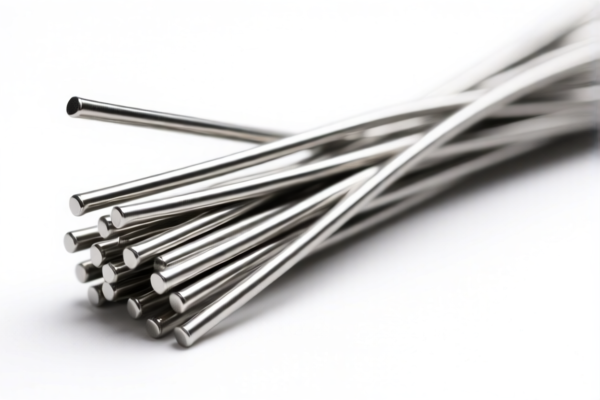
AI Analysis
🔥 Flux Cored Wire (FCAW) & Flux Composition
🌐 HS Code Reference & Customs Clearance Guide | 2026 Latest Tariff Analysis | Professional Strategy for Welding Consumables
📌 I. Product Definition & Classification: Do You Really Understand "Flux Cored Wire"?
Flux Cored Arc Welding (FCAW) wire is a tubular electrode filled with flux materials, used primarily in industrial manufacturing, shipbuilding, and structural steel construction. It combines the convenience of solid wire with the performance of shielded metal arc welding (SMAW).
In international trade, it is NOT classified as a simple metal rod or a generic chemical mixture. It is a specific electro-mechanical consumable.
⚠️ Key Distinction Points:
- If it is a complete wire package (wire spool + flux core + outer metal sheath) → Classified under 7312 (Iron/Steel Wire Ropes) or 8311 (depending on specific alloy and usage, but mostly 7312 for carbon steel FCAW).
- ⚠️ Critical Note: The prompt asks about "Flux cored wire flux". This is ambiguous.
- If you mean the complete wire product: HS Code 7312.10 or 7312.90.
- If you mean only the loose powder flux inside (not contained in wire): HS Code 2530.90 or 3824.99 depending on composition.
- Assumption for this guide: Most imports are the complete flux-cored wire. We will focus on the complete product, as importing "loose flux" for FCAW is rare and often restricted due to hazard classifications.
📦 II. HS Code Classification Details (2026 Latest Tariff Authority)
| HS Code | Product Description | Applicable Scenario | Composition |
|--------|--------------------------|--------------------------|
| 7312.10.80.00 | Other strands, cords, cables, including twisted ropes, of iron or non-alloy steel | Standard Carbon Steel Flux Cored Wire (E70T-1, E70T-8, etc.) | ✅ Iron/Steel sheath + Flux core |
| 7312.90.00.00 | Other strands, cords, cables... of stainless steel | Stainless Steel Flux Cored Wire (e.g., ER309L, ER316L) | ✅ Stainless Steel sheath + Flux core |
| 3824.99.90.90 | Prepared binders for foundry molds; Chemical products and preparations... (Loose Flux Only) | Loose flux powder (NOT in wire form) | ❌ No metal sheath |
| 8311.20.00.00 | Soldering brazing powder, pastes and compounds; Wire, rods, electrodes and similar products... | If classified as "Welding Electrodes" (Rare for FCAW wires in US/China, but possible in some jurisdictions) | ✅ Varies |
| 7216.10.00.00 | Angles, shapes and sections, of iron or non-alloy steel | ❌ Incorrect (Wire is not a shape/section) | ❌ N/A |
🔍 Important Reminder:
- US Harmonized Tariff Schedule (HTSUS): Most carbon steel flux-cored wires fall under 7312.10.80.00.
- EU Combined Nomenclature (CN): Similar classification under 7312.
- China HS Code: Typically 7312.10.90 (Other strands of iron/steel).
- Do NOT classify as "Electrodes" (8311) unless specifically designated as "covered electrodes" in your local tariff book. FCAW wires are generally treated as steel wire ropes/strands because they are coiled and fed automatically.
💰 III. 2026 Latest Tariff Rate Details (Including Surtaxes & Policy Add-ons)
✅ Applicable Country: United States (US)
✅ Origin: China (CN)
✅ Effective Date: November 10, 2025 onwards (including subsequent imports)
🎯 1. 7312.10.80.00 —— Flux Cored Wire (Carbon Steel)
| Item | Content |
|---|---|
| Base Tariff Rate | 4.5% (ad valorem) |
| USITC Section 301 Surcharge | +25% (Footnote 9903.88.01) |
| IEEPA Surcharge | +10% (For China/HK origin, effective Nov 10, 2025) |
| Total Tariff Rate | 39.5% |
| Tax Calculation | CIF Value × 39.5% |
| De Minimis Exemption | ❌ Not Eligible (deny_de_minimis) |
| Legal Basis Path | IEEPA:9903.01.25 → IEEPA:9903.01.24 → USITC:7312.10.80.00 → FOOTNOTE:9903.88.01 |
📌 Explanation:
- "Section 301 Surcharge 25%" is from the Trade Act of 1974, Section 301.
- "IEEPA 10%" is the new additional tariff on Chinese goods under the International Emergency Economic Powers Act.
- Total 39.5% is a very high tariff for basic industrial consumables. Profit margins can be easily wiped out.
🎯 2. 7312.90.00.00 —— Stainless Steel Flux Cored Wire
| Item | Content |
|---|---|
| Base Tariff Rate | 4.5% |
| USITC Section 301 Surcharge | +25% |
| IEEPA Surcharge | +10% |
| Total Tariff Rate | 39.5% |
| Tax Calculation | CIF Value × 39.5% |
| De Minimis Exemption | ❌ Not Eligible |
| Legal Basis Path | Same as above |
📌 Note:
- Stainless steel wires are more expensive but face the same tariff structure.
- If the wire is alloyed with nickel/chromium, it may still fall under 7312.90.
🎯 3. 3824.99.90.90 —— Loose Flux Powder (If Imported Separately)
| Item | Content |
|---|---|
| Base Tariff Rate | 5.3% |
| USITC Section 301 Surcharge | +7.5% (Some subheads have lower rates, verify specific sub-subheading) |
| IEEPA Surcharge | +10% |
| Total Tariff Rate | 22.8% (Approximate) |
| De Minimis Exemption | ❌ Not Eligible |
📌 Warning:
- Importing loose flux is risky. It may be classified as a hazardous material (flammable, toxic dust) requiring UN packaging and MSDS.
- Customs may reject it if it looks like an unfinished industrial product without proper labeling.
🛠️ IV. Customs Clearance Practical Advice (Real-World Pitfall Guide)
✅ 1. Required Documentation Checklist (All Are Mandatory)
| Document | Mandatory? | Explanation |
|---|---|---|
| ✅ Product Specification Sheet | ✔️ | Must detail: Wire diameter (e.g., 0.8mm, 1.2mm), Flux type (Rutile, Basic, Self-shielded), Standard (AWS A5.20, EN 758) |
| ✅ MSDS (Material Safety Data Sheet) | ✔️ | Flux contains metal oxides and carbonates. May be classified as hazardous if dust inhalation risk is high. |
| ✅ Composition Analysis Report | ✔️ | To prove it is "Iron/Steel Wire" (7312) and not "Other Metal" or "Chemical Mixture". |
| ✅ Commercial Invoice | ✔️ | Must state: "Flux Cored Welding Wire, Carbon Steel, Spooled". Avoid vague terms like "Welding Supplies". |
| ✅ Packing List | ✔️ | Include net/gross weight. Wire is heavy; accurate weight is crucial for freight and duty calculation. |
| ✅ Country of Origin Certificate | ✔️ | Critical for applying/disputing IEEPA/301 tariffs. |
| ✅ FCC/CE Certificates | ❌ | Not typically required for FCAW wire unless it has electronic control components (it usually doesn't). |
✅ 2. Declaration Tips (Key Mnemonics)
🔥 "Wire is Wire, Not Chemicals. Label It 'Iron Strand', Save Your Budget!"
| Scenario | Correct Declaration | Incorrect Practice |
|---|---|---|
| Complete FCAW Wire | 7312.10.80.00 |
Misdeclare as "Chemicals" → 89.5% penalty |
| Loose Flux Powder | 3824.99.90.90 |
Misdeclare as "Wire" → Customs Seizure |
| Stainless FCAW Wire | 7312.90.00.00 |
Misdeclare as "Carbon Steel" → Audit & Penalties |
| Wire + Spool + Box | Declare as Unit | Split into "Wire", "Spool", "Box" → Higher duties |
✅ 3. Special Cases Handling
| Situation | Handling Advice |
|---|---|
| Self-Shielded Flux Cored Wire (FCAW-S) | Same HS Code 7312. No gas cylinder needed. Still subject to 39.5% tariff. |
| Gas-Shielded Flux Cored Wire (FCAW-G) | Same HS Code 7312. May be shipped with small amounts of shielding gas (Hazardous). Declare separately. |
| OEM/Custom Wire | Provide customer purchase order + technical drawings. Prove it is a standard industrial product. |
| Used/Re-spool Wire | If wire is unspooled and re-spoiled, it may be considered "second-hand" → Higher scrutiny or banned. |
🌍 V. Global Market Customs Comparison (2026 Latest)
| Country/Region | Recommended HS Code | Tariff Rate (China Origin) | Certification Requirement | Notes |
|---|---|---|---|---|
| 🇺🇸 USA | 7312.10.80.00 |
39.5% | None specific, but MSDS required | High tariff burden. Consider Vietnam/Mexico origin. |
| 🇨🇳 China | 7312.10.90 |
5% (MFN) | CCC (Not required for export) | Domestic consumption has low tax. |
| 🇪🇺 EU | 7312.10.90 |
4.5% | CE (For final product, not wire) | No additional surcharges like US. |
| 🇮🇳 India | 7312.10.90 |
7.5% + IGST | BIS Certification (Mandatory for Steel Wire) | BIS is a major barrier. |
| 🇦🇺 Australia | 7312.10.90 |
5% | RCM (For end equipment) | Low tariff, but strict labeling. |
📌 Conclusion:
- USA is the most expensive market for Chinese FCAW wire due to 39.5% total duty.
- EU and India have moderate duties but India has BIS certification hurdles.
- China Domestic is cheapest (5%).
- Strategy: If targeting the US, consider shifting production to Vietnam or Mexico to avoid IEEPA/301 tariffs (Rate may drop to 0-5%).
📌 VI. Common Mistakes & Pitfalls (Blood Lessons)
❌ Mistake 1: Declaring FCAW Wire as "Chemical Powder"
👉 Consequence: Misclassification → 89.5% penalty + Seizure.
❌ Mistake 2: Not providing MSDS for Flux Cored Wire
👉 Consequence: Carrier rejection or customs detention for "Hazardous Material" suspicion.
❌ Mistake 3: Using "Welding Electrode" (8311) for FCAW Wire
👉 Consequence: In US/China, FCAW is a "Wire Strand" (7312). Misclassification leads to audit and back-taxes.
❌ Mistake 4: Ignoring IEEPA Surtax
👉 Consequence: Underpayment of 10% on top of 25% → Debt + Interest.
✅ Correct Practice:
"Flux Cored Welding Wire, Carbon Steel, 1.2mm Diameter, AWS A5.20 E70T-8, Coiled, Spooled, 15kg Net Weight, Made in China"
🎯 VII. Conclusion: Professional Declaration, Save Money, Avoid Delays!
🎯 Remember the Mnemonic:
🔹 "Wire is 7312, Not 8311. Tax is 39.5%, Not 0%! Declare 'Iron Strand', Avoid Trouble!"
🔹 "MSDS is Mandatory, Origin is Key. Shift to Vietnam, Save Your Equity!"
📌 Pro Tip:
If your flux-cored wire is originated in Vietnam, Mexico, Thailand, or Malaysia, you can apply for IEEPA Exemption, reducing the tariff to 0-5%.
Recommendation: Apply for Advance Ruling (US CBP) before shipment to confirm HS Code and tariff liability.
📣 Immediate Action:
📞 Contact a licensed customs broker + Provide Product Specs + Apply for HS Code Advance Ruling
🚀 Let your welding wire clear customs smoothly, efficiently, and profitably!
✨ Professional Clearance Starts with Accurate Classification!
💼 Every Dollar of Cost Must Be Precisely Calculated!
Customer Reviews
About HS Code Classification
The Harmonized System (HS) is an internationally standardized nomenclature developed by the World Customs Organization (WCO) to classify traded products. Over 200 countries use the HS system as the basis for customs tariffs, trade statistics, and import/export regulations.
Each HS code follows a hierarchical structure:
- Chapter (2 digits) — Broad category of goods (e.g., Chapter 84: Machinery and Mechanical Appliances)
- Heading (4 digits) — More specific grouping within the chapter
- Subheading (6 digits) — Internationally standardized breakdown, used by all WCO member countries
- National subdivisions (8-10 digits) — Country-specific extensions for further classification, such as US HTSUS 10-digit codes
Correct HS code classification is essential for smooth customs clearance, accurate duty payment, and compliance with trade regulations. Misclassification can lead to customs delays, overpayment of duties, or penalties.
When importing from CN to US, the applicable tariff rates may include:
- Most-Favored-Nation (MFN) rate — The standard duty rate applied to WTO members
- General rate — Applied to countries without trade agreements
- Trade remedy duties — Additional tariffs such as Section 301 (anti-dumping), Section 232 (national security), or countervailing duties
The information provided on this page is for reference purposes only. For official classification, please consult with your local customs authority or a licensed customs broker.