Flypaper strips
CN → US| HS Code | Tariff Rate | Origin | Destination | Doc |
|---|---|---|---|---|
| 3919102055 | 40.8% | CN | US | Official Doc |
| 3919905060 | 40.8% | CN | US | Official Doc |
| 3808911000 | 37.8% | CN | US | Official Doc |
| 3808915001 | 40.0% | CN | US | Official Doc |
Product Images
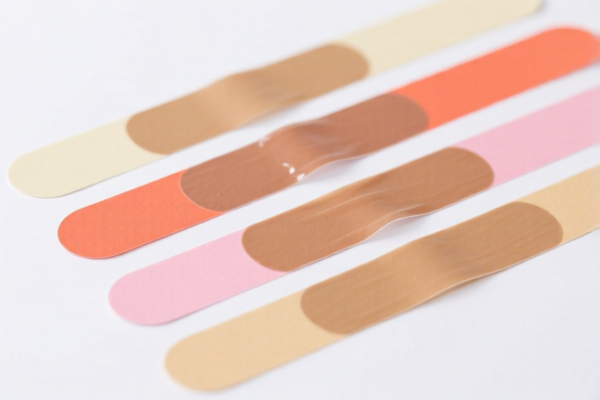
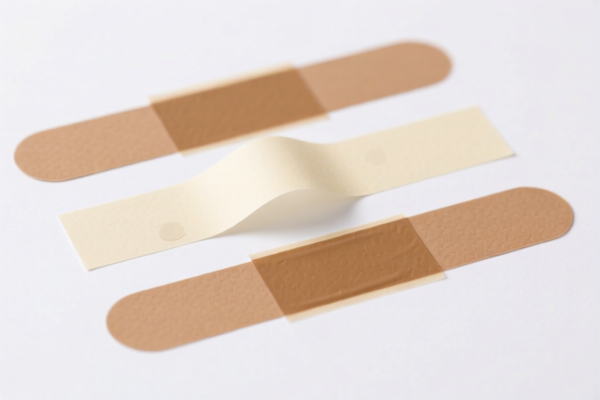
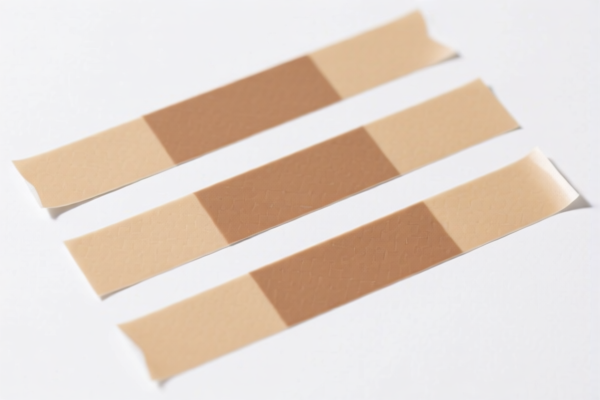
AI Analysis
🕸️ Flypaper Strips (Adhesive Pest Control Devices)
🌐 HS Code Classification & Customs Clearance Guide | 2026 Updated Tariff Analysis | Strategic Import Strategy for US Market
📌 I. Product Definition: What Exactly Are "Flypaper Strips"?
Flypaper strips are adhesive traps used primarily for pest control, specifically targeting flying insects like flies, moths, and mosquitoes. They typically consist of a paper or plastic strip coated with a sticky, non-drying adhesive, often infused with an attractant.
In international trade, the classification depends heavily on the material composition and the intended use (mechanical trap vs. chemical insecticide).
⚠️ Critical Distinction:
- If the product is primarily a plastic/adhesive strip without active pesticides → It falls under Chapter 39 (Plastics).
- If the product is explicitly labeled as an insecticide preparation or contains active chemical agents (like pyrethroids) applied to the paper → It may fall under Chapter 38 (Pharmaceutical/Insecticide Preparations).
📦 II. HS Code Classification Matrix (2026 Official Tariff Data)
Based on the provided data, here are the four possible classifications, their summaries, and total tax rates.
| HS Code | Summary Description | Total Tax Rate | Tax Breakdown |
|---|---|---|---|
| 3919.10.20.55 | Based on Plastic Material & Strip Format | 40.8% | Base: 5.8%, Section 301: 25.0%, Section 122: 10% |
| 3919.90.50.60 | Based on Self-Adhesive Flat Shape | 40.8% | Base: 5.8%, Section 301: 25.0%, Section 122: 10% |
| 3808.91.10.00 | Based on Flypaper Use & Strip Format | 37.8% | Base: 2.8%, Section 301: 25.0%, Section 122: 10% |
| 3808.91.50.01 | Based on Insecticide Use & "Other" Category | 40.0% | Base: 5.0%, Section 301: 25.0%, Section 122: 10% |
🔍 Key Insight:
- Chapter 39 (Plastics) codes have a higher base duty (5.8%).
- Chapter 38 (Insecticides) codes have a lower base duty (2.8% or 5.0%), making them potentially cheaper if the product is legally classified as an insecticide preparation.
- All codes are subject to US Section 301 (25%) and Section 122 (10%) tariffs, resulting in a total burden of 37.8%–40.8%.
💰 III. Detailed Tariff Structure & Legal Basis (2026 US Market)
✅ Applicable Country: United States (US)
✅ Origin: China (CN)
✅ Effective Date: Post-2025 November 10 (Includes subsequent imports)
🎯 1. Classification: 3919.10.20.55 & 3919.90.50.60 (Plastic-Based)
Best for: Purely mechanical plastic strips with adhesive, no active pesticides.
| Item | Detail |
|---|---|
| Base Duty | 5.8% |
| USITC Surcharge (Section 301) | +25.0% |
| IEEPA Surcharge (Section 122) | +10.0% |
| Total Effective Rate | 40.8% |
| Calculation Basis | CIF Value × 40.8% |
| De Minimis Exemption | ❌ Not Eligible (High tariff threshold) |
| Legal Path | USITC:3919.10.20.55 → FOOTNOTE:301.01 → IEEPA:122.01 |
📌 Explanation:
These HS codes classify the item as a "Self-adhesive plates, sheets, film, foil, tape, strip, and other forms of flat shape, of plastics." The high base duty reflects the protectionist policy on plastic imports.
🎯 2. Classification: 3808.91.10.00 (Flypaper Specific)
Best for: Products explicitly marketed as "Flypaper" with a specific strip form factor.
| Item | Detail |
|---|---|
| Base Duty | 2.8% |
| USITC Surcharge (Section 301) | +25.0% |
| IEEPA Surcharge (Section 122) | +10.0% |
| Total Effective Rate | 37.8% |
| Calculation Basis | CIF Value × 37.8% |
| De Minimis Exemption | ❌ Not Eligible |
| Legal Path | USITC:3808.91.10.00 → FOOTNOTE:301.01 → IEEPA:122.01 |
📌 Strategy Note:
This is the lowest total tax rate (37.8%) among all options. To qualify, you must ensure the product description and marketing materials explicitly reference "Flypaper" and its specific usage, rather than just "adhesive strip."
🎯 3. Classification: 3808.91.50.01 (Insecticide Preparation)
Best for: Flypaper strips infused with chemical insecticides (e.g., pyrethrin, organophosphates).
| Item | Detail |
|---|---|
| Base Duty | 5.0% |
| USITC Surcharge (Section 301) | +25.0% |
| IEEPA Surcharge (Section 122) | +10.0% |
| Total Effective Rate | 40.0% |
| Calculation Basis | CIF Value × 40.0% |
| De Minimis Exemption | ❌ Not Eligible |
| Legal Path | USITC:3808.91.50.01 → FOOTNOTE:301.01 → IEEPA:122.01 |
📌 Regulatory Warning:
If you classify under this code, the product is considered a pesticide under EPA jurisdiction. You MUST provide EPA registration numbers. Misclassification here can lead to severe fines or seizure by both CBP and the EPA.
🛠️ IV. Customs Clearance Practical Advice
✅ 1. Essential Documentation Checklist
| Document | Required? | Purpose |
|---|---|---|
| ✅ Product Specification Sheet | ✔️ | Must detail: Material (Plastic/Paper), Adhesive Type, Dimensions, and whether it contains active pesticides. |
| ✅ Commercial Invoice | ✔️ | Clearly state "Flypaper Strips" or "Adhesive Insect Trap." Avoid vague terms like "Craft Material." |
| ✅ EPA Registration Certificate | ✔️ | CRITICAL if classifying under 3808.91.50.01. Must be valid for the US market. |
| ✅ Certificate of Origin (CO) | ✔️ | Required to prove origin for Section 301/122 tariff calculations. |
| ✅ Third-Party Test Report | ✔️ | If claiming insecticide efficacy, provide lab reports. If plastic, provide material safety data sheet (MSDS). |
✅ 2. Declaration Strategy (The "Golden Rules")
🔥 Key Mantra:
"Chemical or Mechanical? Declare Correctly or Pay the Price!"
| Scenario | Recommended HS Code | Risk if Incorrect |
|---|---|---|
| Plain Plastic Strip with sticky glue, NO pesticides | 3919.10.20.55 or 3919.90.50.60 | If declared as 3808, may be held for EPA review. |
| "Flypaper" explicitly named, NO active pesticides | 3808.91.10.00 | Best for low duty (37.8%) if CBP accepts the "Flypaper" description. |
| Insecticide-Coated Strip (has chemical smell/label) | 3808.91.50.01 | Must have EPA Reg #. No EPA # = Seizure. |
| Paper-Based Flypaper | 3808.91.10.00 (Preferred) | Paper might be classified under Chapter 48, but 3808 is more common for pest control products. |
✅ 3. Special Situations
| Situation | Handling Advice |
|---|---|
| OEM Private Label | Ensure the label clearly states the product type. If it says "Pesticide," you need EPA. If it says "Adhesive Trap," you might avoid EPA but face higher plastic duties. |
| Bundle Sales | If sold with a plastic frame/hanger, declare the main component (the flypaper) or as a set. Do not split the hanger and paper to avoid separate HS codes. |
| Small Samples | Even for samples, if the value exceeds de minimis ($800 is for the consignee, not per item), tariffs apply. For bulk imports, tariffs always apply. |
🌍 V. Global Market Comparison (2026)
| Region | Recommended HS Code | Estimated Duty | Key Requirement |
|---|---|---|---|
| 🇺🇸 USA | 3808.91.10.00 | 37.8% | EPA Reg (if chemical), CO Form A |
| 🇨🇳 China | 3808.91.10.00 | ~5-10% | Import License for Pesticides |
| 🇪🇺 EU | 3808.91.10.00 | ~4-6% | Biocidal Products Regulation (BPR) |
| 🇯🇵 Japan | 3808.91.10.00 | ~6-10% | Fertilizer Control Law / Pesticide Act |
📌 Conclusion for US Importers:
The US is the most expensive market due to the叠加 (stacking) of Base Duty + Section 301 (25%) + Section 122 (10%).
3808.91.10.00 offers the lowest total tariff (37.8%) but requires strict adherence to "Flypaper" naming.
3919.10.20.55 is safer for non-chemical plastic strips but costs 40.8%.
📌 VI. Common Pitfalls & Avoidance Guide
❌ Pitfall 1: Calling it "Glue Strip" instead of "Flypaper"
👉 Consequence: CBP may reclassify to 3919 (40.8%) if they suspect it's just a plastic tape, or hold it for EPA review if they suspect pesticide use.
👉 Solution: Use the exact term "Flypaper" on the invoice.
❌ Pitfall 2: Ignoring EPA Registration for Chemical Strips
👉 Consequence: Seizure and Destruction of goods by CBP. Fines up to $10,000+ per day.
👉 Solution: If the product contains active insecticides, ensure EPA Reg # is on the label and invoice.
❌ Pitfall 3: Underestimating Section 122 Tariffs
👉 Consequence: Budgeting only for 301 tariffs (25%) leads to unexpected costs. The total is ~38-41%.
👉 Solution: Calculate landed cost using Total Tax = Base + 25% + 10%.
🎯 VII. Final Recommendation
- If your flypaper contains chemicals (pyrethroids, etc.):
- Use 3808.91.50.01 (40.0% tax).
- MUST have valid EPA Registration.
-
This is the legally correct path for chemical pesticides.
-
If your flypaper is purely mechanical (sticky glue only, no active pesticide):
- Try to classify under 3808.91.10.00 (37.8% tax) by labeling it explicitly as "Flypaper."
- This saves 3.0% compared to plastic codes.
-
If CBP rejects this, fallback to 3919.10.20.55 (40.8% tax).
-
Documentation is Key:
- Clearly state: "Flypaper Strip, Adhesive Pest Control Device, [Material: Plastic/Paper], [Active Ingredients: None/Specific Chemical]".
📌 Pro Tip:
For large volumes, consider applying for an Exclusion from Section 301 tariffs if available, or explore Foreign Trade Zones (FTZ) to defer duty payments. However, Section 122 tariffs are generally non-excludable.
📣 Immediate Action:
📞 Consult with a Customs Broker: Verify if your specific product formula qualifies for the lower 3808.91.10.00 rate.
📄 Prepare EPA Docs: If chemical, ensure registration is active.
📦 Optimize Packaging: Label clearly as "Flypaper" to support the preferred HS code.
✨ Smart Classification Saves 3%+ of Landed Cost!
💼 Don't let tariff misclassification eat your margins!
Customer Reviews
About HS Code Classification
The Harmonized System (HS) is an internationally standardized nomenclature developed by the World Customs Organization (WCO) to classify traded products. Over 200 countries use the HS system as the basis for customs tariffs, trade statistics, and import/export regulations.
Each HS code follows a hierarchical structure:
- Chapter (2 digits) — Broad category of goods (e.g., Chapter 84: Machinery and Mechanical Appliances)
- Heading (4 digits) — More specific grouping within the chapter
- Subheading (6 digits) — Internationally standardized breakdown, used by all WCO member countries
- National subdivisions (8-10 digits) — Country-specific extensions for further classification, such as US HTSUS 10-digit codes
Correct HS code classification is essential for smooth customs clearance, accurate duty payment, and compliance with trade regulations. Misclassification can lead to customs delays, overpayment of duties, or penalties.
When importing from CN to US, the applicable tariff rates may include:
- Most-Favored-Nation (MFN) rate — The standard duty rate applied to WTO members
- General rate — Applied to countries without trade agreements
- Trade remedy duties — Additional tariffs such as Section 301 (anti-dumping), Section 232 (national security), or countervailing duties
The information provided on this page is for reference purposes only. For official classification, please consult with your local customs authority or a licensed customs broker.