Foam Ball Set
CN → US| HS Code | Tariff Rate | Origin | Destination | Doc |
|---|---|---|---|---|
| 6702906500 | 34.5% | CN | US | Official Doc |
| 9503000071 | 10.0% | CN | US | Official Doc |
| 9503000073 | 10.0% | CN | US | Official Doc |
| 6702104000 | 13.4% | CN | US | Official Doc |
| 9505906000 | 10.0% | CN | US | Official Doc |
Product Images


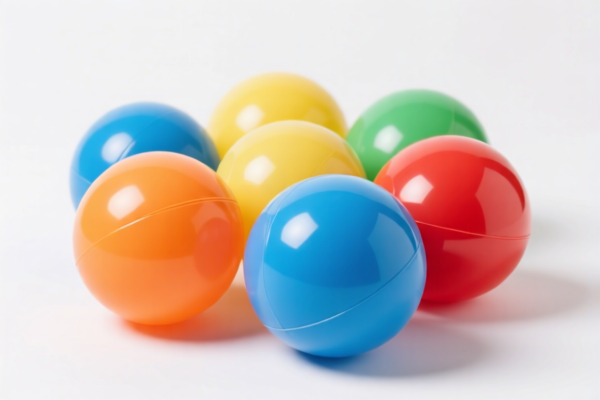
AI Analysis
🎈 Foam Ball Set: The Ultimate Guide to HS Code Classification & 2026 Clearance Strategy
🌐 HS Code Reference & Clearance Guide | 2026 Latest Tariff Analysis | Professional Entry Strategy
📌 1. Product Definition: What Exactly is a "Foam Ball Set"?
A "Foam Ball Set" is a recreational product primarily composed of lightweight, porous polyurethane (PU) or similar foam materials. In international trade, it sits at the intersection of toys, sports equipment, and decorative items.
Its classification is critical because it hinges on three factors: 1. Form: Is it a simple ball, a packaged set, or a decorative component? 2. Material: Is it classified strictly as "Plastic" or "Other Organic Materials" (like paper pulp)? 3. Intent: Is it for play (Toys) or decoration (Artificial Flowers)?
⚠️ Critical Distinction: * Play Set (Toys): A set containing foam balls + accessories (e.g., a basket, pump, or game instructions) → Category 9503. * Decorative Item: If used as a floral/fabric substitute for home decor → Category 6702. * Simple Ball: A single foam sphere or a bulk pack without "set" status → Category 9503.73. * Plastic Set: If the foam is chemically classified as synthetic resin/plastic within a kit → Category 6702.10.
📦 2. HS Code Classification Matrix (2026 Authority Reference)
The following table details the five potential classifications based on the product's specific attributes, as derived from current tariff data.
| HS Code | Product Description & Logic | Material Assumption | Total Tax Rate (US) | Key Tax Components |
|---|---|---|---|---|
| 9503.00.00.71 | "Set/Model/Toy" Category Assumes the product is a complete play kit (e.g., foam balls + launcher). |
PU / Foam (Toy Material) | 10.0% | Base: 0% + Section 301: 0% + Section 122: 10% |
| 9503.00.00.73 | "Ball" Category Specifically for foam balls classified as "other" toys. |
Foam Material | 10.0% | Base: 0% + Section 301: 0% + Section 122: 10% |
| 6702.10.40.00 | "Plastic Artificial Items" Assumes foam is legally "Plastic/Synthetic Resin" AND sold as a "Set" with parts. |
Plastic / Synthetic Resin | 13.4% | Base: 3.4% + Section 301: 0% + Section 122: 10% |
| 9505.90.60.00 | "Festive/Entertainment" General holiday or party decoration items (not strictly toys). |
Rubber / Plastic | 10.0% | Base: 0% + Section 301: 0% + Section 122: 10% |
| 6702.90.65.00 | "Other Artificial Foliage" Non-plastic foam (e.g., paper pulp/fiber) used for decorative parts. |
Non-Plastic (Paper/Fiber) | 34.5% | Base: 17.0% + Section 301: 7.5% + Section 122: 10% |
💰 3. 2026 Tariff Breakdown & Legal Analysis
✅ Applicable Market: United States (US) ✅ Origin: China (CN) ✅ Effective Date: 2025/2026 (Current Trade War Era)
🎯 Scenario A: The Standard Toy Classification (9503.00.00.71 & .73)
The most common and cost-effective classification for standard foam ball sets.
| Tax Component | Rate | Legal Basis |
|---|---|---|
| Base Duty (MFN) | 0.0% | Standard toy entry rate. |
| Section 301 (Additional) | 0.0% | Toys often enjoy exemptions or low rates under specific 301 lists. |
| Section 122 (New Add-on) | +10.0% | Crucial: A specific 10% surcharge applicable to these sub-codes. |
| 🔥 TOTAL DUTY | 10.0% | CIF Value × 10% |
📌 Explanation: * The 10% total is driven entirely by the Section 122 Tariff. * This is a highly preferred classification because the base duty and Section 301 duties are waived. * Warning: Do not mix this with "Plastic" classifications if you can avoid it, as it triggers a base duty.
🎯 Scenario B: The "Plastic Set" Classification (6702.10.40.00)
Used if the foam is strictly defined as "Synthetic Plastic" in a set format.
| Tax Component | Rate | Legal Basis |
|---|---|---|
| Base Duty (MFN) | 3.4% | Applies to "Plastic" articles. |
| Section 301 (Additional) | 0.0% | No additional 301 penalty for this specific sub-code. |
| Section 122 (New Add-on) | +10.0% | Mandatory surcharge. |
| 🔥 TOTAL DUTY | 13.4% | CIF Value × 13.4% |
📌 Explanation: * The 3.4% Base Duty makes this slightly more expensive than the Toy classification. * The Section 122 tariff still applies. * Risk: Misclassifying a toy as a "plastic set" unnecessarily increases your landed cost by 3.4%.
🎯 Scenario C: The "Non-Plastic Decor" Trap (6702.90.65.00)
The most expensive scenario. Avoid unless the foam is explicitly non-synthetic (e.g., paper pulp).
| Tax Component | Rate | Legal Basis |
|---|---|---|
| Base Duty (MFN) | 17.0% | High duty for non-plastic organic materials. |
| Section 301 (Additional) | +7.5% | Significant Section 301 penalty applied. |
| Section 122 (New Add-on) | +10.0% | Mandatory surcharge. |
| 🔥 TOTAL DUTY | 34.5% | CIF Value × 34.5% |
⚠️ CRITICAL WARNING: * If your foam ball set is made of Polyurethane (PU), it is legally "Plastic" in most trade contexts. * Declaring it as "Non-Plastic" to get a "Toy" code (which has 0% base) is high risk. * Declaring it as "Non-Plastic" but getting caught by the 6702.90.65.00 code results in a 34.5% tax penalty. This is the most dangerous classification for standard foam products.
🎯 Scenario D: Festive/Entertainment Use (9505.90.60.00)
Alternative for party decorations.
| Tax Component | Rate | Legal Basis |
|---|---|---|
| Base Duty (MFN) | 0.0% | Zero base duty for entertainment goods. |
| Section 301 | 0.0% | No additional 301. |
| Section 122 | +10.0% | Mandatory surcharge. |
| 🔥 TOTAL DUTY | 10.0% | CIF Value × 10% |
🛠️ 4. Strategic Clearance Advice (Actionable Tips)
✅ 1. Material Definition is Key
- Do NOT claim "Paper Pulp" or "Fiber" unless you have a lab report proving the foam is non-synthetic.
- Standard Foam Balls = Polyurethane (PU) = Plastic.
- Strategy: Always aim for 9503 (Toys) or 9505 (Entertainment) to avoid the 17% Base Duty + 7.5% Section 301 trap.
✅ 2. The "Set" vs. "Ball" Distinction
- If sold as a single ball: Use 9503.00.00.73 (10% Tax).
- If sold as a "Set" (Balls + Bag + Pump): Use 9503.00.00.71 (10% Tax).
- Why? Both carry the same 10% total rate, but the "Set" code (71) is more accurate for kits.
✅ 3. Avoid the 6702.90.65.00 Pitfall
- Do not use this code unless your product is explicitly a decorative artificial flower part made of non-plastic material.
- If customs auditors find Polyurethane in a "Non-Plastic" declaration, they will reclassify to 6702.90.65.00, charging 34.5%.
- Result: You will owe back-taxes, fines, and potentially face shipment seizure.
✅ 4. Documentation Checklist
| Document | Requirement |
|---|---|
| Product Specifications | Must explicitly state "Polyurethane Foam" or "Synthetic Plastic". |
| Commercial Invoice | Clearly describe: "Foam Ball Set, PU Material, for Children's Play". |
| Bill of Materials | List all components (balls, bag, etc.) to justify "Set" classification. |
| Declaration Statement | State: "No parts of rubber or non-synthetic fiber used." (To avoid 6702.90.65.00). |
📌 5. Quick Summary: Which Code to Pick?
| Product State | Recommended HS Code | Total Tax | Why? |
|---|---|---|---|
| Single Foam Ball | 9503.00.00.73 |
10.0% | Toy classification, 0% base duty. |
| Foam Ball Kit (Set) | 9503.00.00.71 |
10.0% | Toy classification, 0% base duty. |
| Party Decoration (Non-Play) | 9505.90.60.00 |
10.0% | Entertainment classification, 0% base duty. |
| Plastic Set (Strictly Plastic) | 6702.10.40.00 |
13.4% | Acceptable if "Toy" code is rejected, but higher tax. |
| Non-Plastic Decor (Rare) | 6702.90.65.00 |
34.5% | AVOID unless 100% non-synthetic. |
🚀 Final Pro Tip: Always declare as "Toy" (9503) if the product is intended for play. This is the safest, lowest-tax route (10%) because it avoids the heavy 17% base duty and 7.5% Section 301 surcharge associated with the "Other" (6702.90) category.
📣 Call to Action
📞 Contact your Customs Broker Today: 1. Confirm your foam composition (PU vs. Fiber). 2. Verify if your product is a "Set" or "Single Item". 3. Apply 9503.00.00.71 or 73 for the 10% sweet spot.
Avoid the 34.5% tax trap! 🚫💸
✨ Precision Classification = Maximum Profit Margins 📅 Data Valid for 2026 Trade Regulations
Customer Reviews
About HS Code Classification
The Harmonized System (HS) is an internationally standardized nomenclature developed by the World Customs Organization (WCO) to classify traded products. Over 200 countries use the HS system as the basis for customs tariffs, trade statistics, and import/export regulations.
Each HS code follows a hierarchical structure:
- Chapter (2 digits) — Broad category of goods (e.g., Chapter 84: Machinery and Mechanical Appliances)
- Heading (4 digits) — More specific grouping within the chapter
- Subheading (6 digits) — Internationally standardized breakdown, used by all WCO member countries
- National subdivisions (8-10 digits) — Country-specific extensions for further classification, such as US HTSUS 10-digit codes
Correct HS code classification is essential for smooth customs clearance, accurate duty payment, and compliance with trade regulations. Misclassification can lead to customs delays, overpayment of duties, or penalties.
When importing from CN to US, the applicable tariff rates may include:
- Most-Favored-Nation (MFN) rate — The standard duty rate applied to WTO members
- General rate — Applied to countries without trade agreements
- Trade remedy duties — Additional tariffs such as Section 301 (anti-dumping), Section 232 (national security), or countervailing duties
The information provided on this page is for reference purposes only. For official classification, please consult with your local customs authority or a licensed customs broker.