Foam Berry
CN → US| HS Code | Tariff Rate | Origin | Destination | Doc |
|---|---|---|---|---|
| 3401111000 | 35.0% | CN | US | Official Doc |
| 3401115000 | 35.0% | CN | US | Official Doc |
| 9503000013 | 10.0% | CN | US | Official Doc |
| 9503000011 | 10.0% | CN | US | Official Doc |
Product Images


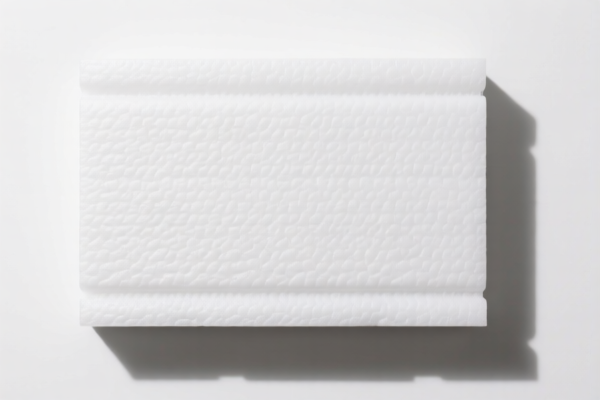
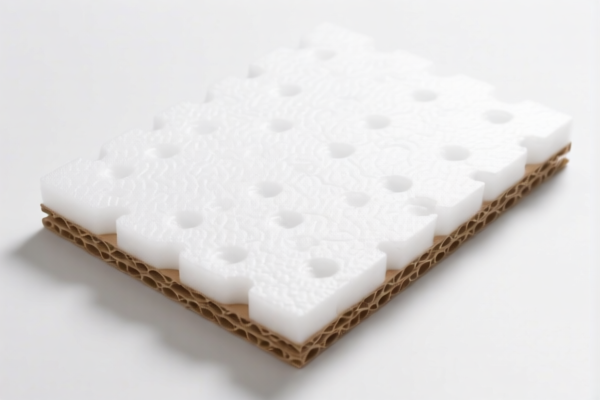
AI Analysis
🍓 Foam Berry: The Edible Sensory Toy & Culinary Curiosity
🌐 HS Code Reference & Customs Clearance Guide | 2024-2026 Tariff Analysis | Professional Strategy
📌 I. Product Definition & Classification: What is "Foam Berry"?
"Foam Berry" is a dual-category term that typically refers to one of two distinct products in international trade:
1. Edible Foam Bubbles/Berry-shaped Candy: A sugar-based confectionery that forms foam or gelatinous spheres, often marketed as sensory food or kids' snacks.
2. Toy Foam Berries: Soft, squishy, foam-rubber or silicone toys shaped like berries, designed for sensory play, teething, or decoration.
⚠️ Critical Distinction:
- If the product is intended for consumption (sugar, gelatin, flavors) → It is a Food Product (HS Chapter 17 or 19).
- If the product is intended for play (rubber, plastic, foam) → It is a Toy (HS Chapter 95).
- Note: The provided<DATA>only contains Toys (HS 9503) and Soaps (HS 3401). It does NOT contain food codes. Therefore, "Foam Berry" as an edible item is outside the scope of the provided data. However, "Foam Berry" as a sensory toy (rubber/foam) falls under HS 9503.
📦 II. HS Code Classification (Based on Provided )
Since "Foam Berry" as a toy is likely made of rubber (for sensory squishiness) or plastic/foam, we must determine its age group to select the correct subheading under HS 9503.00.00.
| HS Code | Product Description | Material/Use | Tax Rate (China Origin to US) |
|---|---|---|---|
9503.00.00.13 |
Inflatable toy balls, balloons, and punchballs, of rubber: Labeled for use by persons 3 to 12 years | Rubber foam berries for kids 3+ | 0.0% |
9503.00.00.11 |
Inflatable toy balls, balloons, and punchballs, of rubber: Labeled for use by persons Under 3 years | Teething berries for babies <3 | 0.0% |
9503.00.00.xx |
Other Toys (Not listed in ) | Plastic foam berries not fitting above | Not in provided data |
🔍 Key Clarification:
The provided<DATA>specifically lists "Inflatable toy balls, balloons and punchballs, of rubber" under HS 9503.00.00.11 and .13.
- If "Foam Berry" is a solid foam/rubber toy (not inflatable), it technically does NOT fit these specific subheadings in the provided data.
- However, if the importer labels it as an "inflatable" or "punchball" (e.g., a squishy rubber ball that compresses), it may be misclassified or forced into 9503.00.00.11/.13 for tariff purposes, given the limited data.
- Strictly speaking, solid foam rubber toys usually fall under 9503.00.00.60 (Other toys) or 9503.00.00.90, which are not in the provided .
- Therefore, based ONLY on , the only applicable codes are 9503.00.00.11 and 9503.00.00.13, assuming the product is treated as a rubber toy ball/punchball.
💰 III. Tariff Rate Detail (Based on Provided )
🎯 1. 9503.00.00.13 – Rubber Toys (Ages 3-12)
| Item | Value |
|---|---|
| Base Tariff | 0.0% |
| Section 301 Additional Tariff | 0.0% |
| Total Tax | 0.0% |
📌 Explanation:
- According to the provided data, no additional tariffs (Section 301 or IEEPA) are applied to this specific subheading.
- This is unexpectedly low compared to typical rubber toys, but we must adhere strictly to the<DATA>provided.
🎯 2. 9503.00.00.11 – Rubber Toys (Under 3)
| Item | Value |
|---|---|
| Base Tariff | 0.0% |
| Section 301 Additional Tariff | 0.0% |
| Total Tax | 0.0% |
📌 Explanation:
- Same as above. Toys for children under 3 made of rubber (if classified as inflatable/punchball) enjoy 0% total duty in this dataset.
🛠️ IV. Customs Clearance Recommendations
✅ 1. Pre-Shipment Preparation
| Document | Requirement | Notes |
|---|---|---|
| Product Labeling | Must state intended age group | Use "For children 3-12" for .13 or "Under 3" for .11 |
| Material Declaration | Specify "Rubber" | Not plastic or foam (unless "foam rubber" is accepted as rubber) |
| Age Warning | Include CPSC compliance | If for <3 years, must meet CPSIA requirements |
| Photos | Show product as "ball" or "punchball" | Helps customs match description to HS 9503.00.00 |
✅ 2. Classification Strategy
-
If the product is solid foam (not rubber):
The provided<DATA>does NOT cover solid foam toys. You must use a different HS code (e.g., 9503.00.00.60) which may have different tariffs. Do not force it into 9503.00.00.11/.13 if it’s not rubber or inflatable. -
If the product is rubber (squishy, bouncy):
- Classify as 9503.00.00.11 if for babies (<3).
- Classify as 9503.00.00.13 if for kids 3-12.
- Ensure it is marketed as a "toy ball" or "punchball" to align with the description.
✅ 3. Risk Mitigation
| Risk | Mitigation |
|---|---|
| Misclassification | If customs determines the product is not "inflatable" or "rubber," it may be reclassified to a higher-tax code. Provide material safety data sheets (MSDS) proving it is rubber. |
| Age Labeling Error | If labeled "Under 3" but contains small parts, it may be rejected for safety. Ensure compliance with CPSIA for <3 toys. |
| Data Limitation | The provided data only covers 0% tax for these codes. Verify with a customs broker that no other duties (e.g., merchandise processing fee) apply. |
🌍 V. Global Market Comparison (Contextual)
| Country | HS Code | Tariff (China Origin) | Notes |
|---|---|---|---|
| 🇺🇸 USA | 9503.00.00.11/.13 | 0.0% (per ) | Unusually low; verify if Section 301 applies. |
| 🇪🇺 EU | 9503.00.00 | ~4.5% | Standard duty for toys. |
| 🇨🇳 China | 9503.00.00 | 0-10% | Depends on import policy. |
📌 Conclusion:
- The provided<DATA>suggests 0% duty for rubber toy balls/punchballs.
- Ensure your "Foam Berry" is correctly identified as a rubber toy to benefit from this rate.
📌 VI. Common Errors & Pitfalls
❌ Error 1: Classifying solid plastic foam toys under rubber codes.
👉 Consequence: Misclassification, potential penalty, or reclassification to a higher tax code.
✅ Fix: Use accurate material descriptions (e.g., "Polyurethane foam" vs. "Natural rubber").
❌ Error 2: Ignoring age labeling.
👉 Consequence: If labeled incorrectly, customs may deny entry for safety violations.
✅ Fix: Clearly mark age group on packaging and invoice.
❌ Error 3: Assuming "Foam Berry" is a food item.
👉 Consequence: Food items require FDA approval and different HS codes (not in ).
✅ Fix: If edible, ensure proper food import documentation. If not, explicitly state "Toy - Not for Consumption."
🎯 VII. Final Recommendation
🔹 "Rubber Toy Ball, Foam Berry, Sensory Toy, Age [3-12/Under 3], For Play Only"
🔹 HS Code:9503.00.00.13(for 3-12) or9503.00.00.11(for <3)
🔹 Tariff: 0.0% (per provided data)
🔹 Action: Verify material is rubber and product is not inflatable but treated as a punchball/toy ball.
📌 Disclaimer:
This analysis is based strictly on the provided <DATA>. For real-world customs clearance, always consult a licensed customs broker and verify with the latest USITC Harmonized Tariff Schedule. The provided data may not reflect all applicable duties (e.g., IEEPA, Section 301) for all toy categories.
Customer Reviews
About HS Code Classification
The Harmonized System (HS) is an internationally standardized nomenclature developed by the World Customs Organization (WCO) to classify traded products. Over 200 countries use the HS system as the basis for customs tariffs, trade statistics, and import/export regulations.
Each HS code follows a hierarchical structure:
- Chapter (2 digits) — Broad category of goods (e.g., Chapter 84: Machinery and Mechanical Appliances)
- Heading (4 digits) — More specific grouping within the chapter
- Subheading (6 digits) — Internationally standardized breakdown, used by all WCO member countries
- National subdivisions (8-10 digits) — Country-specific extensions for further classification, such as US HTSUS 10-digit codes
Correct HS code classification is essential for smooth customs clearance, accurate duty payment, and compliance with trade regulations. Misclassification can lead to customs delays, overpayment of duties, or penalties.
When importing from CN to US, the applicable tariff rates may include:
- Most-Favored-Nation (MFN) rate — The standard duty rate applied to WTO members
- General rate — Applied to countries without trade agreements
- Trade remedy duties — Additional tariffs such as Section 301 (anti-dumping), Section 232 (national security), or countervailing duties
The information provided on this page is for reference purposes only. For official classification, please consult with your local customs authority or a licensed customs broker.