Foam Edge Trim
CN → US| HS Code | Tariff Rate | Origin | Destination | Doc |
|---|---|---|---|---|
| 3916905000 | 40.8% | CN | US | Official Doc |
| 4016100000 | 35.0% | CN | US | Official Doc |
| 3916200020 | 40.8% | CN | US | Official Doc |
Product Images
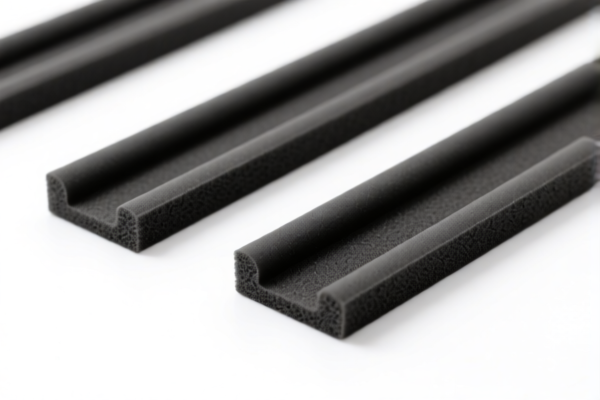
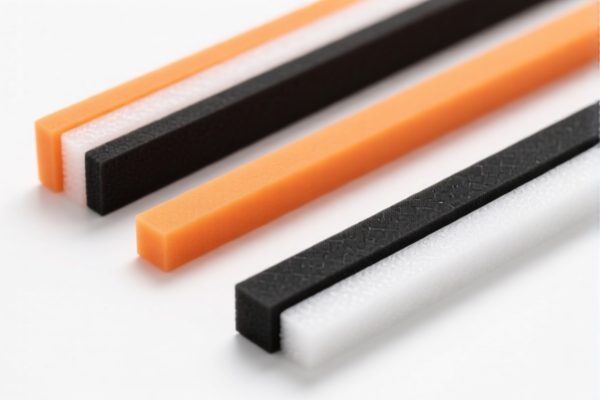
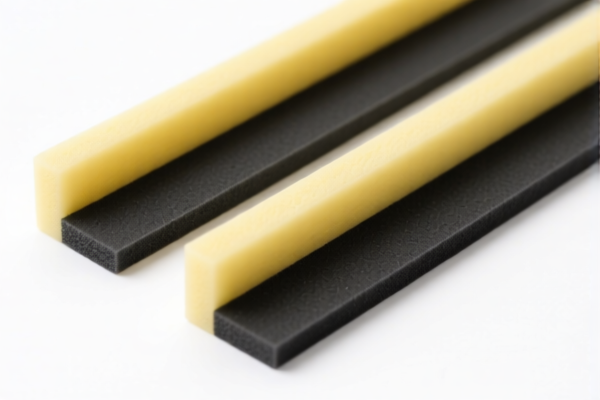
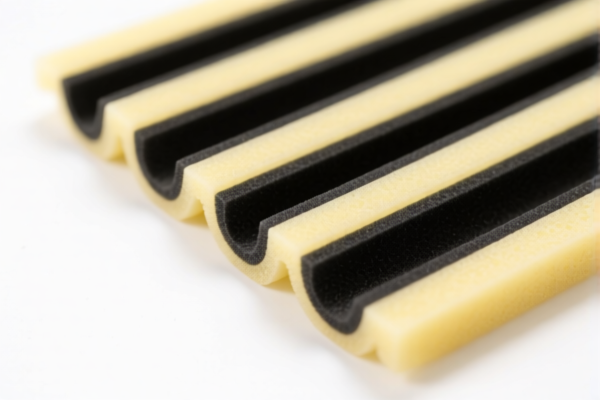
AI Analysis
📦 Foam Edge Trim (收边条/泡沫封边条)
🌐 HS Code Reference & Customs Clearance Guide | 2026 Latest Tariff Analysis | Strategic通关 Strategy for US Imports
📌 I. Product Definition & Classification: What Exactly is "Foam Edge Trim"?
Foam Edge Trim refers to flexible, strip-shaped products made from foamed materials (such as EVA, PE, or expanded plastics), primarily used for edge protection, sealing, cushioning, and finishing in construction, automotive, or packaging applications.
In international trade, the classification hinges on two key factors: 1. Material: Is it Plastic (Chapter 39) or Rubber (Chapter 40)? 2. Form: Is it a "Profil" (Profile/Bar/Strip) or a "Other Article" (Miscellaneous)?
⚠️ Key Classification Logic:
- If the material is inferred as Plastic/Polymer (EVA/PE) and the form is Strip/Profile →归入 Chapter 39 (Plastics).
- If the material is inferred as Rubber/Polysulfide and treated as a general "Other Article" → 归入 Chapter 40 (Rubber).
📊 II. HS Code Classification Details (2026 Authority Comparison)
Based on the provided data, here are the three possible HS Codes and their justification:
| HS Code | Product Description | Justification / Match Logic | Estimated Total Tax Rate (US/CN) |
|---|---|---|---|
3916.90.50.00 |
Plastics; Profilized, not further worked than surface or cross-section wholly by cutting | Material: Inferred as Plastic (Foam/EVA/PE). Form: Matches "Profilized" (Strip/Bar). No Conflict: No material conflict. |
40.8% |
4016.10.00.00 |
Other articles of cellular rubber | Material: Inferred as Polymer/Rubber. Form: "Edge trim" fits "Other articles". Logic: Fallback category for cellular rubber items not elsewhere specified. |
35.0% |
3916.20.00.20 |
Plastics; Profilized, of polymers of ethylene | Material: Inferred as Polymer/Plastic. Form: "Edge trim" matches "Profilized/Strip". Match: High alignment with plastic profile attributes. |
40.8% |
🔍 Critical Note:
-3916.90.50.00and3916.20.00.20both result in a 40.8% total tax rate.
-4016.10.00.00offers a lower rate of 35.0%, but relies on the assumption that the product is classified as "Cellular Rubber" rather than plastic. If the product is clearly EVA/Plastic, this classification may be challenged by customs.
💰 III. 2026 Latest Tariff Rate Breakdown (Detailed Clauses)
✅ Applicable Country: United States (US)
✅ Origin: China (CN)
✅ Effective Date: From 2025/2026 Import Periods (Including Section 301 & IEEPA)
🎯 1. For HS Codes 3916.90.50.00 & 3916.20.00.20 (Plastic Profiles)
| Item | Content |
|---|---|
| Base Tariff | 5.8% (Ad Valorem) |
| Section 301 Add-on | +25.0% (USITC Footnote 9903.01.25 / 9903.01.24) |
| IEEPA Add-on | +10.0% (Targeting China/HK products under Section 122/IEEPA) |
| Total Tax Rate | 40.8% |
| Calculation Basis | CIF Value × 40.8% |
| De Minimis Exemption | ❌ NOT APPLICABLE (deny_de_minimis) |
| Legal Path | Base Tariff → USITC:3916.xxxx.xxxx → FOOTNOTE:301 → IEEPA:10% |
📌 Explanation:
- The 25% Section 301 tariff is standard for many plastic products from China.
- The 10% IEEPA tariff is an additional punitive duty on specific Chinese imports.
- Total 40.8% is significant. Importers must calculate landed cost carefully.
🎯 2. For HS Code 4016.10.00.00 (Cellular Rubber Articles)
| Item | Content |
|---|---|
| Base Tariff | 0.0% |
| Section 301 Add-on | +25.0% |
| IEEPA Add-on | +10.0% |
| Total Tax Rate | 35.0% |
| Calculation Basis | CIF Value × 35.0% |
| De Minimis Exemption | ❌ NOT APPLICABLE (deny_de_minimis) |
| Legal Path | USITC:4016.10.00.00 → FOOTNOTE:301 → IEEPA:10% |
📌 Note:
- This is the most cost-effective option if the product can be legally classified as Cellular Rubber (e.g., certain EPDM or SBR foams) rather than plastic (EVA/PE).
- If the product is explicitly labeled "EVA Foam" or "Polyethylene Foam," Customs may reject this classification and demand the higher 40.8% rate.
🛠️ IV. Customs Clearance Practical Advice (Avoid Pitfalls)
✅ 1. Documentation Checklist (Must-Have)
| Document | Required? | Explanation |
|---|---|---|
| ✅ Product Specification Sheet | ✔️ | Must specify material composition (e.g., "100% EVA" or "EPDM Rubber"). |
| ✅ Material Safety Data Sheet (MSDS) | ✔️ | Proves chemical composition (Plastic vs. Rubber). |
| ✅ Product Photos (Close-up) | ✔️ | Shows texture, cross-section (cellular structure), and labeling. |
| ✅ Commercial Invoice | ✔️ | Clear description: "Foam Edge Trim, Material: [Specify], Use: [Specify]". |
| ✅ Packing List | ✔️ | Weight and dimensions for duty calculation. |
| ✅ Origin Certificate (CO) | ✔️ | Critical for proving CN origin (triggers Section 301). |
✅ 2. Declaration Tips (Key Mantras)
🔥 "Material First, Form Second, No Ambiguity!"
| Scenario | Recommended HS Code | Risk if Misdeclared |
|---|---|---|
| Explicitly "EVA" or "PE" Foam | 3916.90.50.00 or 3916.20.00.20 (40.8%) |
If declared as Rubber (4016.10) → Audit Risk, Penalties, Back-tariff. |
| Explicitly "EPDM" or "SBR" Rubber | 4016.10.00.00 (35.0%) |
If declared as Plastic → Overpaying 5.8% unnecessarily. |
| Unclear Material | Provide MSDS + Lab Test | Customs will classify based on evidence; ambiguity leads to delays. |
| Mixed Materials | Separate Declaration | Do not mix plastic and rubber in one SKU; classify separately. |
✅ 3. Special Handling for "Foam"
- Cellular Structure: Both HS Codes (
3916and4016.10) rely on the product being in a "foamed" or "cellular" state. Ensure the product is not solid plastic/rubber. - Usage Context: If the foam is used as an insulator (electrical/thermal), it might fall under different chapters (e.g.,
3921or4016.99). However, "Edge Trim" implies a geometric profile, keeping it in3916or4016.10. - Labeling: Label the product as "Foam Edge Strip" and specify the base polymer. Vague terms like "Rubberized Foam" may trigger questions.
🌍 V. Global Market Comparison (2026)
| Market | Recommended HS Code | Est. Tax Rate (CN Origin) | Notes |
|---|---|---|---|
| 🇺🇸 USA | 3916.90.50.00 / 4016.10.00.00 |
40.8% / 35.0% | High tariffs due to Section 301 + IEEPA. |
| 🇨🇳 China | 3916.90.50.00 |
5.8% | No punitive tariffs. Standard import duty. |
| 🇪🇺 EU | 3916.90.50.00 |
3.7% | Lower tariffs; no Section 301 equivalent. |
| 🇬🇧 UK | 3916.90.50.00 |
3.7% | Post-Brexit tariffs similar to EU. |
| 🇯🇵 Japan | 3916.90.50.00 |
4.6% | Moderate tariffs. |
📌 Conclusion:
- USA is the most expensive market for Foam Edge Trim from China.
- Cost Optimization: If possible, verify if the product can be classified under4016.10.00.00(35.0%) instead of the plastic codes (40.8%) by using rubber-based foams (e.g., EPDM) instead of plastic foams (EVA/PE).
- Supply Chain: Consider sourcing from Vietnam, Mexico, or Thailand to avoid IEEPA/Section 301 penalties (taxes could drop to 0%~10%).
📌 VI. Common Errors & Pitfalls (Lessons Learned)
❌ Error 1: Using vague terms like "Foam Strip" without specifying material.
👉 Result: Customs may classify under the highest applicable duty rate or demand a lab test (costly & delays clearance).
❌ Error 2: Claiming "De Minimis" (Section 321) for shipments under $800.
👉 Result: Rejected. These HS codes are explicitly excluded from De Minimis treatment (deny_de_minimis). Full duties apply.
❌ Error 3: Misclassifying Plastic Foam as Rubber to save 5.8%.
👉 Result: If lab tests prove it's EVA/PE, customs will back-tariff + penalties.
❌ Error 4: Ignoring the "122 Clause/IEEPA" 10% add-on.
👉 Result: Underestimating landed cost by 10%. Always budget for the full 40.8% or 35.0%.
🎯 VII. Conclusion: Smart Classification, Smart Savings!
🎯 Remember the Mantra:
🔹 "Material Defines, Form Confirms, Tariff Follows!"
🔹 "Plastic Foam = 40.8%, Rubber Foam = 35.0%."
🔹 "No De Minimis! Full Duty Applies!"
📌 Pro Tip:
- If you are importing EVA/PE Foam, expect 40.8%.
- If you can switch to EPDM/SBR Rubber Foam, you save 5.8%.
- For US Market, strongly consider Non-CN Origins (Vietnam/Mexico) to avoid IEEPA/Section 301.
📣 Immediate Action:
📞 Verify Material Composition with your supplier.
🧪 Request MSDS to confirm Plastic vs. Rubber.
📋 Apply for Advance Ruling if shipment value is high.
✨ Professional Clearance Starts with Precise Classification!
💼 Every Percent Saved is Pure Profit!
Customer Reviews
About HS Code Classification
The Harmonized System (HS) is an internationally standardized nomenclature developed by the World Customs Organization (WCO) to classify traded products. Over 200 countries use the HS system as the basis for customs tariffs, trade statistics, and import/export regulations.
Each HS code follows a hierarchical structure:
- Chapter (2 digits) — Broad category of goods (e.g., Chapter 84: Machinery and Mechanical Appliances)
- Heading (4 digits) — More specific grouping within the chapter
- Subheading (6 digits) — Internationally standardized breakdown, used by all WCO member countries
- National subdivisions (8-10 digits) — Country-specific extensions for further classification, such as US HTSUS 10-digit codes
Correct HS code classification is essential for smooth customs clearance, accurate duty payment, and compliance with trade regulations. Misclassification can lead to customs delays, overpayment of duties, or penalties.
When importing from CN to US, the applicable tariff rates may include:
- Most-Favored-Nation (MFN) rate — The standard duty rate applied to WTO members
- General rate — Applied to countries without trade agreements
- Trade remedy duties — Additional tariffs such as Section 301 (anti-dumping), Section 232 (national security), or countervailing duties
The information provided on this page is for reference purposes only. For official classification, please consult with your local customs authority or a licensed customs broker.