Foam Glass Block
CN → US| HS Code | Tariff Rate | Origin | Destination | Doc |
|---|---|---|---|---|
| 7020004000 | 41.6% | CN | US | Official Doc |
| 7016905000 | 40.0% | CN | US | Official Doc |
| 7020006000 | 40.0% | CN | US | Official Doc |
| 7016901010 | 43.0% | CN | US | Official Doc |
| 7016905000 | 40.0% | CN | US | Official Doc |
Product Images

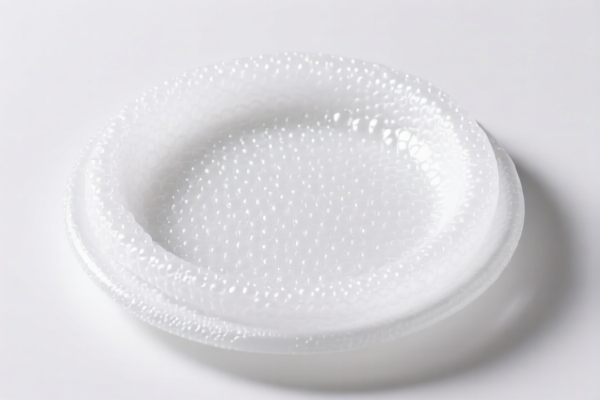
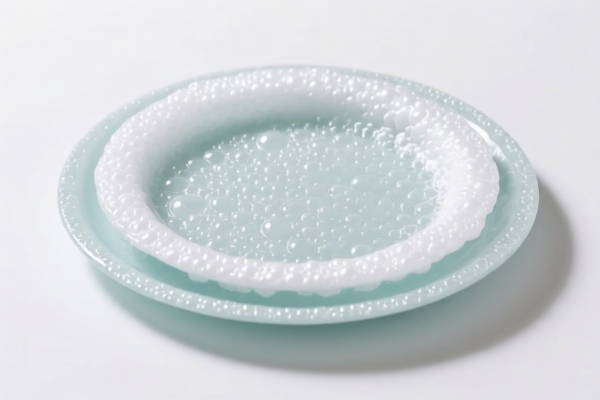
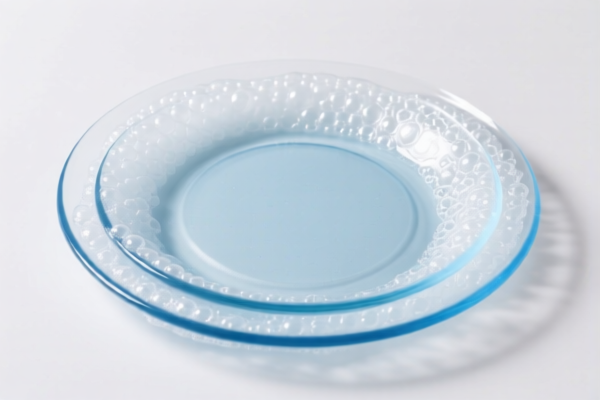
AI Analysis
🏗️ Foam Glass Block (Insulating Glass Bricks)
🌐 HS Code Reference & Clearance Guide | 2026 Latest Tariff Analysis | Professional Customs Strategy
📌 I. Product Definition & Classification: Do You Really Understand "Foam Glass Blocks"?
Foam Glass Blocks are lightweight, cellular glass construction materials made from crushed glass, foaming agents, and other additives. They are widely used for insulation, soundproofing, and load-bearing wall partitions. In international trade, they are strictly categorized based on their material composition and structural form.
Key Distinction:
- Glass Blocks (7016 series): Solid or foamed glass shaped into blocks, slabs, or bricks.
- Other Glass Articles (7020 series): Glass items that do not fit the specific definitions of bricks, slabs, or tiles in heading 7016 (e.g., simple glass bricks that don’t meet the "foamed" or "insulating" criteria often pushed to 7020).
⚠️ Critical Classification Point:
- If the product is explicitly "Foamed Glass" (cellular structure) → It is a Glass Brick/Slab → HS Code 7016.xx.
- If the product is simply a Solid Glass Brick without foaming characteristics → It may fall under HS Code 7020.xx (Other glass articles).
- Shape Matters: "Brick" shape strongly points to 7016; irregular or non-structural shapes may point to 7020.
📦 II. HS Code Classification Details (2026 Latest Tariff Mapping)
| HS Code | Product Description | Key Characteristics | Classification Basis |
|---|---|---|---|
7016.90.50.00 |
Foam Glass Blocks, classified as glass bricks | Cellular structure, insulating properties, brick shape | ✅ Primary Choice for Foam Glass |
7016.90.10.10 |
Glass Brick Blocks, fitting brick/slab definition | Solid or composite glass, brick form | ⚠️ Alternative for Solid Glass Bricks |
7020.00.40.00 |
Glass Articles, Material: Glass, Form: Brick | Non-insulating glass bricks, simple glass artifacts | ⚠️ For Non-Foamed, Simple Glass Bricks |
7020.00.60.00 |
Glass Articles, Material: Glass, No Material Conflict | General glass items not covered in 7016 | ⚠️ Fallback for Unclear Forms |
🔍 Important Reminder:
- Foam Glass (porous, cellular) is best classified under 7016.90.50.00 because it is a specialized glass brick/slab for insulation.
- Solid Glass Bricks (dense, non-porous) may be classified under 7016.90.10.10 if they fit the "brick" definition, or 7020.00.40.00 if they are considered "other glass articles."
- Do not misclassify solid glass bricks as "foam glass" – this will lead to customs rejection or penalties.
💰 III. 2026 Latest Tariff Rate Breakdown (Including Surcharges & Policy Add-ons)
✅ Applicable Country: United States (US)
✅ Origin: China (CN)
✅ Effective Date: 2025-11-10 onwards (including subsequent imports)
🎯 1. 7016.90.50.00 —— Foam Glass Blocks (Insulating Glass Bricks)
| Item | Detail |
|---|---|
| Base Tariff | 5.0% (ad valorem) |
| Section 301 Surcharge | +25.0% (USITC Footnote 9903.88.01) |
| IEEPA Surcharge | +10.0% (Against China/HK products, effective 2025-11-10) |
| Total Rate | 40.0% |
| Tax Calculation | CIF Value × 40% |
| De Minimis Eligible? | ❌ No (deny_de_minimis) |
| Legal Basis Path | IEEPA:9903.01.25 → IEEPA:9903.01.24 → USITC:7016.90.50.00 → FOOTNOTE:9903.88.01 |
📌 Explanation:
- The 25% Section 301 surcharge is applied to most glass products from China.
- The 10% IEEPA surcharge is a new additional tariff against Chinese goods.
- Total 40% is a significant cost – plan accordingly!
🎯 2. 7016.90.10.10 —— Glass Brick Blocks (Solid/Composite)
| Item | Detail |
|---|---|
| Base Tariff | 8.0% (ad valorem) |
| Section 301 Surcharge | +25.0% |
| IEEPA Surcharge | +10.0% |
| Total Rate | 43.0% |
| Tax Calculation | CIF Value × 43% |
| De Minimis Eligible? | ❌ No (deny_de_minimis) |
| Legal Basis Path | IEEPA:9903.01.25 → IEEPA:9903.01.24 → USITC:7016.90.10.10 → FOOTNOTE:9903.88.01 |
📌 Note:
- This code has a higher base rate (8%) than foam glass blocks (5%).
- If your product is solid glass brick (not foamed), this code may apply, resulting in a higher total tax (43%).
🎯 3. 7020.00.40.00 —— Glass Articles, Form: Brick (Non-Foamed)
| Item | Detail |
|---|---|
| Base Tariff | 6.6% (ad valorem) |
| Section 301 Surcharge | +25.0% |
| IEEPA Surcharge | +10.0% |
| Total Rate | 41.6% |
| Tax Calculation | CIF Value × 41.6% |
| De Minimis Eligible? | ❌ No (deny_de_minimis) |
| Legal Basis Path | IEEPA:9903.01.25 → IEEPA:9903.01.24 → USITC:7020.00.40.00 → FOOTNOTE:9903.88.01 |
📌 Note:
- This code applies to non-insulating, simple glass bricks.
- Total rate is 41.6%, slightly lower than solid glass bricks (43%) but higher than foam glass (40%).
🎯 4. 7020.00.60.00 —— Glass Articles (General)
| Item | Detail |
|---|---|
| Base Tariff | 5.0% (ad valorem) |
| Section 301 Surcharge | +25.0% |
| IEEPA Surcharge | +10.0% |
| Total Rate | 40.0% |
| Tax Calculation | CIF Value × 40% |
| De Minimis Eligible? | ❌ No (deny_de_minimis) |
| Legal Basis Path | IEEPA:9903.01.25 → IEEPA:9903.01.24 → USITC:7020.00.60.00 → FOOTNOTE:9903.88.01 |
📌 Note:
- This is a fallback code for glass articles not covered in 7016.
- Use only if the product’s form is unclear or non-standard.
- Total rate is 40%, same as foam glass blocks.
🛠️ IV. Customs Clearance Practical Advice (Real-World Pitfall Avoidance)
✅ 1. Preparation Checklist (No Exceptions)
| Document | Required | Notes |
|---|---|---|
| ✅ Product Specification Sheet | ✔️ | Must include: Dimensions, weight, density, thermal conductivity, material composition (glass type, foaming agent %) |
| ✅ Product Photos (Including Label) | ✔️ | Clear shots of the brick/block, showing texture (porous for foam, solid for non-foam) |
| ✅ Third-Party Test Report | ✔️ | UL, CE, ISO, or ASTM standards (e.g., ASTM C355 for thermal conductivity) |
| ✅ Commercial Invoice | ✔️ | Clearly state: "Foam Glass Block" or "Glass Brick," not just "Glass Product" |
| ✅ Packing List | ✔️ | Detail weight, dimensions, and package count |
| ✅ Certificate of Origin (CO) | ✔️ | If not from China, apply for preferential rates |
✅ 2. Declaration Tips (Key Mantras)
🔥 “Foam Glass = 7016.90.50, Solid Brick = 7016.90.10 or 7020.00.40, Never Guess, Always Specify!”
| Scenario | Correct Declaration | Wrong Practice |
|---|---|---|
| Porosity/Cellular Structure | 7016.90.50.00 (Foam Glass) |
Declare as "Solid Glass" → 43% |
| Non-Porous, Dense Brick | 7016.90.10.10 or 7020.00.40.00 |
Declare as "Foam Glass" → 40% (but risky if tested) |
| Unclear Form/Structure | 7020.00.60.00 (General Glass) |
Avoid unless necessary |
| Mixed Packages (Foam + Solid) | Split Declaration | Combine into one code → Customs rejection |
✅ 3. Special Case Handling
| Situation | Recommendation |
|---|---|
| OEM Custom Foam Glass Blocks | Provide client order + technical drawings to prove "foamed" structure |
| Glass Bricks with Coatings/Films | Still classified under 7016 or 7020, not as "mirrors" or "optical glass" |
| Glass Bricks for Medical Equipment | If specialized, may apply for "special use" exemption, but requires proof |
| Glass Bricks for Military/Aerospace | Can apply for "special purpose" declaration, but may still incur full tariffs |
🌍 V. Global Market Clearance Comparison (2026 Latest)
| Country/Region | Recommended HS Code | Tariff (China Origin) | Certification Required | Notes |
|---|---|---|---|---|
| 🇺🇸 United States | 7016.90.50.00 |
40.0% (Foam) 41.6%-43% (Solid) |
UL, ASTM, IBC Compliance | High tariffs due to Section 301 + IEEPA |
| 🇨🇳 China | 7016.90.50.00 |
5.0% | CCC, GB Standards | No additional surcharges |
| 🇪🇺 European Union | 7016.90.50.00 |
4.0% (if CE Marked) | CE, EN 13171 | No surcharges |
| 🇬🇧 United Kingdom | 7016.90.50.00 |
4.0% | UKCA, BS Standards | No surcharges |
| 🇦🇺 Australia | 7016.90.50.00 |
5.0% | RCM, AS/NZS Standards | No surcharges |
📌 Conclusion:
- The US imposes the highest tariffs on glass blocks from China due to Section 301 and IEEPA surcharges.
- Foam Glass Blocks (7016.90.50.00) have the lowest total rate (40%) among US-bound glass blocks.
- Consider supply chain diversification (e.g., Vietnam, Mexico) to avoid high US tariffs if possible.
📌 VI. Common Mistakes & Pitfall Guide (Lessons from Experience)
❌ Mistake 1: Declaring "Foam Glass" as "Solid Glass Brick"
👉 Consequence: Misclassification → Customs penalty + back taxes (difference between 40% and 43%)
❌ Mistake 2: Using vague terms like "Glass Product" on Invoice
👉 Consequence: Customs cannot verify classification → Delayed release or return
❌ Mistake 3: Not providing porosity/density test reports
👉 Consequence: Customs assumes "solid glass" → Higher tariff (43%) or audit
❌ Mistake 4: Assuming "De Minimis" applies
👉 Consequence: No de minimis exemption for these HS codes → All goods taxed, even small shipments
✅ Correct Approach:
“Foam Glass Block, Insulating, Cellular Structure, ASTM C355 Certified, Model FGB-100, 400x200x100mm, Density 180kg/m³”
🎯 VII. Conclusion: Professional Declaration Saves Money!
🎯 Remember the Mantra:
🔹 “Foam Glass = 7016.90.50 (40%), Solid Brick = 7016.90.10 (43%) or 7020.00.40 (41.6%), Never Guess!”
🔹 “HS Code Determines Cost, 3% Difference = Big Savings, Accurate Declaration = Fast Clearance!”
📌 Pro Tip:
If your foam glass blocks are originally from Vietnam, Mexico, Thailand, or Malaysia, you may qualify for IEEPA Exemption, reducing tariffs to 0%~5%.
Recommendation: Apply for an Advance Ruling from US Customs and Border Protection (CBP) to confirm HS Code and avoid surprises.
📣 Immediate Action:
📞 Contact a professional customs broker + Provide product specs + Apply for HS Code Advance Ruling
🚀 Ensure your foam glass blocks clear customs smoothly, maximize profit, and expand globally!
✨ Professional Clearance Starts with Accurate Classification!
💼 Every cent counts – get it right the first time!
Customer Reviews
About HS Code Classification
The Harmonized System (HS) is an internationally standardized nomenclature developed by the World Customs Organization (WCO) to classify traded products. Over 200 countries use the HS system as the basis for customs tariffs, trade statistics, and import/export regulations.
Each HS code follows a hierarchical structure:
- Chapter (2 digits) — Broad category of goods (e.g., Chapter 84: Machinery and Mechanical Appliances)
- Heading (4 digits) — More specific grouping within the chapter
- Subheading (6 digits) — Internationally standardized breakdown, used by all WCO member countries
- National subdivisions (8-10 digits) — Country-specific extensions for further classification, such as US HTSUS 10-digit codes
Correct HS code classification is essential for smooth customs clearance, accurate duty payment, and compliance with trade regulations. Misclassification can lead to customs delays, overpayment of duties, or penalties.
When importing from CN to US, the applicable tariff rates may include:
- Most-Favored-Nation (MFN) rate — The standard duty rate applied to WTO members
- General rate — Applied to countries without trade agreements
- Trade remedy duties — Additional tariffs such as Section 301 (anti-dumping), Section 232 (national security), or countervailing duties
The information provided on this page is for reference purposes only. For official classification, please consult with your local customs authority or a licensed customs broker.