Foam Polystyrene Insulation Board
CN → USProduct Images
AI Analysis
🧱 Foam Polystyrene Insulation Board (EPS/XPS Boards)
🌐 HS Code Reference & Clearance Guide | 2026 Latest Tariff Analysis | Professional Customs Strategy
📌 I. Product Definition & Classification: What Exactly Is "Foam Polystyrene"?
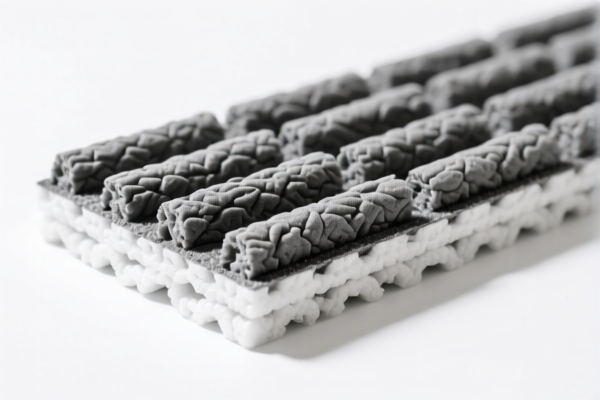
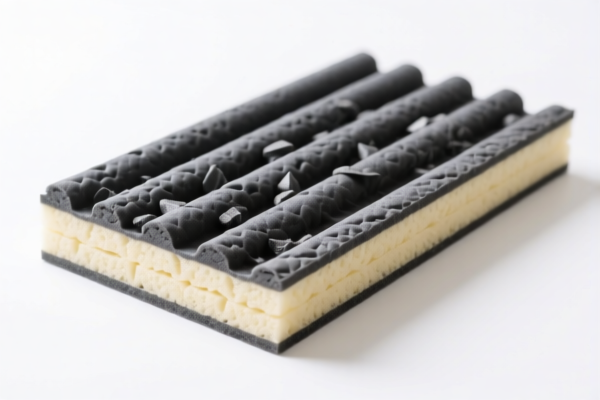
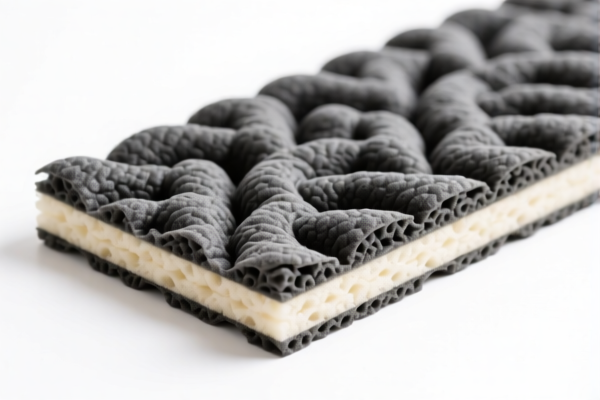
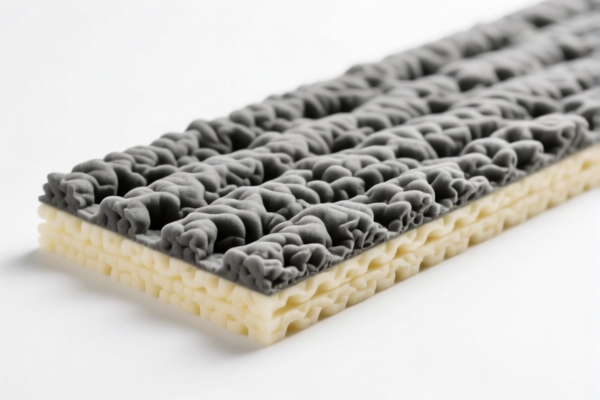
Foam Polystyrene Insulation Board is a lightweight, rigid plastic material widely used in construction for thermal and acoustic insulation. In international trade, it is primarily categorized under two distinct HS Codes depending on its manufacturing process and physical form.
Expanded Polystyrene (EPS): Bead-based foam, often white, formed into blocks or shapes.
Extruded Polystyrene (XPS): Dense, closed-cell foam, often colored (blue/pink), with a smooth surface.
⚠️ Key Distinction Point:
- If it is bead-formed foam (EPS) or uncombined with other materials → Classified under 3921.13.
- If it is prepared specifically for construction (e.g., facing with foil, paper, or metal) → It may still fall under 3921.13 if the facing is minor, but must be declared accurately to avoid misclassification under "prepared fabrics" or "planks" (4418).
- Crucial Rule: The material must be polystyrene. If it is Polyurethane (PU) or Polyisocyanurate (PIR), it falls under 3921.90 or 3921.11, NOT 3921.13.
📦 II. HS Code Classification Details (2026 Latest Tariff Authority Comparison)
| HS Code | Product Description | Application Scenario | Material Specifics |
|---|---|---|---|
3921.13.00.00 |
Other plates, sheets, film, foil and strip, of polymers of ethylene (polyethylene) | ❌ Incorrect for Polystyrene | N/A |
3921.13.10.00 |
Expanded Polystyrene (EPS) Plates, Sheets, etc. | EPS insulation boards, packaging foam blocks, coolers | ✅ Polystyrene (EPS) |
3921.13.90.00 |
Other Plates, Sheets, Film, Foil, Strip | Includes XPS (Extruded Polystyrene) insulation boards | ✅ Polystyrene (XPS) |
3921.90.10.00 |
Of other plastics (e.g., Polyurethane/PIR) | If the board is NOT polystyrene (e.g., PU foam) | ❌ Not Polystyrene |
4418.10.00.00 |
Wood-based panels | ❌ Do not misclassify plastic insulation as wood | N/A |
3926.90.90.00 |
Other articles of plastics | Scrap, cut-offs, or non-sheet forms | ✅ Plastic but wrong form |
🔍 Critical Reminder:
- EPS (bead foam) typically falls under3921.13.10.00(specifically for expanded polystyrene).
- XPS (extruded foam) typically falls under3921.13.90.00(other plates/sheets of polymers of styrene).
- Do NOT classify as "Plastic Pipes" (3917) or "Plastic Molding" (3926) unless cut into specific shapes that are no longer simple sheets.
- Fire Rating: While HS codes don't directly reflect fire ratings (Class A, B, C), customs may request Fire Test Reports (e.g., ASTM E84, UL 723) to verify the material is indeed polystyrene and not a different polymer disguised as such.
💰 III. 2026 Latest Tariff Rate Breakdown (Including Surtaxes, Policy Surcharges)
✅ Applicable Country: United States (US)
✅ Country of Origin: China (CN)
✅ Effective Date: November 10, 2025 (and subsequent imports)
🎯 1. 3921.13.10.00 — Expanded Polystyrene (EPS) Plates/Sheets
| Item | Content |
|---|---|
| Base Tariff Rate | 0% (ad valorem) |
| USITC Surtax (Section 301) | +25% (from USITC Footnote 9903.88.01) |
| IEEPA Surtax | +10% (Against Chinese/HK products, effective from Nov 10, 2025) |
| Total Effective Rate | 45% |
| Tax Calculation | CIF Value × 45% |
| De Minimis Eligibility | ❌ Not Eligible (deny_de_minimis) |
| Legal Basis Path | IEEPA:9903.01.25 → IEEPA:9903.01.24 → USITC:3921.13.10.00 → FOOTNOTE:9903.88.01 |
📌 Explanation:
- Polystyrene products from China are subject to the full 301 surtax and the new IEEPA surtax.
- Total 45% is a significant cost driver. Many importers struggle with this high rate.
- No exemption for small shipments (Section 321 de minimis does not apply).
🎯 2. 3921.13.90.00 — Other Plates, Sheets (Includes XPS Insulation)
| Item | Content |
|---|---|
| Base Tariff Rate | 0% |
| USITC Surtax (Section 301) | +25% |
| IEEPA Surtax | +10% |
| Total Effective Rate | 45% |
| Tax Calculation | CIF Value × 45% |
| De Minimis Eligibility | ❌ Not Eligible |
| Legal Basis Path | IEEPA:9903.01.25 → IEEPA:9903.01.24 → USITC:3921.13.90.00 → FOOTNOTE:9903.88.01 |
📌 Note:
- XPS insulation boards (often blue/pink foam) are classified here.
- The tax treatment is identical to EPS.
- Warning: If the board is faced with foil or paper, ensure the facing is considered minor. If the facing is integral to the function (e.g., radiant barrier), customs may argue for a different classification, but 3921.13 is still the dominant classification for insulation boards.
🛠️ IV. Customs Clearance Practical Advice (Battle-Tested Pitfall Guide)
✅ 1. Required Documentation Checklist (Non-negotiable)
| Document | Mandatory? | Description |
|---|---|---|
| ✅ Product Specification Sheet | ✔️ | Must state: Material (Polystyrene), Type (EPS/XPS), Density (kg/m³), Dimensions, Fire Rating (UL 723/ASTM E84). |
| ✅ Certificate of Origin (CO) | ✔️ | Essential for claiming any potential exemptions (if not China-origin). |
| ✅ Commercial Invoice | ✔️ | Must clearly describe: "Expanded Polystyrene (EPS) Insulation Boards" or "Extruded Polystyrene (XPS) Insulation Boards." Avoid vague terms like "Plastic Foam." |
| ✅ Bill of Lading | ✔️ | Must match invoice description. |
| ✅ Fire Safety Test Report | ✔️ | Highly Recommended. Customs may request proof of flammability rating (e.g., Class B or C). |
| ✅ packing List | ✔️ | Include gross/net weight, number of pallets. |
✅ 2. Declaration Tips (Key Mantra)
🔥 "Material First, Form Second. Don't Say 'Plastic', Say 'Polystyrene'!"
| Scenario | Correct Declaration | Wrong Practice |
|---|---|---|
| EPS Board | "Expanded Polystyrene (EPS) Insulation Board, Unfaced, 2in x 4ft x 8ft" |
"Plastic Foam Sheet" → Risk of misclassification |
| XPS Board | "Extruded Polystyrene (XPS) Insulation Board, Blue Foil Faced, 1in x 4ft x 8ft" |
"Building Material" → Too vague |
| Faced Board | "XPS Board with Aluminum Foil Facing, 90% Foam, 10% Foil" |
"Insulated Panel" → Could be misread as composite |
| Scrap/Offcuts | "Recycled EPS Granules" → Classify under 3915.10 |
"Insulation Board" → Wrong code |
✅ 3. Special Cases Handling
| Scenario | Handling Advice |
|---|---|
| Faced with Aluminum/Paper | Declare as "Polystyrene Boards with Minor Facing." Ensure the facing is not the primary material. If the facing is heavy/structural, consult a customs broker. |
| Cut-to-Size Boards | Still classified under 3921.13 if they remain plates/sheets. Do not classify as "Plastic Parts" (3926) unless they are complex 3D shapes. |
| Composite Boards (e.g., Foam + Drywall) | If the foam is laminate to drywall, it may fall under 6815.90 (Inorganic materials) or 3921.90. Not 3921.13. |
| Origin: Non-China (e.g., Vietnam, Thailand) | Huge Savings! Apply for Free Trade Agreement (FTA) benefits. USITC surtaxes may be waived. Tax could drop to 0-5%. |
🌍 V. Global Market Clearance Comparison (2026 Latest)
| Country/Region | Recommended HS Code | Tariff (China Origin) | Certification Requirements | Notes |
|---|---|---|---|---|
| 🇺🇸 USA | 3921.13.10.00 / 3921.13.90.00 |
45% (0% base + 25% + 10%) | FCC (if electronic), UL 723 (Fire) | High tariff burden. Consider non-China sourcing. |
| 🇨🇳 China | 3921.13 |
6.5% | GB/T 10801 (National Standard) | No anti-dumping duties on PS foam. |
| 🇪🇺 EU | 3921.13 |
0% (Most FTA partners) | CE Marking, REACH, Fire Rating (Euroclass B/s1/d0) | Strict fire safety rules. |
| 🇨🇦 Canada | 3921.13 |
0% (if eligible under CUSMA) | CAN/ULC-S102 (Fire) | Check origin for CUSMA benefits. |
| 🇲🇽 Mexico | 3921.13 |
0% (if eligible under USMCA) | NOM-030-ENER (Energy Efficiency) | USMCA benefits apply if manufactured in North America. |
📌 Conclusion:
- USA is the most challenging market due to the 45% cumulative tax rate.
- China, EU, Canada, Mexico are more favorable, especially if non-Chinese origin or FTA-eligible.
- Fire Rating is the biggest technical hurdle globally. Ensure your product meets local fire codes (e.g., ASTM E84 in US, Euroclass in EU).
📌 VI. Common Mistakes & Pitfall Guide (Lessons Learned)
❌ Mistake 1: Declaring as "Plastic Sheet" without specifying Polystyrene
👉 Consequence: Customs may classify under 3921.90 (other plastics) with higher duties or delay for further inspection.
❌ Mistake 2: Ignoring the Fire Rating
👉 Consequence: US Customs may reject the entry if the product is deemed a fire hazard without proper documentation (UL 723/ASTM E84).
❌ Mistake 3: Misclassifying Faced Boards as "Wood or Composite"
👉 Consequence: Incorrect HS Code (e.g., 4418) leads to penalties and back-taxes.
❌ Mistake 4: Assuming De Minimis applies for small shipments
👉 Consequence: Section 321 exemption is DENIED for polystyrene from China. All shipments are subject to the 45% tax.
✅ Correct Practice:
"Extruded Polystyrene (XPS) Insulation Board, Blue, 1-inch thickness, 4ft x 8ft, UL 723 Class 1 Fire Rating, Made in China"
🎯 VII. Conclusion: Precision in Classification, Profit in Clearance!
🎯 Remember the Mantra:
🔹 "EPS is 10, XPS is 90. Both are 45% tax from China. Don't guess, declare clearly!"
🔹 "Fire Rating is Key. No Report, No Entry."
🔹 "45% is the US Price. Source Elsewhere to Save."
📌 Pro Tip:
If your insulation boards are manufactured in Vietnam, Thailand, or Mexico, apply for the Certificate of Origin to claim 0-5% tariffs under USMCA or ASEAN-US trade frameworks.
Strongly recommend applying for a Customs Ruling (IS Ruling) before large shipments to confirm the HS Code and tax liability.
📣 Take Action Now:
📞 Contact a licensed customs broker + Provide Fire Test Report + Apply for Pre-Ruling
🚀 Let your insulation boards pass smoothly, save costs, and grow your business!
✨ Professional Customs Clearance Starts with Accurate Classification!
💼 Every percentage point saved is pure profit!
Customer Reviews
About HS Code Classification
The Harmonized System (HS) is an internationally standardized nomenclature developed by the World Customs Organization (WCO) to classify traded products. Over 200 countries use the HS system as the basis for customs tariffs, trade statistics, and import/export regulations.
Each HS code follows a hierarchical structure:
- Chapter (2 digits) — Broad category of goods (e.g., Chapter 84: Machinery and Mechanical Appliances)
- Heading (4 digits) — More specific grouping within the chapter
- Subheading (6 digits) — Internationally standardized breakdown, used by all WCO member countries
- National subdivisions (8-10 digits) — Country-specific extensions for further classification, such as US HTSUS 10-digit codes
Correct HS code classification is essential for smooth customs clearance, accurate duty payment, and compliance with trade regulations. Misclassification can lead to customs delays, overpayment of duties, or penalties.
When importing from CN to US, the applicable tariff rates may include:
- Most-Favored-Nation (MFN) rate — The standard duty rate applied to WTO members
- General rate — Applied to countries without trade agreements
- Trade remedy duties — Additional tariffs such as Section 301 (anti-dumping), Section 232 (national security), or countervailing duties
The information provided on this page is for reference purposes only. For official classification, please consult with your local customs authority or a licensed customs broker.