Foam Rubber Decorative Strip
CN → US| HS Code | Tariff Rate | Origin | Destination | Doc |
|---|---|---|---|---|
| 4008115000 | 38.3% | CN | US | Official Doc |
| 4016100000 | 35.0% | CN | US | Official Doc |
| 4016996050 | 37.5% | CN | US | Official Doc |
| 4008111000 | 35.0% | CN | US | Official Doc |
| 4006901000 | 35.0% | CN | US | Official Doc |
Product Images
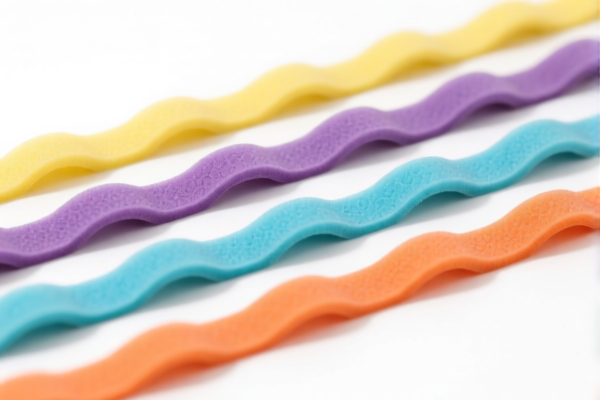

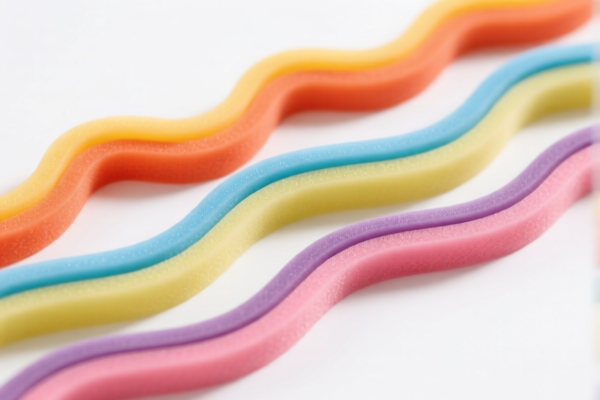
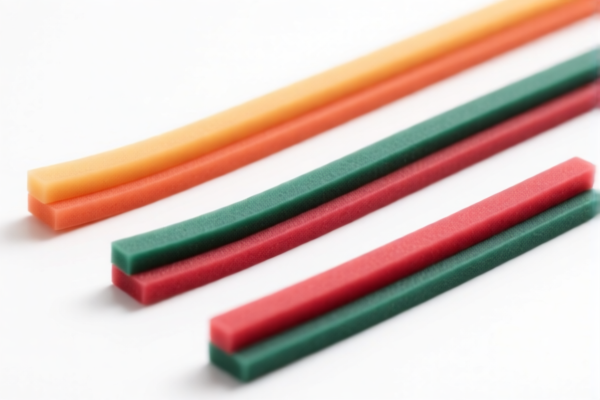
AI Analysis
🧱 Foam Rubber Decorative Strip (橡胶泡沫装饰条)
🌐 HS Code Reference & Clearance Guide | 2026 Latest Tariff Analysis | Strategic Compliance Strategy
📌 I. Product Definition & Classification: Understanding "Foam Rubber"
Foam Rubber Decorative Strips are elastic, porous rubber products used for cushioning, sealing, soundproofing, or aesthetic embellishment in automotive, construction, furniture, and industrial applications. In international trade, the classification depends heavily on three factors:
1. State of Vulcanization: Is it unvulcanized (raw/rubbery) or vulcanized (finished/elastic)?
2. Physical Form: Is it a sheet (board) or a strip/rod?
3. Material Composition: Pure rubber vs. mixed compounds.
⚠️ Critical Distinction Point:
- If the product is unvulcanized (soft, sticky, non-elastic) → It falls under Chapter 40, Heading 4006/4008.
- If the product is vulcanized (hard, elastic, finished) → It falls under Chapter 40, Heading 4016.
- "Strip" vs. "Sheet": "Strip" usually implies a long, narrow profile, while "Sheet/Board" is flat and wide. Misclassifying shape can lead to incorrect HS codes.
📦 II. HS Code Classification Details (2026 Latest Tariff Authority Comparison)
| HS Code | Product Description | Application Scenario | Vulcanization Status | Form Factor |
|---|---|---|---|---|
4008.11.50.00 |
Strips of cellular rubber; not vulcanized; non-hardenable | Raw foam rubber strips, pre-processing stage | ❌ Unvulcanized | Strip |
4016.10.00.00 |
Honeycomb rubber articles; vulcanized | Finished honeycomb rubber products (special shape) | ✅ Vulcanized | Cellular/Honeycomb |
4016.99.60.50 |
Other articles of vulcanized rubber other than hard rubber; cellular | General vulcanized foam strips where use is unspecified | ✅ Vulcanized | Strip |
4008.11.10.00 |
Sheets/Plate/Strip of cellular rubber; not vulcanized; non-hardenable | Raw foam rubber strips with clear cellular characteristics | ❌ Unvulcanized | Strip |
4006.90.10.00 |
Articles of rubber other than hard rubber; unvulcanized; sheet/plate | Foam Rubber Boards/Sheets (Not strips) | ❌ Unvulcanized | Sheet/Board |
🔍 Key Reminder:
-4008Series: Applies to Unvulcanized rubber. These are often intermediate goods.
-4016Series: Applies to Vulcanized (finished) rubber. These are final consumer or industrial products.
-4006vs4008:4006.90.10.00is specifically for Sheets/Boards of unvulcanized rubber. If your product is a Strip, do NOT use this code unless it is specifically categorized as an article rather than a sheet. Note: The provided data links4006.90.10.00to "Foam Rubber Board", so use it ONLY for board-shaped items.
💰 III. 2026 Latest Tariff Rate Breakdown (Including Surcharges & Policy Add-ons)
✅ Applicable Country: United States (US)
✅ Origin: China (CN)
✅ Effective Date: 2025 Nov 10 onwards (including subsequent imports)
🎯 1. 4008.11.50.00 & 4008.11.10.00 & 4006.90.10.00 —— Unvulcanized Foam Rubber (Strips/Boards)
| Item | Content |
|---|---|
| Base Rate (MFN) | 0.0% - 3.3% (ad valorem) |
| Section 301 Tariff | +25.0% (Additional Duty) |
| Section 122 Tariff | +10.0% (Specific Policy Surcharge) |
| Total Effective Rate | 35.0% - 38.3% |
| Tax Calculation | CIF Value × Total Rate |
| De Minimis Eligibility | ❌ NO (High tariff items are typically excluded from de minimis relief) |
| Legal Basis Path | Section 301: 9903.88.01 → Section 122: Specific Authority → USITC: 4008/4006 |
📌 Explanation:
- The base tariff is low (0-3.3%) because raw/unvulcanized rubber has minimal value-add.
- However, the 25% Section 301 tariff dominates the cost.
- The 10% Section 122 tariff is an additional layer often applied to specific raw material imports.
- Total Cost Impact: Importers should budget for ~35-38% duty. This is a HIGH cost center for raw foam rubber imports.
🎯 2. 4016.10.00.00 —— Vulcanized Honeycomb Rubber Articles
| Item | Content |
|---|---|
| Base Rate (MFN) | 0.0% (ad valorem) |
| Section 301 Tariff | +25.0% (Additional Duty) |
| Section 122 Tariff | +10.0% (Specific Policy Surcharge) |
| Total Effective Rate | 35.0% |
| Tax Calculation | CIF Value × 35.0% |
| De Minimis Eligibility | ❌ NO |
| Legal Basis Path | Section 301: 9903.88.01 → Section 122: Specific Authority → USITC: 4016.10.00.00 |
📌 Note:
- Even though the base rate is 0%, the total tax is 35%, identical to the low-end unvulcanized strips.
- This HS code is for special shapes (honeycomb). If your decorative strip is just a simple oval/rectangle, do NOT use this code.
🎯 3. 4016.99.60.50 —— Other Vulcanized Cellular Rubber Articles
| Item | Content |
|---|---|
| Base Rate (MFN) | 2.5% (ad valorem) |
| Section 301 Tariff | +25.0% (Additional Duty) |
| Section 122 Tariff | +10.0% (Specific Policy Surcharge) |
| Total Effective Rate | 37.5% |
| Tax Calculation | CIF Value × 37.5% |
| De Minimis Eligibility | ❌ NO |
| Legal Basis Path | Section 301: 9903.88.01 → Section 122: Specific Authority → USITC: 4016.99.60.50 |
📌 Warning:
- This is the HIGHEST tax bracket among the options at 37.5%.
- This code is a "catch-all" for vulcanized cellular rubber articles that don't fit specific categories (like honeycomb).
- Strategy: Try to qualify for4008(35%) or4016.10(35%) if the product characteristics allow. Avoid4016.99.60.50if a more specific, lower-tax code fits.
🛠️ IV. Clearance Practical Advice (Strategic Pitfall Avoidance)
✅ 1. Documentation Checklist (Mandatory)
| Document | Must Provide | Description |
|---|---|---|
| ✅ Product Specification Sheet | ✔️ | Detailed dimensions, density, hardness (Shore A), material composition (SBR, EPDM, etc.) |
| ✅ Vulcanization Certificate | ✔️ | CRITICAL: Must state if the product is Vulcanized or Unvulcanized. This determines Chapter 4006/4008 vs 4016. |
| ✅ Product Photos (Clear) | ✔️ | Show cross-section (to prove cellular/foam structure) and ends (to prove strip vs. sheet). |
| ✅ Commercial Invoice | ✔️ | Must clearly state "Foam Rubber Decorative Strip" and specify "Vulcanized/Unvulcanized". |
| ✅ Packing List | ✔️ | Weight and quantity. |
| ✅ Material Safety Data Sheet (MSDS) | ✔️ | For rubber compounds, especially if containing specific chemicals. |
✅ 2. Declaration Tips (Key Mnemonics)
🔥 “Shape First, State Second, Code Third!”
| Scenario | Correct Declaration | Common Mistake |
|---|---|---|
| Unvulcanized, Strip Shape | 4008.11.10.00 or 4008.11.50.00 |
Using 4016 (Vulcanized) → Misclassification Penalty |
| Unvulcanized, Board Shape | 4006.90.10.00 |
Using 4008 (Strip) → HS Code Mismatch |
| Vulcanized, Honeycomb Shape | 4016.10.00.00 |
Using 4016.99.60.50 → Higher Tax (37.5%) |
| Vulcanized, Simple Strip | 4016.99.60.50 (or check for better fit) |
Declaring as "Decorative Item" (Chapter 95) → High Risk of Rejection |
✅ 3. Special Situation Handling
| Situation | Handling Advice |
|---|---|
| OEM Custom Strips | Provide the original design drawing. If it mimics a known product (e.g., automotive seal), ensure the HS code reflects the material state not just the end-use. |
| "Decorative" Labeling | Do NOT declare as "Decoration" (Chapter 95). Rubber strips are primarily functional/structural. Stick to Chapter 40. |
| Mixed Materials | If the strip has a fabric backing, check if rubber is the essential character. If rubber >50% by weight/value, it likely stays in Chapter 40. |
| Samples vs. Mass Production | Samples may be treated differently for duty-free entry, but always declare correctly. Do not undervalue. |
🌍 V. Global Market Clearance Comparison (2026 Latest)
| Country/Region | Recommended HS Code | Base Tariff | Additional Duties (China) | Total Effective Tax |
|---|---|---|---|---|
| 🇺🇸 USA | 4008.11.10.00 / 4016.10.00.00 |
0-3.3% | +25% (301) +10% (122) | 35.0% - 38.3% |
| 🇨🇳 China | 4008.11.10.00 / 4016.10.00.00 |
10-20% | None | ~10-20% |
| 🇪🇺 EU | 4008.11 / 4016.10 |
4.5-6.5% | None (GSP varies) | ~4.5-6.5% |
| 🇦🇺 Australia | 4008.11 / 4016.10 |
5% | None | 5.0% |
| 🇯🇵 Japan | 4008.11 / 4016.10 |
3.5-5% | None | ~3.5-5.0% |
📌 Conclusion:
- The USA is the MOST EXPENSIVE market for importing foam rubber from China due to Section 301 and Section 122 tariffs.
- EU, Japan, Australia offer significantly lower costs. Consider supply chain diversification if US margins are thin.
📌 VI. Common Errors & Pitfalls (Lessons Learned)
❌ Mistake 1: Declaring "Unvulcanized" rubber as "Vulcanized"
👉 Consequence: Incorrect HS code (4016 vs 4008). Customs may audit for value mismatch or origin fraud.
👉 Tax Difference: Minimal in this dataset, but legal risk is high.
❌ Mistake 2: Using 4006.90.10.00 for Strips
👉 Consequence: 4006.90.10.00 is for Sheets/Boards. Using it for strips is a shape mismatch. Customs will reject or reclassify, causing delays.
👉 Fix: Use 4008.11.10.00 or 4008.11.50.00 for unvulcanized strips.
❌ Mistake 3: Ignoring the "Section 122" Tariff
👉 Consequence: Many importers forget the 10% Surtax.
👉 Impact: Total tax is 35-38%, not just 25%. Profit margins can be wiped out.
❌ Mistake 4: Declaring as "Plastic" (Chapter 39)
👉 Consequence: Rubber is rubber. If it's cellular rubber, it's Chapter 40. Misdeclaration leads to penalties.
✅ Correct Declaration Example:
"Foam Rubber Strip, Unvulcanized, EPDM Material, Cross-section 10mm x 5mm, For Automotive Sealing, Model XYZ"
HS Code:4008.11.10.00
🎯 VII. Conclusion: Professional Declaration, Cost Efficiency, Risk Control
🎯 Remember the Mnemonic:
🔹 "Unvulcanized: 4008. Vulcanized: 4016. Strip vs Sheet matters!"
🔹 "US Tariff is 35%+. Don't let the 10% Section 122 surprise you!"
🔹 "Honeycomb gets 35%, Other Vulcanized gets 37.5%. Choose wisely!"
📌 Pro Tip:
If your foam rubber strip is simple, unvulcanized, and generic, try to qualify for 4008.11.10.00 (35%) rather than 4016.99.60.50 (37.5%). The 2.5% savings is significant on high-volume shipments.
Always request a "Vulcanization Statement" from your supplier. This is the single most important document for classification.
📣 Immediate Action:
📞 Contact your customs broker + Provide Cross-Section Photos + Request Pre-Ruling (Advance Ruling) for complex shapes.
🚀 Ensure your foam rubber strips pass US customs smoothly, avoid audits, and protect your profit margins!
✨ Professional Clearance Starts with Accurate Classification!
💼 Your every cent of tax is worth calculating precisely!
Customer Reviews
About HS Code Classification
The Harmonized System (HS) is an internationally standardized nomenclature developed by the World Customs Organization (WCO) to classify traded products. Over 200 countries use the HS system as the basis for customs tariffs, trade statistics, and import/export regulations.
Each HS code follows a hierarchical structure:
- Chapter (2 digits) — Broad category of goods (e.g., Chapter 84: Machinery and Mechanical Appliances)
- Heading (4 digits) — More specific grouping within the chapter
- Subheading (6 digits) — Internationally standardized breakdown, used by all WCO member countries
- National subdivisions (8-10 digits) — Country-specific extensions for further classification, such as US HTSUS 10-digit codes
Correct HS code classification is essential for smooth customs clearance, accurate duty payment, and compliance with trade regulations. Misclassification can lead to customs delays, overpayment of duties, or penalties.
When importing from CN to US, the applicable tariff rates may include:
- Most-Favored-Nation (MFN) rate — The standard duty rate applied to WTO members
- General rate — Applied to countries without trade agreements
- Trade remedy duties — Additional tariffs such as Section 301 (anti-dumping), Section 232 (national security), or countervailing duties
The information provided on this page is for reference purposes only. For official classification, please consult with your local customs authority or a licensed customs broker.