Foam Rubber Strip
CN → US| HS Code | Tariff Rate | Origin | Destination | Doc |
|---|---|---|---|---|
| 4016100000 | 35.0% | CN | US | Official Doc |
| 4016996050 | 37.5% | CN | US | Official Doc |
| 4008111000 | 35.0% | CN | US | Official Doc |
| 4008115000 | 38.3% | CN | US | Official Doc |
| 4006901000 | 35.0% | CN | US | Official Doc |
Product Images
AI Analysis
🧽 Foam Rubber Strip (Rubber Product Guide)
🌐 HS Code Reference & Clearance Guide | 2026 Customs Classification Analysis | Professional Compliance Strategy
📌 I. Product Definition & Classification: What is "Foam Rubber Strip"?
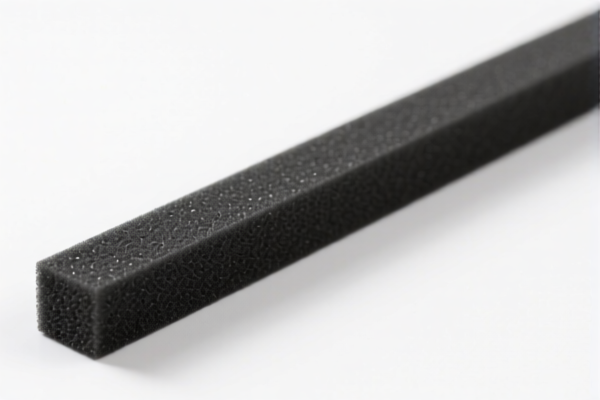
A Foam Rubber Strip is a flexible, porous rubber product shaped into a linear form (strip). It is widely used for sealing, cushioning, gasketing, and shock absorption in construction, automotive, and packaging industries.
In international trade, the classification depends heavily on two factors: 1. State of Vulcanization: Is it Vulcanized (hardened) or Non-Vulcanized (raw)? 2. Structure: Is it Cellular (foam/pores visible) or Solid?
⚠️ Key Distinction:
- Cellular Rubber (Foam): Contains open or closed cells. Usually classified under Chapter 40, Heading 40.08 or 40.16.
- Solid Rubber Strip: Dense, non-porous. Usually classified under Chapter 40, Heading 40.08 (if vulcanized sheets/strips) or 40.06 (if non-vulcanized).
- Honeycomb Structure: A specific cellular structure often falls under 40.16.
📦 II. HS Code Classification Details (Based on Provided Data)
Based on the provided data <DATA>, here are the potential HS Codes, their matching logic, and tax implications.
| HS Code | Product Description | Matching Logic (Summary) | Total Tax Rate* |
|---|---|---|---|
4016.10.00.00 |
Honeycomb Rubber Products | Matches: Material is rubber; Form fits the category of vulcanized rubber products specifically defined as honeycomb rubber. | 35.0% |
4016.99.60.50 |
Other Rubber Articles (Strip Form) | Matches: Material is rubber; Form is strip; Classified as an article. Falls under residual/general provisions ("Other") because it doesn't fit specific sub-headings. | 37.5% |
4008.11.10.00 |
Vulcanized Foam Rubber, Strip Form | Match Success: Form matches strip; Material matches rubber; Features foam rubber characteristics (cellular structure). | 35.0% |
4008.11.50.00 |
Vulcanized Foam Rubber Sheets/Strips | Matches: Foam rubber material corresponds to cellular rubber; Strip corresponds to sheet/strip form. Fits classification definition for vulcanized foam. | 38.3% |
4006.90.10.00 |
Other Non-Vulcanized Rubber Articles | Matches: Material is rubber; Form is sheet-like/strip; Classified as non-vulcanized rubber in other shapes/articles. | 35.0% |
* Tax rates calculated based on the provided
total_taxfield, which includes Base Duty, Additional Tariffs (Section 301), and IEEPA Tariffs.
💰 III. Detailed Tariff Breakdown (2026 Current Rates)
✅ Applicable Country: United States (US)
✅ Origin: China (CN) (Assumed based on tariff structure in data)
✅ Effective Date: 2025/2026 Current Rates
🎯 1. 4008.11.10.00 — Vulcanized Foam Rubber, Strip Form
This is often the most accurate code for standard foam rubber seals/strips.
| Item | Content |
|---|---|
| Base Duty | 0.0% |
| Section 301 Additional Duty | +25.0% (USITC Footnote 9903.88.01) |
| IEEPA Additional Duty | +10.0% (Against China/HK products, effective Nov 10, 2025) |
| Total Rate | 35.0% |
| De Minimis Eligibility | ❌ No (High risk of seizure at low values) |
| Legal Path | IEEPA:9903.01.25 → USITC:4008.11.10.00 → FOOTNOTE:9903.88.01 |
📌 Explanation:
- 0% Base: Standard MFN rate for vulcanized foam. - +25%: Section 301 tariffs on Chinese rubber products. - +10%: IEEPA tariffs on specific Chinese goods. - Total: 35%. This is a high-cost classification. Ensure the product is genuinely foam (cellular) and vulcanized.
🎯 2. 4016.10.00.00 — Honeycomb Rubber Products
Use this only if the foam has a distinct honeycomb cellular structure (hexagonal cells).
| Item | Content |
|---|---|
| Base Duty | 0.0% |
| Section 301 Additional Duty | +25.0% |
| IEEPA Additional Duty | +10.0% |
| Total Rate | 35.0% |
| De Minimis Eligibility | ❌ No |
| Legal Path | IEEPA:9903.01.25 → USITC:4016.10.00.00 → FOOTNOTE:9903.88.01 |
📌 Explanation:
- Specific to honeycomb structures. If your foam is standard open/closed cell, do not use this code, as it may trigger a misdeclaration audit.
🎯 3. 4008.11.50.00 — Vulcanized Foam Rubber (Other Sheets/Strips)
Used for foam strips that may not meet the specific "10.10" criteria or are thicker/different density.
| Item | Content |
|---|---|
| Base Duty | 3.3% |
| Section 301 Additional Duty | +25.0% |
| IEEPA Additional Duty | +10.0% |
| Total Rate | 38.3% |
| De Minimis Eligibility | ❌ No |
📌 Note:
- Higher total tax than4008.11.10.00due to the 3.3% base duty. - Use only if4008.11.10.00is deemed incorrect by customs precedent.
🎯 4. 4016.99.60.50 — Other Rubber Articles (Strip)
A "catch-all" for rubber strips that do not fit specific foam or honeycomb definitions.
| Item | Content |
|---|---|
| Base Duty | 2.5% |
| Section 301 Additional Duty | +25.0% |
| IEEPA Additional Duty | +10.0% |
| Total Rate | 37.5% |
| De Minimis Eligibility | ❌ No |
📌 Risk:
- If the product is clearly foam, customs may reject this code as misclassification. - Total tax is 37.5%, which is higher than the primary foam code (35%).
🎯 5. 4006.90.10.00 — Non-Vulcanized Rubber Articles
Use only if the rubber is NOT vulcanized (i.e., raw, unhardened rubber).
| Item | Content |
|---|---|
| Base Duty | 0.0% |
| Section 301 Additional Duty | +25.0% |
| IEEPA Additional Duty | +10.0% |
| Total Rate | 35.0% |
| De Minimis Eligibility | ❌ No |
⚠️ Critical Warning:
- Most "strips" sold for sealing/cushioning are vulcanized. - If you ship non-vulcanized foam, use this code. If it is vulcanized, this is a misdeclaration.
🛠️ IV. Clearance Practical Advice (Avoid Pitfalls)
✅ 1. Documentation Checklist
| Document | Required? | Notes |
|---|---|---|
| Product Specification Sheet | ✅ Yes | Must state: Foam vs. Solid, Vulcanized vs. Non-Vulcanized, Density. |
| Photos | ✅ Yes | Close-up of cross-section to prove cellular/foam structure. |
| Commercial Invoice | ✅ Yes | Clearly describe as "Vulcanized Foam Rubber Strip". Avoid vague terms like "Rubber Piece." |
| Material Test Report | ✅ Recommended | Prove vulcanization status (Durometer hardness test). |
| Packing List | ✅ Yes | Ensure weight/volume matches invoice. |
✅ 2. Classification Strategy (Key Tips)
🔥 "Foam is Key, Vulcanization is King!"
| Scenario | Recommended HS Code | Reason |
|---|---|---|
| Standard Foam Seal Strip (Open/Closed Cell) | 4008.11.10.00 |
Best fit for vulcanized foam strips. Lowest tax (35%). |
| Honeycomb Structure Foam | 4016.10.00.00 |
Specific to honeycomb cells. Tax: 35%. |
| Solid Rubber Strip (No Pores) | 4008.11.50.00 or 4016.99.60.50 |
Not foam. Higher tax risk if mislabeled as foam. |
| Raw, Unhardened Rubber Strip | 4006.90.10.00 |
Only if non-vulcanized. Rare for finished goods. |
✅ 3. Special Cases & Warnings
| Case | Advice |
|---|---|
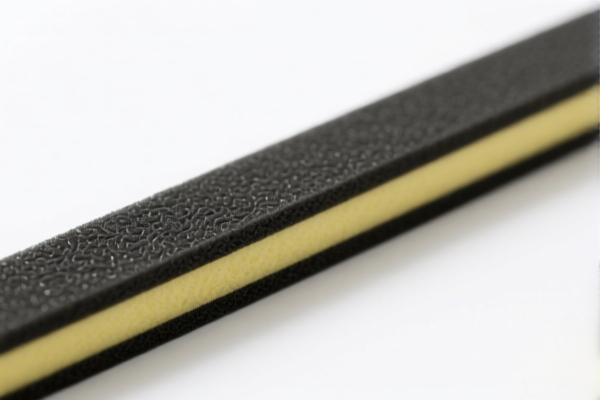
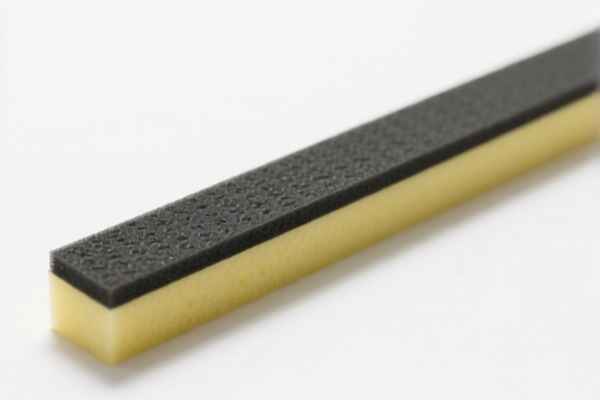
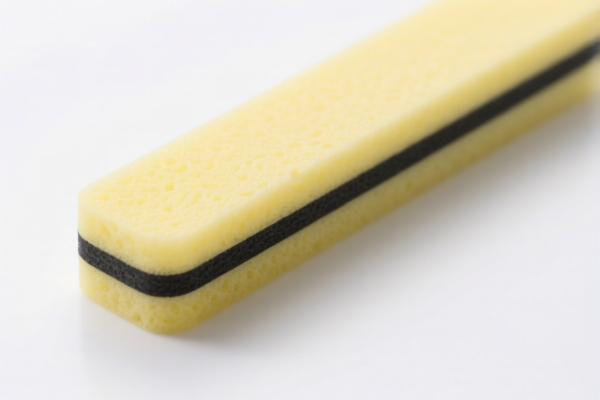
| Hybrid Materials (Foam + Fabric/Adhesive) | Still generally 4008.11.10.00 if rubber is the essential character. Document layers. |
| Custom Shapes (Cut to size) | If cut from a sheet, still 4008.11.10.00. Do not use "Other" codes unless it's a unique complex assembly. |
| De Minimis (Section 321) | ❌ NOT ELIGIBLE. All listed codes have Section 301 + IEEPA tariffs, exceeding the $800 exemption threshold for most rubber products from China. |
| Misclassification Risk | Do not use 4016.99.60.50 for foam. Customs can detect foam via X-ray or visual inspection. Penalties include back taxes + fines. |
🌍 V. Global Market Comparison (2026)
| Country/Region | Recommended HS Code | Total Tax (China Origin) | Notes |
|---|---|---|---|
| 🇺🇸 USA | 4008.11.10.00 |
35.0% | Includes 301 + IEEPA tariffs. |
| 🇨🇳 China | 4008.11.10.00 |
~5-10% | Import duty into China is lower; check specific CE. |
| 🇪🇺 EU | 4008.11.00 |
0% - 3% | No Section 301/IEEPA equivalent. Standard MFN rates apply. |
| 🇬🇧 UK | 4008.11.00 |
0% - 3% | Post-Brexit tariff schedule similar to EU. |
| 🇨🇦 Canada | 4008.11.10.00 |
0% - 3.5% | CUSMA may apply if originating in Canada/US/Mexico. |
📌 Conclusion:
- USA is the most expensive market due to trade wars. - EU/UK have minimal tariffs for foam rubber. - Strategy: If shipping to the US, ensure accurate foam classification to avoid higher "other" categories. Consider supply chain diversification (e.g., manufacturing in Vietnam/Mexico) to avoid 35% tariffs.
📌 VI. Common Errors & Pitfalls
❌ Error 1: Declaring "Foam Strip" as "Plastic Strip"
👉 Result: Misclassification. Rubber and Plastic are in different chapters. Penalty + Back Tax.
❌ Error 2: Using 4016.99.60.50 for Foam Products
👉 Result: Customs may argue it should be 4008.11.10.00. If they agree, you still pay 35%, but you risk audit flags for using residual codes incorrectly.
❌ Error 3: Ignoring IEEPA Tariffs
👉 Result: Under-declaring duties. IEEPA 10% is new and mandatory for many Chinese goods.
❌ Error 4: Claiming De Minimis for High-Value Shipments
👉 Result: Seizure. Rubber strips are rarely eligible for $800 exemption if they fall under Section 301/IEEPA lists.
🎯 VII. Conclusion: Smart Classification, Lower Costs!
🎯 Remember:
🔹 "Foam = 4008.11.10.00 (35%)"
🔹 "Honeycomb = 4016.10.00.00 (35%)"
🔹 "Solid/Other = 4016.99.60.50 (37.5%)"
🔹 "Non-Vulcanized = 4006.90.10.00 (35%)"🔹 "Always verify vulcanization status!"
🔹 "No de minimis for Chinese rubber strips to the US!"
📌 Pro Tip:
If your foam rubber strips are high-density or have special additives, consult a customs broker for a Pre-Ruling (PRT). This ensures the 35% rate is locked in, avoiding unexpected 38.3% or higher rates.
📣 Act Now:
📞 Contact a Customs Broker
📸 Provide Cross-Section Photos
📄 Prepare Detailed Specs
🚀 Ensure Smooth Clearance & Profit Protection!
✨ Professional Clearance Starts with Accurate Classification!
💼 Every Percentage Point Matters in Global Trade!
Customer Reviews
About HS Code Classification
The Harmonized System (HS) is an internationally standardized nomenclature developed by the World Customs Organization (WCO) to classify traded products. Over 200 countries use the HS system as the basis for customs tariffs, trade statistics, and import/export regulations.
Each HS code follows a hierarchical structure:
- Chapter (2 digits) — Broad category of goods (e.g., Chapter 84: Machinery and Mechanical Appliances)
- Heading (4 digits) — More specific grouping within the chapter
- Subheading (6 digits) — Internationally standardized breakdown, used by all WCO member countries
- National subdivisions (8-10 digits) — Country-specific extensions for further classification, such as US HTSUS 10-digit codes
Correct HS code classification is essential for smooth customs clearance, accurate duty payment, and compliance with trade regulations. Misclassification can lead to customs delays, overpayment of duties, or penalties.
When importing from CN to US, the applicable tariff rates may include:
- Most-Favored-Nation (MFN) rate — The standard duty rate applied to WTO members
- General rate — Applied to countries without trade agreements
- Trade remedy duties — Additional tariffs such as Section 301 (anti-dumping), Section 232 (national security), or countervailing duties
The information provided on this page is for reference purposes only. For official classification, please consult with your local customs authority or a licensed customs broker.