Foam Rubber Strips
CN → US| HS Code | Tariff Rate | Origin | Destination | Doc |
|---|---|---|---|---|
| 4016100000 | 35.0% | CN | US | Official Doc |
| 4016996050 | 37.5% | CN | US | Official Doc |
| 4008111000 | 35.0% | CN | US | Official Doc |
| 4008115000 | 38.3% | CN | US | Official Doc |
| 4006901000 | 35.0% | CN | US | Official Doc |
Product Images
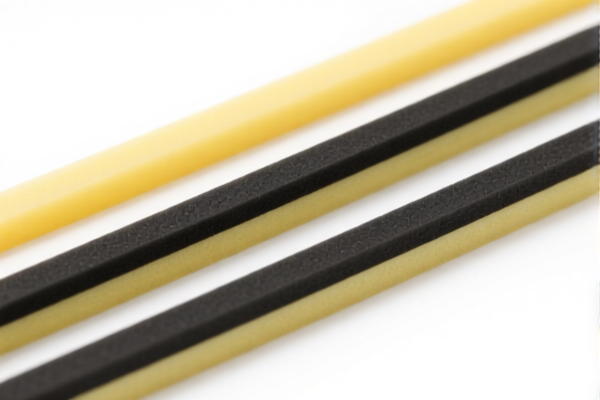
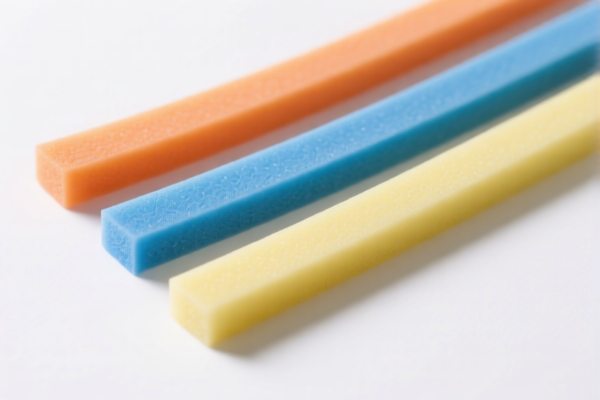
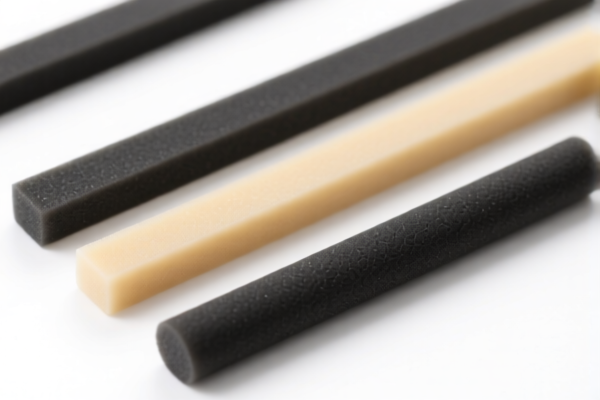
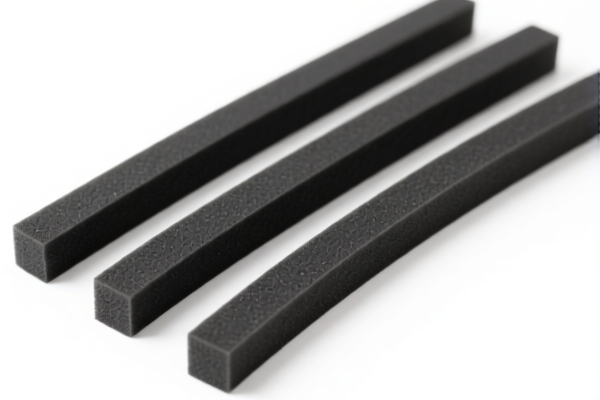
AI Analysis
🧱 Foam Rubber Strips (橡胶泡沫条)
🌐 HS Code Reference & Customs Clearance Guide | 2026 Latest Tariff Analysis | Professional Customs Strategy
📌 Part 1: Product Definition & Classification: Do You Really Understand "Foam Rubber Strips"?
Foam Rubber Strips are essential sealing, cushioning, and vibration-damping components used in automotive, construction, HVAC, and packaging industries. In international trade, they are primarily classified under Chapter 40 (Rubber and Articles Thereof). The specific HS Code depends on whether the product is considered "cellular rubber" (foam) or general rubber items, and its physical form (strip vs. plate).
⚠️ Key Distinction Point:
- If the product is explicitly defined as "Cellular Rubber" (foam) and shaped as strips/bars → It may fall under 4008.11 or 4008.19 depending on vulcanization and specific sub-category.
- If the product is considered a general rubber article not specifically listed elsewhere (e.g., specific seal strips), it may fall under the residual category "Other" such as 4016.99 or 4006.90.
- Critical Note: Misclassification between "Cellular Rubber" (4008) and "Other Rubber Articles" (4016/4006) can lead to significant duty differences due to different base rates.
📦 Part 2: HS Code Classification Details (2026 Latest Tariff Authority Comparison)
| HS Code | Product Description | Application Scenario | Base Duty | Total Duty (US/CN) |
|---|---|---|---|---|
4016.10.00.00 |
Cellular rubber products (other than hard rubber) | Standard foam strips, gaskets, seals; fits the category of "cellular rubber articles" | 0.0% | 35.0% |
4016.99.60.50 |
Other rubber articles | General purpose foam strips; falls under the residual "other" category for rubber articles | 2.5% | 37.5% |
4008.11.10.00 |
Vulcanized rubber, cellular, in strips, rods, tubes | Foam rubber specifically classified as strips/rods; highlights "cellular" nature | 0.0% | 35.0% |
4008.11.50.00 |
Vulcanized rubber, cellular, plates, sheets, strips | Foam rubber in strip form; specific subheading for cellular rubber forms | 3.3% | 38.3% |
4006.90.10.00 |
Other rubber articles, plates, sheets, strip | Non-cellular or general rubber strips; if deemed not strictly "cellular" or under different chapter logic | 0.0% | 35.0% |
🔍 Key Reminder:
- 4008 Series: Specifically for Cellular Rubber (Foam). This is the most accurate for "Foam" rubber.
- 4016 Series: For Articles of Rubber (including cellular).4016.10is specifically for cellular rubber products.
- 4006/4016 Residual: If the foam structure is not the primary defining feature or if specific "cellular" sub-headings are not met, customs may push to "Other" categories, often with higher base duties.
💰 Part 3: 2026 Latest Tariff Rate Breakdown (Including Surcharges & Policy Add-ons)
✅ Applicable Country: United States (US)
✅ Origin: China (CN)
✅ Effective Date: November 10, 2025 (and subsequent imports)
🎯 1. 4016.10.00.00 & 4008.11.10.00 —— Cellular Rubber Products / Strips
| Item | Content |
|---|---|
| Base Tariff | 0% (ad valorem) |
| USITC Additional Tariff | +25% (Under USITC Footnote for Chinese origin rubber articles) |
| IEEPA Additional Tariff | +10% (针对中国/香港产品,自2025年11月10日起) |
| Total Tariff Rate | 35.0% |
| Tax Calculation | CIF Value × 35% |
| De Minimis Eligibility | ❌ Not Eligible (deny_de_minimis) |
| Legal Basis Path | IEEPA:9903.01.25 → USITC:4016.10.00.00 → FOOTNOTE:Section 301 |
📌 Explanation:
- The 0% base rate makes these codes attractive for base duty, but the 35% total is still significant.
- The 25% USITC tariff applies to many rubber articles from China.
- The 10% IEEPA tariff is a new/specific add-on for Chinese goods in this sector.
- Total Cost Impact: 35% must be factored into landed cost calculations immediately.
🎯 2. 4016.99.60.50 —— Other Rubber Articles (Residual)
| Item | Content |
|---|---|
| Base Tariff | 2.5% |
| USITC Additional Tariff | +25% |
| IEEPA Additional Tariff | +10% |
| Total Tariff Rate | 37.5% |
| Tax Calculation | CIF Value × 37.5% |
| De Minimis Eligibility | ❌ Not Eligible |
| Legal Basis Path | IEEPA:9903.01.24 → USITC:4016.99.60.50 → FOOTNOTE:Section 301 |
📌 Note:
- This code has a higher base rate (2.5%) compared to the cellular-specific codes (0%).
- It is often used when the product doesn't fit the strict "cellular" definition of 4008/4016.10.
- Higher Total Cost: 37.5% vs 35% → Choose 4016.10 or 4008.11 if possible to save 2.5%.
🎯 3. 4008.11.50.00 —— Vulcanized Cellular Rubber (Strips/Plates)
| Item | Content |
|---|---|
| Base Tariff | 3.3% |
| USITC Additional Tariff | +25% |
| IEEPA Additional Tariff | +10% |
| Total Tariff Rate | 38.3% |
| Tax Calculation | CIF Value × 38.3% |
| De Minimis Eligibility | ❌ Not Eligible |
| Legal Basis Path | IEEPA:9903.01.25 → USITC:4008.11.50.00 → FOOTNOTE:Section 301 |
📌 Warning:
- This is the most expensive option at 38.3%.
- It has the highest base duty (3.3%).
- Avoid this classification unless no other option fits, as it adds ~3.3% to the base cost compared to the 0% base options.
🎯 4. 4006.90.10.00 —— Other Rubber Articles (Plates/Strips)
| Item | Content |
|---|---|
| Base Tariff | 0.0% |
| USITC Additional Tariff | +25% |
| IEEPA Additional Tariff | +10% |
| Total Tariff Rate | 35.0% |
| Tax Calculation | CIF Value × 35% |
| De Minimis Eligibility | ❌ Not Eligible |
| Legal Basis Path | IEEPA:9903.01.24 → USITC:4006.90.10.00 → FOOTNOTE:Section 301 |
📌 Note:
- Similar total rate to4016.10and4008.11(35%).
- May be used if the product is not clearly "cellular" or if specific cellular headings are rejected.
🛠️ Part 4: Customs Clearance Practical Advice (Real-World Pitfall Avoidance Guide)
✅ 1. Required Documentation Checklist (All Must Be Provided)
| Document | Required | Description |
|---|---|---|
| ✅ Product Specification Sheet | ✔️ | Must detail material composition (e.g., EPDM, NBR, Silicone), density, hardness (Shore A), and whether it is vulcanized or unvulcanized. |
| ✅ Product Photos | ✔️ | Clear images showing the foam/cellular structure (cross-section) to prove it falls under "Cellular Rubber" (Chapter 40, Heading 4008/4016) and not solid rubber. |
| ✅ Commercial Invoice | ✔️ | Must explicitly state "Foam Rubber Strip" and material type. Avoid vague terms like "Rubber Gasket" without specifying cellular nature. |
| ✅ Packing List | ✔️ | Include dimensions, weight, and package count. |
| ✅ Certificate of Origin (CO) | ✔️ | Essential for confirming Chinese origin and applying correct 301/IEEPA rates. |
| ✅ Third-Party Test Report | ✔️ | Optional but recommended: Proof of rubber compound type (e.g., flame retardancy, oil resistance) if claimed. |
✅ 2. Declaration Tips (Key Mnemonics)
🔥 "Foam Structure is Key, Cellular Definition Saves Money!"
| Scenario | Correct Declaration | Incorrect Practice |
|---|---|---|
| Foam Rubber Strip (Cellular) | 4016.10.00.00 or 4008.11.10.00 |
Misclassified as solid rubber → 37.5%-38.3% |
| Solid Rubber Strip | 4008.11.50.00 (if cellular) or 4016.99 |
Claiming "Foam" when it's solid → Fraud Risk |
| Unvulcanized Foam | 4006.90.10.00 (if not cellular) |
Misclassified as vulcanized |
| OEM Custom Foam Strip | Provide client spec + design drawings | Vague "Rubber Part" → Classification Dispute |
📌 Critical Point:
- "Cellular" means it has a porous/foam structure. Provide a cross-section photo to prove this.
- If customs determines it is not cellular, it may be reclassified to a higher-duty category like4016.99or4008.11.50.
- Vulcanization Status: Most foam rubber strips are vulcanized. Ensure your declaration matches the actual state.
✅ 3. Special Case Handling
| Scenario | Handling Advice |
|---|---|
| High-Density Foam | Still cellular. Use 4016.10 if it meets cellular criteria. |
| Open-Cell vs Closed-Cell | Both are cellular. Ensure documentation reflects this for potential use-case requirements (e.g., insulation). |
| Coated Foam Rubber | If coated with plastic or metal, classification may change to Chapter 39 or 73. Consult specialist. |
| Mixed Materials (Rubber + Fabric) | If rubber is not the essential character, it may fall under Chapter 59 or 63. Avoid unless necessary. |
🌍 Part 5: Global Market Clearance Comparison (2026 Latest)
| Country/Region | Recommended HS Code | Tariff (US/CN Origin) | Certification Requirements | Notes |
|---|---|---|---|---|
| 🇺🇸 USA | 4016.10.00.00 |
35.0% (0% Base + 25% + 10%) | No specific FDA/CPSC usually, unless food/medical contact | High Duty – Budget carefully. |
| 🇨🇳 China | 4016.10.00.00 |
5% (Standard MFN) | CCC (if applicable) | No Section 301 tariffs domestically. |
| 🇪🇺 EU | 4016.10 |
0% (if under 0% MFN) | REACH, RoHS (if electronic) | No major surcharges for rubber. |
| 🇬🇧 UK | 4016.10 |
0% | UKCA, REUK | Post-Brexit rules apply. |
| 🇨🇦 Canada | 4016.10 |
0% (under CUSMA if Canadian) | None | Preferential tariff if origin qualifies. |
| 🇲🇽 Mexico | 4016.10 |
0% (under USMCA if Mexican) | NOM | No surcharges. |
📌 Conclusion:
- USA is the only major market with heavy surcharges (35%) for Chinese-made foam rubber strips.
- EU, UK, Canada, Mexico have significantly lower or zero tariffs.
- Strategy: Consider near-shoring to Mexico or third-country routing if cost-sensitive and supply chain allows.
📌 Part 6: Common Mistakes & Pitfall Avoidance (Lessons Learned)
❌ Mistake 1: Declaring "Foam Rubber" but providing no proof of cellular structure
👉 Consequence: Customs may classify as solid rubber → Higher Duty (37.5%-38.3%) + Inspection Delay.
❌ Mistake 2: Using generic term "Rubber Strip" without specifying "Foam"
👉 Consequence: Risk of being classified under 4016.99 (2.5% base) → Higher Base Duty.
❌ Mistake 3: Ignoring IEEPA 10% Surcharges
👉 Consequence: Underestimating landed cost by 10% → Profit Erosion.
❌ Mistake 4: Misclassifying Vulcanized vs. Unvulcanized
👉 Consequence: Legal compliance issues if unvulcanized rubber is declared as vulcanized (or vice versa).
✅ Correct Approach:
"Vulcanized EPDM Foam Rubber Strip, Closed-Cell, 5mm Thickness, Shore A 60, Model XYZ, for Automotive Sealing"
🎯 Part 7: Conclusion: Precise Declaration, Cost Optimization
🎯 Remember These Key Points:
🔹 "Foam = Cellular = Chapter 40, Heading 4008/4016"
🔹 "USA Tariff = 35% (0% Base + 25% + 10%)"
🔹 "Proof of Foam Structure is Mandatory"
🔹 "Avoid4008.11.50(38.3%) if4016.10(35%) is applicable"
📌 Pro Tip:
If your foam rubber strips are originating from Vietnam, Malaysia, or Thailand, you may qualify for IEEPA exemption or lower duties under Section 301 exclusions.
Recommendation: Apply for a Binding Ruling (Advance Ruling) from US CBP to confirm the correct HS Code (4016.10vs4008.11) and tariff liability.
📣 Immediate Action:
📞 Consult a Licensed Customs Broker
🖼️ Provide Cross-Section Photos
📄 Apply for Pre-Ruling
🚀 Optimize Landed Cost with Accurate Classification
✨ Professional Clearance Starts with Accurate Classification!
💼 Every Percent of Duty Matters – Don't Let Misclassification Eat Your Profit!
Customer Reviews
About HS Code Classification
The Harmonized System (HS) is an internationally standardized nomenclature developed by the World Customs Organization (WCO) to classify traded products. Over 200 countries use the HS system as the basis for customs tariffs, trade statistics, and import/export regulations.
Each HS code follows a hierarchical structure:
- Chapter (2 digits) — Broad category of goods (e.g., Chapter 84: Machinery and Mechanical Appliances)
- Heading (4 digits) — More specific grouping within the chapter
- Subheading (6 digits) — Internationally standardized breakdown, used by all WCO member countries
- National subdivisions (8-10 digits) — Country-specific extensions for further classification, such as US HTSUS 10-digit codes
Correct HS code classification is essential for smooth customs clearance, accurate duty payment, and compliance with trade regulations. Misclassification can lead to customs delays, overpayment of duties, or penalties.
When importing from CN to US, the applicable tariff rates may include:
- Most-Favored-Nation (MFN) rate — The standard duty rate applied to WTO members
- General rate — Applied to countries without trade agreements
- Trade remedy duties — Additional tariffs such as Section 301 (anti-dumping), Section 232 (national security), or countervailing duties
The information provided on this page is for reference purposes only. For official classification, please consult with your local customs authority or a licensed customs broker.