Focusing Plate
CN → US| HS Code | Tariff Rate | Origin | Destination | Doc |
|---|---|---|---|---|
| 9001909000 | 35.0% | CN | US | Official Doc |
| 9001908000 | 35.0% | CN | US | Official Doc |
Product Images
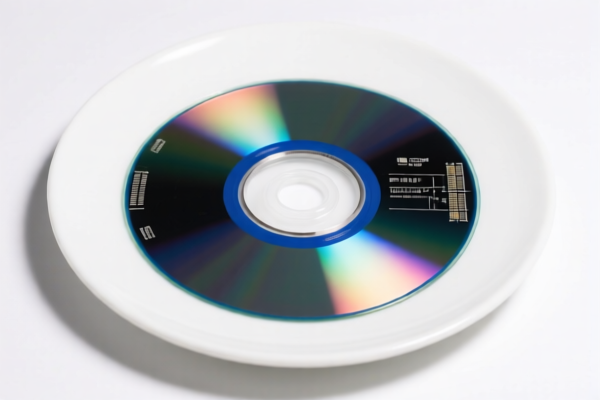
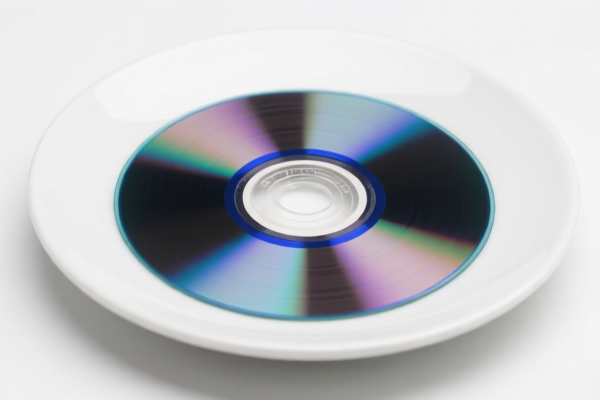
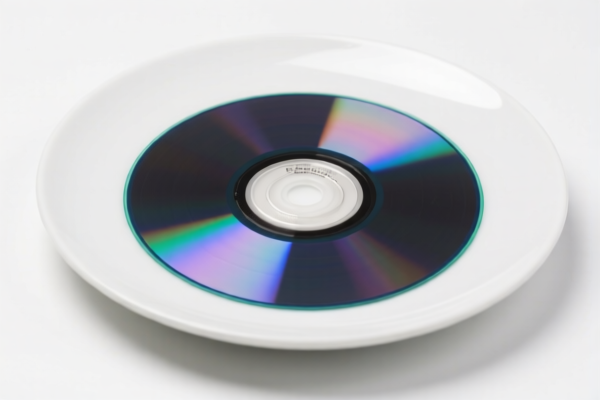
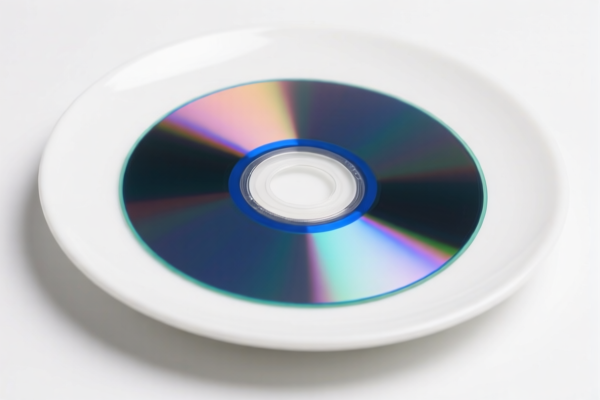
AI Analysis
🔍 Focusing Plate (Optical Element)
🌐 HS Code Reference & Customs Clearance Guide | 2026 Latest Tariff Analysis | Professional Clearance Strategy
📌 I. Product Definition: What is a "Focusing Plate"?
In the context of international trade and optical instruments, a "Focusing Plate" (often referred to as a focusing screen, ground glass, or precision optical plate) is a critical unmounted optical component. It is typically used in cameras, microscopes, laser systems, or surveying instruments to assist in visual focusing or as a substrate for imaging.
Key characteristics include: * Material: Can be made of glass, acrylic, polycarbonate, or specialized optical plastics. * State: Unmounted (not yet fixed into a housing or device). * Processing: Optically worked (e.g., ground, polished, coated) to manipulate light. * Function: To refine focus, scatter light for visibility, or serve as a precise reference plane.
⚠️ Critical Classification Distinction:
- If the plate is optically worked (ground/polished) and used for focusing → It falls under Chapter 90 (Optical Instruments).
- If it is merely a plain glass sheet with no optical working → It may fall under Chapter 70 (Glass).
- Note: The provided data focuses on optical elements, assuming the plate has optical function.
📦 II. HS Code Classification Details (Based on Provided Data)
Based on the input data, "Focusing Plate" is classified under Heading 9001 (Optical fibers, polarizing sheets, lenses, prisms, mirrors, and other optical elements). The specific subheadings depend on the material and specific design intent.
| HS Code | Product Description | Applicable Scenario | Key Criteria |
|---|---|---|---|
9001.90.90.00 |
Other Optical Elements (Unmounted) | Standard focusing screens, ground glass plates, precision optical plates for cameras/microscopes | Unmounted, optical work, no specific engraving/pho-tographic halftone design |
9001.90.80.00 |
Halftone Screens | Focusing plates specifically designed for engraving or photographic printing processes (e.g., printing plates) | Designed for halftone reproduction, used in printing/engraving |
🔍 重点提醒 (Key Reminder):
-9001.90.90.00is the default for most standard optical focusing plates used in imaging or alignment.
-9001.90.80.00applies ONLY if the plate is explicitly a "halftone screen" for engraving/photographic printing. Misclassification can lead to severe tariff differences.
💰 III. 2026 Latest Tariff Rate Details (US Imports from China)
✅ Applicable Country: United States (US)
✅ Origin: China (CN)
✅ Effective Date: 2025/2026 (Current Trade Policy)
🎯 1. 9001.90.90.00 – Other Optical Elements (Standard Focusing Plate)
| Item | Content |
|---|---|
| Base Tariff | 0.0% (Ad valorem) |
| Section 301 / Additional Tariff | +25.0% |
| Total Tax Rate | 25.0% |
| Tax Calculation | CIF Value × 25% |
| De Minimis Exemption | ❌ Not Eligible (High tariff items usually excluded or subject to strict scrutiny) |
| Legal Basis | HS: 9001.90.90.00 → Section 301 Footnote → 25% Additional Duty |
📌 Explanation:
- Base Rate 0%: Optical elements generally enjoy low base tariffs under HTSUS.
- Additional 25%: This is the standard Section 301 tariff for many Chinese-origin optical components and precision instruments.
- Total Burden: 25% is a significant cost. Importers must factor this into landed cost.
🎯 2. 9001.90.80.00 – Halftone Screens (Engraving/Photographic Use)
| Item | Content |
|---|---|
| Base Tariff | 0.0% |
| Additional Tariff | 0.0% |
| Total Tax Rate | 0.0% |
| Tax Calculation | CIF Value × 0% |
| De Minimis Exemption | ✅ Eligible (If value < $800, subject to current CBP rules) |
| Legal Basis | HS: 9001.90.80.00 → Exempt from Section 301 list |
📌 Note:
- Zero Tariff Advantage: If the focusing plate is explicitly a halftone screen for printing/engraving, it qualifies for 0% duty.
- Strict Definition: This exemption is NARROW. It does NOT apply to standard camera focusing screens or general optical plates. It applies only to screens designed for halftone reproduction in engraving or photography printing.
- Risk: Misclassifying a standard optical plate as a "halftone screen" to get 0% tax is considered fraud and carries heavy penalties.
🛠️ IV. Customs Clearance Practical Advice (Pitfall Avoidance Guide)
✅ 1. Documentation Checklist (Must Provide)
| Document | Required? | Explanation |
|---|---|---|
| ✅ Product Specification Sheet | ✔️ | Must state: Material (Glass/Plastic), Optical Work (Ground/Polished), Mounting Status (Unmounted). |
| ✅ Product Photos | ✔️ | Show surface texture (ground/glossy), edges, and any markings. |
| ✅ Intended Use Statement | ✔️ | Crucial for distinguishing between 9001.90.90 (General Optical) and 9001.90.80 (Halftone Screen). |
| ✅ Commercial Invoice | ✔️ | Describe as "Unmounted Optical Focusing Plate, Ground Glass" or "Halftone Screen for Printing". |
| ✅ HS Code Confirmation | ✔️ | Verify if it fits the narrow "Halftone" definition before claiming 0%. |
✅ 2. Classification Strategy (Key Decision Tree)
🔥 “Function Dictates Code, Code Dictates Cost!”
| Scenario | Correct HS Code | Duty Rate | Action |
|---|---|---|---|
| Standard Camera/Microscope Focusing Screen | 9001.90.90.00 |
25% | Pay 25% tariff. Budget accordingly. |
| Optical Plate for Laser Alignment | 9001.90.90.00 |
25% | Pay 25% tariff. |
| Plate for Halftone Printing/Engraving | 9001.90.80.00 |
0% | Only if it is a halftone screen. Provide proof of use. |
| Plain Glass Sheet (No Optical Work) | Not in Data (Likely Ch. 70) | Varies | Not covered by this data. Seek separate classification. |
📌 Critical Warning:
- Do NOT claim9001.90.80.00for a standard focusing screen just to save taxes. CBP auditors will reject it if it is not a halftone screen for printing.
- Unmounted Status: Ensure the invoice explicitly states "Unmounted". If mounted in a camera body, it may shift to Chapter 9006 (Cameras) with different duties.
✅ 3. Special Considerations
| Situation | Recommendation |
|---|---|
| Mixed Shipments | If shipping both standard plates (25%) and halftone screens (0%) in one container, separate the line items clearly. Do not bundle them under one code. |
| Customs Audit | Keep samples and technical data sheets. Prove the "optical working" process for 9001.90.90.00. Prove the "halftone design" for 9001.90.80.00. |
| Section 301 Exclusions | Currently, 9001.90.90.00 is NOT excluded from Section 301. No waiver available. |
🌍 V. Global Market Comparison (2026)
| Market | HS Code | Duty Rate (CN Origin) | Notes |
|---|---|---|---|
| 🇺🇸 USA | 9001.90.90.00 |
25% (Total) | High tariff due to Section 301. |
| 🇪🇺 EU | 9001.90.90 |
0% (Usually) | Many optical elements enjoy 0% MFN duty in EU. No 301 equivalent. |
| 🇨🇳 China (Export) | 9001.90.90 |
0% (Export Duty) | No export tax for these goods. |
📌 Conclusion:
- USA Market: The 25% tariff is a major cost driver. Consider sourcing from non-China origins if possible, or factor into pricing.
- EU Market: More favorable with 0% duties, making it a better market for Chinese optical components.
📌 VI. Common Mistakes & Pitfalls (Lessons Learned)
❌ Mistake 1: Calling a "Focusing Plate" a "Lens"
👉 Result: May trigger different regulatory requirements (e.g., FDA for medical lenses). Stick to "Optical Element" or "Focusing Screen".
❌ Mistake 2: Claiming 0% duty for a standard focusing plate under 9001.90.80.00
👉 Result: Severe Penalties. CBP will reclassify and assess back taxes + fines. Only use 9001.90.80.00 for true halftone screens.
❌ Mistake 3: Ignoring "Unmounted" Status
👉 Result: If the plate is pre-installed in a device, it is no longer an "element" but part of a "machine," changing the HS code entirely.
✅ Correct Practice:
"Unmounted Ground Glass Focusing Screen, Optical Glass, for Camera Use, Model XYZ"
→ HS: 9001.90.90.00 → Duty: 25%
🎯 VII. Conclusion: Professional Classification Saves Money
🎯 Key Takeaways:
🔹 Standard Focusing Plate =
9001.90.90.00→ 25% Duty (USA)
🔹 Halftone Screen for Printing =9001.90.80.00→ 0% Duty (USA)
🔹 Accuracy is Key: Misclassification leads to audits, delays, and penalties.
📌 Pro Tip:
If your product is a standard optical focusing plate, accept the 25% tariff as a cost of doing business in the US. Do not force-fit it into the 0% category. For EU markets, highlight the 0% MFN duty as a competitive advantage.
✨ Professional Customs Clearance Starts with Accurate Classification!
💼 Your Bottom Line Depends on the First Line of the Invoice!
Customer Reviews
About HS Code Classification
The Harmonized System (HS) is an internationally standardized nomenclature developed by the World Customs Organization (WCO) to classify traded products. Over 200 countries use the HS system as the basis for customs tariffs, trade statistics, and import/export regulations.
Each HS code follows a hierarchical structure:
- Chapter (2 digits) — Broad category of goods (e.g., Chapter 84: Machinery and Mechanical Appliances)
- Heading (4 digits) — More specific grouping within the chapter
- Subheading (6 digits) — Internationally standardized breakdown, used by all WCO member countries
- National subdivisions (8-10 digits) — Country-specific extensions for further classification, such as US HTSUS 10-digit codes
Correct HS code classification is essential for smooth customs clearance, accurate duty payment, and compliance with trade regulations. Misclassification can lead to customs delays, overpayment of duties, or penalties.
When importing from CN to US, the applicable tariff rates may include:
- Most-Favored-Nation (MFN) rate — The standard duty rate applied to WTO members
- General rate — Applied to countries without trade agreements
- Trade remedy duties — Additional tariffs such as Section 301 (anti-dumping), Section 232 (national security), or countervailing duties
The information provided on this page is for reference purposes only. For official classification, please consult with your local customs authority or a licensed customs broker.