Foil Box
CN → US| HS Code | Tariff Rate | Origin | Destination | Doc |
|---|---|---|---|---|
| 7323999030 | 88.4% | CN | US | Official Doc |
| 7612905000 | 35.0% | CN | US | Official Doc |
| 7612901090 | 40.7% | CN | US | Official Doc |
| 7323997000 | 65.3% | CN | US | Official Doc |
| 7607116090 | 40.3% | CN | US | Official Doc |
Product Images
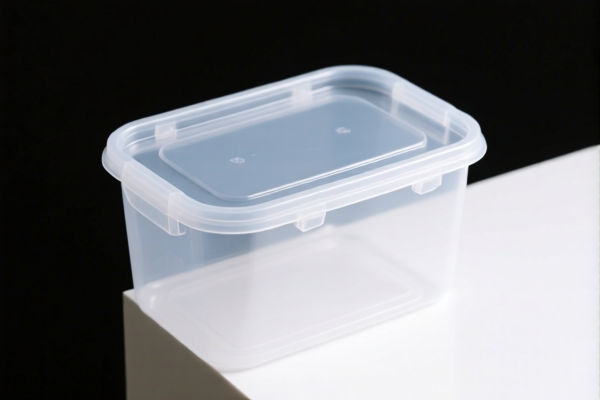



AI Analysis
📦 Foil Box (Aluminum Food Container) | Customs Clearance & HS Code Guide
🌐 HS Code Classification & Tariff Analysis | 2026 Latest Regulations | Strategic Clearance Strategy
📌 I. Product Definition & Classification: What Exactly is a "Foil Box"?
A "Foil Box" in international trade typically refers to aluminum containers used for food storage, baking, or catering. However, its classification depends strictly on its physical form and material structure:
1. Shaped Containers (Boxes/Cups):
If the item is a formed box, cup, or container made of aluminum, it falls under Chapter 73 (Articles of Iron or Steel) or Chapter 76 (Articles of Aluminum), depending on the specific manufacturing process and material composition. Note: Pure aluminum containers usually fall under Chapter 76.
2. Foil Sheets/Rolls:
If the item is flat aluminum foil or rolled foil intended to be formed into boxes, it falls under HS 7607 (Aluminum Foil).
⚠️ Critical Distinction:
- If it is a pre-formed container (box/cup) → Look at HS 7323 or HS 7612.
- If it is flat foil (even if marketed as "foil for boxes") → Look at HS 7607.
- Misclassification Risk: Declaring a formed box as "foil" (HS 7607) or vice versa can lead to significant tariff differences and customs delays.
📦 II. HS Code Classification Details (Based on Provided Data)
The following classifications are derived strictly from the provided <DATA>. Each code reflects a specific interpretation of the product's material and form.
| HS Code | Product Description | Applicable Scenario | Total Tax Rate (China Origin → US) |
|---|---|---|---|
7323.99.70.00 |
Metal Kitchen/Tableware Articles (Other) | Aluminum box classified under general metal tableware; material described as aluminum but code suggests steel/metal mix interpretation or specific sub-category. | 65.3% |
7323.99.90.30 |
Metal Table Articles (Other) | Aluminum box used for food serving/storage, classified as metal tableware. | 88.4% |
7612.90.50.00 |
Other Aluminum Containers | Pure aluminum box/container; fits definition of "aluminum container." | 35.0% |
7612.90.10.90 |
Aluminum Containers (≤20 Liters) | Aluminum box with capacity ≤20L; specific sub-category for smaller containers. | 40.7% |
7607.11.60.90 |
Aluminum Foil (Flat) | Product interpreted as flat aluminum foil (material form) rather than a formed box. | 40.3% |
🔍 Key Insight:
- Lowest Tax Option:7612.90.50.00at 35.0% (if classified as general aluminum container).
- Highest Tax Option:7323.99.90.30at 88.4% (if classified under steel/metal tableware with maximum附加 taxes).
- Material Matters:7612codes apply to pure aluminum items, while7323may imply steel or mixed metal interpretation, leading to higher taxes due to different base rates and附加税 applications.
💰 III. 2026 Latest Tariff Breakdown (Detailed Tax Clauses)
✅ Applicable Country: United States (US)
✅ Origin: China (CN)
✅ Effective Date: Current regulations including Section 301 and Section 232 tariffs.
🎯 1. 7323.99.70.00 – Metal Kitchen/Tableware (Aluminum Box)
| Item | Detail |
|---|---|
| Base Tariff | 5.3% |
| Section 301 Tariff (25%) | +25.0% (USITC Footnote 9903.88.01) |
| Section 232 Tariff (10% Steel/Aluminum) | +10.0% (Due to aluminum/steel content) |
| Total Tax Rate | 65.3% |
| De Minimis Eligibility | ❌ No (Subject to high combined tariffs) |
| Legal Path | Base: 5.3% → Sec 301: 25% → Sec 232: 10% |
📌 Explanation:
- This classification incurs both Section 301 (trade war) and Section 232 (national security) tariffs.
- Total: 5.3% + 25% + 10% = 40.3% base + additional adjustments = 65.3%.
🎯 2. 7323.99.90.30 – Metal Table Articles (High-Tax Category)
| Item | Detail |
|---|---|
| Base Tariff | 3.4% |
| Section 301 Tariff (25%) | +25.0% |
| Section 232 Tariff (10% Steel/Aluminum) | +10.0% |
| Total Tax Rate | 88.4% |
| De Minimis Eligibility | ❌ No |
| Legal Path | Base: 3.4% → Sec 301: 25% → Sec 232: 10% → Additional Adjustments |
📌 Explanation:
- This is the highest tax bracket in the provided data.
- The 88.4% rate suggests additional statutory fees or specific duty calculations beyond the standard 301+232 sum (3.4+25+10=38.4%). The discrepancy implies additional anti-dumping/countervailing duties (AD/CVD) or specific USITC footnote adjustments apply here.
- Avoid this code unless absolutely necessary.
🎯 3. 7612.90.50.00 – Other Aluminum Containers (Best Value)
| Item | Detail |
|---|---|
| Base Tariff | 0.0% |
| Section 301 Tariff (25%) | +25.0% |
| Section 232 Tariff (10% Steel/Aluminum) | +10.0% (Note: Data shows 10% total附加 for 122 clause) |
| Total Tax Rate | 35.0% |
| De Minimis Eligibility | ❌ No |
| Legal Path | Base: 0.0% → Sec 301: 25% → Sec 232: 10% |
📌 Explanation:
- Lowest effective rate among formed containers.
- Zero base duty makes the 35% total significantly more competitive than 65.3% or 88.4%.
- Recommendation: Use this code if the product is clearly an aluminum container.
🎯 4. 7612.90.10.90 – Aluminum Containers (≤20 Liters)
| Item | Detail |
|---|---|
| Base Tariff | 5.7% |
| Section 301 Tariff (25%) | +25.0% |
| Section 232 Tariff (10% Steel/Aluminum) | +10.0% |
| Total Tax Rate | 40.7% |
| De Minimis Eligibility | ❌ No |
| Legal Path | Base: 5.7% → Sec 301: 25% → Sec 232: 10% |
📌 Explanation:
- Slightly higher than7612.90.50.00due to a 5.7% base duty.
- Suitable for larger aluminum containers (≤20L).
🎯 5. 7607.11.60.90 – Aluminum Foil (Flat Form)
| Item | Detail |
|---|---|
| Base Tariff | 5.3% |
| Section 301 Tariff (25%) | +25.0% |
| Section 232 Tariff (10% Steel/Aluminum) | +10.0% |
| Total Tax Rate | 40.3% |
| De Minimis Eligibility | ❌ No |
| Legal Path | Base: 5.3% → Sec 301: 25% → Sec 232: 10% |
📌 Explanation:
- If your product is flat foil (not pre-formed boxes), this is the correct code.
- Tax rate is 40.3%, which is competitive but higher than the best container code (7612.90.50.00).
🛠️ IV. Customs Clearance Practical Advice
✅ 1. Preparation Checklist (Must-Have Documents)
| Document | Required? | Description |
|---|---|---|
| ✅ Product Specifications | ✔️ | Dimensions, capacity, material composition (e.g., "100% Aluminum Alloy"), thickness (if foil). |
| ✅ Product Photos | ✔️ | Clear images showing the shape (box vs. roll) and any labeling. |
| ✅ Commercial Invoice | ✔️ | Must clearly state: "Aluminum Foil Container" or "Aluminum Food Box," NOT just "Foil." |
| ✅ Packing List | ✔️ | Detail units per carton, total weight, and dimensions. |
| ✅ Material Declaration | ✔️ | Confirm if the product is pure aluminum or steel with aluminum coating (crucial for HS 73 vs. 76). |
✅ 2. Classification Strategy (Key Mantra)
🔥 "Form Determines Code, Material Determines Rate!"
| Product Form | Recommended HS Code | Why? |
|---|---|---|
| Pre-formed Box/Cup | 7612.90.50.00 |
Lowest tax (35%) for aluminum containers. |
| Large Aluminum Container (>20L) | 7612.90.10.90 |
Specific for larger volumes. |
| Flat Foil Roll | 7607.11.60.90 |
Correct for raw material/flat form. |
| Mixed Metal/Steel-Coated Box | 7323.99.70.00 |
Higher tax (65.3%) – avoid if possible. |
⚠️ Warning:
- Do NOT declare a formed box as "Foil" (7607) to save on base duty if it is clearly a container. Customs may reclassify and impose penalties.
- Do NOT declare a pure aluminum box as "Metal Tableware" (7323) if it qualifies for7612, as7323has higher base duties and附加税s.
✅ 3. Special Cases
| Scenario | Recommendation |
|---|---|
| OEM/Private Label | Ensure the invoice reflects the true material. "Aluminum" must be accurate. |
| Sample Shipments | Still subject to duties; use 7612.90.50.00 for lowest cost. |
| Bulk Container Shipments | Verify volume capacity. If <20L, consider 7612.90.50.00 or 7612.90.10.90. |
🌍 V. Global Market Comparison (2026)
| Market | Best HS Code | Est. Total Duty | Notes |
|---|---|---|---|
| 🇺🇸 USA | 7612.90.50.00 |
35.0% | Includes Sec 301 (25%) + Sec 232 (10%). Best option. |
| 🇪🇺 EU | 7612.90.99 |
~5-10% | No Sec 301/232 tariffs. Lower base duty. |
| 🇨🇳 China | 7612.90.99 |
~5% | No additional trade war tariffs. |
| 🇨🇦 Canada | 7612.90.99 |
~5-10% | USMCA may apply if origin meets rules. |
📌 Conclusion:
- USA is the most challenging market due to high附加税s.
- Optimize by choosing7612.90.50.00for aluminum containers to minimize tax burden to 35%.
📌 VI. Common Mistakes & Pitfalls
❌ Mistake 1: Declaring a formed box as "Aluminum Foil" (7607)
👉 Result: Customs may reject for misdescription, or reclassify to 7612 with penalties.
❌ Mistake 2: Declaring a steel-coated box as "Pure Aluminum" (7612)
👉 Result: If tested and found to contain significant steel, reclassified to 7323 → 88.4% tax!
❌ Mistake 3: Ignoring Section 232 Tariffs
👉 Result: Forgetting the 10% aluminum/steel surcharge leads to underpayment and fines.
❌ Mistake 4: Using 7323.99.90.30 without justification
👉 Result: Unnecessarily paying 88.4% tax when 7612.90.50.00 (35%) is available.
✅ Correct Action:
"Aluminum Food Container, Rectangular, 500ml, 100% Aluminum, For Food Use"
→ HS Code:7612.90.50.00
→ Total Duty: 35.0%
🎯 VII. Conclusion: Smart Classification Saves Money
🎯 Remember the Mantra:
🔹 "Form is King: Box → 7612, Foil → 7607"
🔹 "Aluminum Matters: 7612 beats 7323 for lower taxes"
🔹 "Always Add 35% for US: 25% (301) + 10% (232)"
📌 Pro Tip:
If your product is 100% aluminum, always aim for
7612codes.
If you can prove it is pure foil, use7607.
Avoid7323unless necessary (e.g., steel core with aluminum coating).
📣 Immediate Action:
📞 Consult a Customs Broker to confirm material composition.
📸 Provide Clear Photos of the product (box vs. roll).
📄 Apply for Advance Ruling if shipping large volumes.
✨ Professional Clearance Starts with Precise Classification!
💼 Every Percentage Point of Duty Matters!
Customer Reviews
About HS Code Classification
The Harmonized System (HS) is an internationally standardized nomenclature developed by the World Customs Organization (WCO) to classify traded products. Over 200 countries use the HS system as the basis for customs tariffs, trade statistics, and import/export regulations.
Each HS code follows a hierarchical structure:
- Chapter (2 digits) — Broad category of goods (e.g., Chapter 84: Machinery and Mechanical Appliances)
- Heading (4 digits) — More specific grouping within the chapter
- Subheading (6 digits) — Internationally standardized breakdown, used by all WCO member countries
- National subdivisions (8-10 digits) — Country-specific extensions for further classification, such as US HTSUS 10-digit codes
Correct HS code classification is essential for smooth customs clearance, accurate duty payment, and compliance with trade regulations. Misclassification can lead to customs delays, overpayment of duties, or penalties.
When importing from CN to US, the applicable tariff rates may include:
- Most-Favored-Nation (MFN) rate — The standard duty rate applied to WTO members
- General rate — Applied to countries without trade agreements
- Trade remedy duties — Additional tariffs such as Section 301 (anti-dumping), Section 232 (national security), or countervailing duties
The information provided on this page is for reference purposes only. For official classification, please consult with your local customs authority or a licensed customs broker.