Foldable Electric Kettle
CN → US| HS Code | Tariff Rate | Origin | Destination | Doc |
|---|---|---|---|---|
| 7907001000 | 13.0% | CN | US | Official Doc |
| 7907006000 | 38.0% | CN | US | Official Doc |
| 8516100080 | 17.5% | CN | US | Official Doc |
| 8516710060 | 21.2% | CN | US | Official Doc |
Product Images
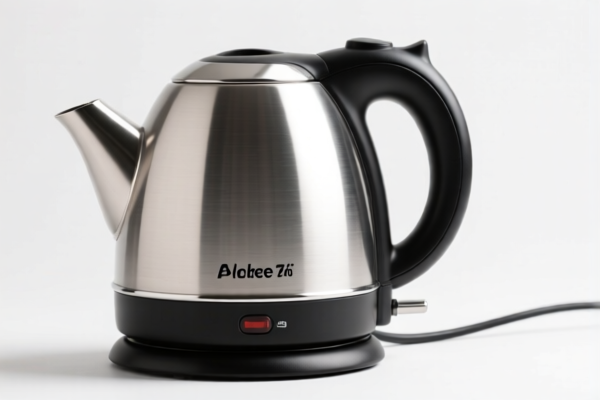
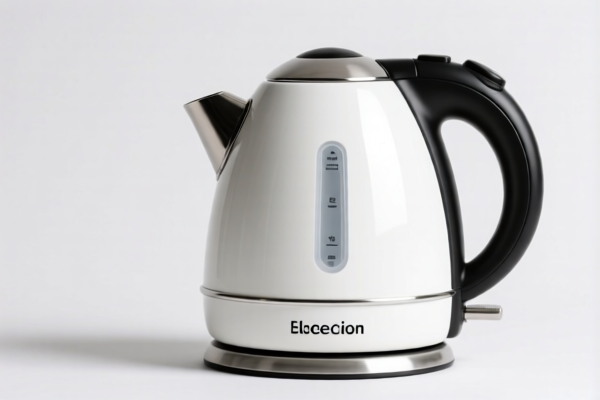
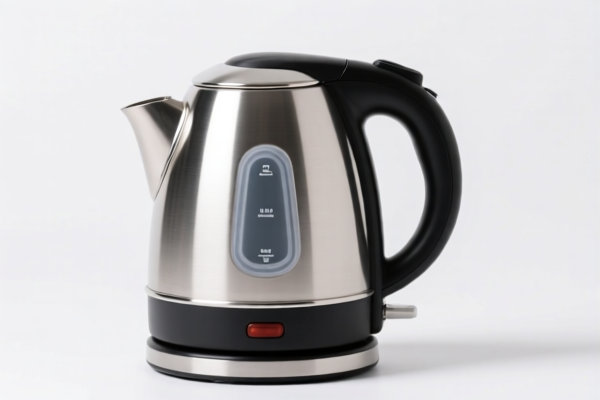
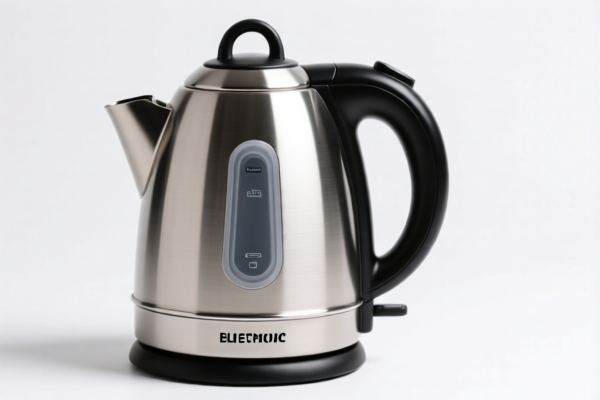
AI Analysis
🌊 Foldable Electric Kettle (Water Heaters & Immersion Devices)
🌐 HS Code Reference & Customs Clearance Guide | 2026 Latest Tariff Analysis | Expert-Level Clearance Strategy
📌 I. Product Definition & Classification: Do You Really Understand "Foldable Kettles"?
A foldable electric kettle is a compact, portable, and often collapsible appliance designed for boiling water, typically used for travel, camping, or small households. In international trade, despite its unique form factor, it is fundamentally an electrothermic appliance of a kind used for domestic purposes.
The critical distinction in classification lies not in the "foldable" feature, but in whether it is a standalone water heater or a specialized appliance (like a coffee maker).
⚠️ Key Classification Point:
- If the device is primarily for boiling water (pure heating function) → It falls under 8516.10.00.80 ("Electric instantaneous or storage water heaters...").
- If the device has specific brewing mechanisms (e.g., tea bag holders, specific temperature control for tea leaves, coffee filtration) and is marketed as a "Coffee/Tea Maker" → It might fall under 8516.71.00.60.
- Crucial Note: Most generic "foldable kettles" are classified as standard water heaters. Only if they possess complex brewing accessories do they shift to the "coffee/tea maker" category.
📦 II. HS Code Classification Details (2026 Latest Tariff Authority对照)
| HS Code | Product Description | Applicable Scenario | Key Feature |
|---|---|---|---|
8516.10.00.80 |
Other electric instantaneous or storage water heaters; Other water heaters and immersion heaters | Standard foldable kettles, travel kettles, immersion heaters | ✅ Pure water heating function |
8516.71.00.60 |
Other electrothermic appliances: Coffee or tea makers; Coffee makers: Other | Kettles with specialized brewing chambers, tea infusers, or coffee drip functions | ✅ Specialized brewing function |
🔍 Important Reminder:
- Form Factor is Irrelevant: Whether the kettle is foldable, rigid, glass, or stainless steel, if its primary function is heating water, it generally belongs to 8516.10.
- Avoid Misclassification: Do not classify a simple foldable kettle as "Coffee Maker" (8516.71) unless it has specific brewing components. Using the wrong code can lead to underpayment of duties (if 8516.10 has higher effective taxes) or customs delays.
- Parts: If importing only the heating element or the foldable body separately, different codes may apply (e.g., 7907 for zinc parts if applicable, though rare for kettles). The data below focuses on the complete appliance.
💰 III. 2026 Latest Tariff Rate Detail (Including Surtaxes & Policy Add-ons)
✅ Applicable Country: United States (US)
✅ Origin: China (CN)
✅ Effective Time: From November 10, 2025 onwards (including subsequent imports)
🎯 1. 8516.10.00.80 —— Other Water Heaters (Standard Foldable Kettle)
| Item | Content |
|---|---|
| Base Tariff Rate | 0.0% (ad valorem) |
| USITC Surcharge | +7.5% (Section 301 / USTR List 3/4A specific to this subheading) |
| IEEPA Surcharge | Not Applicable (No 10% IEEPA tax for this specific category in the provided data) |
| Total Effective Rate | 7.5% |
| Tax Calculation | CIF Value × 7.5% |
| De Minimis Eligibility | ❌ Not Eligible (Deny de minimis for Section 301 goods) |
| Legal Basis Path | USITC:8516.10.00.80 → FOOTNOTE:301.10 |
📌 Explanation:
- The 7.5% surcharge is applied under the Section 301 trade remedy measures against China.
- Although the base rate is 0%, the add-on tax makes it 7.5%.
- This is significantly lower than many other consumer electronics (which can face 25% or more), making foldable kettles a relatively "low-risk" tariff item compared to, say, monitors or smartphones.
🎯 2. 8516.71.00.60 —— Coffee/Tea Makers (Specialized Brewing Kettle)
| Item | Content |
|---|---|
| Base Tariff Rate | 3.7% (ad valorem) |
| USITC Surcharge | +7.5% (Section 301 surcharge applies) |
| IEEPA Surcharge | Not Applicable |
| Total Effective Rate | 11.2% |
| Tax Calculation | CIF Value × 11.2% |
| De Minimis Eligibility | ❌ Not Eligible |
| Legal Basis Path | USITC:8516.71.00.60 → FOOTNOTE:301.10 |
📌 Note:
- If your foldable kettle is marketed as a "Smart Tea Brewer" or "Coffee Maker" with specific brewing accessories, the base rate is higher (3.7%) plus the same 7.5% surcharge.
- Total Cost Impact: 11.2% vs. 7.5%. The difference is small, but misclassification can still trigger audits.
- Recommendation: Unless the product is explicitly a coffee/tea brewing device, classify as 8516.10.00.80 to avoid overpaying or facing compliance questions.
🛠️ IV. Customs Clearance Practical Advice (Battle-Tested Pitfall Avoidance)
✅ 1. Preparation Checklist (Non-negotiable)
| Document | Mandatory | Explanation |
|---|---|---|
| ✅ Product Specifications | ✔️ | Must clearly state "Electric Water Heater," voltage, wattage, and material (e.g., BPA-free plastic, stainless steel). |
| ✅ Product Photos | ✔️ | Must show the foldable mechanism and heating element. Clear view of the nameplate (Voltage, Watts, Model). |
| ✅ FCC Certification | ✔️ | Required for all electronic devices in the US. Must be linked to the specific model. |
| ✅ UL/ETL Safety Report | ✔️ | Highly recommended (sometimes mandatory) for electrical appliances to prove safety compliance. |
| ✅ Commercial Invoice | ✔️ | Description must be precise: "Foldable Electric Water Heater, 110V, 60Hz, for Domestic Use." Avoid vague terms like "Travel Appliance." |
| ✅ Packing List | ✔️ | Detail all components (e.g., kettle body, cord, plug, instruction manual). |
✅ 2. Declaration Tips (Key Mantra)
🔥 "Function is King, Form is Secondary. State 'Water Heater,' Not 'Kitchen Tool'!"
| Scenario | Correct Declaration | Wrong Approach |
|---|---|---|
| Simple Foldable Kettle | 8516.10.00.80 |
"Travel Cookware" → Risk of reclassification to 7907 (Zinc) or 8516.71 |
| Kettle with Tea Infuser | 8516.10.00.80 (if primary function is heating) OR 8516.71.00.60 (if marketing emphasizes brewing) |
Ambiguous "Multi-function Kettle" → Delay |
| Parts Only (e.g., Foldable Body) | 7907.00.10.00 or 7907.00.60.00 (if zinc) |
Declare as complete kettle → Tax evasion risk |
| Kettle + Cord + Plug | Single HS Code (8516.10.00.80) |
Split declaration → Higher risk of inspection |
✅ 3. Special Case Handling
| Situation | Handling Advice |
|---|---|
| Material: Zinc Parts? | If the kettle body is made of zinc (rare, usually plastic/stainless steel), parts may fall under 7907.00.10.00 (0% tax). However, complete appliances are classified by function. Do not classify a complete plastic kettle as zinc parts. |
| OEM/White Label | Ensure the FCC ID is correctly listed on the device and documentation. Customs may check the FCC database against the invoice description. |
| "Travel" Marketing | Emphasize "Domestic Use" in the description. Customs focuses on the function, not the marketing term "travel." |
| Voltage Conversion | If the product is designed for 220V but sold in the US, it may be rejected for safety reasons. Ensure it is 110V-120V compliant for the US market. |
🌍 V. Global Market Clearance Comparison (2026 Latest)
| Country/Region | Recommended HS Code | Tariff Rate | Certification Requirement | Notes |
|---|---|---|---|---|
| 🇺🇸 USA | 8516.10.00.80 |
7.5% (China Origin) | FCC + UL/ETL | Higher than base 0% due to Section 301. |
| 🇨🇳 China | 8516.10.00.80 |
~5-10% (Import) | CCC | Lower barrier for export from China. |
| 🇪🇺 EU | 8516.10.00.00 |
0% (if under 1000 EUR) | CE + RoHS | No Section 301 equivalent; generally low duty. |
| 🇬🇧 UK | 8516.10.00.00 |
0% | UKCA + CE | Post-Brexit rules align with EU for this category. |
| 🇯🇵 Japan | 8516.10.00.00 |
3.5% | PSE | Moderate tariff, strict safety standards. |
📌 Conclusion:
- The US market has a 7.5% effective tariff for foldable kettles due to trade policies.
- No other major market in the provided data applies such surcharges to this category.
- Cost Optimization: For US-bound goods, 7.5% is manageable. However, ensure FCC compliance to avoid rejection, which is the primary non-tariff barrier.
📌 VI. Common Errors & Pitfalls (Lessons from the Field)
❌ Error 1: Classifying as 8516.71.00.60 (Coffee Maker) when it's just a kettle.
👉 Consequence: Overpaying 3.7% base duty. (Though total is still lower than many electronics, accuracy is key for audits).
❌ Error 2: Declaring as "Kitchen Utensil" or "Travel Mug."
👉 Consequence: Customs may classify under Chapter 79 (Zinc) or 76 (Aluminum) if material is misreported, or flag it for missing FCC.
❌ Error 3: Ignoring the Section 301 surcharge.
👉 Consequence: Underpayment. 7.5% is not free. If you declare 0%, you face penalties and interest.
❌ Error 4: Missing UL/ETL Certification.
👉 Consequence: Goods held at customs, returned, or destroyed due to safety concerns. Electrical appliances are heavily scrutinized.
✅ Correct Practice:
"Foldable Electric Water Heater, 120V, 60Hz, 1.5L, BPA-Free Plastic Body, Stainless Steel Heating Element, FCC Certified, Model: TRAVEL-KETTLE-01"
🎯 VII. Conclusion: Smart Clearance, Lower Costs, Faster Shipping!
🎯 Remember the Mantra:
🔹 "Function First, Tariff Follows. 7.5% is the US Price. FCC is the Key."
🔹 "Don't Overcomplicate 'Foldable.' It's Still a Water Heater."
🔹 "3.7% Base + 7.5% Surcharge = 11.2% if misclassified as Coffee Maker. Stick to 0% Base + 7.5% Surcharge = 7.5%."
📌 Pro Tip:
- If you are exporting from Vietnam, Mexico, or Thailand, you may avoid the 7.5% Section 301 surcharge entirely, reducing the total tariff to 0%.
- Supply Chain Strategy: Consider sourcing or final assembly in non-China countries if you are selling to the US to maximize cost competitiveness.
📣 Immediate Action:
📞 Contact your customs broker with the FCC ID and technical specs.
🚀 Apply for an Advance Ruling if your product has mixed features (e.g., heating + brewing).
📦 Ensure your invoice clearly states "Electric Water Heater" to prevent misclassification.
✨ Professional clearance starts with accurate classification!
💼 Your profit margin depends on precision.
Customer Reviews
About HS Code Classification
The Harmonized System (HS) is an internationally standardized nomenclature developed by the World Customs Organization (WCO) to classify traded products. Over 200 countries use the HS system as the basis for customs tariffs, trade statistics, and import/export regulations.
Each HS code follows a hierarchical structure:
- Chapter (2 digits) — Broad category of goods (e.g., Chapter 84: Machinery and Mechanical Appliances)
- Heading (4 digits) — More specific grouping within the chapter
- Subheading (6 digits) — Internationally standardized breakdown, used by all WCO member countries
- National subdivisions (8-10 digits) — Country-specific extensions for further classification, such as US HTSUS 10-digit codes
Correct HS code classification is essential for smooth customs clearance, accurate duty payment, and compliance with trade regulations. Misclassification can lead to customs delays, overpayment of duties, or penalties.
When importing from CN to US, the applicable tariff rates may include:
- Most-Favored-Nation (MFN) rate — The standard duty rate applied to WTO members
- General rate — Applied to countries without trade agreements
- Trade remedy duties — Additional tariffs such as Section 301 (anti-dumping), Section 232 (national security), or countervailing duties
The information provided on this page is for reference purposes only. For official classification, please consult with your local customs authority or a licensed customs broker.