Foldable Electronic Scale
CN → US| HS Code | Tariff Rate | Origin | Destination | Doc |
|---|---|---|---|---|
| 8423100010 | 10.0% | CN | US | Official Doc |
| 8423810010 | 35.0% | CN | US | Official Doc |
Product Images
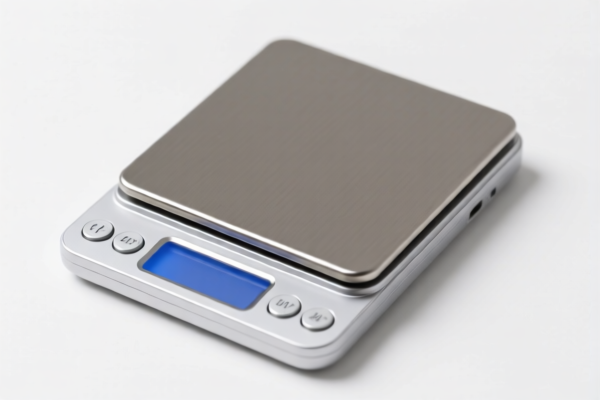
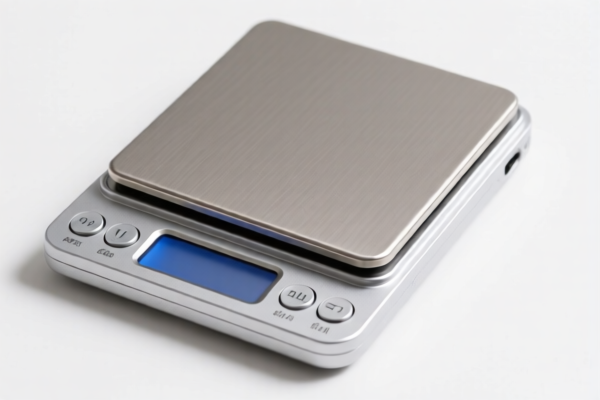
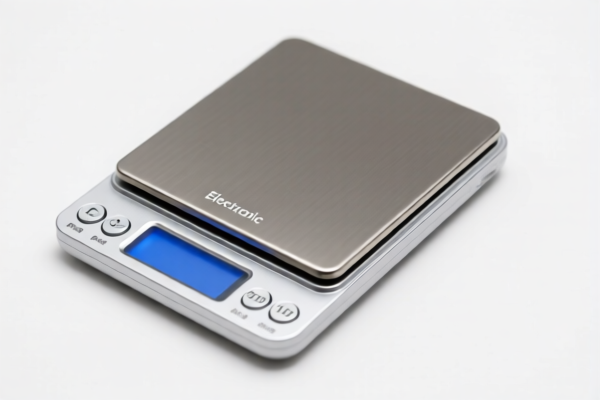
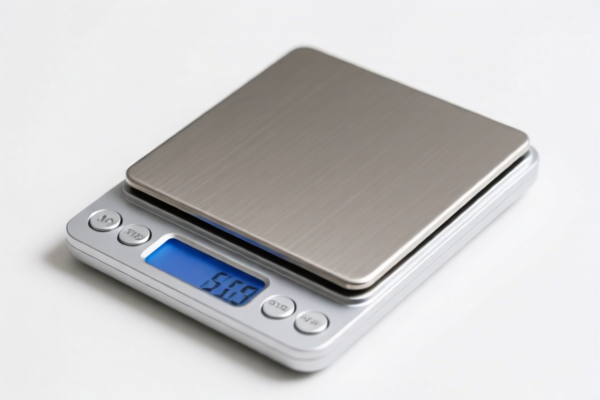
AI Analysis
⚖️ Foldable Electronic Scale (Personal Weighing Machines & Digital Counting Scales)
🌐 HS Code Reference & Clearance Guide | 2026 Latest Tariff Analysis | Professional Compliance Strategy
📌 I. Product Definition & Classification: What Exactly is a "Foldable Electronic Scale"?
A foldable electronic scale is a digital weighing device designed for portability. In international trade, its classification depends strictly on its function and maximum capacity, not just its physical ability to fold. The US Harmonized Tariff Schedule (HTSUS) distinguishes between:
Personal Weighing Machines (Home/Body Scales): Intended for weighing humans (including babies). These are typically flat, low-capacity units. * Key Characteristic: Designed for biological subjects.
Digital Electronic Counting Scales: Intended for industrial or retail counting of small parts. These often have a platform for items and display item counts based on average unit weight. * Key Characteristic: Designed for inanimate objects, often with a capacity ≤ 30kg.
⚠️ Critical Distinction:
- If the scale is marketed for human body weight → It falls under 8423.10.00.10.
- If the scale is marketed for counting parts (even if foldable) → It falls under 8423.81.00.10 (provided capacity ≤ 30kg).
- Note: Physical features like "foldable" do not change the HS code; the purpose dictates the classification.
📦 II. HS Code Classification Details (2026 Latest Tariff Reference)
Based on the provided data, here are the two possible classifications:
| HS Code | Product Description | Applicable Scenario | Max Capacity / Feature |
|---|---|---|---|
8423.10.00.10 |
Personal weighing machines, including baby scales; Digital electronic type | Home use, body weight measurement, baby weight | Not specified (Typically ≤ 180-200kg for humans) |
8423.81.00.10 |
Other weighing machinery: Having a maximum weighing capacity not exceeding 30 kg; Digital electronic type: Counting scales | Industrial counting, retail inventory, small parts counting | ≤ 30 kg |
🔍 Key Reminder:
- 8423.10.00.10 is for Personal/Home use.
- 8423.81.00.10 is for Other industrial/commercial use (Counting) with capacity ≤ 30kg.
- Do not assume all foldable scales are "personal." If it has a counting function and is used for parts, it may fall under 8423.81.
💰 III. 2026 Latest Tariff Rate Details (Including Additional Taxes)
✅ Applicable Country: United States (US)
✅ Origin: China (CN) (Assumed based on tax structure in data)
✅ Effective Time: Current rates as per 2026 data
🎯 1. 8423.10.00.10 —— Personal Weighing Machines (Digital Electronic Type)
| Item | Content |
|---|---|
| Base Tariff | 0.0% |
| Additional Tariff (Section 301) | 0.0% |
| Total Tariff Rate | 0.0% |
| Tax Calculation | CIF Value × 0% = $0 |
| Can De Minimis Apply? | ✅ Yes (Usually subject to $800 de minimis rule for low-value shipments, but subject to customs scrutiny if misclassified) |
| Legal Basis Path | 8423.10.00.10 → Base Rate 0% → No Section 301 Addition |
📌 Explanation:
- Personal weighing machines are currently exempt from additional Section 301 tariffs in this specific subcategory.
- This is a low-risk, low-cost classification for importers.
- Ensure the product is clearly labeled as "Personal/Baby Scale" to justify this code.
🎯 2. 8423.81.00.10 —— Other Weighing Machinery (Counting Scales ≤ 30kg)
| Item | Content |
|---|---|
| Base Tariff | 0.0% |
| Additional Tariff (Section 301) | 25.0% |
| Total Tariff Rate | 25.0% |
| Tax Calculation | CIF Value × 25% |
| Can De Minimis Apply? | ❌ No (Items subject to Section 301 tariffs generally lose de minimis eligibility) |
| Legal Basis Path | 8423.81.00.10 → Base Rate 0% + Section 301 Footnote → 25% Total |
📌 Explanation:
- This classification triggers a 25% additional tariff under Section 301 of the Trade Act.
- Even though the base rate is 0%, the effective cost is significantly higher.
- Counting scales are treated differently from personal scales, often viewed as industrial equipment, thus attracting higher tariffs.
🛠️ IV. Customs Clearance Practical Advice (Pitfall Avoidance Guide)
✅ 1. Documentation Checklist (Essential)
| Document | Required | Description |
|---|---|---|
| ✅ Product Specification Sheet | ✔️ | Must specify max weight capacity and primary function (Human vs. Parts Counting) |
| ✅ Product Photos (Front/Back/Interior) | ✔️ | Show foldable mechanism, display, and any "Counting" mode labels |
| ✅ Commercial Invoice | ✔️ | Clear description: "Foldable Digital Personal Scale" OR "Foldable Digital Counting Scale" |
| ✅ Packing List | ✔️ | Item weight, dimensions, and package contents |
| ✅ FCC Certificate (if applicable) | ✔️ | Electronic devices often require FCC ID for US import |
| ✅ Labeling | ✔️ | Must include voltage, wattage, and manufacturer info in English |
✅ 2. Declaration Strategy (Key Tips)
🔥 “Function Dictates Code, Capacity Defines Tier!”
| Scenario | Correct HS Code | Tax Rate | Risk Level |
|---|---|---|---|
| Personal/Baby Scale (Foldable) | 8423.10.00.10 |
0% | ✅ Low |
| Counting Scale (Foldable, ≤30kg) | 8423.81.00.10 |
25% | ⚠️ High |
| Counting Scale (>30kg) | Not in Data | Higher Risk | ❌ Very High |
📌 Warning:
- If you declare a Counting Scale as a Personal Scale to avoid the 25% tariff, customs may inspect and reclassify it, leading to penalties, back taxes, and shipment delays.
- Pro Tip: If the scale has a "counting" button or function, it is safer to classify under8423.81.00.10and budget for the 25% tariff.
✅ 3. Special Cases & Handling
| Situation | Handling Advice |
|---|---|
| Dual-Function Scale (Human + Counting) | Classify based on primary use. If marketed as a personal scale with a counting feature for small items, argue for 8423.10.00.10. Provide evidence of marketing focus. |
| Foldable Mechanism | Mention "Foldable" in the description for clarity, but emphasize electronic digital type. The folding feature does not change the HS code. |
| OEM/White Label | Ensure the invoice reflects the actual manufacturer and country of origin. Misdeclaration of origin can void tariff exemptions or trigger penalties. |
| Batteries Included | Declare lithium-ion battery content per IATA/DOT regulations if shipped by air. |
🌍 V. Global Market Clearance Comparison (2026 Latest)
| Country/Region | Recommended HS Code | Tariff Rate | Certification Required | Notes |
|---|---|---|---|---|
| 🇺🇸 USA | 8423.10.00.10 (Personal) 8423.81.00.10 (Counting) |
0% 25% |
FCC ID, UL/ETL (Safety) | Critical: Counting scales face 25% Section 301 tariff. |
| 🇨🇳 China | 8423.10.00.10 8423.81.00.10 |
0% 0% |
CCC (if applicable) | No additional tariffs. |
| 🇪🇺 EU | 9031.80.80 |
0% - 1.7% | CE, RoHS | Harmonized code may differ from US HTS. |
| 🇬🇧 UK | 9031.80.80 |
0% | UKCA, RoHS | Post-Brexit rules apply. |
| 🇨🇦 Canada | 9031.80.80 |
0% | CSA, IC | Check for specific provincial rules. |
📌 Conclusion:
- The US market is the most complex due to Section 301 tariffs on industrial weighing machinery.
- Personal scales enjoy a 0% tariff, making them highly competitive.
- Counting scales incur a 25% tariff, significantly impacting margins.
📌 VI. Common Mistakes & Pitfall Guide (Lessons Learned)
❌ Mistake 1: Declaring a Counting Scale as a Personal Scale
👉 Consequence: Customs may inspect, find counting features, and apply 25% tariff + penalties.
👉 Solution: Be honest in description. If it counts parts, declare it as such.
❌ Mistake 2: Ignoring Capacity Limits
👉 Consequence: If capacity > 30kg for counting scales, it may fall under a different, potentially higher-tariff category.
👉 Solution: Verify max capacity on specs sheet.
❌ Mistake 3: Missing FCC ID for Electronic Devices
👉 Consequence: Shipment held at US port until FCC documentation is provided.
👉 Solution: Ensure FCC ID is on the product and invoice.
❌ Mistake 4: Using Generic Terms like "Scale"
👉 Consequence: Ambiguity leads to manual review and delays.
👉 Solution: Use specific terms: "Foldable Digital Personal Scale" or "Foldable Digital Counting Scale."
✅ Correct Practice:
"Foldable Digital Personal Weighing Scale, Max Capacity 180kg, Battery Operated, FCC ID: XYZ123"
OR
"Foldable Digital Counting Scale, Max Capacity 30kg, Counting Function Enabled, For Industrial Use"
🎯 VII. Conclusion: Professional Declaration, Cost Optimization!
🎯 Remember the Mantra:
🔹 "Personal = 0%, Counting = 25%! Check the Function, Not Just the Fold!"
🔹 "FCC ID is Mandatory, Capacity is Critical, Declaration Must Be Precise!"
📌 Pro Tip:
- If your foldable scale is both personal and counting, market it as personal if possible, and provide evidence (marketing materials, user manual) showing human use as the primary intent.
- For industrial clients, budget for the 25% tariff on counting scales.
- Consider pre-classification rulings if unsure about dual-function devices.
📣 Immediate Action:
📞 Consult a licensed customs broker for dual-function devices.
📄 Prepare detailed specs highlighting primary use.
🚀 Clear customs smoothly, avoid unexpected tariffs, and maximize profit!
✨ Professional clearance starts with accurate classification!
💼 Every dollar saved on tariffs is pure profit!
Customer Reviews
About HS Code Classification
The Harmonized System (HS) is an internationally standardized nomenclature developed by the World Customs Organization (WCO) to classify traded products. Over 200 countries use the HS system as the basis for customs tariffs, trade statistics, and import/export regulations.
Each HS code follows a hierarchical structure:
- Chapter (2 digits) — Broad category of goods (e.g., Chapter 84: Machinery and Mechanical Appliances)
- Heading (4 digits) — More specific grouping within the chapter
- Subheading (6 digits) — Internationally standardized breakdown, used by all WCO member countries
- National subdivisions (8-10 digits) — Country-specific extensions for further classification, such as US HTSUS 10-digit codes
Correct HS code classification is essential for smooth customs clearance, accurate duty payment, and compliance with trade regulations. Misclassification can lead to customs delays, overpayment of duties, or penalties.
When importing from CN to US, the applicable tariff rates may include:
- Most-Favored-Nation (MFN) rate — The standard duty rate applied to WTO members
- General rate — Applied to countries without trade agreements
- Trade remedy duties — Additional tariffs such as Section 301 (anti-dumping), Section 232 (national security), or countervailing duties
The information provided on this page is for reference purposes only. For official classification, please consult with your local customs authority or a licensed customs broker.