Foldable Glasses
CN → US| HS Code | Tariff Rate | Origin | Destination | Doc |
|---|---|---|---|---|
| 9013105000 | 22.8% | CN | US | Official Doc |
| 7009911090 | 42.8% | CN | US | Official Doc |
| 9013809100 | 22.0% | CN | US | Official Doc |
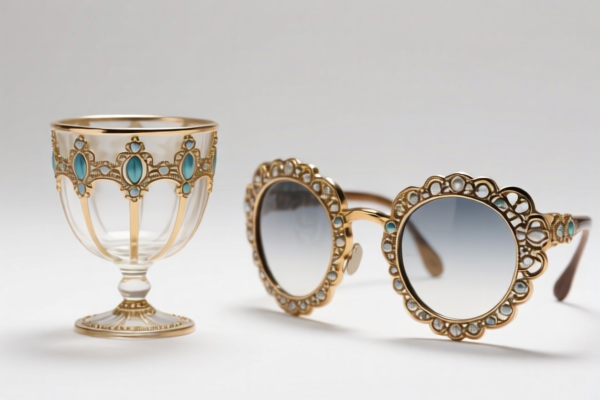
Product Images



AI Analysis
🕶️ Foldable Glasses (Collapsible Mirrors/Optical Devices)
🌐 HS Code Reference & Customs Clearance Guide | 2026 Latest Tariff Analysis | Professional Clearance Strategy
📌 I. Product Definition & Classification: Do You Really Understand "Foldable Glasses"?
Foldable Glasses generally refer to compact optical mirrors or reflectors designed for portability. In international trade, their classification depends heavily on their material, intended use, and structural composition. They are not merely "accessories" but can be classified as complete optical instruments or glass articles depending on specific attributes.
⚠️ Key Distinction Points:
- If primarily used as a personal grooming tool with a glass/plastic mirror surface → May fall under Glassware (Chapter 70) or Optical Devices (Chapter 90).
- If integrated into medical, industrial, or precision optical equipment → Classified under Optical Instruments (Chapter 90).
- Material Conflict Check:
- Glass-based mirrors → Potentially 7009.
- Plastic/Optical Component-based → Potentially 9013.
📦 II. HS Code Classification Details (2026 Latest Tariff Authority Comparison)
Based on the provided data, there are three potential classifications for "Foldable Glasses," each with distinct tax implications and logical justifications.
| HS Code | Product Description | Logical Justification (Why this code?) | Total Tax Rate |
|---|---|---|---|
9013.10.50.00 |
Other Optical Appliances (Portable/Foldable) | Optical Category: Fits "Other optical appliances" not specifically listed. Form Factor: Matches portable/foldable optical devices. Material: No conflict with optical material requirements. | 22.8% |
7009.91.10.90 |
Other Mirrors (Glass-based) | Material Priority: Classified as "Mirrors." Form Factor: "Foldable" nature is covered under "Other" via fallback principle. Inference: In absence of material conflict, inferred as Glass Material Mirrors. | 42.8% |
9013.80.91.00 |
Other Optical Appliances (Reflectors) | Usage Definition: Falls under "Other optical appliances and instruments" (Reflective mirrors). Material: Reasonably inferred as Glass or Plastic. Conflict: No obvious material/form conflict with the "Other" sub-category. | 22.0% |
🔍 Critical Insight:
- Why not just "Glasses" for Vision? These codes indicate these are likely reflective mirrors (e.g., compact vanity mirrors, optical reflectors) rather than corrective eyewear (which would fall under 9001 or 9004).
- Tax Divergence: The difference between 22.0% and 42.8% is massive. Misclassification as Glass (7009) instead of Optical (9013) results in a ~20% higher tax burden.
💰 III. 2026 Latest Tariff Rate Breakdown (Including Additional Taxes)
✅ Applicable Country: United States (US)
✅ Origin: China (CN)
✅ Effective Time: Current tariffs apply based on the provided data structure.
🎯 1. 9013.10.50.00 —— Other Optical Appliances (Portable)
| Item | Content |
|---|---|
| Base Tariff | 5.3% |
| Section 301 (Additional) | 7.5% |
| Section 122 Tariff | 10% |
| Total Tax Rate | 22.8% |
| Calculation Base | CIF Value × 22.8% |
| De Minimis Exemption | ❌ Not Applicable (Subject to high additional tariffs) |
| Legal Basis Path | USITC:9013.10.50.00 → Section 301: 7.5% → Section 122: 10% |
📌 Explanation:
- This is the most favorable optical classification among the options.
- Combines standard import duty with specific trade remedy tariffs.
🎯 2. 7009.91.10.90 —— Glass Mirrors (Other)
| Item | Content |
|---|---|
| Base Tariff | 7.8% |
| Section 301 (Additional) | 25.0% |
| Section 122 Tariff | 10% |
| Total Tax Rate | 42.8% |
| Calculation Base | CIF Value × 42.8% |
| De Minimis Exemption | ❌ Not Applicable |
| Legal Basis Path | USITC:7009.91.10.90 → Section 301: 25% → Section 122: 10% |
📌 Warning:
- This is the highest cost option.
- The 25% Section 301 tariff on glass goods from China is punitive.
- Risk: If customs determines the product is primarily a "glass mirror" for household use, they may force this classification regardless of your argument.
🎯 3. 9013.80.91.00 —— Other Optical Appliances (Reflectors)
| Item | Content |
|---|---|
| Base Tariff | 4.5% |
| Section 301 (Additional) | 7.5% |
| Section 122 Tariff | 10% |
| Total Tax Rate | 22.0% |
| Calculation Base | CIF Value × 22.0% |
| De Minimis Exemption | ❌ Not Applicable |
| Legal Basis Path | USITC:9013.80.91.00 → Section 301: 7.5% → Section 122: 10% |
📌 Explanation:
- The lowest total tariff (22.0%).
- Relies on the argument that the item is a "Reflecting Mirror" used in an optical capacity, not just a decorative glass item.
🛠️ IV. Customs Clearance Practical Advice (Real-World Pitfall Avoidance)
✅ 1. Preparation Checklist (Non-Negotiable)
| Material | Mandatory? | Explanation |
|---|---|---|
| ✅ Product Specifications | ✔️ | Must detail: Dimensions, folding mechanism, material (Glass vs. Plastic/Coated), intended use. |
| ✅ Technical Diagrams | ✔️ | Show the optical path if claimed as "Optical Appliance." Prove it’s not just a piece of glass. |
| ✅ Product Photos (Labeled) | ✔️ | Clear shots of the hinge, reflective surface, and any branding/model number. |
| ✅ Material Declaration | ✔️ | Explicitly state if the reflective layer is silvered glass, aluminized plastic, or dielectric coating. This is crucial for distinguishing Ch. 70 vs. Ch. 90. |
| ✅ Commercial Invoice | ✔️ | Description should include: "Foldable Reflective Mirror, Optical Grade, [Material] Substrate." Avoid vague terms like "Beauty Tool." |
✅ 2. Declaration Strategy (Key Mantra)
🔥 "Define Function, Not Form. Optical Intent Overrides Glass Nature."
| Scenario | Correct Declaration Strategy | Wrong Approach |
|---|---|---|
Claiming 9013.80.91.00 |
Emphasize "Reflective Optical Component" or "Portable Optical Instrument." Highlight precision coating. | Calling it a "Glass Hand Mirror" → Triggers 42.8% tax. |
Claiming 9013.10.50.00 |
Highlight "Portable/Optical Appliance." Focus on portability and optical utility. | Ignoring the "Optical" aspect → Customs may reclassify. |
Defending against 7009 |
Provide test reports showing reflectivity precision or optical clarity beyond standard glass mirrors. | Admitting it’s for "personal grooming" without optical context. |
✅ 3. Special Handling for "Foldable" Feature
| Feature | Customs Perception | Recommendation |
|---|---|---|
| Hinge/Mechanism | Often viewed as a structural accessory. | Do not declare hinge separately. It’s part of the whole instrument. |
| Protective Case | If packed together, declare as a set. | Ensure the case is not deemed the primary item. |
| Coating Type | Metallic (Silver/Aluminum) vs. Dielectric. | Dielectric coatings strongly support 9013 (Optical). Silvered glass leans toward 7009. Use Dielectric/High-precision claims if possible. |
🌍 V. Global Market Comparison (2026 Outlook)
| Region | Preferred HS Code | Est. Tax Burden (China Origin) | Key Certifications |
|---|---|---|---|
| 🇺🇸 USA | 9013.80.91.00 |
22.0% (Optical) vs 42.8% (Glass) | None specific, but Accurate Description is Key |
| 🇨🇳 China | 9013.80.91.00 |
~5-10% (Import Duty) | CCC (if applicable) |
| 🇪🇺 EU | 9013.80.91.00 |
~4% + VAT | CE Marking (if electronic/optical aid) |
| 🇬🇧 UK | 9013.80.91.00 |
~4% + VAT | UKCA Marking |
📌 Conclusion:
- The US market is the most critical due to the 20%+ tax gap between Optical (9013) and Glass (7009).
- Strategic Advice: To achieve the 22.0% rate, you must successfully argue that the product is an Optical Appliance/Instrument (Chapter 90) rather than a simple Glass Mirror (Chapter 70).
📌 VI. Common Errors & Pitfall Guide (Lessons from Experience)
❌ Error 1: Using "Hand Mirror" or "Beauty Mirror" in the description.
👉 Consequence: Customs assumes it’s a household glass item → Reclassified to 7009 → 42.8% Tax.
👉 Fix: Use "Foldable Optical Reflector" or "Portable Optical Mirror."
❌ Error 2: Ignoring the Material distinction.
👉 Consequence: If the mirror is clearly silvered glass, 9013 is weak.
👉 Fix: If possible, use polished metal or special optical coating substrates to strengthen the 9013 claim.
❌ Error 3: Missing Section 122 or Section 301 references.
👉 Consequence: Underpayment leading to penalties.
👉 Fix: Always include both additional tariffs in cost calculations.
✅ Correct Declaration Example:
"Foldable Optical Reflector, Portable, Dielectric Coated on Polished Substrate, Model XYZ. Classified as Optical Appliance under HS 9013.80.91.00."
🎯 VII. Conclusion: Precision Classification Saves Money!
🎯 Remember the Golden Rule:
🔹 "Optical Intent > Glass Material"
🔹 "22% vs 42%: A $2000 shipment saves $4,000 in taxes by choosing the right HS Code!"📌 Pro Tip:
If your product uses standard glass, the risk of 7009 classification is high. Consider re-engineering the substrate to a plastic/optical polymer with high-reflectivity coating to firmly anchor it in Chapter 90.
📣 Immediate Action Plan:
📞 Consult a Customs Broker with your specific technical drawings.
📄 Apply for an Advance Ruling if shipment volume is high.
🚀 Optimize Description: Ensure "Optical" and "Reflective" are prominent, not "Glass" and "Beauty."
✨ Professional Clearance, Starts with Accurate Classification!
💼 Your Profit Margin Depends on the HS Code!
Customer Reviews
About HS Code Classification
The Harmonized System (HS) is an internationally standardized nomenclature developed by the World Customs Organization (WCO) to classify traded products. Over 200 countries use the HS system as the basis for customs tariffs, trade statistics, and import/export regulations.
Each HS code follows a hierarchical structure:
- Chapter (2 digits) — Broad category of goods (e.g., Chapter 84: Machinery and Mechanical Appliances)
- Heading (4 digits) — More specific grouping within the chapter
- Subheading (6 digits) — Internationally standardized breakdown, used by all WCO member countries
- National subdivisions (8-10 digits) — Country-specific extensions for further classification, such as US HTSUS 10-digit codes
Correct HS code classification is essential for smooth customs clearance, accurate duty payment, and compliance with trade regulations. Misclassification can lead to customs delays, overpayment of duties, or penalties.
When importing from CN to US, the applicable tariff rates may include:
- Most-Favored-Nation (MFN) rate — The standard duty rate applied to WTO members
- General rate — Applied to countries without trade agreements
- Trade remedy duties — Additional tariffs such as Section 301 (anti-dumping), Section 232 (national security), or countervailing duties
The information provided on this page is for reference purposes only. For official classification, please consult with your local customs authority or a licensed customs broker.