Foldable Packaging Sheets
CN → US| HS Code | Tariff Rate | Origin | Destination | Doc |
|---|---|---|---|---|
| 3923109000 | 38.0% | CN | US | Official Doc |
| 3923900080 | 38.0% | CN | US | Official Doc |
| 4819200020 | 35.0% | CN | US | Official Doc |
| 4819200040 | 35.0% | CN | US | Official Doc |
Product Images
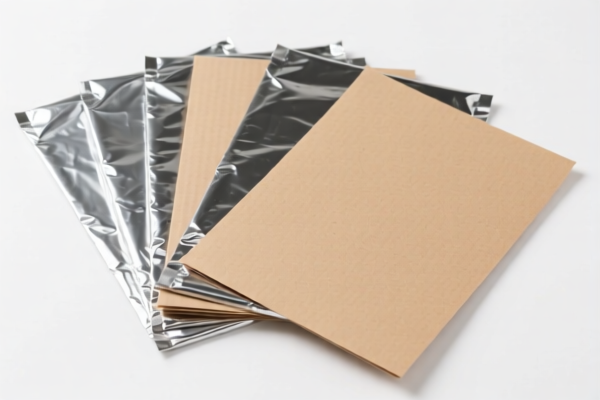
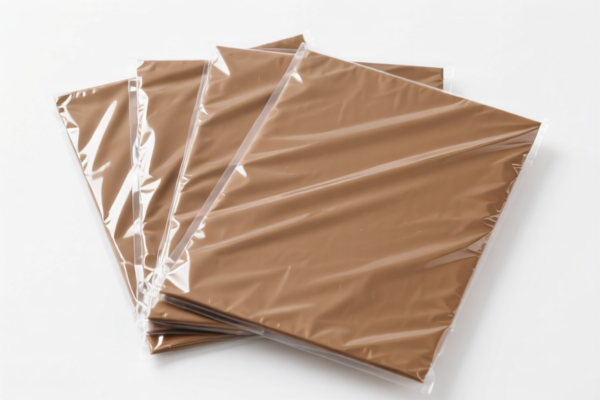
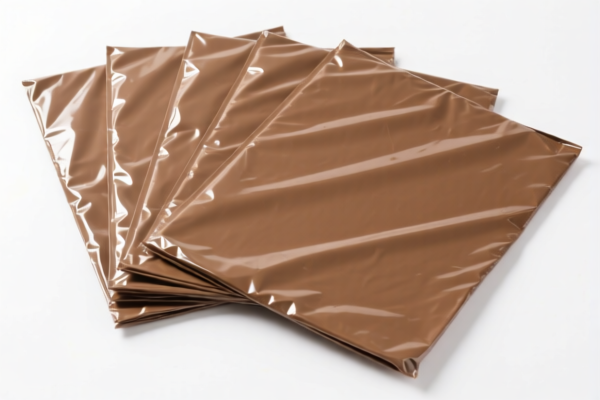
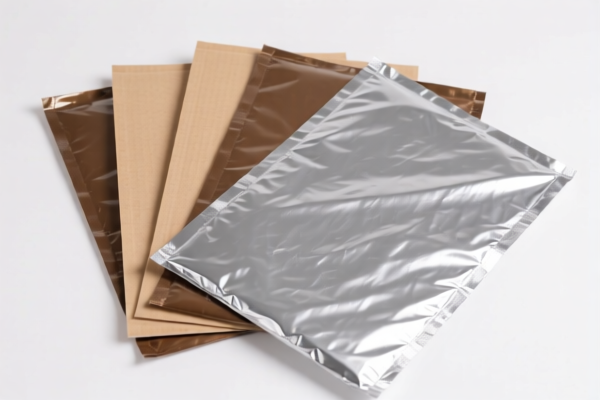
AI Analysis
📦 Foldable Packaging Sheets (Paper/Cardboard & Plastic)
🌐 HS Code Reference & Customs Clearance Guide | 2024/2025 Tariff Analysis | Professional Clearance Strategy
📌 I. Product Definition & Classification: What are "Foldable Packaging Sheets"?
Foldable packaging sheets are rigid or semi-rigid flat articles made of paper, paperboard, cellulose wadding, or plastics, designed to be folded into boxes, cartons, or protective structures. In international trade, they are primarily classified into two material categories: Paper/Cardboard and Plastics.
1. Paper/Cardboard Foldable Sheets:
- Includes non-corrugated folding cartons, boxes, and cases.
- Used for consumer goods, electronics, pharmaceuticals, and food/beverage packaging.
- Key Distinction: If the material is corrugated (fluted layer), it falls under HS Code 4819.10. If non-corrugated (solid board, kraft, etc.), it falls under HS Code 4819.20.
2. Plastic Foldable Sheets:
- Includes plastic boxes, cases, crates, and similar conveyance/packing articles.
- Key Distinction: If it is a specific "box/case" made of plastic, it falls under HS Code 3923.10. If it is a general plastic packing article (including sheets that form bags or other containers not specified elsewhere), it may fall under HS Code 3923.90.
⚠️ Critical Classification Point:
- If made of Paper/Paperboard → Look at 4819.20.
- If made of Plastics → Look at 3923.10 or 3923.90.
- Do not mix materials in a single HS Code declaration unless they are part of a composite good classified by essential character (rare for simple sheets).
📦 II. HS Code Classification Details (From Provided Data)
| HS Code | Product Description (Full Text) | Material | Application |
|---|---|---|---|
4819.20.00.20 |
Folding cartons, boxes and cases, of non-corrugated paper or paperboard; Sanitary food and beverage containers | Paper/Cardboard | Food packaging, sanitary containers, non-corrugated folding cartons |
4819.20.00.40 |
Folding cartons, boxes and cases, of non-corrugated paper or paperboard; Other | Paper/Cardboard | General non-corrugated paper boxes, gift boxes, electronics packaging |
3923.10.90.00 |
Articles for conveyance or packing of goods, of plastics; Boxes, cases, crates and similar articles; Other | Plastics | Plastic folding boxes, crates, plastic cases |
3923.90.00.80 |
Articles for conveyance or packing of goods, of plastics; Other | Plastics | Other plastic packing sheets, bags, or unspecified plastic containers |
🔍 Important Note:
-4819.20covers all non-corrugated paper/cardboard folding containers.
-3923.10is specific to plastic boxes/cases.
-3923.90is a "catch-all" for other plastic packing articles not specifically listed under 3923.10–3923.90.
💰 III. 2024/2025 Tariff Rate Analysis (Detailed Tax Breakdown)
✅ Applicable Country: United States (US)
✅ Origin: China (CN)
✅ Status: Subject to Section 301 & IEEPA Additional Duties
🎯 1. Paper/Cardboard Foldable Sheets (HS Code: 4819.20.xx)
Both subheadings under 4819.20 carry identical tax structures in the provided data.
A. 4819.20.00.20 (Sanitary Food & Beverage Containers / Non-Corrugated)
| Item | Detail |
|---|---|
| Base Tariff | 0.0% |
| Additional Duty (Section 301) | 25.0% |
| Total Tariff Rate | 25.0% |
| Tax Calculation | CIF Value × 25% |
| De Minimis Exemption | ❌ Not Applicable (High-value goods subject to full duty) |
| Legal Basis | USITC 4819.20.00.20 + Section 301 Footnote |
B. 4819.20.00.40 (Other Non-Corrugated Paper/Cardboard)
| Item | Detail |
|---|---|
| Base Tariff | 0.0% |
| Additional Duty (Section 301) | 25.0% |
| Total Tariff Rate | 25.0% |
| Tax Calculation | CIF Value × 25% |
| De Minimis Exemption | ❌ Not Applicable |
| Legal Basis | USITC 4819.20.00.40 + Section 301 Footnote |
📌 Explanation:
- Paper and paperboard packaging from China faces a 25% additional duty under Section 301.
- Although the base rate is 0%, the effective tariff is 25%.
- This applies to both sanitary food containers and general non-corrugated boxes.
🎯 2. Plastic Foldable Sheets (HS Code: 3923.xx)
C. 3923.10.90.00 (Plastic Boxes, Cases, Crates)
| Item | Detail |
|---|---|
| Base Tariff | 3.0% |
| Additional Duty (Section 301) | 25.0% |
| Total Tariff Rate | 28.0% |
| Tax Calculation | CIF Value × 28% |
| De Minimis Exemption | ❌ Not Applicable |
| Legal Basis | USITC 3923.10.90.00 + Section 301 Footnote |
D. 3923.90.00.80 (Other Plastic Packing Articles)
| Item | Detail |
|---|---|
| Base Tariff | 3.0% |
| Additional Duty (Section 301) | 25.0% |
| Total Tariff Rate | 28.0% |
| Tax Calculation | CIF Value × 28% |
| De Minimis Exemption | ❌ Not Applicable |
| Legal Basis | USITC 3923.90.00.80 + Section 301 Footnote |
📌 Explanation:
- Plastic packing articles from China face a base 3% + 25% additional duty = 28% total.
- Whether classified as specific "boxes/crates" (3923.10) or "other" (3923.90), the rate is identical.
- Warning: Misclassifying plastic sheets as paper (4819.20) could lead to customs penalties. Always declare the correct material.
🛠️ IV. Customs Clearance Practical Advice (Avoiding Pitfalls)
✅ 1. Required Documentation Checklist
| Document | Mandatory? | Notes |
|---|---|---|
| Commercial Invoice | ✅ Yes | Must clearly state material (e.g., "Non-corrugated Paperboard" or "Polyethylene Plastic") |
| Packing List | ✅ Yes | Detail quantity, weight, and dimensions |
| Product Specifications | ✅ Yes | Confirm if corrugated or non-corrugated (critical for paper) |
| Material Certificate | ✅ Recommended | To prove material composition if challenged |
| FSC Certificate | ✅ Recommended | For paper products, may be required by US buyers for sustainability compliance |
| FDA Compliance (if food contact) | ✅ Yes | For 4819.20.00.20, ensure food-contact safety standards are met |
✅ 2. Declaration Tips
| Scenario | Correct HS Code | Incorrect Code | Consequence |
|---|---|---|---|
| Paper Folding Box (Non-Corrugated) | 4819.20.00.20 or .40 |
4819.10 (Corrugated) |
Under/Overpayment of duty; possible penalty |
| Plastic Folding Crate | 3923.10.90.00 |
3923.90.00.80 |
Minor, but best to be precise |
| Plastic Sheet (Not Box/Crate) | 3923.90.00.80 |
3923.10.90.00 |
Misclassification; may trigger review |
| Corrugated Paper Box | 4819.10.00.00 |
4819.20 |
Major Error: Corrugated is excluded from 4819.20 |
🔥 Golden Rule:
"Check the Flute!"
- If there is a fluted middle layer → 4819.10 (Not in provided data, but common).
- If solid board → 4819.20 (25% duty).
- If Plastic → 3923.10 or 3923.90 (28% duty).
✅ 3. Cost Optimization Strategies
- For Paper Products:
- The 25% duty is unavoidable under current Section 301 tariffs.
- Consider substantial transformation in a third country (e.g., China imports raw paper, folds/boxes in Vietnam/Mexico) to change origin and avoid the 25% additional duty.
-
Note: Simple folding/conversion in a third country may not qualify for origin change; substantial manufacturing (printing, adhesive application, structural design) is required.
-
For Plastic Products:
- 28% is the rate. Similar third-country strategy may apply.
- Ensure plastic resin origin is declared accurately.
🌍 V. Global Market Comparison (Brief)
| Market | Paper (4819.20) Tariff | Plastic (3923) Tariff | Notes |
|---|---|---|---|
| 🇺🇸 USA | 25% (Additional) | 28% (Base + Additional) | High duties due to Section 301 |
| 🇨🇳 China | ~5-10% | ~5-6% | Lower base rates; no Section 301 |
| 🇪🇺 EU | Varies (often 0-6.5%) | Varies (often 0-6.5%) | Check specific EU TARIC codes |
| 🇬🇧 UK | Varies | Varies | Post-Brexit tariffs apply |
📌 Conclusion:
- The USA has the highest effective tariffs for these goods from China.
- Cost impact is significant: For a $100k shipment, expect $25k–$28k in additional duties.
- Plan supply chain accordingly.
📌 VI. Common Mistakes & Pitfalls
❌ Mistake 1: Declaring "Packaging Sheets" without specifying material.
👉 Result: Customs may assign the highest duty rate or hold shipment for inspection.
✅ Fix: Clearly state "Non-corrugated Paperboard" or "HDPE Plastic".
❌ Mistake 2: Confusing Corrugated vs. Non-Corrugated Paper.
👉 Result: Wrong HS Code (4819.10 vs 4819.20).
✅ Fix: Provide a cross-section photo showing the layer structure.
❌ Mistake 3: Ignoring the 25% Section 301 Duty.
👉 Result: Unexpected cost surge at customs.
✅ Fix: Budget for 25% (Paper) or 28% (Plastic) additional duty.
❌ Mistake 4: Assuming Plastic Sheets are "Bags" (3923.40).
👉 Result: Wrong classification.
✅ Fix: If it forms a box/crate, use 3923.10. If it’s a bag/film, use 3923.40.
🎯 VII. Final Recommendations
🔹 For Importers:
- Verify Material Composition: Paper vs. Plastic changes the base rate (0% vs 3%).
- Check Corrugation: Only non-corrugated paper goes to
4819.20. - Budget for Duties: Include 25% (Paper) or 28% (Plastic) in your landed cost calculation.
- Consider Third-Country Sourcing: If possible, source or finalize packaging in countries not subject to Section 301 (e.g., Vietnam, Thailand) to save costs.
🔹 For Exporters:
- Provide Clear Documentation: Include material certificates and product photos.
- Accurate Description: Use "Non-corrugated Folding Carton" or "Plastic Packaging Crate".
- Pre-Consult Customs Broker: Confirm HS Code before shipment to avoid delays.
📣 Immediate Action:
📞 Contact your customs broker with product samples/photos.
🚀 Ensure your invoice explicitly states material type and construction (corrugated/non-corrugated).
💡 Save costs: Explore duty mitigation strategies if volume is high.
✨ Precision in Classification Saves Dollars!
💼 Every HS Code digit counts in tariff calculation.
Customer Reviews
About HS Code Classification
The Harmonized System (HS) is an internationally standardized nomenclature developed by the World Customs Organization (WCO) to classify traded products. Over 200 countries use the HS system as the basis for customs tariffs, trade statistics, and import/export regulations.
Each HS code follows a hierarchical structure:
- Chapter (2 digits) — Broad category of goods (e.g., Chapter 84: Machinery and Mechanical Appliances)
- Heading (4 digits) — More specific grouping within the chapter
- Subheading (6 digits) — Internationally standardized breakdown, used by all WCO member countries
- National subdivisions (8-10 digits) — Country-specific extensions for further classification, such as US HTSUS 10-digit codes
Correct HS code classification is essential for smooth customs clearance, accurate duty payment, and compliance with trade regulations. Misclassification can lead to customs delays, overpayment of duties, or penalties.
When importing from CN to US, the applicable tariff rates may include:
- Most-Favored-Nation (MFN) rate — The standard duty rate applied to WTO members
- General rate — Applied to countries without trade agreements
- Trade remedy duties — Additional tariffs such as Section 301 (anti-dumping), Section 232 (national security), or countervailing duties
The information provided on this page is for reference purposes only. For official classification, please consult with your local customs authority or a licensed customs broker.