Foldable Textile Beverage Bag
CN → US| HS Code | Tariff Rate | Origin | Destination | Doc |
|---|---|---|---|---|
| 6305390000 | 25.9% | CN | US | Official Doc |
| 4202920807 | 42.0% | CN | US | Official Doc |
| 6307909891 | 24.5% | CN | US | Official Doc |
| 4202920809 | 42.0% | CN | US | Official Doc |
| 6305900000 | 23.7% | CN | US | Official Doc |
Product Images
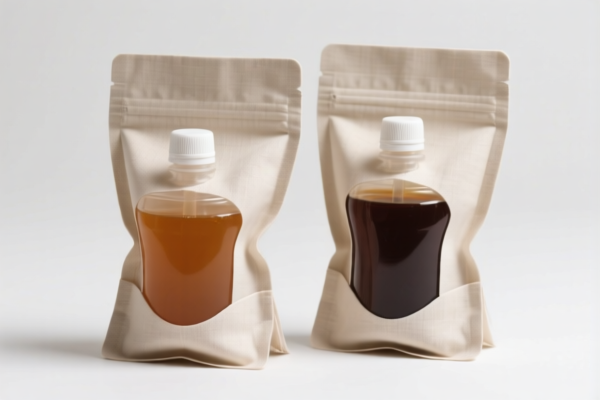
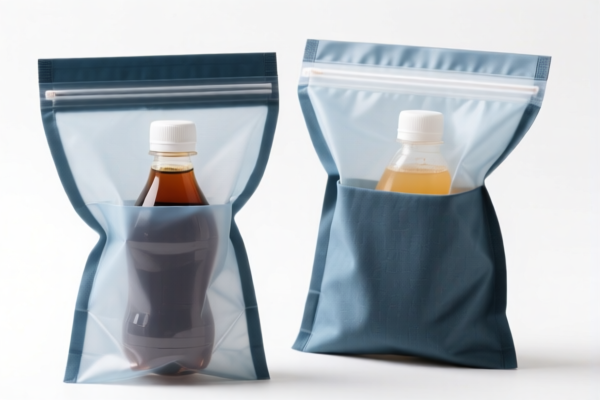
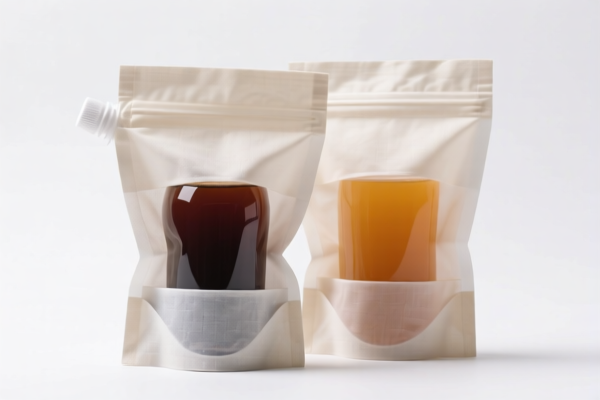
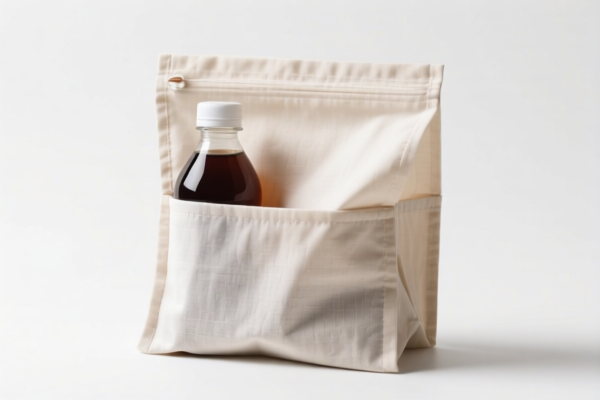
AI Analysis
🎒 Foldable Textile Beverage Bag (可折叠纺织外层饮料袋)
🌐 HS Code Reference & Customs Clearance Guide | 2026 Latest Tariff Analysis | Professional Strategy for Low-Risk Clearance
📌 I. Product Definition & Classification: Do You Really Know "What Are You Shipping"?
A Foldable Textile Beverage Bag is typically a soft-sided, reusable, or disposable container made primarily of textile materials (man-made fibers), designed to hold beverages (or food). In international trade, the classification depends heavily on the material composition, primary function, and specific design features.
The key distinction lies in whether it is viewed as a general textile container (Chapter 63) or a specific article of apparel/accessories/luggage (Chapter 42).
⚠️ Critical Distinction Point:
- If it is primarily a packaging bag for drinks (like a cooler bag or simple sack) made of textile materials → Falls under Chapter 63 (Miscellaneous Made-Up Textile Articles) or Chapter 62/63.
- If it is specifically designed as a luggage/accessory item (like a lunch bag or beverage holder with specific structural elements resembling luggage) → Falls under Chapter 42 (Articles of Leather; Saddle Harness; Luggage).
📦 II. HS Code Classification Details (2026 Latest Tariff Authority Comparison)
Below are the five possible HS Codes derived from the data, ranked by tax efficiency (lowest tax to highest).
| HS Code | Product Description (Summary) | Key Features & Usage | Tax Rate |
|---|---|---|---|
6305.39.00.00 |
Foldable textile outer beverage bag; made of man-made textile materials; intended for packaging beverages. | General textile packaging bag. Most common for simple soft-sided drink coolers/sacks. | 25.9% |
6307.90.98.91 |
Foldable textile outer beverage bag; classified as a made-up textile product, not specifically excluded. | General purpose textile article. Often used for broader textile container definitions. | 24.5% (Lowest Base) |
6305.90.00.00 |
Foldable textile outer beverage bag; made of other textile materials; used as bags for packaging goods. | Used when material doesn't fit "man-made" specific sub-categories or is mixed/other. | 23.7% (Lowest Base) |
4202.92.08.07 |
Foldable textile outer beverage bag; made of artificial fiber; form and use comply with classification requirements. | Classified under luggage/accessories (Ch 42). Higher base tax but specific fit for "bags" in this chapter. | 42.0% |
4202.92.08.09 |
Foldable textile outer beverage bag; explicitly contains textile outer layer, used for keeping food/beverages warm. | Specifically for insulated beverage/food bags. High tariff due to specific accessory classification. | 42.0% |
🔍 Key Insight:
- Chapter 63 codes (6305...,6307...) are significantly cheaper (23.7%-25.9%) compared to Chapter 42 codes (4202...) which are at 42.0%.
- The difference is driven by the Additional Tariffs (Section 301 and IEEPA).
💰 III. 2026 Latest Tariff Rate Breakdown (Including Surtaxes & Policy Add-ons)
✅ Applicable Country: United States (US)
✅ Country of Origin: China (CN)
✅ Effective Time: 2025 onwards (includes subsequent imports)
🎯 1. 6307.90.98.91 & 6305.90.00.00 & 6305.39.00.00 —— General Textile Beverage Bags (Chapter 63)
| Item | Content |
|---|---|
| Base Duty Rate | 6.2% – 8.4% (ad valorem) |
| Section 301 Additional Duty | +7.5% |
| IEEPA Additional Duty (122 Clause) | +10% (Applied to products from China) |
| Total Effective Tax Rate | 23.7% – 25.9% |
| Tax Calculation | CIF Value × Total Rate |
| De Minimis Exemption | ❌ Not Applicable (For high-value commercial shipments) |
| Legal Basis Path | HTSUS:6305/6307 → USITC Footnote → IEEPA:122 |
📌 Explanation:
- These codes benefit from the lowest additional surtax of 7.5% (Section 301).
- The IEEPA 10% is mandatory for Chinese-origin goods in this category.
- Total Tax: Ranges from 23.7% to 25.9%, making these the most cost-effective classification for non-insulated or general textile beverage bags.
🎯 2. 4202.92.08.07 & 4202.92.08.09 —— Specific Articles of Luggage/Accessories (Chapter 42)
| Item | Content |
|---|---|
| Base Duty Rate | 7.0% (ad valorem) |
| Section 301 Additional Duty | +25.0% (Higher tier for certain textile/luggage items) |
| IEEPA Additional Duty (122 Clause) | +10% |
| Total Effective Tax Rate | 42.0% |
| Tax Calculation | CIF Value × 42.0% |
| De Minimis Exemption | ❌ Not Applicable |
| Legal Basis Path | HTSUS:4202.92 → USITC Footnote → IEEPA:122 |
📌 Warning:
- The Section 301 surtax jumps to 25% for these HS codes, nearly triple the rate of Chapter 63 codes.
- This is likely because4202items are sometimes scrutinized more heavily or fall under a different penalty bracket in current trade policy.
- Total Tax: 42.0%. This is a high-cost classification.
🛠️ IV. Customs Clearance Practical Advice (Field Pitfall Avoidance Guide)
✅ 1. Documentation Checklist (Must-Haves)
| Document | Mandatory? | Notes |
|---|---|---|
| ✅ Product Photos | ✔️ | Must clearly show the textile outer layer and foldable nature. |
| ✅ Material Composition | ✔️ | Specify % of man-made fibers vs. natural fibers. Crucial for 6305 vs 6307. |
| ✅ Usage Declaration | ✔️ | "Used for holding beverages, NOT for apparel or luggage" → Supports Chapter 63. |
| ✅ Insulation Details | ✔️ | If insulated, customs may lean toward 4202.92.08.09. Avoid if possible to save tax. |
| ✅ Commercial Invoice | ✔️ | Clearly state "Foldable Textile Bag" not "Lunch Box" or "Insulated Carrier" unless necessary. |
| ✅ Packaging List | ✔️ | Confirm quantity and net weight. |
✅ 2. Declaration Strategy (Key Mantra)
🔥 "Textile Sack = Ch 63 (Low Tax); Luggage Bag = Ch 42 (High Tax)!"
| Scenario | Recommended HS Code | Reason |
|---|---|---|
| Simple foldable drink sack | 6305.39.00.00 or 6305.90.00.00 |
General packaging use. Lowest additional tax (7.5%). |
| Generic textile container | 6307.90.98.91 |
Broad category, lowest base rate (7.0%). |
| Insulated beverage holder | 4202.92.08.09 |
If it has significant insulation/structure resembling luggage. High Tax! |
| Luxury fashion beverage bag | 4202.92.08.07 |
If marketed as an accessory/luggage item. High Tax! |
✅ 3. Special Case Handling
| Situation | Handling Advice |
|---|---|
| Is it Insulated? | If yes, it might be forced into 4202. To avoid 42% tax, ensure it is described as a "textile packaging bag" with minimal insulation structure. |
| Material Mix? | If >50% man-made fiber → 6305. If mixed/other → 6307 or 6305.90. |
| Customs Audit Risk | If declared as 4202, expect stricter scrutiny on "luggage" features. If declared as 6305, provide proof of "packaging" function. |
🌍 V. Global Market Comparison (2026 Update)
| Country/Region | Recommended HS Code | Est. Tax (China Origin) | Notes |
|---|---|---|---|
| 🇺🇸 USA | 6305.39.00.00 / 6307.90.98.91 |
23.7% – 25.9% | Best option. Avoid 4202 due to 25% Section 301. |
| 🇺🇸 USA | 4202.92.08.07/09 |
42.0% | High cost. Only if legally required by design. |
| 🇨🇳 China | 6305 / 6307 |
9% – 10% | No additional surtaxes. |
| 🇪🇺 EU | 6305 / 6307 |
0% – 6% | Low tariff. No Section 301 equivalent. |
| 🇬🇧 UK | 6305 / 6307 |
0% – 6% | Post-Brexit tariffs favorable for textiles. |
📌 Conclusion:
- USA is the only major market with high additional tariffs on Chinese textiles.
- Strategic Goal: Classify under Chapter 63 (6305/6307) to pay ~25% instead of 42%.
- Risk: Misclassifying a high-insulation bag as a simple textile bag can lead to penalties and back taxes.
📌 VI. Common Mistakes & Pitfalls (Lessons from the Field)
❌ Mistake 1: Calling it a "Lunch Bag" or "Insulated Cooler"
👉 Consequence: Customs may classify it under 4202 → Tax jumps from 25% to 42%.
👉 Fix: Use "Foldable Textile Beverage Bag" or "Packaging Sack".
❌ Mistake 2: Not declaring insulation
👉 Consequence: If inspected, it’s found insulated → Penalty for misdeclaration.
👉 Fix: If insulated, consider if the product must be 4202. If not, minimize insulation description.
❌ Mistake 3: Using vague terms like "Drink Holder"
👉 Consequence: Customs has discretion → Likely 4202 (higher risk).
👉 Fix: Be specific: "Made of man-made textile materials, for packaging".
🎯 VII. Conclusion: Smart Classification, Maximize Profit!
🎯 Remember the Mantra:
🔹 "Chapter 63 = 25% Tax (Win!); Chapter 42 = 42% Tax (Pain!)"
🔹 "Describe it as Packaging, Not Luggage!"
📌 Pro Tip:
If your product must be insulated, consult a customs broker to see if you can structure it as a "Textile Pouch" rather than a "Luggage Article".
Apply for a Pre-Ruling if shipping large volumes to the US to lock in the 25.9% rate.
📣 Action Item:
📞 Contact a US Customs Broker with product photos.
📄 Declare as "Foldable Textile Bag".
🚀 Save 16%+ in taxes by choosing the right HS Code!
✨ Professional Customs Clearance Starts with Precise Classification!
💼 Every Percentage Point Matters in Your Bottom Line!
Customer Reviews
About HS Code Classification
The Harmonized System (HS) is an internationally standardized nomenclature developed by the World Customs Organization (WCO) to classify traded products. Over 200 countries use the HS system as the basis for customs tariffs, trade statistics, and import/export regulations.
Each HS code follows a hierarchical structure:
- Chapter (2 digits) — Broad category of goods (e.g., Chapter 84: Machinery and Mechanical Appliances)
- Heading (4 digits) — More specific grouping within the chapter
- Subheading (6 digits) — Internationally standardized breakdown, used by all WCO member countries
- National subdivisions (8-10 digits) — Country-specific extensions for further classification, such as US HTSUS 10-digit codes
Correct HS code classification is essential for smooth customs clearance, accurate duty payment, and compliance with trade regulations. Misclassification can lead to customs delays, overpayment of duties, or penalties.
When importing from CN to US, the applicable tariff rates may include:
- Most-Favored-Nation (MFN) rate — The standard duty rate applied to WTO members
- General rate — Applied to countries without trade agreements
- Trade remedy duties — Additional tariffs such as Section 301 (anti-dumping), Section 232 (national security), or countervailing duties
The information provided on this page is for reference purposes only. For official classification, please consult with your local customs authority or a licensed customs broker.