Folder
CN → US| HS Code | Tariff Rate | Origin | Destination | Doc |
|---|---|---|---|---|
| 4820300040 | 35.0% | CN | US | Official Doc |
| 4820300020 | 35.0% | CN | US | Official Doc |
| 3926908700 | 40.3% | CN | US | Official Doc |
| 4202322000 | 55.0% | CN | US | Official Doc |
| 3926909989 | 22.8% | CN | US | Official Doc |
Product Images
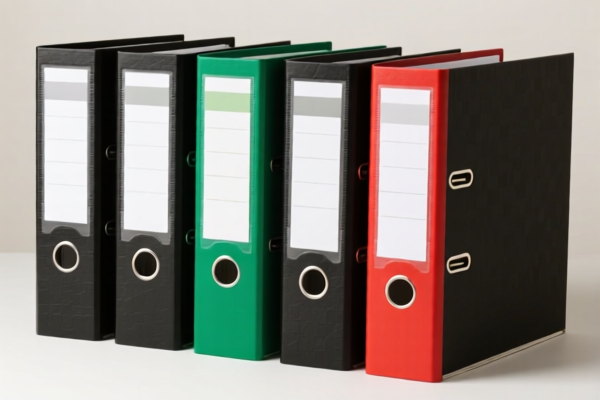
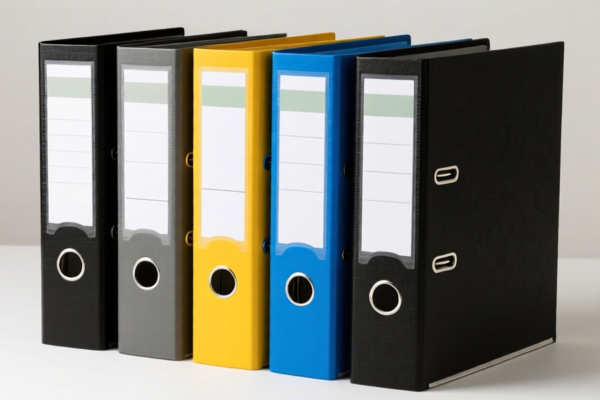


AI Analysis
📁 Folder (Stationery / Document Organizer)
🌐 HS Code Reference & Customs Clearance Guide | 2026 Updated Tariff Analysis | Professional Strategy
📌 I. Product Definition: What Exactly is a "Folder"?
In the world of international trade, a "Folder" is a deceptively simple item, yet its classification depends heavily on material composition, structure, and function. It generally refers to a binding device made of paper, plastic, or leather used to organize loose papers.
Key Material Distinctions: 1. Paper/Cardboard Folders: Traditional stationery items, often used in offices and schools. 2. Plastic Folders: Durable, often water-resistant, used for heavy-duty organization or industrial filing. 3. Mixed Material Folders: Items where one material (e.g., plastic sheets) forms the outer casing or primary structure.
⚠️ Critical Classification Logic:
- Purely Paper/Cardboard → Chapter 48 (Paper Products).
- Plastic Body/Sheeting → Chapter 39 (Plastics) or Chapter 42 (Leather/Plastic Articles).
- Functionality → Does it act as a "container" or just a "fastener"?
📦 II. HS Code Classification Details (2026 Authorized Tariff对照)
Based on current trade data, folders fall into three distinct categories with varying tax burdens.
| HS Code | Product Description | Material & Structure | Applicable Scenario |
|---|---|---|---|
| 4820.30.00.40 | Paper/Cardboard Folders | Made of paper or cardboard; falls under "Paper Stationery". | Office files, school folders, standard paper binders. |
| 4820.30.00.20 | Paper/Cardboard Folders (Leaving) | Specifically categorized as "Folders, Notebooks, etc." | Standard ring binders with paper covers, loose-leaf files. |
| 3926.90.87.00 | Plastic Flat Folders | Made of plastic; classified as "Plastic Products". | Clear plastic page holders, plastic document bags, vinyl folders. |
| 4202.32.20.00 | Plastic Sheet Outer Folder | Outer surface made of plastic sheets; classified as "Containers". | Rigid plastic filing cases, folder cases with plastic exterior. |
| 3926.90.99.89 | Unspecified Plastic/Paper Folders | Mixed or unclear material; classified as "Other Plastic Articles". | Ambiguous materials, generic plastic organizers, mixed composite folders. |
🔍 Key Differentiator:
- If the folder is 100% paper/cardboard, it belongs to 4820.
- If the folder is Plastic (flat, sheet-like), it belongs to 3926.
- If the folder is a Container with a Plastic Exterior, it shifts to 4202 (often attracting higher duties).
💰 III. 2026 Latest Tariff Rate Breakdown (US Import Data)
✅ Applicable Market: USA (US)
✅ Country of Origin: China (CN)
✅ Effective Period: Current / 2026 Projection
🎯 1. Paper/Cardboard Folders (4820.30.00.40 & 4820.30.00.20)
The most common stationery item, but heavily taxed due to trade policies.
| Item | Details |
|---|---|
| Base Duty Rate | 0.0% (Standard MFN rate) |
| Section 301 Added Duty | +25.0% (Section 301 Tariff) |
| Section 122 Duty | +10.0% (Trade Enforcement/Retaliation) |
| Total Effective Rate | 35.0% |
| Tax Calculation | CIF Value × 35% |
| De Minimis Exemption | ❌ NO (Section 301/122 goods are strictly excluded) |
📌 Explanation:
- Although the base duty is 0%, the Section 301 (25%) and Section 122 (10%) clauses apply strictly to Chinese-origin stationery.
- Result: You pay 35% on the value of the folder. No "de minimis" (small shipment) exemption exists.
🎯 2. Plastic Flat Folders (3926.90.87.00)
Common for clear, durable, industrial-grade organization.
| Item | Details |
|---|---|
| Base Duty Rate | 5.3% |
| Section 301 Added Duty | +25.0% |
| Section 122 Duty | +10.0% |
| Total Effective Rate | 40.3% |
| Tax Calculation | CIF Value × 40.3% |
| De Minimis Exemption | ❌ NO |
📌 Explanation:
- Unlike paper, plastic products start with a 5.3% base tariff.
- Add the 25% (301) + 10% (122) surcharges.
- Result: A 40.3% total tariff burden makes these expensive to import from China to the US.
🎯 3. Plastic Exterior Folder / Container (4202.32.20.00)
High-risk classification due to "Container" status.
| Item | Details |
|---|---|
| Base Duty Rate | 20.0% |
| Section 301 Added Duty | +25.0% |
| Section 122 Duty | +10.0% |
| Total Effective Rate | 55.0% |
| Tax Calculation | CIF Value × 55.0% |
| De Minimis Exemption | ❌ NO |
📌 Explanation:
- This is the highest tax bracket.
- The base duty is 20% (higher than simple plastic or paper).
- Add 25% + 10% surcharges.
- Result: 55.0% total tax. This classification is often triggered if the folder is rigid or marketed as a "container" rather than a "stationery item."
🎯 4. Unspecified/Mixed Material Folders (3926.90.99.89)
Used when material composition is ambiguous or mixed.
| Item | Details |
|---|---|
| Base Duty Rate | 5.3% |
| Section 301 Added Duty | +7.5% (Reduced 301 rate in some sub-categories) |
| Section 122 Duty | +10.0% |
| Total Effective Rate | 22.8% |
| Tax Calculation | CIF Value × 22.8% |
| De Minimis Exemption | ❌ NO |
📌 Explanation:
- This is a "catch-all" category for unclear items.
- While the base is 5.3%, the surcharge structure differs slightly (301 rate is 7.5% here, not 25%), resulting in a lower total of 22.8%.
- Risk: Customs may challenge this classification if the product clearly fits3926.90.87.00or4202.32.20.00.
🛠️ IV. Customs Clearance Practical Advice (Real-World Pitfall Avoidance)
✅ 1. Documentation Checklist (Must-Have)
| Document | Requirement | Why It Matters |
|---|---|---|
| Material Composition Report | ✔️ Mandatory | Proves if it's paper (4820) vs. plastic (3926/4202). Critical for tax calculation. |
| Product Photos (Front/Back/Inside) | ✔️ Mandatory | Customs needs to see the "plastic sheets" vs. "paper cover" distinction. |
| Bill of Materials (BOM) | ✔️ Recommended | Shows the exact ratio of materials if mixed (affects HS Code). |
| Commercial Invoice | ✔️ Mandatory | Must explicitly state "Folders, Paper/Plastic" to avoid generic descriptions. |
| Packing List | ✔️ Mandatory | Confirms quantity and weight; helps verify if it's a "container" vs. "stationery". |
✅ 2. Declaration Strategy (Golden Rules)
🔥 Rule: "Material Defines Tax, Structure Defines HS!"
| Scenario | Correct HS Code | Wrong HS Code | Consequence |
|---|---|---|---|
| Paper Folder with Plastic Pockets | 4820.30.00.20 |
3926.90.87.00 |
Underpaid Tax (0% base vs 5.3% base + penalties). |
| Rigid Plastic Filing Case | 4202.32.20.00 |
3926.90.87.00 |
Overpaid Tax (55% vs 40.3%) or Customs Rejection. |
| Clear Plastic Sheet Folder | 3926.90.87.00 |
4202.32.20.00 |
Overpaid Tax (40.3% vs 55%). |
| Unclear Material Folder | 3926.90.99.89 |
4820.30.00.40 |
Risk of Audit (Customs may reclassify to higher tax). |
✅ 3. Special Handling Tips
| Situation | Strategy |
|---|---|
| Mixed Materials (Paper + Plastic) | Declare based on primary material (the one giving the main character). If plastic cover > 50%, use Plastic HS Code. |
| "Container" vs. "Stationery" | If the folder has a rigid spine, hard plastic back, and is marketed as a "Case" or "Organizer", use 4202. If it's a simple folded paper/plastic sheet, use 4820 or 3926. |
| Avoiding 55% Tax | Ensure the product is not described as a "Container" in the invoice. Use terms like "Stationery Folder" or "Document Organizer" instead of "Plastic Case". |
🌍 V. Global Market Comparison (2026)
| Region | Preferred HS Code | Est. Duty (China Origin) | Key Requirement |
|---|---|---|---|
| 🇺🇸 USA | 4820 / 3926 / 4202 |
35.0% ~ 55.0% | Section 301 & 122 apply. No de minimis. |
| 🇪🇺 EU | 4820 / 3926 |
Variable (0-10%) | CE Marking + EPR (Waste). No Section 301. |
| 🇨🇦 Canada | 4820 / 3926 |
0-5% | No Section 301. CETA Agreement may apply. |
| 🇦🇺 Australia | 4820 / 3926 |
0-5% | No Section 301. |
📌 Conclusion: The USA is the only major market imposing the Section 301 + 122 surcharges, making Chinese folders significantly more expensive for US importers compared to other regions.
📌 VI. Common Errors & Red Flags (Learn from Others' Mistakes)
❌ Error 1: Calling a "Plastic Folder" a "Paper Folder" to hide the 5.3% base tax.
👉 Risk: Customs inspection will reveal the material. Fines + 55% Tax (if reclassified as container).
❌ Error 2: Declaring a "Plastic Case" as 3926.90.87.00 to avoid 4202.32.20.00.
👉 Risk: If the item is rigid and functions as a container, Customs will force the 55% rate and penalize you.
❌ Error 3: Assuming "De Minimis" ($800) applies to folders shipped via mail.
👉 Risk: Section 301/122 goods are excluded from de minimis. You must pay duty even on small shipments.
✅ Correct Approach:
"Paper/Cardboard Folder, Stationery, No Hard Cover" (For
4820)
"Plastic Document Holder, Sheet Type" (For3926)
"Rigid Plastic Filing Case, Container" (For4202)
🎯 VII. Final Verdict: Cost-Saving Strategy
🎯 The Golden Rule:
"Paper is 35%, Plain Plastic is 40.3%, Plastic Container is 55%."
Avoid "Container" classification at all costs!
📌 Action Plan:
1. Material Check: Confirm if the folder is paper or plastic.
2. Structure Check: Is it a simple sheet/fold (4820/3926) or a rigid case (4202)?
3. Invoice Wording: Use "Stationery" or "Folder", avoid "Case" or "Container" unless it truly is a container.
4. Cost Calculation: Add 35% to 55% to your landed cost. No exemptions!
✨ Professional Customs Clearance Starts with Accurate HS Codes!
💼 Don't let a "Folder" cost you 55% of your profit!
Customer Reviews
About HS Code Classification
The Harmonized System (HS) is an internationally standardized nomenclature developed by the World Customs Organization (WCO) to classify traded products. Over 200 countries use the HS system as the basis for customs tariffs, trade statistics, and import/export regulations.
Each HS code follows a hierarchical structure:
- Chapter (2 digits) — Broad category of goods (e.g., Chapter 84: Machinery and Mechanical Appliances)
- Heading (4 digits) — More specific grouping within the chapter
- Subheading (6 digits) — Internationally standardized breakdown, used by all WCO member countries
- National subdivisions (8-10 digits) — Country-specific extensions for further classification, such as US HTSUS 10-digit codes
Correct HS code classification is essential for smooth customs clearance, accurate duty payment, and compliance with trade regulations. Misclassification can lead to customs delays, overpayment of duties, or penalties.
When importing from CN to US, the applicable tariff rates may include:
- Most-Favored-Nation (MFN) rate — The standard duty rate applied to WTO members
- General rate — Applied to countries without trade agreements
- Trade remedy duties — Additional tariffs such as Section 301 (anti-dumping), Section 232 (national security), or countervailing duties
The information provided on this page is for reference purposes only. For official classification, please consult with your local customs authority or a licensed customs broker.