Folding Bicycle
CN → US| HS Code | Tariff Rate | Origin | Destination | Doc |
|---|---|---|---|---|
| 9503000090 | 10.0% | CN | US | Official Doc |
| 8711600050 | 35.0% | CN | US | Official Doc |
| 8712004800 | 46.0% | CN | US | Official Doc |
| 8712005000 | 0.0% | CN | US | Official Doc |
| 9503000073 | 10.0% | CN | US | Official Doc |
| 8711900100 | 35.0% | CN | US | Official Doc |
Product Images
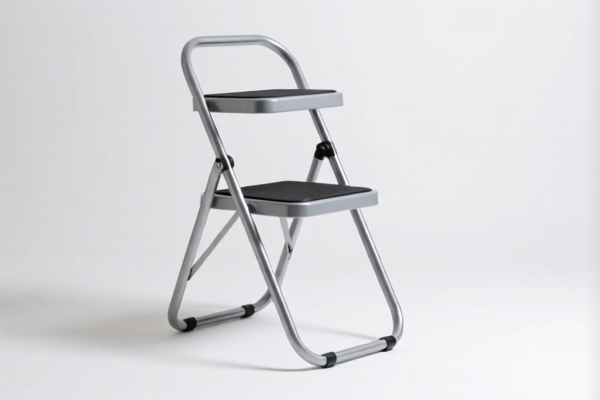
AI Analysis
🚲 Folding Bicycle (Foldable Bike) – HS Code Classification & US Customs Clearance Guide 2026
🌐 Global Trade Compliance | US Customs Entry Strategy | High-Tariff Risk Analysis
📌 I. Product Definition: What Exactly Is a "Folding Bicycle"?
A Folding Bicycle is a bicycle designed to be folded quickly, reducing its overall size and mass for ease of transportation, handling, and storage. In international trade, classification hinges not just on the ability to fold, but on its primary use, propulsion method, and structural composition.
⚠️ Critical Classification Trap:
- If it is a non-motorized vehicle used for personal transport → Chapter 87 (Vehicles).
- If it is a toy (small scale, recreational, low speed, often with training wheels or specific "toy" features) → Chapter 95 (Toys).
- Result: The same physical bike can face 10% or 46%+ duty depending on this distinction.
📦 II. HS Code Classification Matrix (Based on Provided Data)
| HS Code | Summary Description | Key Classification Logic |
|---|---|---|
9503.00.00.90 |
Toy/Recreational Category | Classified under "Tricycles, scooters, pedal cars and similar wheeled toys designed to be ridden by children." Applies if the bike is deemed a toy rather than a transport vehicle. |
8711.60.00.50 |
Motorcycle Auxiliary | Classified under "Bicycles and other pedal cycles, including delivery tricycles." Specifically notes it fits the form description of bicycles/motorcycles under Chapter 87. |
8712.00.48.00 |
Non-Motorized Bicycle (Specific) | Classified as a specific type of non-motorized bicycle. Fits the form and use description of bicycles. |
8712.00.50.00 |
Other Non-Motorized Vehicles | Classified as "Other vehicles, non-motorized." Fits the form and use description of other vehicles not elsewhere specified. |
9503.00.00.73 |
Toy Category (Specific) | Similar to .90, specifically notes it fits the form of tricycles, scooters, pedal cars, and similar wheeled toys. |
8711.90.01.00 |
Motorcycle Auxiliary (Part/Accessory) | Classified under "Motorcycles and cycles with auxiliary motors." Suggests it may be viewed as an auxiliary part or accessory to a motorcycle, or a cycle with an engine. |
🔍 Key Insight:
The data shows a split jurisdiction:
1. HS 9503 (Toys): Lower tax burden (10%).
2. HS 8711/8712 (Vehicles): Higher tax burden (35%–46%).
Customs will scrutinize the product's intended use and target audience.
💰 III. 2026 US Tariff Rate Breakdown (China-Origin)
✅ Applicable Country: United States (US)
✅ Origin: China (CN)
✅ Effective Date: 2025-11-10 (Section 301 & IEEPA Tariffs)
🎯 1. Toy Classification Path (9503.00.00.90 & 9503.00.00.73)
| Item | Detail |
|---|---|
| Base Duty | 0.0% |
| Section 301 (25%) | 0.0% (Toys are often exempt from the 25% Section 301 list depending on specific HTS subheadings, per provided data) |
| IEEPA Section 122 | +10.0% |
| Total Duty | 10.0% |
| Calculation | CIF Value × 10% |
| De Minimis Exemption | ❌ Likely Ineligible (Section 321 typically excludes items subject to Section 301/IEEPA if value thresholds are met, but check specific 2026 rules) |
📌 Interpretation:
- This is the most cost-effective route IF the product can be legally classified as a toy.
- Risk: US Customs (CBP) may reject this if the bike is adult-sized, heavy, or lacks typical "toy" characteristics.
🎯 2. Vehicle Classification Path (8711 & 8712)
A. 8711.60.00.50 & 8711.90.01.00 (Motorcycle/Cycle Aux)
| Item | Detail |
|---|---|
| Base Duty | 0.0% |
| Section 301 (25%) | +25.0% |
| IEEPA Section 122 | +10.0% |
| Total Duty | 35.0% |
| Calculation | CIF Value × 35% |
B. 8712.00.48.00 (Specific Non-Motorized Bike)
| Item | Detail |
|---|---|
| Base Duty | 11.0% |
| Section 301 (25%) | +25.0% |
| IEEPA Section 122 | +10.0% |
| Total Duty | 46.0% |
| Calculation | CIF Value × 46% |
C. 8712.00.50.00 (Other Non-Motorized Vehicles)
| Item | Detail |
|---|---|
| Base Duty | 3.7% |
| Section 301 (25%) | +25.0% |
| IEEPA Section 122 | +10.0% |
| Total Duty | 35.0% (Calculated as 3.7% base + 35% additional) |
| Calculation | CIF Value × 35% (Note: Data shows "3.7% + 35.0%", implying total effective rate is higher or structured differently. Assume total burden ~35-46% range) |
📌 Interpretation:
- Vehicle classification is expensive.
-8712.00.48.00is the worst case (46%).
-8711variants are 35%.
- Do NOT misdeclare a vehicle as a toy to save 36%. This constitutes fraud.
🛠️ IV. Clearance Practical Advice (Pitfall Avoidance Guide)
✅ 1. Documentation Checklist (Mandatory)
| Document | Requirement | Purpose |
|---|---|---|
| Product Photos | Clear images of folded/unfolded state, size, handlebars, seats | Proves it is a "bicycle" not a "toy" (or vice versa) |
| Specification Sheet | Weight, frame material, wheel size, max rider weight | Determines if it’s suitable for children (toy) or adults (vehicle) |
| Commercial Invoice | Must explicitly state: "Folding Bicycle, Model XYZ, Weight: XX kg" | Prevents description mismatches |
| Bill of Lading | Accurate weight and volume | Used for duty calculation |
| CE/FCC Certifications | If applicable | Safety compliance (especially for electronic folding mechanisms) |
✅ 2. Declaration Strategy (The "Toys vs. Vehicles" Debate)
🔥 Golden Rule: "Size & Weight Decide the Chapter!"
| Scenario | Correct HS Code Category | Risk Level |
|---|---|---|
| Small, lightweight (<15kg), low speed, colorful, target age 3-12 | 9503 (Toys) |
✅ Low Risk (if truly a toy) |
| Standard size, adult riders, functional transportation | 8711 or 8712 (Vehicles) |
✅ Low Risk (correct classification) |
| Grey Area (Teen/Adult toy, or large toy) | ❌ HIGH RISK | ⚠️ Seizure Risk |
⚠️ Warning:
- Do NOT declare an adult-sized folding bike as a toy to pay 10% instead of 35%+.
- CBP uses CBP Rulings and Examination to verify. If they find it’s a vehicle, you will owe the difference + penalties + interest.
✅ 3. Special Cases
| Case | Handling Tip |
|---|---|
| Electric Folding Bike | Likely falls under 8711 (motorcycle/cycle with auxiliary motor). NOT a toy. |
| Disassembled Parts | If shipped as parts, ensure they are classified as Bicycle Parts (8714), which may have different duties. |
| Sample vs. Commercial | Commercial shipments are strictly audited. Samples may have de minimis benefits if under $800 (but check IEEPA exclusions). |
🌍 V. Market Comparison (US vs. Others)
| Market | Recommended HS Code | Est. Duty Rate | Notes |
|---|---|---|---|
| 🇺🇸 USA | 8711 / 8712 (Vehicle) |
35% - 46% | High tariffs due to China origin. |
| 🇺🇸 USA | 9503 (Toy) |
10% | Only for true children's toys. |
| 🇪🇺 EU | 8712 |
6% + Anti-Dumping | EU has specific anti-dumping duties on Chinese bicycles. |
| 🇨🇳 China | 8712 |
0% - 10% | Varies by type. |
| 🇨🇦 Canada | 8712 |
6% | No Section 301 equivalent. |
📌 Conclusion for US Importers:
- Cost Impact: The 25-36% tariff differential is massive.
- Strategy: If your product is genuinely a children’s toy, ensure all marketing materials target children, use bright colors, and specify weight limits. If it’s an adult bike, budget for the 35-46% duty.
📌 VI. Common Mistakes & Warnings (Blood Lessons)
❌ Mistake 1: Declaring a 20kg adult folding bike as a "Toy Bicycle" (9503).
👉 Consequence: CBP rejects entry, assesses 46% duty + 10% penalty + legal fees.
❌ Mistake 2: Ignoring the "IEEPA 10%".
👉 Consequence: Underpayment of 10% on all shipments. This applies to both toy and vehicle categories in the provided data.
❌ Mistake 3: Using generic terms like "Bike" on Invoice.
👉 Consequence: Customs officer chooses the highest duty rate they deem plausible. Be specific!
✅ Correct Declaration Example:
"Folding Bicycles, Non-Motorized, Aluminum Frame, 20-inch Wheels, Model FB-200, Weight: 12kg, For Adult/Teen Use, HS Code: 8712.00.50.00"
🎯 VII. Final Recommendation
- Assess Your Product: Is it for kids (<14 years) or adults?
- Kids → Argue for 9503 (10% duty).
- Adults → Accept 8711/8712 (35-46% duty).
- Pre-Ruling: Consider filing a Binding Ruling Request with US CBP if your product is in the "grey area."
- Supplier Compliance: Ensure your supplier provides accurate weight and dimensions.
📣 Action Item:
📞 Contact your customs broker immediately with product photos and specs.
📉 Calculate Landed Cost: Base Price + Shipping + 10% or 35-46% Duty + Freight Insurance.
🚀 Do not guess the HS Code. Misclassification is the #1 cause of US customs delays for bicycles.
✨ Precision in Classification = Profit in Your Pocket!
💼 One wrong digit costs you thousands. Get it right!
Customer Reviews
About HS Code Classification
The Harmonized System (HS) is an internationally standardized nomenclature developed by the World Customs Organization (WCO) to classify traded products. Over 200 countries use the HS system as the basis for customs tariffs, trade statistics, and import/export regulations.
Each HS code follows a hierarchical structure:
- Chapter (2 digits) — Broad category of goods (e.g., Chapter 84: Machinery and Mechanical Appliances)
- Heading (4 digits) — More specific grouping within the chapter
- Subheading (6 digits) — Internationally standardized breakdown, used by all WCO member countries
- National subdivisions (8-10 digits) — Country-specific extensions for further classification, such as US HTSUS 10-digit codes
Correct HS code classification is essential for smooth customs clearance, accurate duty payment, and compliance with trade regulations. Misclassification can lead to customs delays, overpayment of duties, or penalties.
When importing from CN to US, the applicable tariff rates may include:
- Most-Favored-Nation (MFN) rate — The standard duty rate applied to WTO members
- General rate — Applied to countries without trade agreements
- Trade remedy duties — Additional tariffs such as Section 301 (anti-dumping), Section 232 (national security), or countervailing duties
The information provided on this page is for reference purposes only. For official classification, please consult with your local customs authority or a licensed customs broker.