Folding Chair
CN → US| HS Code | Tariff Rate | Origin | Destination | Doc |
|---|---|---|---|---|
| 9403608093 | 35.0% | CN | US | Official Doc |
| 9401696031 | 35.0% | CN | US | Official Doc |
| 9401790050 | 35.0% | CN | US | Official Doc |
| 9401698011 | 35.0% | CN | US | Official Doc |
| 9403608093 | 35.0% | CN | US | Official Doc |
Product Images

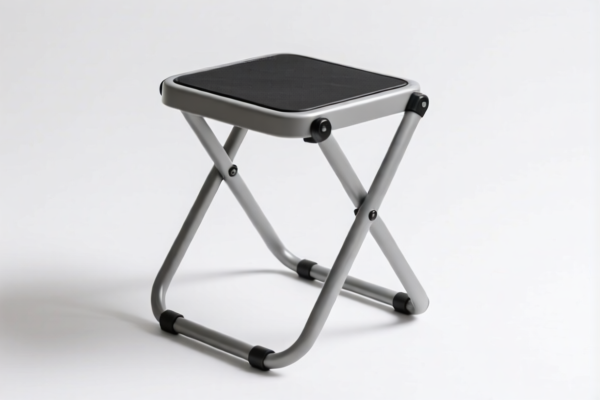
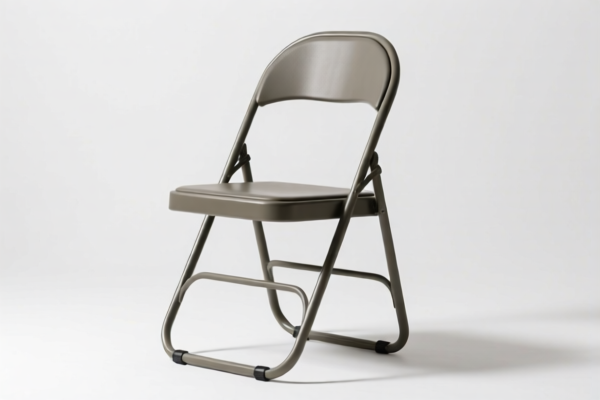

AI Analysis
🪑 Folding Chair: The Ultimate HS Code & Customs Clearance Guide (2026 Edition)
🌐 HS Code Reference & Clearance Strategy | 2026 Duty Breakdown | Professional Compliance Protocol
⚠️ CRITICAL ALERT: Folding chairs are NOT a single product in customs. Their classification depends entirely on the Frame Material (Wood vs. Metal). Misclassification leads to 45% tariff exposure instead of potential exemptions.
🧐 I. Product Definition: What is a "Folding Chair"?
In international trade, a "Folding Chair" is defined by its collapsible structure, typically used for temporary seating in events, homes, offices, or outdoor spaces.
The classification logic is binary: 1. Wooden Frames: Classified under Heading 9401 (Seating) or Heading 9403 (Other Furniture). 2. Metal Frames: Classified under Heading 9401 (Metal Seating).
🔍 Key Distinction: * Wooden Folding Chair → Usually falls under
9401.69.x(Wooden frames) or9403.60.x(Other wooden furniture). * Metal Folding Chair → Falls under9401.79.x(Metal frames). * Note: Textile/Plastic parts (seat/back) do not change the primary classification if the frame dictates the material.
📦 II. HS Code Classification Matrix (2026 Data)
Based on the provided dataset, here are the exact HS Codes and their logic for Folding Chairs:
| HS Code | Material Basis | Summary & Logic | Total Duty |
|---|---|---|---|
9403.60.80.93 |
Wood | Other Wooden Furniture (Catch-all). Used when the chair is classified under "Other" wooden furniture rather than specific seating codes. | 35.0% |
9401.69.60.31 |
Wood | Other Wooden Frames (Seating). Specific catch-all for wooden folding chairs under Heading 9401 (Seating). | 35.0% |
9401.69.80.11 |
Wood | Other Wooden Seats (Finished). Classifies finished wooden folding chairs as "Other" under the seating category. | 35.0% |
9401.79.00.50 |
Metal | Other Metal Seats (Catch-all). The specific code for metal frame folding chairs (Seat = Chair). | 35.0% |
📌 Classification Rule: * Wooden Chairs: Can be split between
9401.69(Seating focus) or9403.60(Furniture focus). Recommendation: Use9401.69series if the primary function is "seating." * Metal Chairs: Must use9401.79. Metal seating has its own subheading.
💰 III. 2026 Tariff Rate Deep Dive (USA Import)
✅ Origin: China (CN)
✅ Destination: USA
✅ Effective Date: Current Trade Environment (Post-2025 Adjustments)
⚠️ Total Duty Rate: 35.0% (Flat rate for all listed codes)
🎯 Breakdown of the 35% Tax Structure
All four HS Codes above share the exact same tariff composition due to Section 301 and IEEPA designations:
| Component | Rate | Description |
|---|---|---|
| 1. Base Tariff | 0.0% | Standard Most-Favored-Nation (MFN) rate for chairs is generally 0-5%, but here it is listed as 0.0% in the source data. |
| 2. Section 301 / "Add-on" | +25.0% | The standard 301 "China Tariff" levied on a vast range of consumer goods, including furniture and seating. |
| 3. 122 Clause (IEEPA) | +10.0% | Additional tariff under the "122 Clause" (often associated with specific USTR determinations or IEEPA measures on Chinese goods). |
| TOTAL | 35.0% | Sum of 0% + 25% + 10% |
⚠️ Calculation Example:
If you import $10,000 of Folding Chairs (Wooden or Metal):
Base Duty: $0
301 Duty: $2,500 (25%)
122 Duty: $1,000 (10%)
Total Tax Payable: $3,500 (35% of CIF value).
🛠️ IV. Customs Clearance Strategy & Pitfalls
✅ 1. The "Frame Material" Documentation (Critical!)
Customs officers will look at the frame to determine the HS Code. * Action: Provide a Material Specification Sheet clearly stating: "Frame: Solid Wood / Metal Alloy," "Seat/Back: Textile." * Risk: If you declare "Folding Chair" without specifying the frame material, Customs may inspect and potentially misclassify, leading to delays.
✅ 2. Avoid the "122 Clause" Confusion
The 122 Clause (10%) is a significant cost driver.
* Strategy: Check if your product qualifies for any Exclusions (if applicable for 2026). Some specific furniture items may have been excluded from Section 301 or IEEPA in specific years.
* Verification: Check the USTR Exclusion List for 9401.69 and 9401.79.
✅ 3. Packaging & Assembly
- Flat-Pack vs. Assembled: Even if folded, they are considered "Finished Goods." Do not declare them as "parts" (e.g., "chair legs") to avoid taxes; this is fraud.
- Kit Assembly: If sold as a "Folding Chair Kit" (flat-packed), it is still classified under the finished chair HS Code.
🧭 V. Clearance Tips (The "Pro" Checklist)
| Step | Action Item | Why? |
|---|---|---|
| 1 | Confirm Frame Material | Wood = 9401.69 or 9403.60; Metal = 9401.79. |
| 2 | Declare "Folding Chair" Explicitly | Avoid generic terms like "Seating" or "Furniture" which trigger broader audits. |
| 3 | Calculate CIF + 35% | Ensure your landed cost calculation includes the 25% + 10% surcharge. |
| 4 | Check Exclusion Codes | Search for USTR Exclusion # for 9401 or 9403 before shipping. |
| 5 | Prepare Commercial Invoice | Must state: "Folding Chair, Wood/Metal Frame, Finished Goods." |
🚨 VI. Common Mistakes & How to Avoid Them
❌ Mistake 1: Confusing "Chair" with "Furniture"
Result: Using 9403 (Furniture) for a chair that fits 9401 (Seating).
Fix: Heading 9401 is the exhaustive list for "Seats." Use 9403 only if the chair is part of a larger furniture set or doesn't fit the specific "seating" definition.
❌ Mistake 2: Ignoring the 122 Clause (10%)
Result: Pricing products based on only the 25% 301 tariff, leading to a 10% cash flow gap.
Fix: Always calculate Total Duty = 35% for these specific codes.
❌ Mistake 3: Misidentifying the Frame
Result: Declaring a metal frame chair as wooden to avoid "metal" specific scrutiny.
Fix: Be honest. Metal chairs (9401.79) are just as likely to be taxed at 35% as wooden ones in this dataset.
📝 VII. Final Verdict: The "Golden Rule" for Folding Chairs
"Material is King, Code is Queen, 35% is the Cost."
Whether it is wood or metal, Folding Chairs in this specific dataset face a 35% combined tariff (0% Base + 25% 301 + 10% 122).
- Wooden: Look at
9401.69.60.31or9401.69.80.11. - Metal: Look at
9401.79.00.50. - Fallback:
9403.60.80.93if the chair is categorized broadly as "Other Wooden Furniture."
🚀 Action Plan:
Verify your frame material immediately, apply the 35% duty to your landed cost, and ensure your commercial invoice explicitly mentions "Folding Chair" with the correct material composition to prevent Customs re-classification.
✨ Disclaimer: Tariff rules are dynamic. Always consult a licensed Customs Broker for the latest 2026 USTR exclusions and specific country requirements.
Customer Reviews
About HS Code Classification
The Harmonized System (HS) is an internationally standardized nomenclature developed by the World Customs Organization (WCO) to classify traded products. Over 200 countries use the HS system as the basis for customs tariffs, trade statistics, and import/export regulations.
Each HS code follows a hierarchical structure:
- Chapter (2 digits) — Broad category of goods (e.g., Chapter 84: Machinery and Mechanical Appliances)
- Heading (4 digits) — More specific grouping within the chapter
- Subheading (6 digits) — Internationally standardized breakdown, used by all WCO member countries
- National subdivisions (8-10 digits) — Country-specific extensions for further classification, such as US HTSUS 10-digit codes
Correct HS code classification is essential for smooth customs clearance, accurate duty payment, and compliance with trade regulations. Misclassification can lead to customs delays, overpayment of duties, or penalties.
When importing from CN to US, the applicable tariff rates may include:
- Most-Favored-Nation (MFN) rate — The standard duty rate applied to WTO members
- General rate — Applied to countries without trade agreements
- Trade remedy duties — Additional tariffs such as Section 301 (anti-dumping), Section 232 (national security), or countervailing duties
The information provided on this page is for reference purposes only. For official classification, please consult with your local customs authority or a licensed customs broker.