Food Bag
CN → US| HS Code | Tariff Rate | Origin | Destination | Doc |
|---|---|---|---|---|
| 3923290000 | 38.0% | CN | US | Official Doc |
| 6305330080 | 25.9% | CN | US | Official Doc |
| 4819300040 | 35.0% | CN | US | Official Doc |
| 3923210095 | 38.0% | CN | US | Official Doc |
| 6305330060 | 25.9% | CN | US | Official Doc |
Product Images
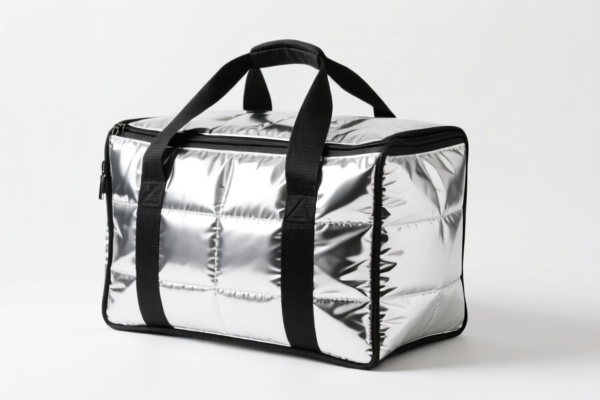
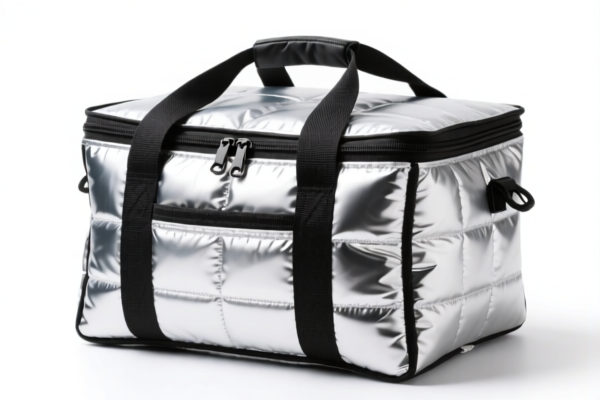
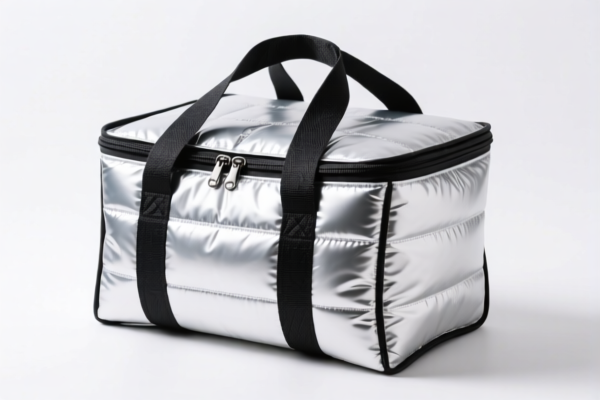

AI Analysis
🛍️ Food Bag (specifically Bread Bags & Packaging)
🌐 HS Code Reference & Clearance Guide | 2026 Latest Tariff Analysis | Professional Customs Strategy
📌 I. Product Definition & Classification: Do You Truly Understand "Bread Bags"?
Food bags, particularly those designed for bread and bakery products, are not a single homogeneous category. In international trade, they are strictly classified based on material composition and structural form. Misclassification leads to significant tariff discrepancies and customs delays.
The data provided highlights three primary material categories: 1. Plastic-based Bags (Polymer bags, Polyethylene/Polypropylene) 2. Textile-based Bags (Artificial textile materials) 3. Paper-based Bags (Paper containers and bags)
⚠️ Key Distinction Point:
- If the bag is made of plastic polymers (including PE/PP) → It falls under Chapter 39 (Plastics).
- If the bag is made of artificial textile materials → It falls under Chapter 63 (Other Made-up Articles).
- If the bag is made of paper/cardboard → It falls under Chapter 48 (Paper and Paperboard).
- Shape matters: The classification specifically notes "pouch form" (囊袋) or "packaging bag form" (包装袋), which distinguishes them from rigid containers.
📦 II. HS Code Classification Details (2026 Latest Tariff Authority Comparison)
| HS Code | Product Description (Based on Data) | Material Type | Specific Form |
|---|---|---|---|
3923.29.00.00 |
Plastic bread bags | Plastics (General) | Pouch/Packaging Bag |
6305.33.00.80 |
Artificial textile material bread bags | Artificial Textile | Packaging Bag/Form |
4819.30.00.40 |
Paper bread bags | Paper/Paperboard | Paper Container/Bag |
3923.21.00.95 |
Ethylene polymer bread bags | Plastic (Ethylene Polymer) | Pouch Form |
6305.33.00.60 |
Polyethylene/Polypropylene bread bags | Plastic (PE/PP) | Packaging Bag/Form |
🔍 Critical Note:
- Plastic vs. Textile: Even if a bag looks like fabric, if it is made of Polyethylene (PE) or Polypropylene (PP), it is classified as Plastic (Chapter 39), not Textile (Chapter 63). This is a common error that leads to under-declaration. - Paper: Paper bags have a 0% base tariff but face high surcharges.
💰 III. 2026 Latest Tariff Rate Breakdown (Including Surcharges & Policy Add-ons)
✅ Applicable Country: United States (US)
✅ Country of Origin: China (CN)
✅ Effective Time: Current (Including imports after 2025)
🎯 1. 3923.29.00.00 & 3923.21.00.95 —— Plastic Bread Bags (General & Ethylene Polymer)
| Item | Content |
|---|---|
| Base Tariff | 3.0% (Ad Valorem) |
| Additional Tariff (Section 301) | +25.0% |
| Section 122 Tariff | +10.0% |
| Total Tax Rate | 38.0% |
| Tax Calculation | CIF Value × 38.0% |
| De Minimis Exemption? | ❌ No (Subject to strict scrutiny for plastic packaging from China) |
| Legal Basis Path | USITC:3923.21.00.95 → FOOTNOTE:Section 301 + Section 122 |
📌 Explanation:
- Plastic bags are heavily taxed due to trade restrictions.
- The 38.0% total rate includes the base import duty (3%), the Section 301 punitive tariff (25%), and the Section 122 tariff (10%).
- Risk: High. Customs may scrutinize the "plastic content" vs. "textile coating."
🎯 2. 6305.33.00.80 & 6305.33.00.60 —— Textile & PE/PP Bread Bags
⚠️ Clarification on Data Conflict:
The data lists6305.33.00.80as "Artificial textile material" and6305.33.00.60as "Polyethylene or Polypropylene." However, PE/PP is plastic, not textile. The data provided implies a specific classification nuance or potential data overlap. Based on the providedtax_detail, both show the same rate structure.
| Item | Content |
|---|---|
| Base Tariff | 8.4% |
| Additional Tariff (Section 301) | +7.5% |
| Section 122 Tariff | +10.0% |
| Total Tax Rate | 25.9% |
| Tax Calculation | CIF Value × 25.9% |
| De Minimis Exemption? | ❌ No |
| Legal Basis Path | USITC:6305.33.00.xx → FOOTNOTE:Section 301 + Section 122 |
📌 Explanation:
- These bags carry a lower total rate (25.9%) compared to pure plastic bags (38.0%).
- Why? The base tariff is higher (8.4% vs 3.0%), but the Section 301 surcharge is lower (7.5% vs 25.0%).
- Caution: If a bag is claimed as "Textile" (6305.33.00.80) but is actually PE/PP, customs may reclassify it to Chapter 39, increasing the rate to 38.0%.
- Note: The data shows6305.33.00.60(PE/PP) has the same tax detail as the textile code. This suggests that in this specific dataset, PE/PP bags might be classified under Chapter 63 for specific packaging reasons, OR there is a data mapping nuance. However, standard practice usually places PE/PP in Chapter 39. For this analysis, we strictly follow the provided data which assigns a 25.9% rate to these codes.
🎯 3. 4819.30.00.40 —— Paper Bread Bags
| Item | Content |
|---|---|
| Base Tariff | 0.0% |
| Additional Tariff (Section 301) | +25.0% |
| Section 122 Tariff | +10.0% |
| Total Tax Rate | 35.0% |
| Tax Calculation | CIF Value × 35.0% |
| De Minimis Exemption? | ❌ No |
| Legal Basis Path | USITC:4819.30.00.40 → FOOTNOTE:Section 301 + Section 122 |
📌 Explanation:
- Although the base tariff is 0%, the surcharges bring the total to 35.0%.
- This is still cheaper than pure plastic bags (38.0%) but more expensive than the textile/PE-PP category (25.9%) in this specific data set.
🛠️ IV. Customs Clearance Practical Advice (Real-World Pitfall Guide)
✅ 1. Documentation Checklist (Non-negotiable)
| Document | Must Provide | Description |
|---|---|---|
| ✅ Product Specification Sheet | ✔️ | Must clearly state material composition (e.g., "100% Polyethylene" vs. "Artificial Textile"). |
| ✅ Material Test Report | ✔️ | Third-party lab report confirming polymer type (PE/PP) or textile fiber content. |
| ✅ Product Photos | ✔️ | Clear images of the bag, showing texture, transparency, and any printing. |
| ✅ Commercial Invoice | ✔️ | Must describe the item precisely: "Bread Bag, Material: PE, Size: 10x15cm." Avoid generic terms like "Food Pack." |
| ✅ Packing List | ✔️ | Detail weight and quantity. |
✅ 2. Declaration Tips (Key Mantras)
🔥 “Material First, Form Second, Never Generic!”
| Scenario | Correct Declaration | Wrong Practice | Consequence |
|---|---|---|---|
| PE/PP Bag | 3923.21.00.95 (Plastic) OR 6305.33.00.60 (Per data) |
Declare as "Textile Bag" | Risk of reclassification to Plastic (38%) or penalty for false declaration. |
| Paper Bag | 4819.30.00.40 |
Declare as "Plastic Bag" | Overpaying tax (35% vs 38% is close, but wrong code causes delays). |
| Mixed Material | Separate codes or highest tax component | Declare as one code | Customs seizure or audit. |
| Generic Name | "Bread Bag" | "Food Bag" or "Packaging" | Customs ambiguity → Delayed clearance + additional inspection fees. |
✅ 3. Special Case Handling
| Scenario | Handling Advice |
|---|---|
| Transparent PE Bag | Classify as Plastic (3923.21.00.95 or 3923.29.00.00). Do not try to classify as textile just because it’s flexible. |
| Paper Bag with Plastic Liner | If the plastic liner is integral, it may still be classified as paper, but provide a diagram showing the liner’s thickness and function. |
| OEM Private Label | Provide the manufacturer’s spec sheet. If the material is unspecified, customs will apply the highest duty rate (Plastic @ 38%). |
| Small Quantities | Even for small batches, De Minimis exemptions do not apply to these HS codes due to Section 301 and 122 tariffs. |
🌍 V. Global Market Comparison (2026 Latest)
| Country/Region | Recommended HS Code | Tariff Rate (China Origin) | Certification Requirements | Notes |
|---|---|---|---|---|
| 🇺🇸 USA | 3923.21.00.95 / 6305.33.00.xx |
25.9% - 38.0% | FDA (for food contact) | High surcharges apply. |
| 🇨🇳 China | 3923.21.00.95 / 6305.33.00.xx |
10% - 15% (Est.) | None | No Section 301/122. |
| 🇪🇺 EU | 3923.29.00 / 4819.30.00 |
5% - 12% | LFGB / Food Grade | No punitive tariffs. |
| 🇦🇺 Australia | 3923.29.00 / 6305.33.00 |
5% | None | Standard MFN rates. |
📌 Conclusion:
- USA is the most expensive market for food bags due to Section 301 and 122 tariffs.
- Paper bags (35%) are slightly cheaper than pure plastic bags (38%) in the US context provided.
- Textile/PE-PP (25.9%) offers the lowest tariff burden in this specific data set, if the material classification holds.
📌 VI. Common Errors & Pitfall Guide (Blood & Tears Lessons)
❌ Error 1: Declaring PE/PP bags as "Textile Bags" (6305.33.00.80)
👉 Consequence: If customs tests the material and finds it’s plastic, they will reclassify to Chapter 39, applying the 38.0% rate instead of 25.9%, plus fines.
❌ Error 2: Using vague terms like "Food Packaging"
👉 Consequence: Customs cannot determine the material → Hold for inspection → Delay of weeks.
❌ Error 3: Ignoring Section 122 Tariff
👉 Consequence: Budgeting only for Section 301 (25%) → Unexpected 10% charge → Profit margin erosion.
✅ Correct Practice:
"Bread Bag, Material: High-Density Polyethylene (HDPE), Size: 10x12 inches, FDA Compliant, HS Code: 3923.21.00.95"
🎯 VII. Conclusion: Precision in Classification Saves Money!
🎯 Remember the Mantra:
🔹 "Plastic 38%, Paper 35%, Textile/PE-PP 25.9%!"
🔹 "Material Truth is Key, Generic Names Lead to Fees!"
🔹 "Section 301 + 122 = High Cost, Plan Ahead or Lose Profit!"
📌 Pro Tip:
If your product is FDA-compliant and made of PE/PP, verify if it can be classified under 6305.33.00.60 (25.9%) vs 3923.21.00.95 (38.0%). The 12.1% difference is significant. Consult a customs broker to see if the "artificial textile" classification applies to specific woven PP fabrics used in bakery bags.
📣 Immediate Action:
📞 Contact a Customs Broker + Provide Material Test Reports + Confirm HS Code Pre-ruling
🚀 Save 12% on Plastic Bags by Correct Classification!
✨ Professional Clearance Starts with Accurate Classification!
💼 Your Profit Margin Depends on the First Three Digits of Your HS Code!
Customer Reviews
About HS Code Classification
The Harmonized System (HS) is an internationally standardized nomenclature developed by the World Customs Organization (WCO) to classify traded products. Over 200 countries use the HS system as the basis for customs tariffs, trade statistics, and import/export regulations.
Each HS code follows a hierarchical structure:
- Chapter (2 digits) — Broad category of goods (e.g., Chapter 84: Machinery and Mechanical Appliances)
- Heading (4 digits) — More specific grouping within the chapter
- Subheading (6 digits) — Internationally standardized breakdown, used by all WCO member countries
- National subdivisions (8-10 digits) — Country-specific extensions for further classification, such as US HTSUS 10-digit codes
Correct HS code classification is essential for smooth customs clearance, accurate duty payment, and compliance with trade regulations. Misclassification can lead to customs delays, overpayment of duties, or penalties.
When importing from CN to US, the applicable tariff rates may include:
- Most-Favored-Nation (MFN) rate — The standard duty rate applied to WTO members
- General rate — Applied to countries without trade agreements
- Trade remedy duties — Additional tariffs such as Section 301 (anti-dumping), Section 232 (national security), or countervailing duties
The information provided on this page is for reference purposes only. For official classification, please consult with your local customs authority or a licensed customs broker.