Food Bowl
CN → US| HS Code | Tariff Rate | Origin | Destination | Doc |
|---|---|---|---|---|
| 6911103510 | 43.5% | CN | US | Official Doc |
| 3924104000 | 13.4% | CN | US | Official Doc |
| 6912003910 | 14.5% | CN | US | Official Doc |
| 6911103710 | 25.5% | CN | US | Official Doc |
| 3924102000 | 24.0% | CN | US | Official Doc |
Product Images


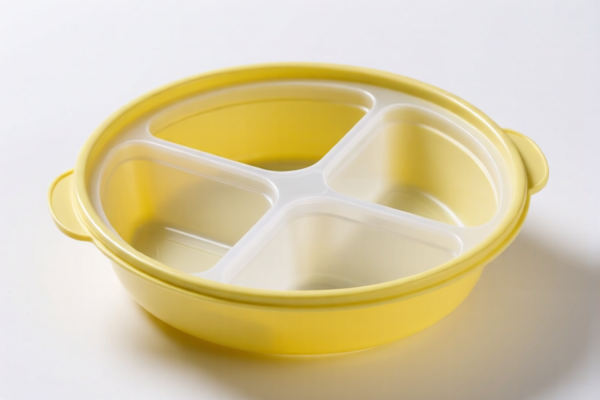
AI Analysis
🍽️ Food Bowl (Dinnerware for Table Use)
🌐 HS Code Reference & Customs Clearance Guide | 2026 Updated Tariff Breakdown | Pro-Level Import Strategy
📌 One, Product Definition & Classification: What Exactly Is a "Food Bowl"?
A food bowl is a container designed for serving or holding food, commonly used in households, restaurants, cafeterias, and institutional settings. In international trade, it is classified based on material composition, construction, and intended use.
⚠️ Key Distinction:
- If made of ceramic (including porcelain) → classified under 6911.10 / 6912.00
- If made of plastic or non-metallic synthetic materials → classified under 3924.10
- Must be intended for table use (not industrial, storage, or decorative only)
📦 Two, HS Code Classification Details (2026 Official Tariff Matrix)
| HS Code | Product Description | Material Type | Intended Use | Includes Drive Circuit? |
|---|---|---|---|---|
6911.10.35.10 |
Ceramic dinnerware (e.g., plates, bowls), for table use | Ceramic (non-porcelain) | Household/restaurant tableware | ❌ No |
3924.10.40.00 |
Plastic dinnerware (bowls, plates), for table use | Plastic (non-metallic) | Disposable or reusable tableware | ❌ No |
6912.00.39.10 |
Non-ceramic ceramic dinnerware (e.g., stoneware, earthenware), for table use | Non-porcelain ceramic | Table use, not decorative | ❌ No |
6911.10.37.10 |
Porcelain dinnerware (bowls, plates), for table use | Porcelain (high-fired ceramic) | Premium tableware | ❌ No |
3924.10.20.00 |
Plastic or non-metallic dinnerware (bowls, plates), for table use | Plastic or synthetic resin | Reusable or disposable | ❌ No |
🔍 Critical Insight:
- "Ceramic" ≠ "Porcelain" — porcelain is a subset of ceramic with higher density and translucency → different HS codes
- Plastic items are treated separately even if they mimic ceramic → 3924.10 applies regardless of shape or design
- No electronic components — if no circuitry, sensor, or power source, no drive board → all are non-electronic
💰 Three, 2026 Updated Tariff Breakdown (With附加 Taxes Explained)
✅ Applicable Country: United States (US)
✅ Origin: China (CN)
✅ Effective Date: November 10, 2025 (including all subsequent imports)
🎯 1. 6911.10.35.10 — Ceramic Dinnerware (Non-Porcelain), for Table Use
| Item | Detail |
|---|---|
| Base Tariff | 26.0% (ad valorem) |
| Section 301 Additional Duty | +7.5% (from USITC under Section 301 of Trade Act) |
| Section 122 (IEEPA) Additional Duty | +10.0% (under International Emergency Economic Powers Act) |
| Total Effective Duty | 43.5% |
| Tax Calculation | CIF Value × 43.5% |
| De Minimis Threshold | ❌ Not applicable (denied under US law) |
| Legal Basis Path | IEEPA:9903.01.25 → Section 301:9903.88.01 → HS:6911.10.35.10 |
📌 Explanation:
- 26% base = standard tariff for ceramic dinnerware
- +7.5% Section 301 = punitive tariff due to China’s alleged unfair trade practices
- +10% IEEPA = emergency economic powers tariff targeting Chinese-origin goods
- Total: 43.5% — Extremely high for non-essential consumer goods
🎯 2. 3924.10.40.00 — Plastic Dinnerware (Non-Metallic), for Table Use
| Item | Detail |
|---|---|
| Base Tariff | 3.4% |
| Section 301 Additional Duty | 0.0% (no 301 duty on this subheading) |
| Section 122 (IEEPA) Additional Duty | +10.0% |
| Total Effective Duty | 13.4% |
| Tax Calculation | CIF Value × 13.4% |
| De Minimis Threshold | ❌ Not applicable |
| Legal Basis Path | IEEPA:9903.01.25 → HS:3924.10.40.00 |
📌 Explanation:
- 3.4% base = low for plastic goods
- No 301 duty → plastic dinnerware not included in 301 list
- +10% IEEPA = applies to all Chinese-origin plastic goods under this category
- Total: 13.4% — still significant, but far lower than ceramic
🎯 3. 6912.00.39.10 — Non-Ceramic Ceramic Dinnerware (e.g., Stoneware), for Table Use
| Item | Detail |
|---|---|
| Base Tariff | 4.5% |
| Section 301 Additional Duty | 0.0% |
| Section 122 (IEEPA) Additional Duty | +10.0% |
| Total Effective Duty | 14.5% |
| Tax Calculation | CIF Value × 14.5% |
| De Minimis Threshold | ❌ Not applicable |
| Legal Basis Path | IEEPA:9903.01.25 → HS:6912.00.39.10 |
📌 Explanation:
- 4.5% base = standard for stoneware/earthenware
- No 301 duty — not on the 301 list
- +10% IEEPA — applies universally to Chinese-origin non-porcelain ceramics
- Total: 14.5% — moderate, but still high for bulk consumer items
🎯 4. 6911.10.37.10 — Porcelain Dinnerware (Bowls, Plates), for Table Use
| Item | Detail |
|---|---|
| Base Tariff | 8.0% |
| Section 301 Additional Duty | +7.5% |
| Section 122 (IEEPA) Additional Duty | +10.0% |
| Total Effective Duty | 25.5% |
| Tax Calculation | CIF Value × 25.5% |
| De Minimis Threshold | ❌ Not applicable |
| Legal Basis Path | IEEPA:9903.01.25 → Section 301:9903.88.01 → HS:6911.10.37.10 |
📌 Explanation:
- 8% base = higher than standard ceramic due to premium material
- +7.5% Section 301 = porcelain is specifically targeted under 301 actions
- +10% IEEPA = applies to all Chinese-origin porcelain
- Total: 25.5% — high but less than ceramic non-porcelain (43.5%) — due to lower base tariff
🎯 5. 3924.10.20.00 — Plastic or Non-Metallic Dinnerware (General), for Table Use
| Item | Detail |
|---|---|
| Base Tariff | 6.5% |
| Section 301 Additional Duty | +7.5% |
| Section 122 (IEEPA) Additional Duty | +10.0% |
| Total Effective Duty | 24.0% |
| Tax Calculation | CIF Value × 24.0% |
| De Minimis Threshold | ❌ Not applicable |
| Legal Basis Path | IEEPA:9903.01.25 → Section 301:9903.88.01 → HS:3924.10.20.00 |
📌 Explanation:
- 6.5% base = standard plastic tableware
- +7.5% Section 301 = this subheading is included in the 301 list
- +10% IEEPA = applies to all Chinese-origin plastic goods
- Total: 24.0% — surprisingly high due to dual附加 taxes🔥 Why this is a trap:
- Many importers assume plastic = low duty → wrong
- This item is specifically targeted under Section 301 and IEEPA
- No de minimis exemption — even small shipments are fully taxed
🛠️ Four, Customs Clearance Best Practices (Real-World Tips)
✅ 1. Required Documentation (Must-Have Checklist)
| Document | Required? | Notes |
|---|---|---|
| ✅ Product Specification Sheet | ✔️ | Include material, dimensions, weight, intended use |
| ✅ Material Certificate (e.g., FDA, REACH, RoHS) | ✔️ | Especially for plastic items |
| ✅ Product Photos (front, back, label, base) | ✔️ | Show brand, model, material |
| ✅ Commercial Invoice | ✔️ | Clearly state "Food Bowl, for Table Use" |
| ✅ Certificate of Origin (CO) | ✔️ | Critical for tariff eligibility |
| ✅ Packing List | ✔️ | Show quantity per container, packaging type |
| ✅ Test Report (if applicable) | ✔️ | For food-safe plastic (e.g., BPA-free, non-toxic) |
✅ 2.申报技巧 (Key Pro Tips)
🔥 "Material First, Use Second, Origin Last!"
| Scenario | Correct HS Code | Common Mistake |
|---|---|---|
| Ceramic bowl (non-porcelain) | 6911.10.35.10 |
Misclassified as 6912.00.39.10 |
| Porcelain bowl | 6911.10.37.10 |
Confused with standard ceramic |
| Plastic bowl (no metal) | 3924.10.40.00 |
Misclassified as 3924.10.20.00 |
| Plastic bowl with 301 duty | 3924.10.20.00 |
Mistakenly thought to be exempt |
| Reusable plastic bowl | 3924.10.20.00 |
Treated as "general" — higher duty |
✅ Pro Tip:
- Always verify the exact subheading — even small differences (e.g., 20 vs 40) change the duty - Use USITC’s HTSUS database or customs brokers for final validation
✅ 3. Special Cases & Risk Mitigation
| Situation | Recommended Action |
|---|---|
| OEM/Branded Bowls | Provide design specs + brand license to avoid "unauthorized" classification |
| Bamboo or Wood Composite Bowls | May fall under 4419.91.00.00 — not covered here; consult expert |
| BPA-Free Plastic Bowls | Still subject to 301 + IEEPA — no exemption |
| Bulk Orders (1000+ units) | Request advance ruling to lock in tariff rate |
| Non-Chinese Origin (e.g., Vietnam, Mexico) | May qualify for IEEPA exemption — apply for CO with proof |
🌍 Five, Global Market Comparison (2026)
| Country | Recommended HS Code | Base Duty | Additional Taxes | Certification Required | Notes |
|---|---|---|---|---|---|
| 🇺🇸 USA | 6911.10.35.10, 3924.10.40.00, etc. |
3.4%–26.0% | +7.5% (301), +10% (IEEPA) | FDA, RoHS | High tariffs apply |
| 🇨🇳 China | 6911.10.35.10, 3924.10.40.00 |
5% | None | CCC, RoHS | No 301/IEEPA |
| 🇪🇺 EU | 6911.10.35.10, 3924.10.40.00 |
0% | None | CE, REACH | No extra duties |
| 🇦🇺 Australia | 6911.10.35.10, 3924.10.40.00 |
5% | None | RCM | No 301/IEEPA |
| 🇯🇵 Japan | 6911.10.35.10, 3924.10.40.00 |
0% | None | PSE | No附加 taxes |
📌 Key Takeaway:
- The U.S. is the only market imposing both 301 and IEEPA duties on food bowls
- China-origin plastic and ceramic items face the highest tariffs
- Vietnam/Mexico-origin goods may qualify for IEEPA exemption — consider shifting production
📌 Six, Common Mistakes & How to Avoid Them
❌ Mistake 1: Classifying a porcelain bowl as 6911.10.35.10
👉 Result: Lower base tariff → underpayment → penalties
❌ Mistake 2: Assuming plastic bowls are duty-free
👉 Result: Misclassified as 3924.10.40.00 → missed 301 + IEEPA → 24% vs 13.4%
❌ Mistake 3: Using generic term “dinnerware” in invoice
👉 Result: Customs cannot verify material → delay or rejection
❌ Mistake 4: Not providing material proof for plastic
👉 Result: Suspected non-food-safe → detention or rejection
✅ Correct Declaration Example:
"Porcelain Food Bowl, 200ml, for Table Use, Model ABC, FDA & RoHS Certified, Origin: China"
🎯 Seven, Conclusion: Precision Pays Off!
🎯 Remember the Golden Rule:
🔹 "Material Defines Code, Code Defines Tax, Tax Defines Profit!"
🔹 "One wrong HS code = 20%+ extra cost!"
📌 Pro Tip:
If your product is originating from Vietnam, Mexico, Thailand, or Malaysia, you may qualify for IEEPA exemption — apply for a Certificate of Origin and request a pre-ruling.
📣 Act Now!
📞 Contact a licensed customs broker + Submit product photos + Request HS Code Pre-Ruling
🚀 Avoid surprise tariffs, prevent delays, and protect your margins!
✨ Smart Importing Starts with Accurate Classification!
💼 Your profit margin depends on one small code — get it right!
Customer Reviews
About HS Code Classification
The Harmonized System (HS) is an internationally standardized nomenclature developed by the World Customs Organization (WCO) to classify traded products. Over 200 countries use the HS system as the basis for customs tariffs, trade statistics, and import/export regulations.
Each HS code follows a hierarchical structure:
- Chapter (2 digits) — Broad category of goods (e.g., Chapter 84: Machinery and Mechanical Appliances)
- Heading (4 digits) — More specific grouping within the chapter
- Subheading (6 digits) — Internationally standardized breakdown, used by all WCO member countries
- National subdivisions (8-10 digits) — Country-specific extensions for further classification, such as US HTSUS 10-digit codes
Correct HS code classification is essential for smooth customs clearance, accurate duty payment, and compliance with trade regulations. Misclassification can lead to customs delays, overpayment of duties, or penalties.
When importing from CN to US, the applicable tariff rates may include:
- Most-Favored-Nation (MFN) rate — The standard duty rate applied to WTO members
- General rate — Applied to countries without trade agreements
- Trade remedy duties — Additional tariffs such as Section 301 (anti-dumping), Section 232 (national security), or countervailing duties
The information provided on this page is for reference purposes only. For official classification, please consult with your local customs authority or a licensed customs broker.